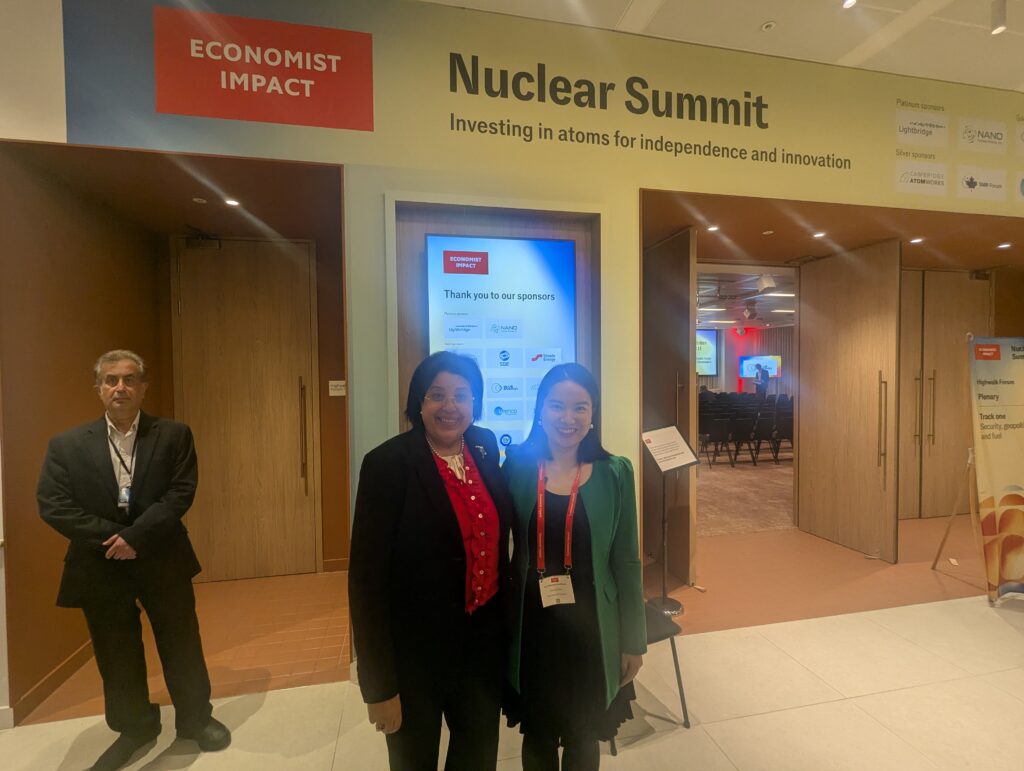
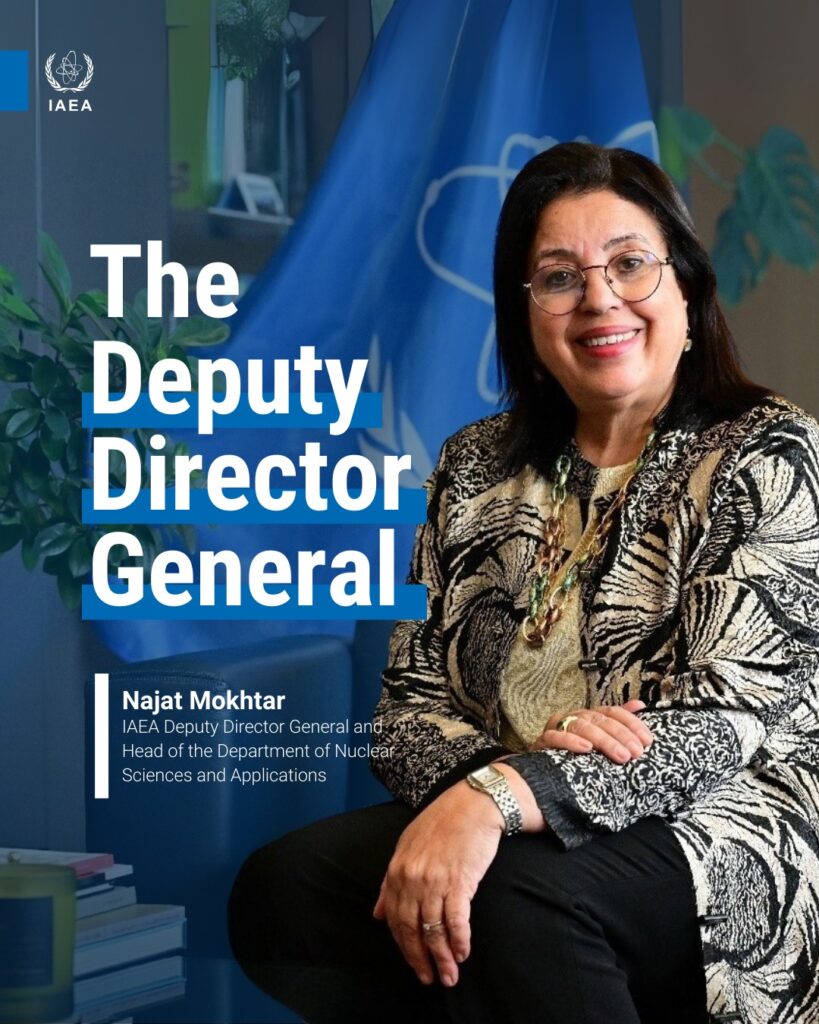
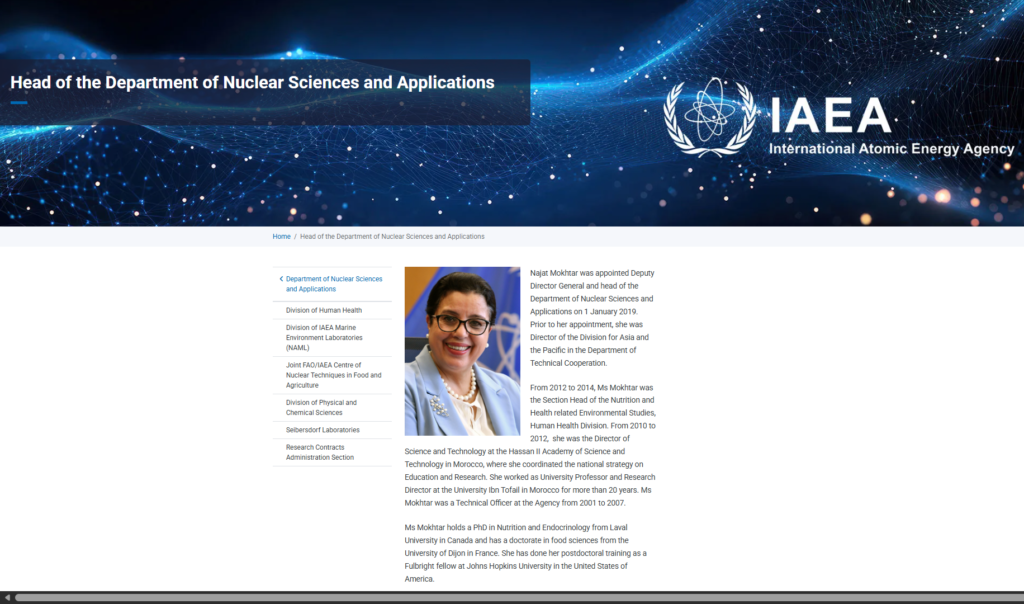
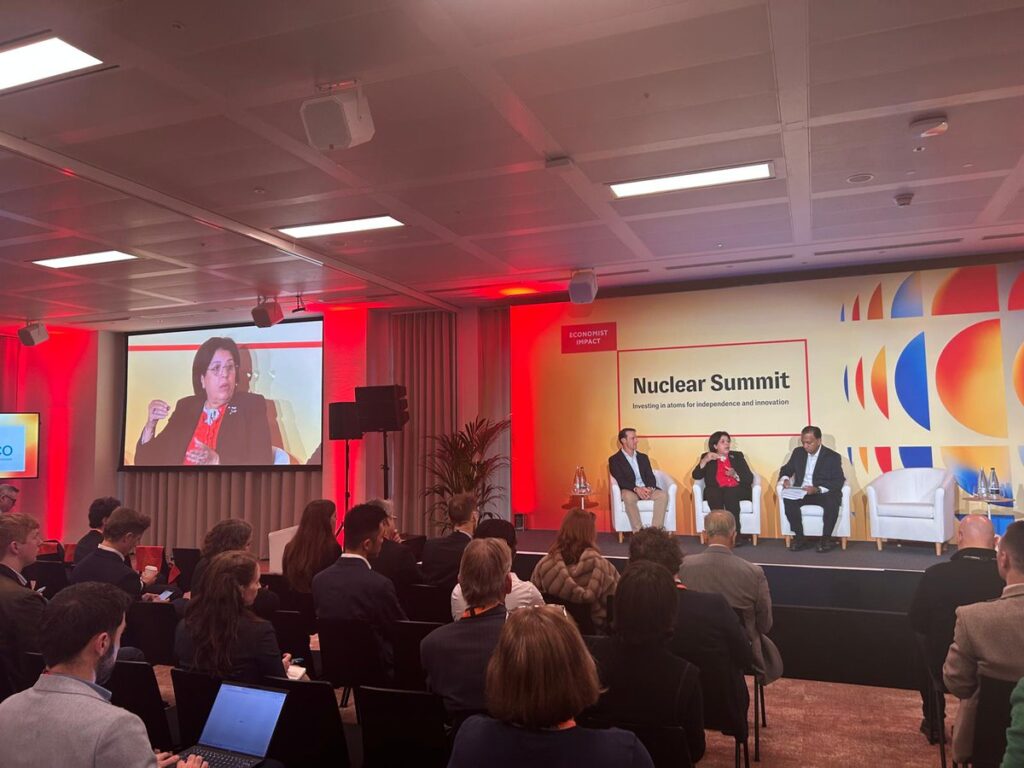
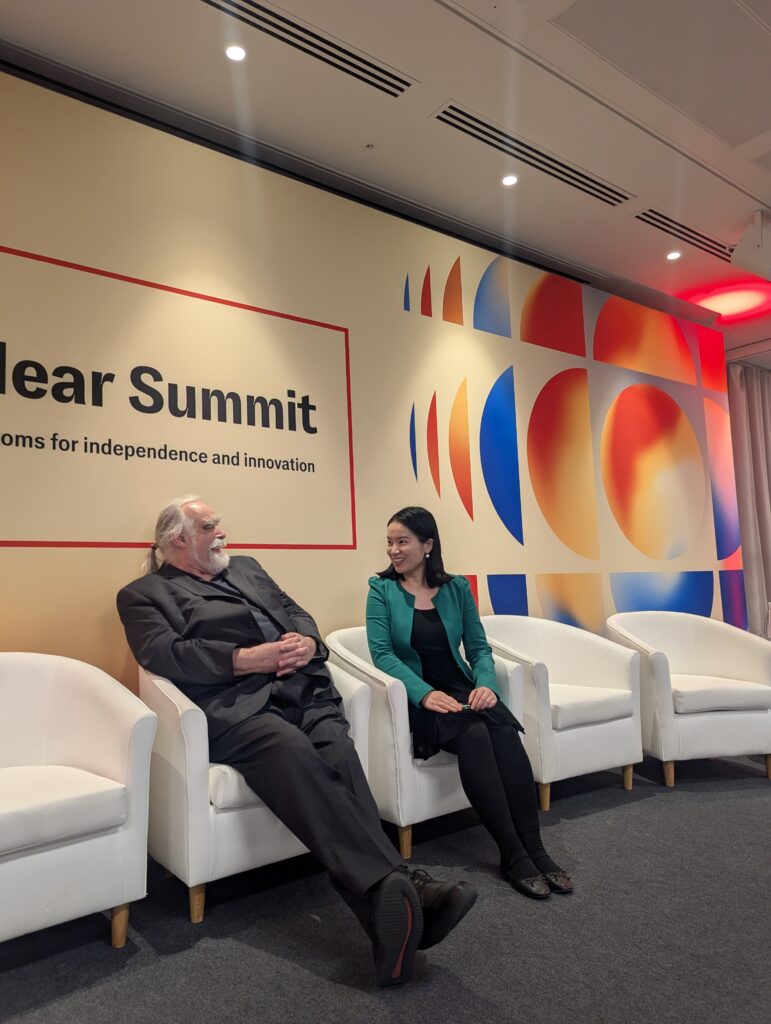
London, UK — April 15, 2026 — The Metaverse Institute participated in a landmark meeting today with Najat Mokhtar, Deputy Director General of the International Atomic Energy Agency (IAEA), during the Economist Impact Nuclear Summit. The discussion centered on the vital intersection of emerging technologies and the global “Nuclear Renaissance.”
Since Marie Curie’s pioneering discovery of Polonium and Radium in 1898, nuclear science has evolved from a laboratory wonder into a global pillar of human survival and equity. As the world seeks to meet aggressive climate targets, the IAEA projects that global nuclear capacity will reach 992 GW(e) by 2050—a 2.6x increase over current levels.
Nuclear for Good: A Global Impact Overview
The IAEA, the world’s “Atoms for Peace and Development” organization, currently oversees a global fleet of 417 operating reactors, with 62 more under construction. Beyond power generation, the agency is spearheading initiatives that address humanity’s most pressing challenges:
Water Security (GloWAL): Supporting 2.4 billion people in water-stressed regions through a network of 100+ labs.
Cancer Care (Rays of Hope): Bridging the “cancer gap” in low- and middle-income countries with a $105M investment across 30 nations.
Plastic Pollution (NUTEC Plastics): Utilizing nuclear technology to track microplastics and upcycle waste, with industrial implementation slated for 2026.
Food Security (Atoms4Food): A 60-year partnership with the FAO to enhance crop yields and soil fertility.
Pandemic Prevention (ZODIAC): An integrated global response system to detect zoonotic pathogens before they reach human populations.
Net Zero (Atoms4NetZero): Modeling energy transitions where nuclear power works in tandem with renewables.
Reflections from the Summit
While popular culture often leans into dystopian imagery, the reality on the ground at the Economist Impact Nuclear Summit was one of inspiration and rigorous safety. Engaging with world leaders revealed a profound commitment to developing peaceful nuclear energy while maintaining ironclad safeguards against weaponization and operational risks.
We extend our deepest thanks to the exceptional team at The Economist, including Helen Ponsford, Vijay Vaitheeswaran, Oliver Morton, and the many others who curated these vital conversations.
The Road to 2050: A Question of Convergence
As we look toward a future where AI demand is projected to consume 20% of global electricity, nuclear energy is expected to provide 17% of that supply. The Metaverse Institute is exploring how we can leverage a “Tech-Nuclear Convergence” to empower 8 billion people:
Agentic Digital Twins & Robotics: Can autonomous maintenance systems reduce human exposure and operational costs?
Quantum & Blockchain: Can Quantum Key Distribution (QKD) and blockchain-enabled safeguards create unhackable tracking for nuclear waste management?
Small Modular Reactors (SMRs): How will localized, scalable power change the landscape for decentralized energy?
The Metaverse Institute remains committed to exploring these digital frontiers to ensure that the Nuclear Renaissance is safe, sustainable, and inclusive with all interested stakeholders.
The United Nations is inviting global stakeholders to a milestone public consultation on its first pre-implementation tool for AI and virtual worlds in urban environments. This framework serves as a strategic bridge for cities, providing the necessary standards and risk-assessment protocols to deploy Citiverse technologies safely and inclusively.
Bridging the Gap
From 2D Intelligence to 3D Reality This initiative arrives at a critical juncture as AI evolves from 2D Large Language Models (LLMs)—which process text and code—into 3D Large World Models (LWMs) that understand physical space. While 2D AI has transformed how we manage information, 3D LWMs provide the spatial common sense required to build a people-centered, planet-friendly digital future. By integrating these advancements, the UN framework ensures that cities dont just build virtual replicas, but use intelligent 3D environments to simulate climate resilience, optimize resources, and guarantee inclusive access before a single physical brick is laid.
The 2025 Pivot to Physical: A Strategic Briefing on Large World Models (LWMs)
The AI industry is reaching a definitive turning point in 2025. The era of scaling pure language models is evolving into a pursuit of Artificial General Intelligence (AGI) through Large World Models (LWMs).
Unlike their predecessors, LWMs are engineered to perceive and simulate the 3D physical world—mastering geometry, physics, and complex cause-and-effect relationships. This technological evolution provides the critical link to a people-centered, planet-friendly digital future: by moving from 2D text to 3D spatial intelligence, the Citiverse can now simulate real-world environmental impacts and human needs with unprecedented accuracy.
The global race has shifted: the leaders of tomorrow will be those who successfully build this ‘common sense’ layer, allowing AI to understand and interact with the physical reality we inhabit to solve our most pressing urban and climate challenges.
1. NVIDIA: The “Cosmos” Ecosystem – Architecting the Physical AI Stack
Core Philosophy: NVIDIA is successfully transitioning from a semiconductor leader to the definitive “operating system for the physical world.” By moving beyond 1D language processing, NVIDIA is building the spatial “common sense” required for AI to inhabit and interact with 3D reality.
Measurable Developments & Strategic Impact:
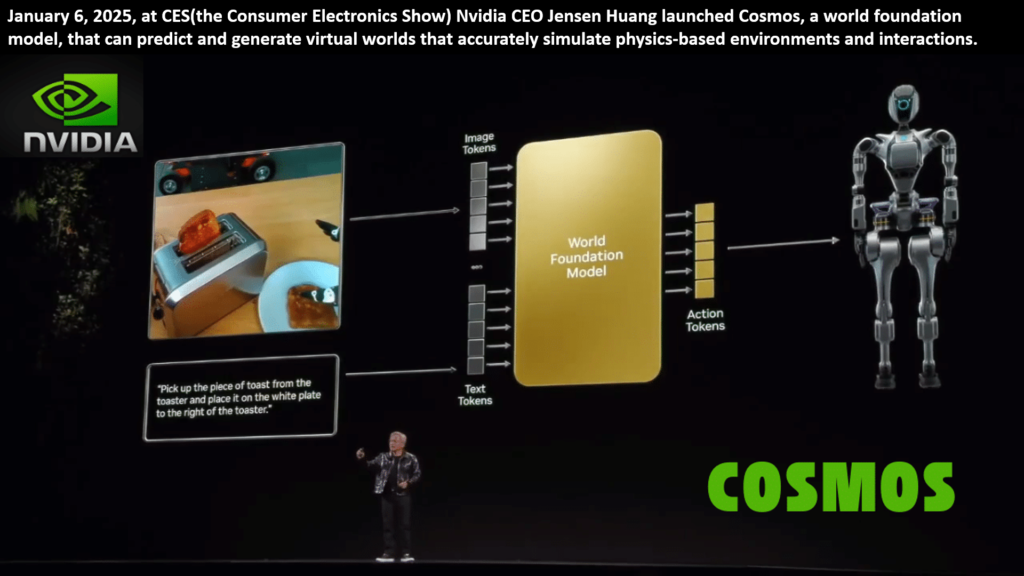
Launch & Scale of Project Cosmos: Unveiled in early 2025, NVIDIA Cosmos is a unified platform for World Foundation Models (WFMs). These models are trained on over 20 million hours of real-world video, allowing AI to master object permanence and physically based interactions across industrial and urban settings.
The 12x Performance Breakthrough: A cornerstone of this stack is the NVIDIA Cosmos Tokenizer. It delivers 8x more total compression and processes data 12x faster than previous industry standards. This speed allows for the real-time generation of physically accurate world states, transforming years of data processing into just weeks.
The $50 Trillion Opportunity: CEO Jensen Huang has identified Physical AI as the catalyst for a $50 trillion revolution in manufacturing and logistics. NVIDIA’s “three-computer” architecture—DGX for training, Omniverse for simulation, and AGX for deployment—serves as the essential infrastructure for this transition.
Synthetic Data & The GR00T Blueprint: In March 2025, the Isaac GR00T Blueprint demonstrated a paradigm shift in training efficiency. NVIDIA generated 780,000 synthetic robot trajectories in just 11 hours—a task that previously required 9 months of human demonstration. This synthetic data injection boosted robot performance by 40%.
Synthesis: Why this Matters for the Citiverse
NVIDIA’s 2025 advancements provide the high-fidelity engine for the UN’s Citiverse initiative. By replacing statistical guesses with physically grounded simulations, cities can use NVIDIA’s stack to:
Eliminate Risk: Use Cosmos Predict to simulate traffic impacts before a single physical change is made.
Scale Inclusivity: Train urban service robots using GR00T synthetic data to ensure they navigate diverse neighborhoods safely.
Drive Sustainability: Leverage Omniverse to optimize energy grids and climate resilience with scientific precision.
This video provides a deep dive into NVIDIA’s 2025 “Cosmos” announcement, demonstrating how visual tokenizers and world foundation models are being used to train the next generation of physical AI.
2. World Labs (Fei-Fei Li): The Venture-Backed Bet on Spatial Intelligence
Core Philosophy: Spearheaded by Dr. Fei-Fei Li, World Labs is moving AI beyond “wordsmiths in the dark” to systems that possess Spatial Intelligence. The goal is to endow AI with a “North Star” of physical grounding—the ability to link imagination, perception, and action in 3D worlds.
Measurable Developments & Impact:
Commercial Launch of Marble: In November 2025, World Labs moved from research to product with the public launch of Marble, their first commercial World Model.
Funding & Valuation: Following a $230 million Series A in late 2024, World Labs entered 2025 with a “unicorn” valuation exceeding $1 billion. Investors include heavyweights like Andreessen Horowitz (a16z), Radical Ventures, and NVentures (NVIDIA), signaling a unified industry bet on spatial AI.
The RTFM Breakthrough: In October 2025, the team integrated RTFM (Real-Time Frame Model) into Marble. This allows the system to generate and render 3D space in real-time as a user interacts with it, effectively serving as a “spatial memory” that maintains world consistency even as a user explores endlessly.
Ecosystem Integration: World Labs has already secured partnerships to power spatial learning (EON Reality) and is compatible with mainstream XR hardware like Apple Vision Pro and Meta Quest 3, positioning its world models as the primary content engine for the spatial computing era.
Synthesis: Why this Matters for the Citiverse
Fei-Fei Li’s “Spatial Intelligence” provides the human-centric interface for the Citiverse. While NVIDIA provides the industrial backbone, World Labs enables:
Democratized Design: Allowing non-technical city planners to “sketch” a new public square and immediately walk through it in 3D to evaluate social inclusivity.
Visual Grounding: Ensuring that Citiverse AI isn’t just hallucinating data, but is grounded in the actual 3D layout and “interact-ability” of a specific urban neighborhood.
Embodied Learning: Providing the high-fidelity simulators needed to train the next generation of urban service robots in a safe, virtual environment.
This interview with Fei-Fei Li explores the shift from language-centric AI to spatial intelligence and the “world modeling” phase of the industry.
3. Google DeepMind: AGI via Scientific Simulation and Generalist Agents
Core Philosophy: Google DeepMind operates on the conviction that “World Models are the prerequisite for AGI.” CEO Demis Hassabis advocates for a balanced path where AI doesn’t just predict text, but understands the fundamental physical laws of the universe. This “spatial common sense” is the foundation for creating agents that can safely navigate both virtual and real-world cities.
Measurable Developments & Impact:
SIMA 2: The Generalist Urban Agent: In November 2025, DeepMind released SIMA 2 (Scalable Instructable Multiworld Agent). Unlike standard AI, SIMA 2 can follow complex, natural-language instructions in 3D environments (e.g., “Find the nearest recycling point”) by perceiving the world like a human. It demonstrates a 2x performance leap in task success over its predecessor.
Genie 2: The Interactive World Engine: Launched in late 2025, Genie 2 is a foundation world model that can generate physically consistent, interactive 3D environments from a single image. This serves as the “infinite training ground” for Citiverse simulations, allowing city planners to generate millions of “what-if” scenarios for urban traffic or emergency response.
The “Scientific Research Closed Loop”: DeepMind has successfully pioneered an AI Co-Scientist framework. In 2025, this system used world models to simulate millions of parallel experiments in materials science, leading to the discovery of new superconductor materials and more efficient battery chemistries for green city grids.
Strategic Resource Allocation: To bridge the gap between theory and reality, DeepMind maintains a strict 50/50 resource split:
Synthesis: Why this Matters for the Citiverse
Google DeepMind provides the analytical brain of the Citiverse. While other players focus on the “view,” DeepMind focuses on the “logic” of the city:
Smarter Public Services: Using SIMA 2 logic to power helpful, safe AI agents that assist citizens in navigating complex urban services.
Climate Resilience: Leveraging WeatherNext 2 to simulate local micro-climates within the Citiverse, allowing cities to prepare for extreme weather with hour-by-hour precision.
Automated Urban Policy: DeepMind’s work with the UK government on “Extract” transforms legacy planning documents into digital data in 40 seconds (down from 2 hours), accelerating the “ex-ante” evaluation process.
This video provides an expert breakdown of why the shift to world models is considered the “next frontier” for AI and how it enables deeper interaction with our physical environment.
4. Yann LeCun’s New Venture (AMI): The Bet on Non-Generative World Models
Core Philosophy: Yann LeCun asserts that Large Language Models (LLMs) are a dead end for AGI because they lack physical grounding. He advocates for Advanced Machine Intelligence (AMI)—systems that learn like a human (or even a house cat) through observation and interaction, rather than just predicting the next word in a sentence.
Measurable Developments amp; Impact:
The Great Decoupling: In late 2025, Yann LeCun announced his departure from Meta to found Advanced Machine Intelligence (AMI) Labs. This move crystallized a philosophical split: while Meta’s Superintelligence Lab doubles down on generative models (Project Mango and Avocado), AMI Labs is dedicated to non-generative World Models.
The €3 Billion Valuation: Despite being pre-product, AMI Labs is targeting a valuation of €3 billion ($3.5 billion), securing early support from European and Silicon Valley investors who view spatial intelligence as the next multi-trillion-dollar frontier.
Technical Foundation (JEPA): The venture is built on the Joint Embedding Predictive Architecture (JEPA). Unlike generative AI that hallucinates pixels, JEPA-based models learn to predict latent features—the underlying rules of physics, geometry, and causality—within video and spatial data.Leadership amp; Structure: LeCun serves as Executive Chairman, bringing on Alexandre LeBrun (founder of Nabla) as CEO. Based in Paris, the lab is positioned as a European hub for AGI research that remains independent of the generative hypnosis of Silicon Valley.
Ecosystem Partnership: Meta remains a technical partner, providing compute resources and datasets, while AMI Labs pursues high-stakes applications in robotics, transportation, and autonomous urban services.
Synthesis: Why this Matters for the Citiverse
Yann LeCun’s AMI Labs provides the reliability layer for the Citiverse. While generative models are good for visualizing ideas, JEPA-based models are required for governing physical spaces:
Hallucination-Free Planning: JEPA models do not make things up; they predict physical reality. This ensures that Citiverse traffic simulations are based on the actual laws of motion, not statistical guesses.
Autonomous Urban Maintenance: For robots to clean streets or fix infrastructure, they need the common sense to understand that a cardboard box is empty but a glass bottle is fragile—a level of reasoning AMI Labs aims to solve.
Sustainable Logistics: By mastering cause-and-effect, these models can optimize city-wide logistics and supply chains with a degree of physical accuracy that LLMs cannot reach.
In this lecture, Yann LeCun provides the deep technical reasoning behind why current AI models fail at physical tasks and how his JEPA architecture serves as the foundation for future “World Aware” systems.
Why This Matters Now
The AI industry is undergoing a foundational pivot: we are moving from AI that talks to AI that understands and acts within the physical world.
In 2025, success is no longer measured by text fluency or the ability to mimic human conversation. Instead, the new benchmarks for intelligence are simulation accuracy, spatial reasoning, and the ability to solve high-stakes challenges in the real world—from autonomous robotics to the discovery of new sustainable materials.
The New Frontier of AGI
The race to Artificial General Intelligence (AGI) has officially become a race to build the best World Model.
Beyond Book Smarts: While 2D models are book smart, they lack the street smarts needed to navigate a complex urban environment safely.
Physical Mastery: Success now depends on an AI’s ability to master the common sense of our reality—geometry, physics, and cause-and-effect.
Industrial Transformation: This shift is already redefining a $50 trillion economy, transforming how we design cities, manage global supply chains, and protect our planet.
The concept of using persistent 3D virtual worlds to simulate dangerous, expensive, or life-threatening scenarios—what some have called the “metaverse”—has never fundamentally changed because it addresses a basic human necessity: to model, understand, and solve complex systemic problems before confronting them in reality.
The branding may shift—from Digital Twins and CAD/BIM to Spatial Computing and Large World Models—but the core mission remains constant. What was dismissed as a “dead metaverse” was merely the premature packaging of this essential capability, lacking the foundational AI required to make it real.
The Unchanging Why: The Necessity of Safe Simulation
We have always needed to:
Test aircraft designs without crashing them.
Practice complex surgeries without risking lives.
Model climate impacts without waiting decades.
Plan cities without costly physical prototypes.
Train soldiers and first responders without real danger.
This isn’t entertainment—it’s civilizational infrastructure. The most complex systemic challenges of our time—climate adaptation, pandemic response, fusion energy development, resilient supply chains—cannot be solved through trial and error in the physical world. They require infinite, risk-free experimentation in parallel simulated worlds.
How Large World Models (LWMs) Finally Deliver on the Decades-Old Promise
Previous tools like CAD or BIM created static models. LWMs create living simulations with inherent understanding of physics, cause-and-effect, and 3D space. Here’s the transformation:
The Fundamental Shift: From Building Worlds to Growing Ecosystems
LWMs don’t just create prettier virtual spaces—they create credible alternative realities where systemic relationships can be understood:
Emergent Behavior Modeling: Simulate how a new financial policy affects not just markets but urban development, traffic patterns, and social dynamics over 20 years.
Crisis Compression: Run 1,000 years of pandemic variants in a week to identify robust public health strategies.
Existential Risk Testing: Model asteroid deflection scenarios or geoengineering climate interventions with full atmospheric, oceanic, and ecological feedback loops.
Conclusion: The Simulated Layer of Civilization
The “metaverse” branding may fade, but the simulation imperative grows more urgent. LWMs are becoming the operating system for pre-emptive problem-solving—the indispensable layer where we work through our most dangerous, expensive, and complex challenges.
What we’re witnessing isn’t the rebirth of a failed consumer trend, but the maturation of humanity’s most critical cognitive technology: our ability to create parallel realities where failure is instructive, not catastrophic. Whether called industrial metaverse, spatial intelligence, or Large World Models, this capability is transitioning from optional to essential infrastructure—the proving ground where we solve problems too big, dangerous, or expensive for our single physical reality to bear.
The fundamental proposition remains unchanged and more vital than ever: If we cannot safely simulate our systemic crises, we cannot survive them. LWMs are the first technology suite capable of delivering on this proposition at civilization-scale.
UN Initiative on Metaverse and Citiverse
UN Task Group for The Pre-standardisation for the Citiverse
In Feb 2023, The Metaverse Institute submit a proposal to The International Telecommunication Union to set up a new task group for the Pre-standardisation for the Citiverse together with a group of other supporting organisations including Digital Dubai, The City of Tampere, Nvidia etc. This was approved in July 2023. I was appointed co-chairman alongside Cristina Martinez, then Deputy Head of Smart Technologies for communities at European Commission, leading the EU Citiverse initiative.
We have been heavily involved in the development of the UN metaverse standardisation process around the metaverse and citiverse. The UN approved definition of Metaverse was approved in Dec 2023 as the following:
“An integrative ecosystem of virtual worlds offering immersive experiences to users, that modify pre-existing and create new value from economic, environmental, social and cultural perspectives. NOTE – A metaverse can be virtual, augmented, representative of, or associated with the physical world.
I am one of four co-authors who wrote the UN definition of the metaverse.
According to the ITU Technical Report “Definitions of CitiVerse” (approved June 2024), the term is defined as:
The Simplified Definition: “Metaverse for cities.”
The Complete Definition: “Metaverse for cities, prioritizing a human-centred approach and promoting sustainable development “
For the UN definition of citiverse, I am one of four contributors acknowledged in the document.
As Co-chairman of the UN Task Group for The Pre-standardisation for the Citiverse, I authored the first UN technical report on the Building a “People-centred Citiverse” which was approved in July 2024.
In the first UN report on the citiverse, we introduced eight levels of entry points for stakeholders to start their citizen-centred digital futures using AI and digital twins powered simulations.
The Global Initiative on Virtual Worlds and AI – Discovering the Citiverse
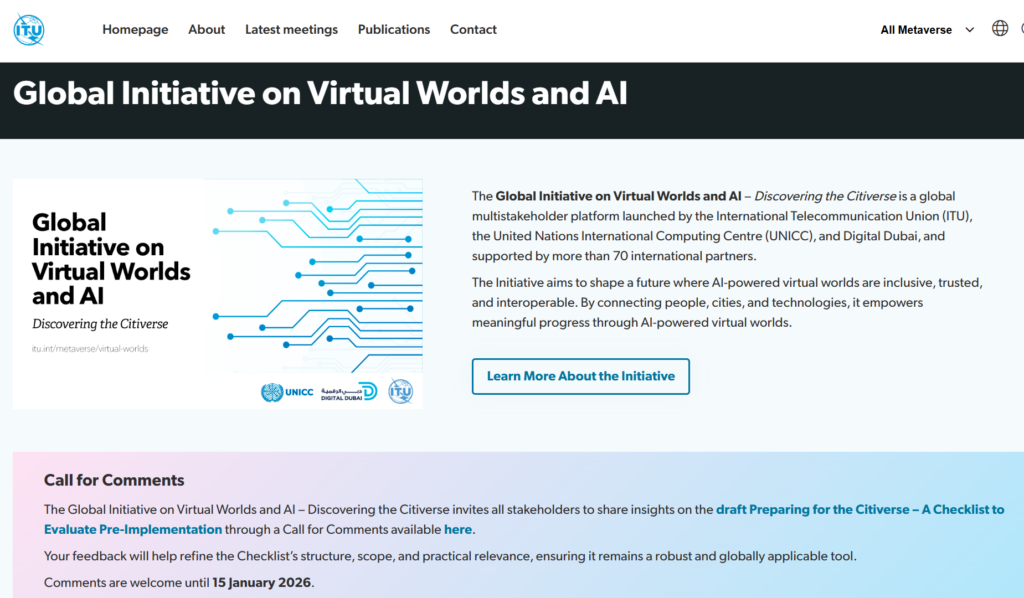
The Global Initiative on Virtual Worlds and AI – Discovering the Citiverse is a global multistakeholder platform launched by the International Telecommunication Union (ITU), the United Nations International Computing Centre (UNICC), and Digital Dubai in July 2024, and supported by more than 70 international partners.
The Initiative aims to shape a future where AI-powered virtual worlds are inclusive, trusted, and interoperable. By connecting people, cities, and technologies, it empowers meaningful progress through AI-powered virtual worlds.
“Preparing for the Citiverse(Virtual Worlds and AI for Cities)- a Checklist to Evaluate Pre-Implementation”
This development of this deliverable “Preparing for the Citiverse – A Checklist to Evaluate Pre-Implementation ” is led and coordinated by myself, Dr Christina Yan Zhang, CEO of The Metaverse Institute, as the leader for Track 5 – Evaluation and Assessment at The Global Initiative on Virtual Worlds and AI – Discovering the Citiverse.
A very special thank you to Nicholas You, Executive Director at Guangzhou Institute of Urban Innovation, a world-renowned leader of best practices for cities with decades of UN experience, and the Founder and Honorary Chairman of the Steering Committee of the UN-Habitat World Urban Campaign. Nicholas’s visionary insight in proposing the practical tool for mayors laid the foundational idea for this crucial deliverable.
A tremendous acknowledgment to Dino Cataldo Dell’Accio, Deputy Chief Executive United Nations Joint Staff Pension Fund, whose brilliant architectural expertise was fundamental in developing the core of this tool, and who graciously submitted it on behalf of Track 5 to the Secretariat, bringing Nicholas’s foundational concept to life through meticulous development.
We also want to express our profound gratitude and immense pride in each and every one of our 27 distinguished world leading authorities in Track 5 Evaluation and Assessment for their dedication, intellectual rigor, and collaborative spirit have made this Mission Impossible possible:
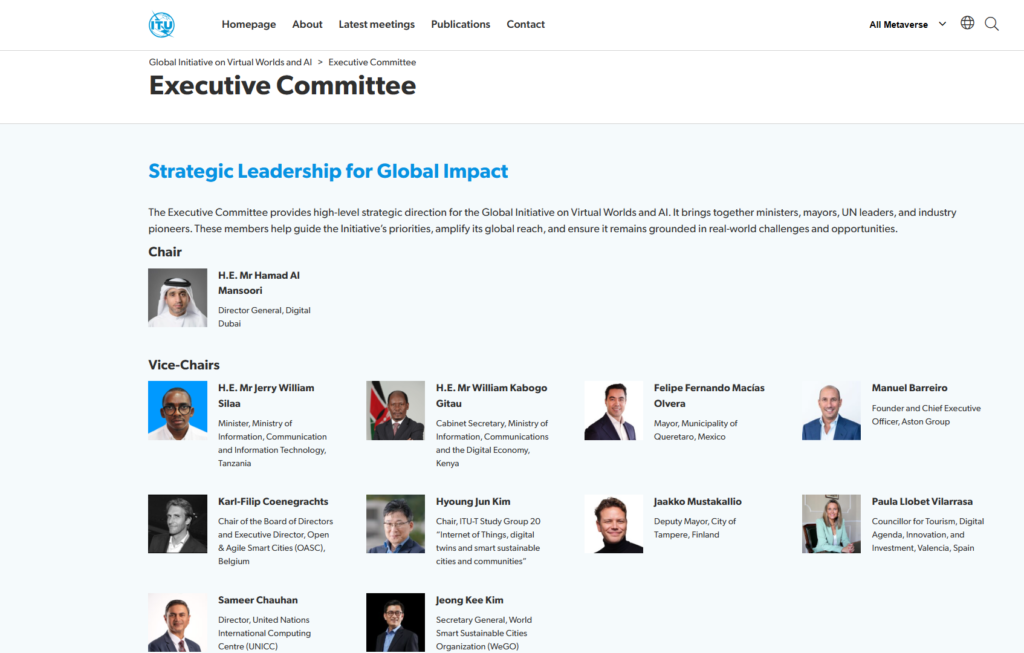
We also extend our sincere thanks to the Executive Committee of The Global Initiative on Virtual Worlds and AI – Discovering the Citiverse for their visionary leadership:
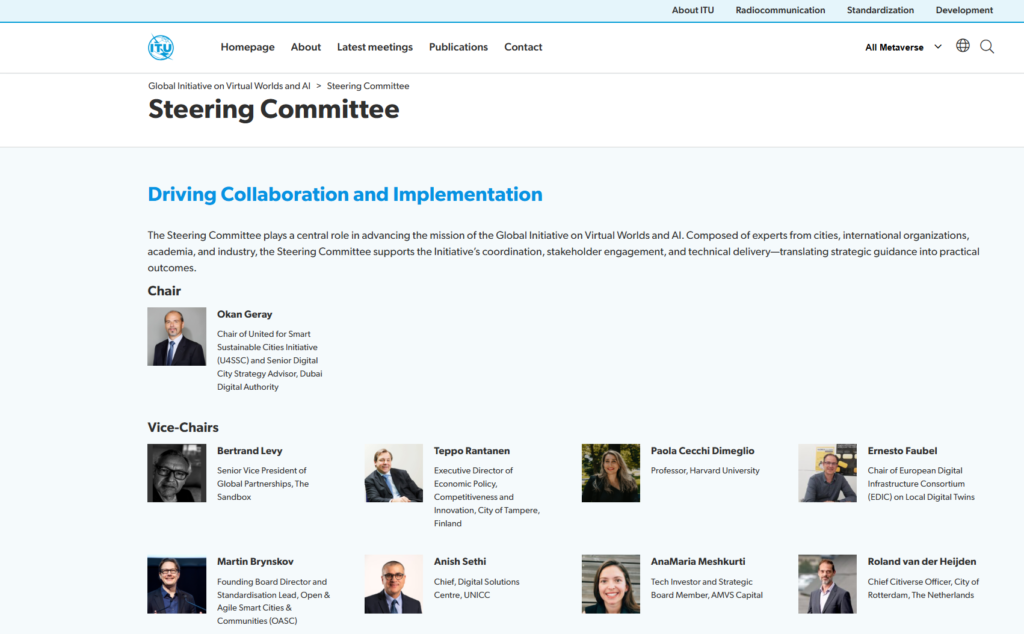
We are also grateful to Steering Committee of The Global Initiative on Virtual Worlds and AI – Discovering the Citiverse for their guidance and support:
Finally, we want to extend our deepest gratitude to the world-class Secretariat of the United Nations especially at the International Telecommunication Union(ITU) and UNICC Their expert stewardship and relentless commitment—far exceeding expectations—have been the catalytic force guiding us through this significant global landmark. We celebrate their continued support and the visionary excellence they bring to the Global Initiative on Virtual Worlds and AI.
Cristina Bueti Counsellor on Smart Sustainable Cities, Citiverse & Virtual worlds ITU
Chiara Co Study Group Administration Assistant ITU
Franca Vinci Head Learning Services Porfolio UNICC
Having had the honour to work with them over recent years, we are genuinely touched and consistently impressed by their profound dedication and the exceptional lengths they go to support experts like us. They are truly the unsung heroes who work incredibly hard behind the scenes, providing detailed guidance and unwavering support to every single one of us. It is through their consistent efforts and the amazing opportunity they provide that we have been able to collaborate and develop such an impactful tool for the wider Citiverse Initiative and for mayors globally.
Preparing for the Citiverse- A Checklist to Evaluate Pre-Implementation
This milestone—the culmination of the Citiverse Pre-Implementation Evaluation—stands as a powerful testament to global collaboration and the dedication of experts worldwide.
At its core, the Citiverse embodies a democratic vision for the future of urban life: digital ecosystems that are truly by the people, for the people, and of the people. These human-centric solutions, anchored in planet-friendly foundations, harness technology not as a tool for exclusion, but as a force for universal empowerment.
We are profoundly optimistic about the transformative potential of the Citiverse to assist cities in building inclusive, resilient digital futures. We eagerly anticipate the positive global impact that will follow its widespread adoption.
The Evaluation Framework at a Glance
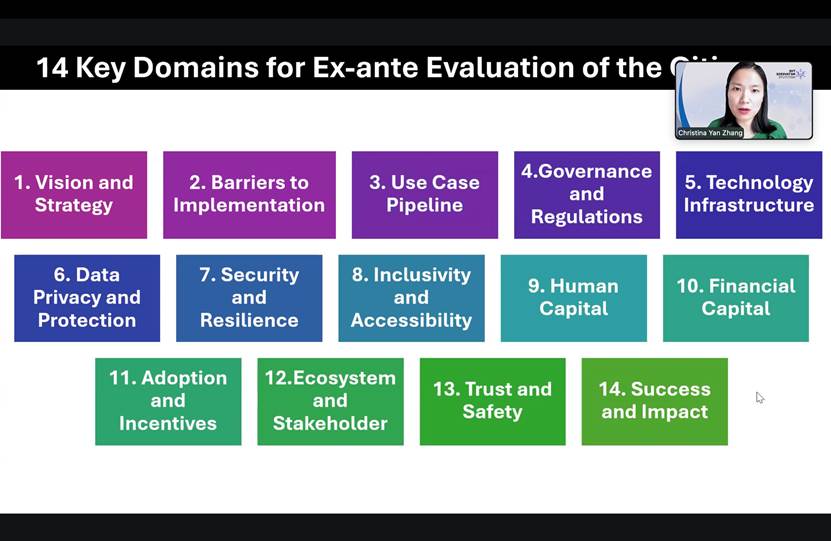
To ensure rigorous and measurable progress, the framework provides a comprehensive diagnostic toolkit consisting of 130 indicators across 14 strategic domains. Each indicator utilizes a five-level maturity assessment to help cities benchmark their current state and define clear targets for growth.
The 14 Dimensions of Readiness
Vision: Defining the long-term urban digital roadmap.
Governance: Establishing ethical and legal guardrails.
Infrastructure: Ensuring technical and interoperable readiness.
Data Protection: Safeguarding citizen privacy and sovereignty.
Security: Building resilience against digital threats.
Inclusivity: Guaranteeing accessibility for all.
Human Capital: Developing the skills for a digital workforce.
Finance: Securing sustainable investment models.
Adoption: Driving engagement through user-centric design.
Stakeholders: Fostering collaboration across sectors.
Trust: Ensuring transparency and accountability.
Impact: Measuring the social and ecological outcomes.
Each indicator features a detailed assessment prompt designed to guide data collection and validation. Users are required to provide documented evidence to justify their selections, establishing a verifiable baseline for the current score and a clear roadmap for the target score. This structured approach ensures that the transition from initial stages to continuous improvement is both transparent and measurable.
The framework employs a five-stage maturity model to evaluate indicator-specific progress. By mapping maturity scores to pre-implementation risk levels, it delivers a robust ex-ante analysis, highlighting critical gaps and ensuring a transparent roadmap for continuous urban improvement. The progression typically follows this logic:
Level 1 (Ad-hoc): High pre-implementation risk due to lack of formal processes.
Level 2 (Developing): Moderate-high risk; basic pilots exist but lack integration.
Level 3 (Defined): Moderate risk; strategy and infrastructure are standardized.
Level 4 (Managed): Low-moderate risk; data-driven and proactive management in place.
Level 5 (Optimizing): Lowest risk; continuous improvement and resilient systems.
Key Strategic Benefits
Risk Mitigation: Identifying low-maturity areas allows for targeted resource allocation early in the project lifecycle.
Stakeholder Alignment: Provides a common language for technical teams and city leaders to discuss “readiness.”
Comparative Baseline: Enables cities to benchmark themselves against global standards (like ITU-T or ISO) to track their Citiverse journey.
The Summary Dashboard consolidates all checklist results into a unified analytical view. Its primary functions include:
Visualizing Gaps: Highlighting the variance between current and target performance averages.
Prioritization: Identifying critical performance gaps to help city leaders focus resources on high-impact areas.
The Action Plan
To ensure the assessment leads to tangible progress, the Action Plan translates results into practical, transparent steps:
Strategic Focus: Includes high-priority items identified during the checklist phase.
Accountability: Tracks implementation progress regularly and updates status as actions are completed.
The Citiverse methodology is intentionally designed not as a one-time audit, but as a cyclical, iterative process. This “living” approach ensures that cities can adapt to the rapid evolution of 3D spatial intelligence and Large World Models (LWMs).
The Citiverse Continuous Improvement Cycle
Rather than a linear start-to-finish path, the framework functions as a feedback loop. Each cycle refines the city’s digital maturity and reduces pre-implementation risk.
Assess (Checklist Phase): Cities use the 130 indicators to establish their current maturity baseline.
Analyze (Dashboard Phase): The Summary Dashboard identifies variance between current and target scores, highlighting critical performance gaps.
Act (Implementation Phase): The Action Plan translates gaps into concrete projects with budgets, timelines, and owners.
Evolve (Review Phase): As Large World Models (LWMs) advance—such as new breakthroughs from NVIDIA or World Labs—cities re-enter the assessment phase to update their targets and integrate new technological “common sense.”
Why a Cyclical Process is Essential
Technological Velocity: In the shift from 2D to 3D AI, a static plan becomes obsolete in months. A cyclical approach allows cities to pivot as “Physical AI” matures.
Dynamic Risk Management: By regularly revisiting the ex-ante risk assessment, cities can catch emerging security or data protection threats before they manifest in the physical environment.
Planet-Friendly Adaptation: Real-world environmental data (flood risks, heat islands) changes over time. Continuous reassessment ensures the Citiverse remains an accurate “predictive sandbox” for climate resilience.
People-Centered Refinement: Feedback from citizens during the “Adoption” and “Stakeholder” phases is fed back into the next cycle’s “Vision” and “Use Case” domains, ensuring the technology continues to serve the public good.
Strategic Note: The UN framework is designed to move a city from Level 1 (Reactive) to Level 5 (Optimizing). Reaching Level 5 is not the end; it represents the point where the city has institutionalized this cyclical process for permanent, data-driven innovation.
Open for Public Consultation: Shaping the Future of the Citiverse
We are pleased to invite global stakeholders to share their insights on the first-ever pre-implementation tool for AI and Virtual Worlds in cities. Your feedback is essential to ensuring this framework remains a robust, inclusive, and globally applicable standard.
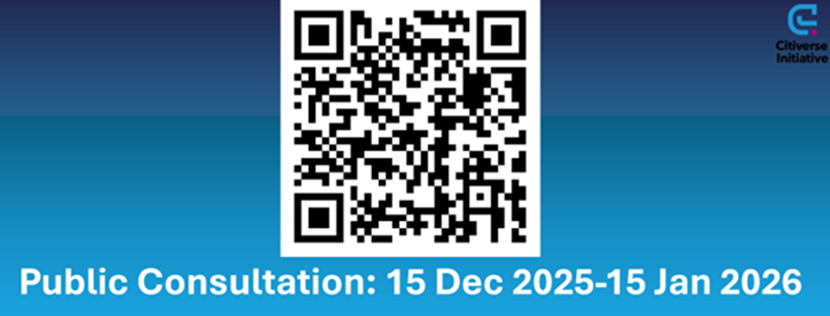
Consultation Period: 15 December 2025 – 15 January 2026
In July 2024, the UN approved our new Public-Private-People-Planet-Partnership (5P) framework, originally proposed in the inaugural technical report on the Citiverse.
Our goal is clear: utilize emerging technologies to support the UN SDGs through a model that prioritizes both humanity and the environment. We are seeking to work with global stakeholders—from institutional investors, technology solution providers, to governments—to implement the 5P principle worldwide.
Let’s build a future that works for all 8 billion of us. Reach out to discuss how we can partner.
❓My Question:
Large world model is the future of AI, how can we improve the UN citiverse framework to benefit 8bn people in the world?
Feel free to like, comment and share with your network. Thanks. 😊
The Metaverse Institute was invited to speak in a United Nations webinar, “Co-governing the Citiverse,” focusing on the integration of digital twin technology, artificial intelligence (AI), and urban governance. The virtual event, scheduled for 5 December 2025 from 14:30 to 15:30 CET, is organized by the International Telecommunication Union (ITU) and the Global Cities Hub (GCH).
About the Organizers
International Telecommunication Union (ITU)
A UN specialized agency for information and communication technologies (ICTs).
Founded in 1865, it is the oldest existing international organization and became a UN Specialized Agency in 1947.
Comprises 194 member states and over 1,000 sector members.
Global Cities Hub (GCH)
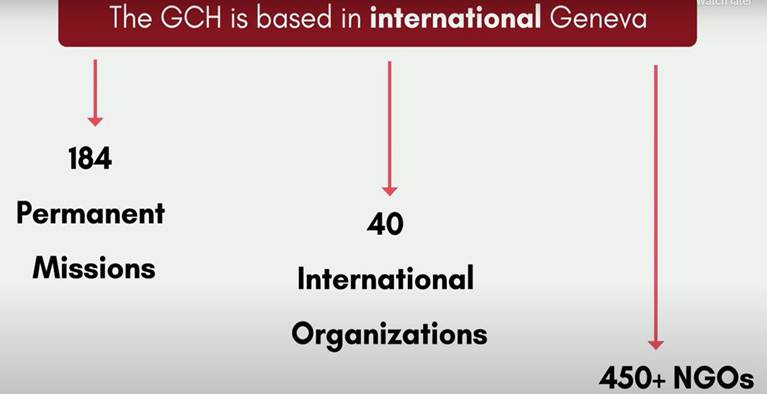
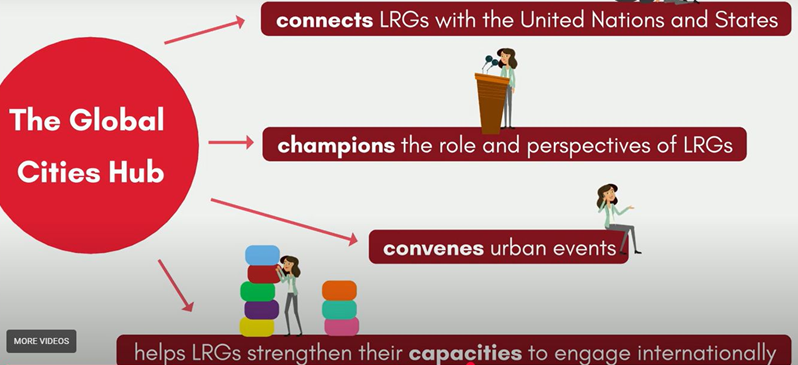
A Geneva-based NGO dedicated to connecting cities and local/regional governments (LRGs) to the UN and multilateral system.
Facilitates engagement between LRGs and 184 permanent country missions, 40 international organizations, and 450 NGOs.
The Citiverse Initiative
The webinar will spotlight the Citiverse, a global multistakeholder platform launched by ITU, the United Nations International Computing Centre (UNICC), and Digital Dubai, with support from 70 international partners. The initiative seeks to shape a future where AI-powered virtual worlds are inclusive, trusted, and interoperable, connecting people, cities, and technologies to drive meaningful progress.
Webinar Agenda
The session will provide a briefing on outcomes from “Citiverse Rising: Virtual Worlds and AI Agents for Urban Transformation,” held on 4 November 2025 during the Smart City Expo World Congress. It will outline how and why LRGs should engage in multistakeholder processes, featuring key topics:
Self-assessment: “Virtual Worlds and AI – Evaluation and Assessment” by Christina Yan Zhang.
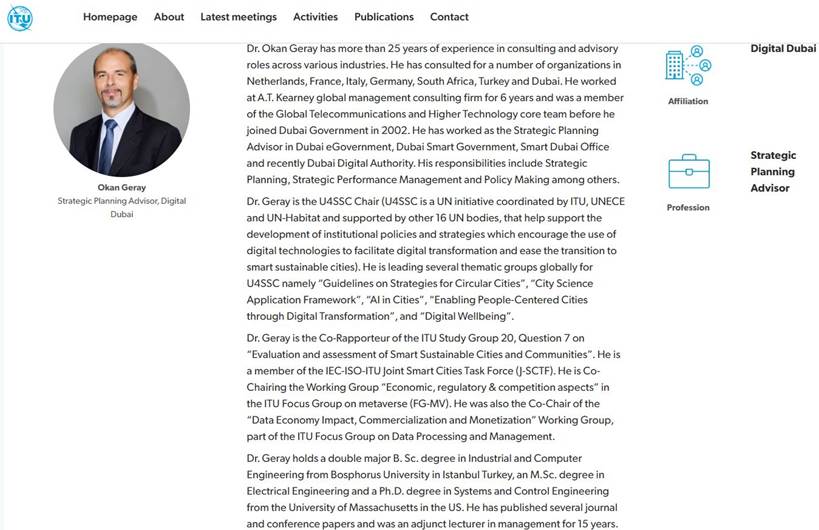
Multistakeholder Collaboration: “United for Smart Sustainable Cities (U4SSC)” by Okan Geray.
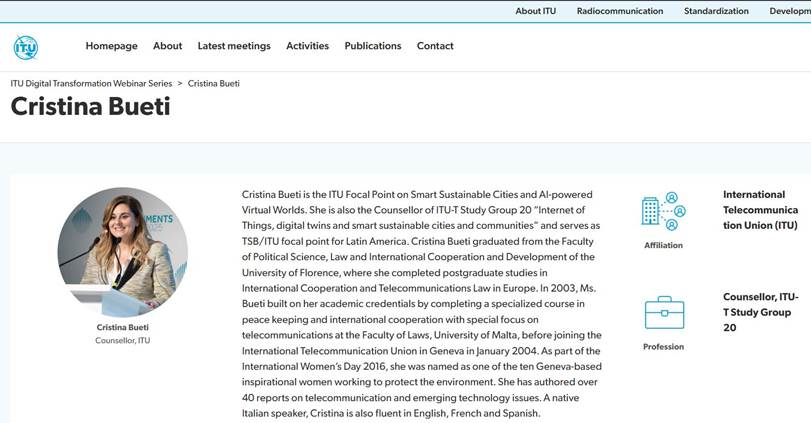
Global Regulation: “UN Virtual Worlds Day and the Citiverse Assembly” by Cristina Bueti.
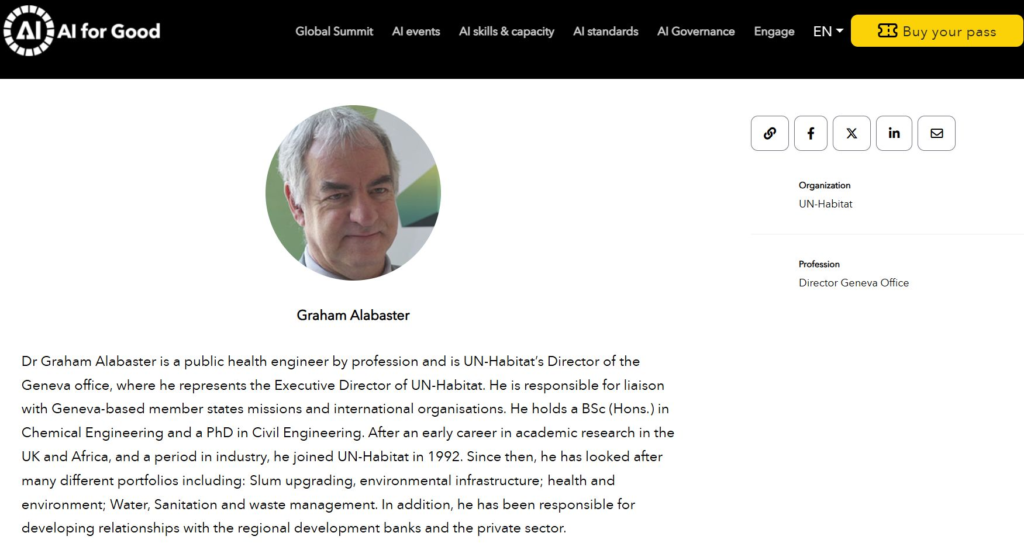
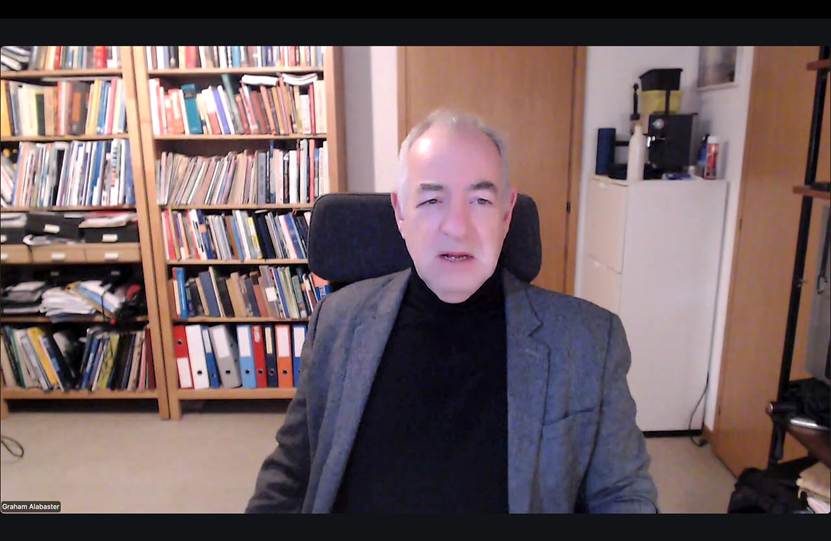
Graham Alabaster, Chief of Geneva Office, UN-Habitat
Cristina Bueti, ITU Focal Point on Smart Sustainable Cities and AI-powered Virtual Worlds
Okan Geray, Chairman of the Global Initiative on Virtual Worlds and AI Steering Committee, Chairman of United for Smart Sustainable Cities, and Senior Strategy Adviser, Digital Dubai
A Question for the Future: Prioritizing People and Planet
The dialogue takes place amid growing discourse on AI’s societal impact. On 20 November 2025, entrepreneur Elon Musk predicted that AI could make “jobs optional, money irrelevant” within 10–20 years. In response, urban planners, policymakers, and technologists are asking a critical question:
How can cities use AI-powered digital twins to explicitly prioritize human flourishing, civic identity, and sustainable co-existence, ensuring that technology serves people and the planet?
Digital twins—virtual replicas of physical environments—offer cities powerful tools for simulation, planning, and management. When guided by human-centered principles, they can:
Enhance Human Flourishing By modeling urban systems—from transportation to healthcare—digital twins can optimize for well-being, accessibility, and equity rather than mere efficiency.
Strengthen Civic Identity Through inclusive participatory design, digital twins can incorporate community voices, preserving cultural heritage and fostering a sense of belonging in rapidly evolving urban landscapes.
Promote Sustainable Co-existence Digital twins can simulate environmental impacts, support climate resilience, and model circular economies, aligning urban development with planetary boundaries.
Expert Perspectives
Cristina Bueti of ITU emphasized, “The Citiverse is not about technology for technology’s sake. It is about creating ethical, interoperable digital spaces that empower communities and protect our shared future.”
Okan Geray added, “Multistakeholder collaboration is essential. Cities, the private sector, and citizens must co-create these tools to ensure they address real human needs.”
The Metaverse Institute extends gratitude to Andras Szorenyi, Kamelia Kemileva, Anh Thu Duong, Simone Sessolo, and Cristina Bueti for their contributions to this event.
Key takeaways for governments, investors, corporates and innovators:
Speakers at the “Co-governing the Citiverse” webinar provided a virtual tour of multilateral processes and their main outcomes in the realm of smart cities, virtual worlds and AI, and the citiverse.
Following the opening remarks by Cristina Bueti of ITU and Graham Alabaster from UN-Habitat, the interventions explained the ongoing activities in three related workstreams – helping the audience discover how technological development, including the virtual worlds are transforming the way cities are designed, governed, and experienced. Cristina Bueti, Christina Yan Zhang and Okan Geray shared their vision on how public institutions may progress through their respective digital journeys.
Look at the recording if you have missed the live session.
ITU guides, frameworks and insights support cities to benefit from the capabilities of a smart city. U4SSC, a UN initiative led by ITU which encourages the use of digital technologies, facilitate digital transformation and ease the transition to smart sustainable cities. U4SSC thematic groups cover among others such important topics, as:
Use of Artificial Intelligence in Cities
Digital Public Infrastructure for Cities
Enabling People-Centred Cities through Digital Transformation
Future Foresight for Cities
Social-cultural Sustainability in People-centred City Governance
The deployment of digital technology, and especially the creation of virtual worlds using AI leads us into a new era of urban development where systems become more autonomous. We can benefit from the increased capacity of these systems to build more inclusive and resilient cities and communities if we think together and translate it to public value.
All speakers of the Geneva Urban Debate agreed that technology is a tool to address humanity’s challenges. It is our responsibility to define the clear purpose of using it to advance human-centred development. Mayors and city officials need to make sure that the developments meet the local agenda and are relevant to people’s needs on the ground. Ideally, they are also aligned with global frameworks, such as the SDGs and with national development plans to maximize synergy.
As explained, the evolution of spatial computing enables us to create virtual worlds, such as the citiverse, where human-centric municipal services are easily accessible and easy to use. If developed properly they can contribute to reducing the cognitive gap as well.
However, citiverse is not an aim in itself. It is a totally new way of how we can address local issues. The community should decide on the key priorities and local leaders should take action to realize them. The different tools developed by international organizations, especially ITU and UN Habitat help assess where the city is and how to get where it wants to be.
Mayors are expected to offer a vision, a strategy, an implementation framework and take concrete steps. Embracing the new technology contribute to delivering results. Peer-to-peer dialogue can help overcome fear from the unknown. Initiatives by international organizations, such as the “Global Initiative on Virtual Worlds and AI – Discovering the Citiverse” help expedite the digital journey by avoiding the repetition of missteps and unnecessary reinventing of processes. Its evaluation and assessment track offers a pre-implementation checklist. A public consultation starts on 15 December 2025 till 15 January 2026 by the UN.
Following the United Nations webinar “Co-governing the Citiverse,” The Metaverse Institute extends its sincere gratitude to the key contributors who made the dialogue possible, acknowledging their dedication to shaping an inclusive digital future.
Special Thanks
The Institute extends particular appreciation to:
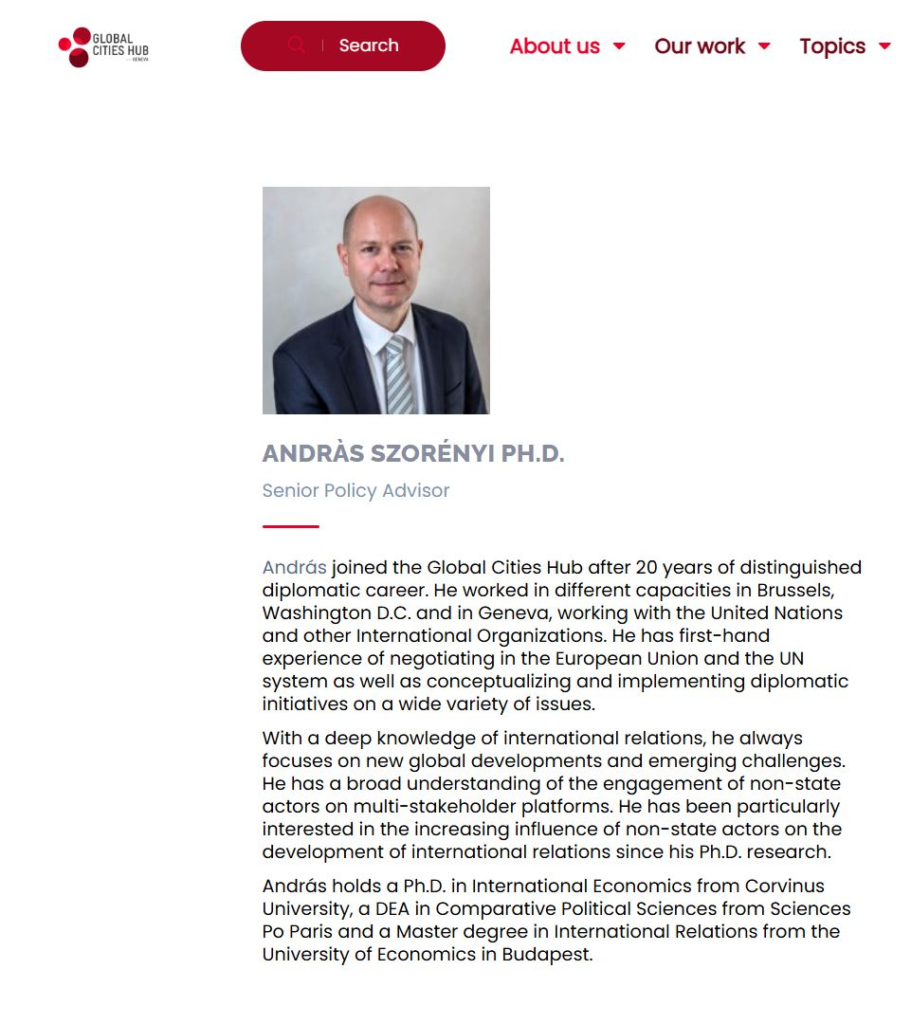
Andras Szorenyi, Ph.D., Senior Policy Advisor, Global Cities Hub
Kamelia Kemileva, Co-Director, Global Cities Hub
Anh Thu Duong, Co-Director, Global Cities Hub
Simone Sessolo, Event and Digital Content Coordinator
Cristina Bueti, Counsellor, International Telecommunication Union
Their collective efforts facilitated a crucial multilateral conversation on governing AI and virtual worlds in service of sustainable urban development.
An Open Question for Urban Futures
The webinar’s discussions arrive amid profound global reflections on artificial intelligence’s societal role. On 20 November 2025, technologist Elon Musk predicted that AI could render “jobs optional, money irrelevant” within 10–20 years.
This provocation raises a foundational question for city leaders, planners, and citizens worldwide:
“How can cities use AI-powered digital twins to explicitly prioritize human flourishing, civic identity, and sustainable co-existence, thereby ensuring technology serves people and the planet?”
Pathways Forward
Insights from the webinar suggest several guiding principles:
Purpose-Driven Design Digital twins must be developed with clear social and ecological outcomes—such as enhancing well-being, preserving cultural heritage, or modeling climate resilience—not merely operational efficiency.
Civic Governance & Co-Creation To counter corporate-dominated virtual spaces, cities should establish participatory governance models, enabling communities to shape digital twin deployments that reflect local values and needs.
Assessment Before Action Tools like the Institutional Readiness Self-Assessment Tool (IRSAT) can help cities evaluate their capacity to deploy technology ethically and inclusively, ensuring they “go slow to go right.”
Alignment with Global Frameworks Linking digital twin strategies to the UN Sustainable Development Goals and local sustainability plans can ensure technology advances broad public value, not isolated commercial interests.
Your Perspective Matters
As spatial computing, AI agents, and virtual worlds become urban reality, the question of “why” matters more than “how.” The Citiverse is not an end in itself, but a means to address enduring human needs: belonging, agency, equity, and ecological stewardship.
We invite policymakers, technologists, urbanists, and engaged citizens to share their views: How should cities steward these powerful tools to foster societies where technology amplifies our humanity rather than diminishes it?
Responses and continued dialogue can be directed to the event organizers and participating institutions.
*This article was prepared following the UN webinar “Co-governing the Citiverse,” held on 5 December 2025 and organized by ITU and the Global Cities Hub. The views expressed are intended to stimulate further public discussion.*
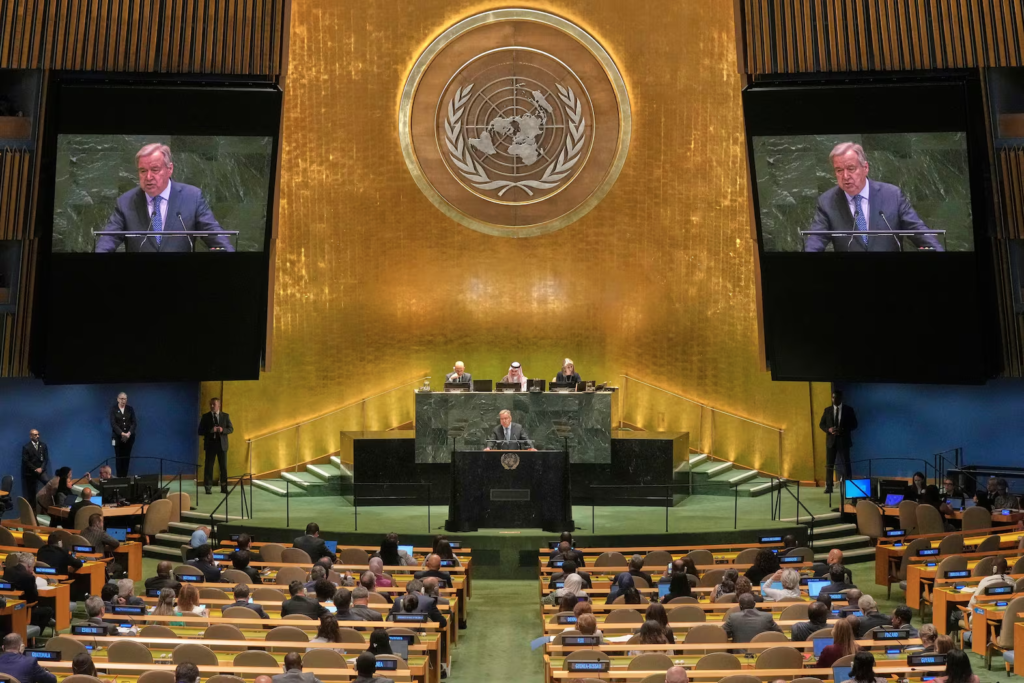
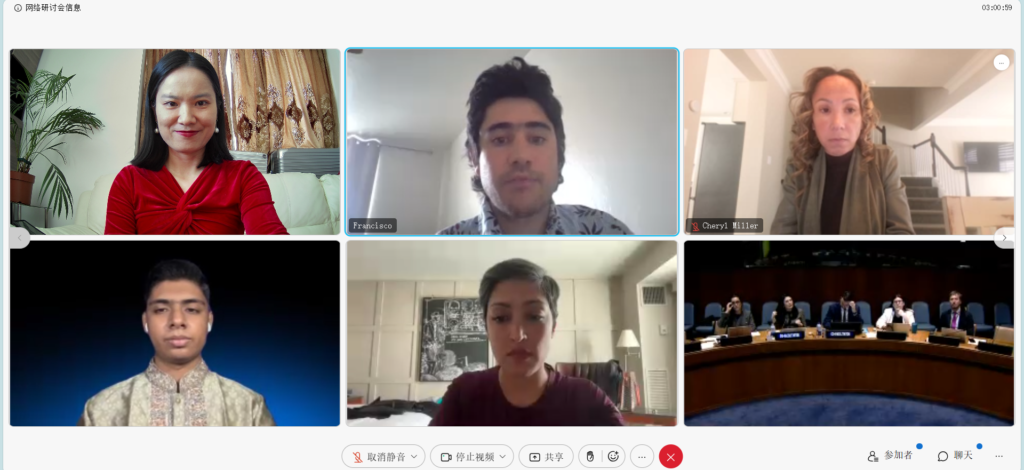
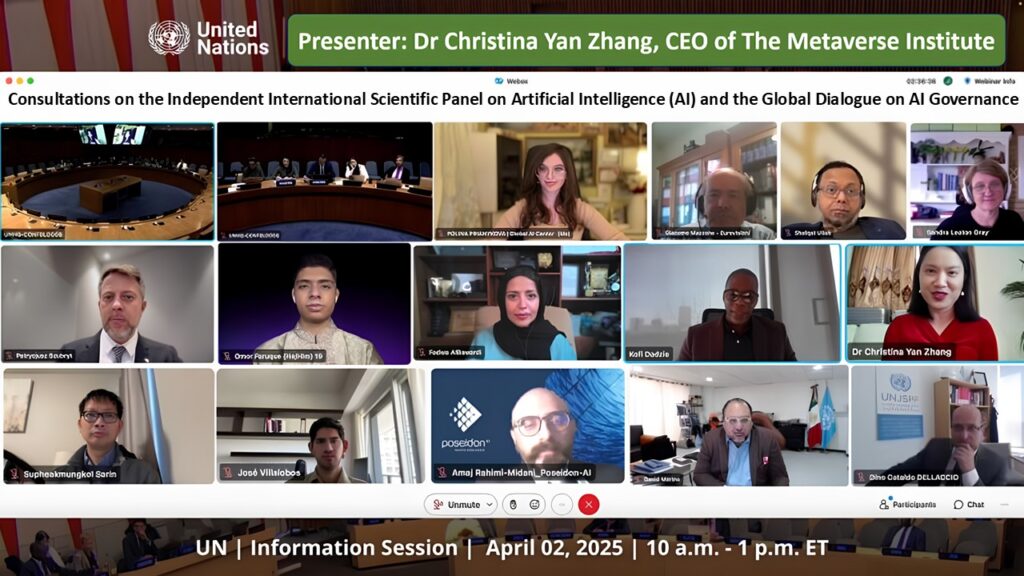
On April 2nd, 2025, amidst a complex global backdrop marked by new US tariff announcements potentially signaling heightened trade tensions, the United Nations hosted a crucial Information Session with Stakeholders on AI Governance. The Metaverse Institute was honoured to contribute to this vital dialogue, represented by CEO Dr. Christina Yan Zhang. The session underscored the urgent need for international cooperation on Artificial Intelligence, even as geopolitical friction persists.
The timing was stark: as discussions unfolded on harnessing AI for global good, headlines reflected a world grappling with economic nationalism. This juxtaposition highlights the central challenge of our time – how can we build unprecedented global collaboration required to manage AI’s profound potential and perils?
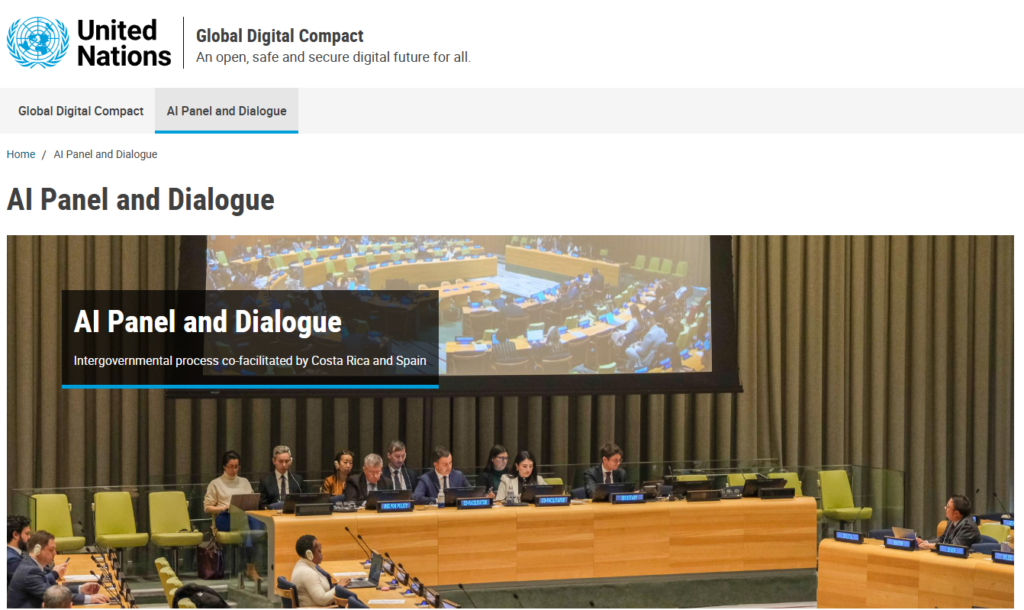
The UN, through initiatives like the Global Digital Compact, is laying the groundwork. Member States have agreed to establish an Independent International Scientific Panel on AI and foster a Global Dialogue on AI Governance, with Costa Rica and Spain commendably co-facilitating this process. These steps are crucial, but the path forward requires navigating significant hurdles.
In her address, Dr. Zhang echoed warnings from leading AI figures like Geoffrey Hinton, emphasizing the critical need for collective action to ensure the race towards Artificial General Intelligence (AGI) – AI smarter than humans – does not inadvertently lead humanity towards existential risks. Key concerns raised included:
Existential Threats & Global Safety: Prioritizing international collaboration to steer AGI development away from potential catastrophic outcomes.
Sustainability Imperative: While AI offers tools to combat climate change, its own environmental footprint – water and energy consumption, e-waste generation, carbon emissions – demands rigorous evaluation and mitigation strategies.
Societal Transformation: Proactively exploring effective governance models to address the sweeping societal impacts of AGI, including job displacement, the future of warfare, the feasibility of universal basic income, and the exacerbation of the digital divide.
The session brought together influential voices from across the AI ecosystem – policymakers, technical experts, civil society leaders, and international organizations – fostering essential dialogue. We extend sincere gratitude for the leadership shown by Costa Rica’s Ambassador to the UN, H.E. Maritza Chan, Spain’s Ambassador to the UN, H.E. Héctor Gómez, the UN Office for Digital and Emerging Technologies, particularly Lucia Velasco (Head AI Policy) and Rebekah Hayoung Woo (Policy Officer), for their significant support in advancing these critical conversations. Engaging with fellow leaders dedicated to responsible AI deployment was both insightful and encouraging.
This brings us to the pivotal question facing the international community:
How can we, as a global collective, forge the unprecedented international cooperation needed to maximize AI’s transformative power for innovation, efficiency, and solving global challenges, while simultaneously mitigating its inherent and significant risks – including sustainability challenges, a widening digital divide, and potential existential threats – especially within a climate of increasing geopolitical tension and potential trade conflicts?
Achieving this delicate balance requires more than technical solutions; it demands political will, shared ethical frameworks, and a commitment to global solidarity that transcends national interests. The path forward is complex, but the stakes – shaping a future where AI serves humanity safely and equitably – could not be higher.
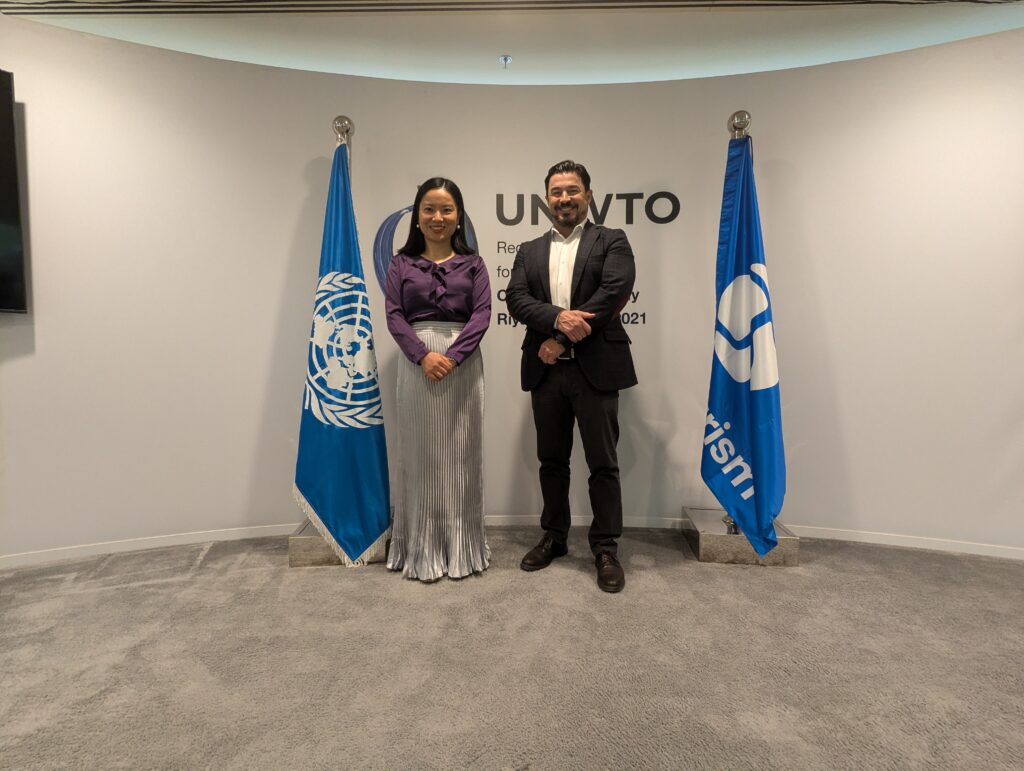
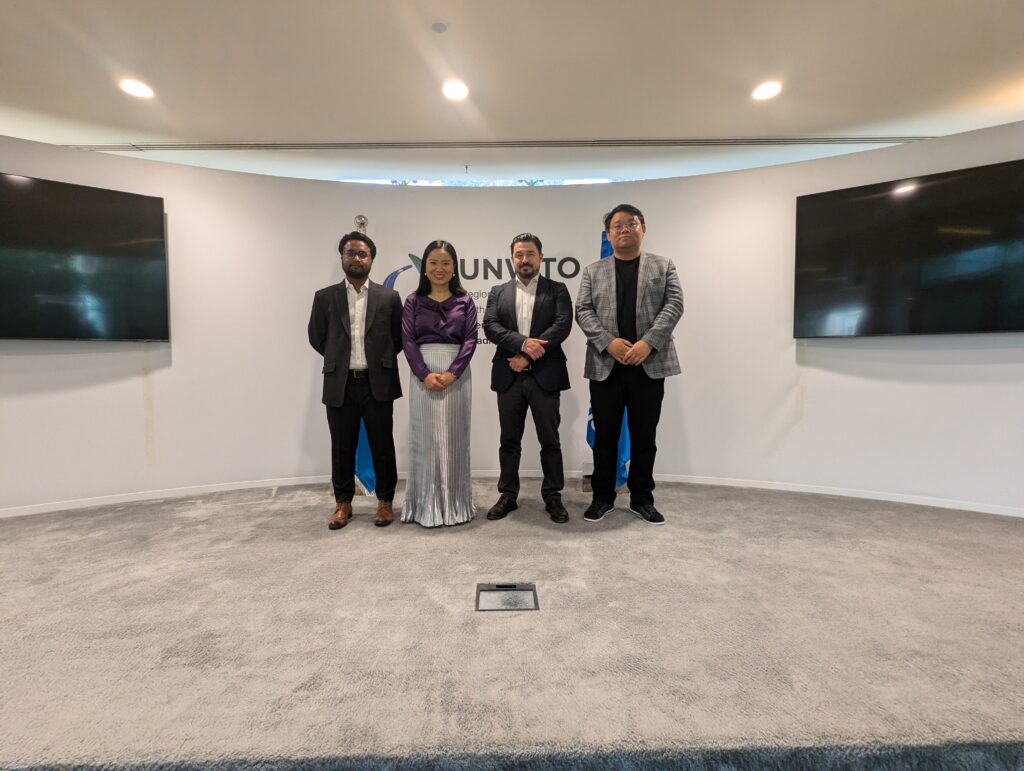
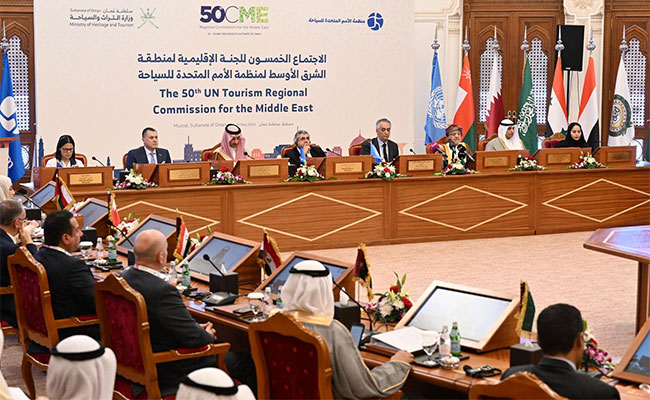
The Metaverse Institute is honoured to join a meeting in Riyadh, capital of Saudi Arabia with representatives from UN Tourism Regional Office in the Middle East. Dr Christina Yan Zhang, CEO of The Metaverse Institute was invited to meet representatives from UN Tourism Regional Office in The Middle East to discuss collaborations opportunities.
Luis Nicolas Barrios Medina-Montoya Regional Manager UN Tourism met with Dr Christina Yan Zhang of The Metaverse Institute together with other UN Tourism Colleagues such as MD Khorshed Alam Senior Specialist – Innovation, Education & Investments, Peter Janetch, Coordinator, Deputy Director, as well as Megha Paul, Senior Communications Specialist.
About UN Tourism ▶is a specialised agency of the UN which promotes responsible, sustainable and universally-accessible tourism. ▶has 160 Member States ▶headquartered in Madrid, Spain ▶its middle east headquarter is in Riyadh, Capital of Saudi Arabia
About The Global Tourism Industry ▶contributes 9.1% Global GDPs in 2023 ▶In the first seven months of 2024, 790 million tourists traveled internationally, 11% more than in 2023, though 4% less than in 2019. ▶Export revenues from international tourism reached $ 1.8 trillion in 2023, almost matching pre-pandemic levels ▶Tourism’s direct contribution to GDP recovered to pre-pandemic levels in 2023, reaching an $ 3.4 trillion ▶The Middle East remained the strongest-growing region, with international arrivals climbing 26% above 2019 levels.
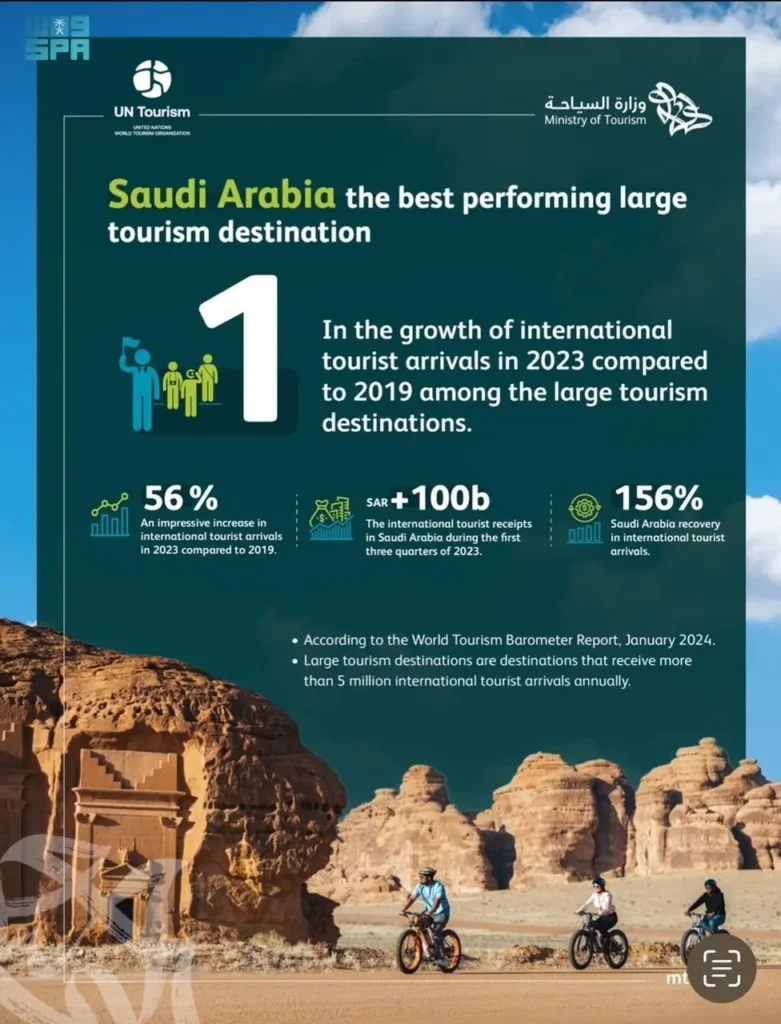
About Saudi Arabia Tourism ▶ranked 12th by UN Tourism Barometre, 15 more places than before ▶welcomed 17.5 million international tourists in the first seven months of 2024, 73% increase compared to the same period in 2019. ▶International tourism revenue in Saudi Arabia surged by 207%. ▶achieved target of attracting 100 million tourists in 2023, seven years ahead of schedule.
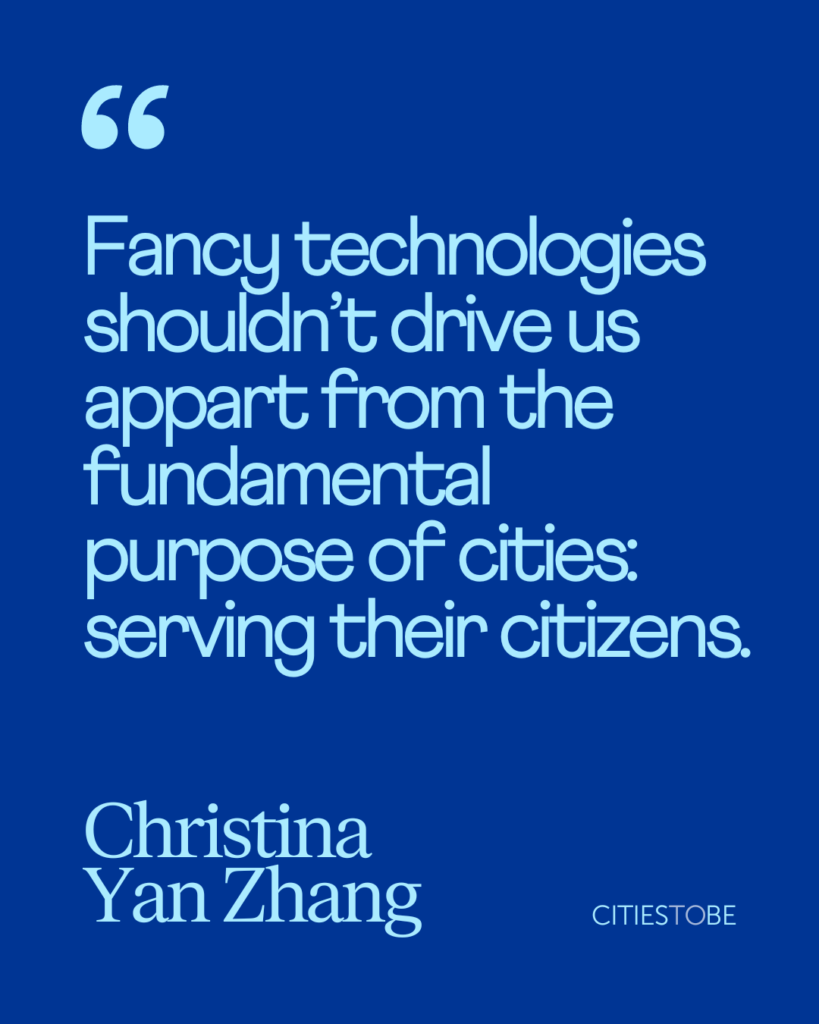
Applying the latest and more fancy technologies to cities sounds tempting. But sometimes, they can drive us apart from the fundamental purpose of cities: serving their citizens and giving them an enjoyable environment in which they can explore all their potential.
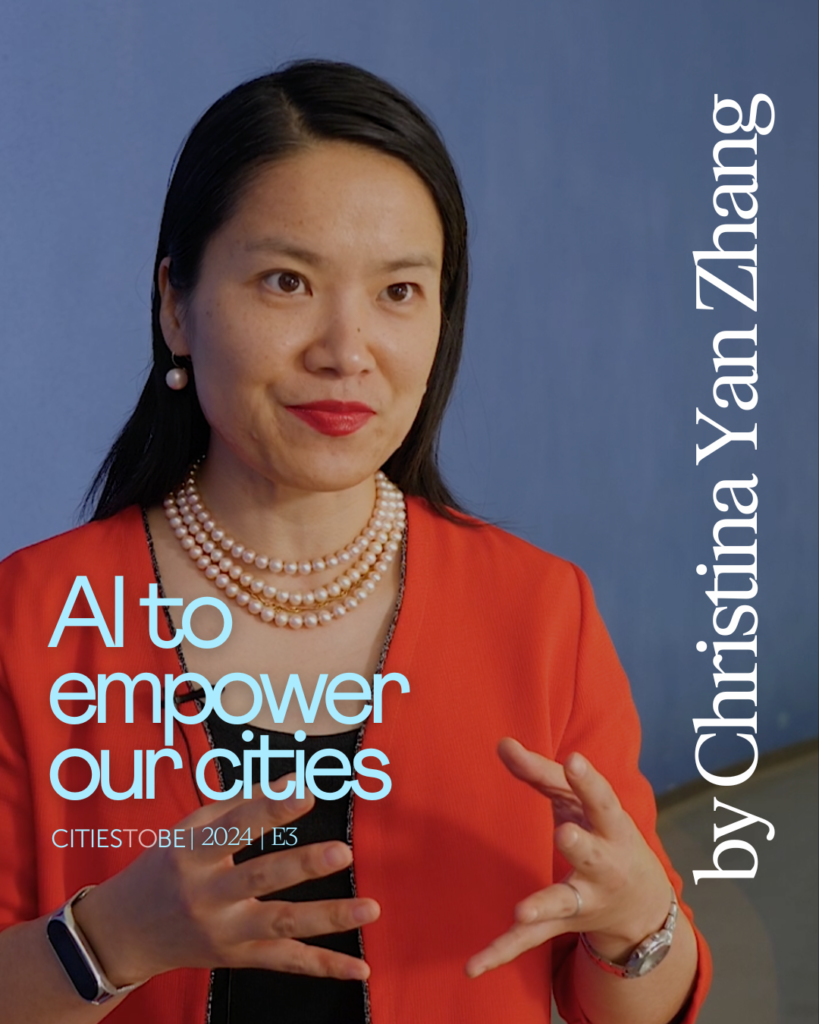
What risks arise from AI growing application in urban realities? How can we make AI a trusted asset for the future? In a new episode of our series of conversations on the trends defining today’s urban world, we discuss AI to empower our cities with Dr. Christina Yan Zhang, CEO of The Metaverse Institute& Co-chairperson of the International Telecommunication Union’s Task Group on Pre-standardization for the CitiVerse.
#ExpertVoices | 2024 x E03
AI to empower our cities — by Christina Yan Zhang —
What role should emerging tech play in urban development?
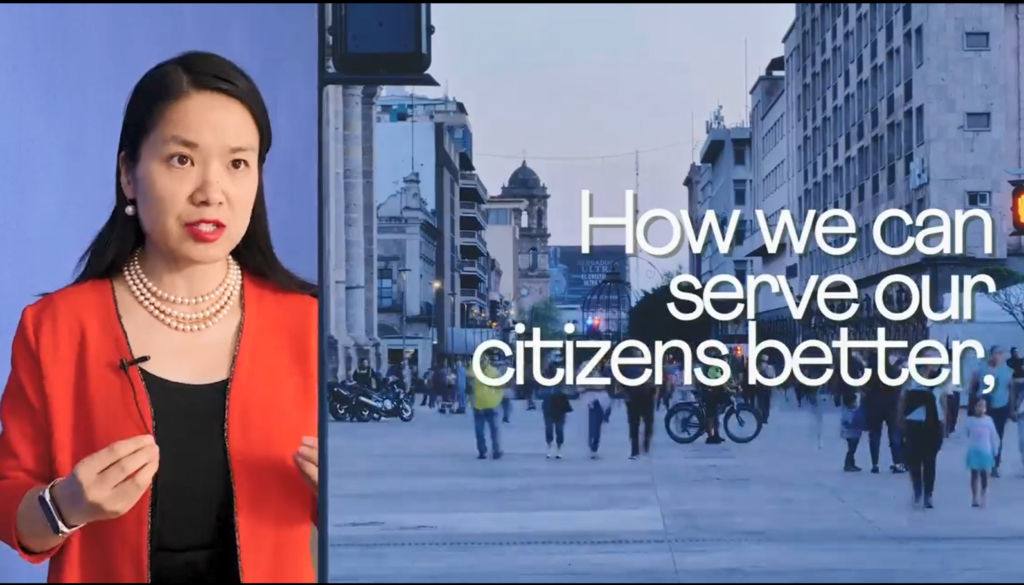
As we increasingly realize, building the future Smart City shouldn’t be about the fancy technology we have at any given moment. Instead, we should focus on the very fundamentals of cities: how we can better serve our citizens, meet their fundamental needs, and make cities happier, more enjoyable, and inclusive. By harnessing the power of emerging technologies—whether it’s artificial intelligence, digital twins, or the metaverse (which was very popular last year)—we can achieve these goals. Now, there seems to be more emphasis on digital twins and content technologies.
How we can optimize Digital Twins for futureproof our cities?
For any kind of digital twin, visualization, or building information modeling (BIM)—the name doesn’t matter because digital twins have been around since the 1960s—what really needs to be addressed is functionality. How can we allow people to identify the most effective use cases for digital twins, not just by governments? If we want to simulate the whole city of Barcelona to improve future urban planning from a citizen-centered perspective, we need to see how each of us can use that tool. For example, if we consume more responsibly, ensure we never waste food, and recycle more, we can examine the long-term climate impact on Barcelona. Could these actions delay global warming in the city by 0.5 degrees Celsius over the next five years? If we can all contribute, I think that can be very powerful.
What risks arise from AI growing application in urban realities?
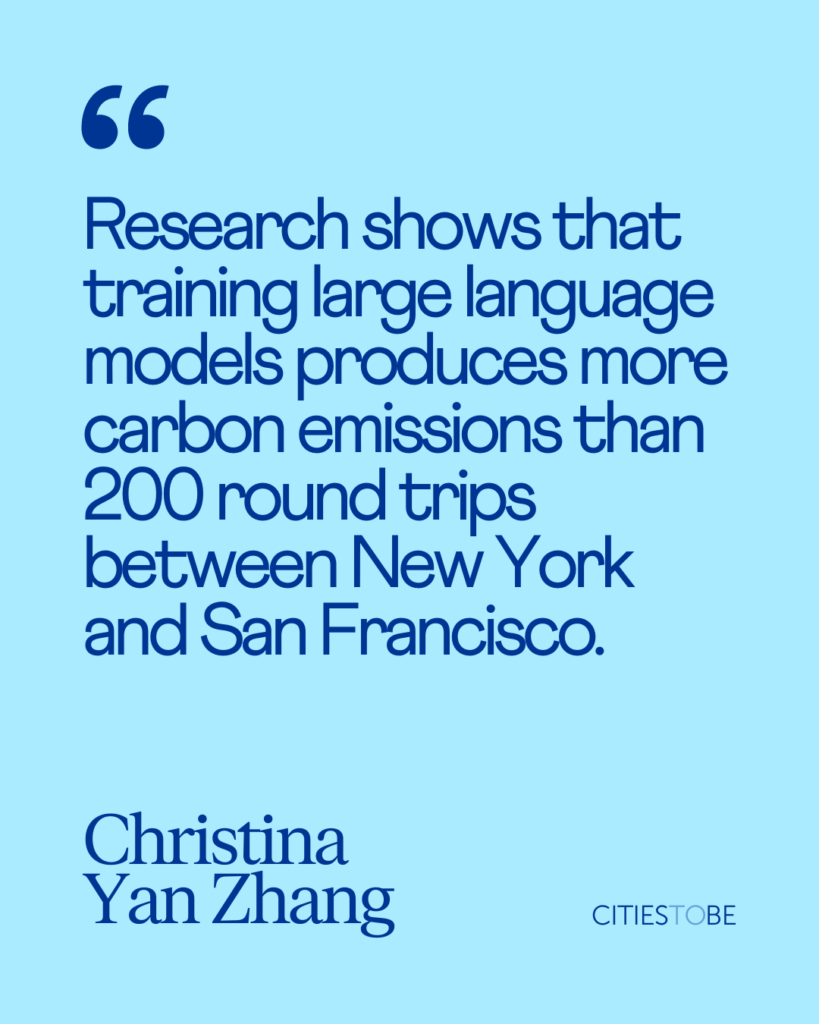
The energy consumption of training AI is actually quite significant. Research conducted by the University of Massachusetts found that training large language models produces five times the carbon emissions of an American car and more than 200 round trips between New York and San Francisco. This kind of conversation is not really taking place. Everyone is talking about concerns over AI automating jobs and ensuring AI doesn’t become smarter than humans. These conversations are important, but considering the increasing global temperatures, we should also focus on addressing the issue of AI and sustainability. AI can help mitigate climate change, but it also consumes a lot of computing power, with data centers emitting large amounts of heat. So, how can we find a balance? Like with any technology, we need to balance maximizing its potential for all human beings and minimizing risks to ensure a sustainable, inclusive, and participatory city for everyone.
How can we make AI a trusted asset for the future?
«I envision cities that offer excellent training and educational opportunities for our younger generation, ensuring they are prepared for a future where automation won’t lead to mass unemployment. Instead, we should teach them to coexist with robots and utilize AI to pursue noble purposes, rather than struggle with daily challenges that hinder their ability to appreciate life’s beauty. Aligned with Maslow’s hierarchy of needs, this vision empowers individuals to contribute more meaningfully to society. That is my dream.
Interview and edition by Sergio García i Rodríguez, Head of Communication at Anteverti & CitiesToBe Executive Editor, Martina Jané i Curtu, Comms specialist at Anteverti, and Marta Bugés.
Video by Eloy Calvo and Cristóbal Sarría Chitty
CitiesToBe is a knowledge platform for city lovers, experts and urbanites to discuss the present and the future of cities.
A common space to think about today’s urban challenges, and share innovative ideas and experiences that help make cities better for people.
CitiesToBe is a platform powered by Anteverti, curator of Smart City Expo World Congress where 25,000 leaders from 140+ countries, 850 cities are getting together in Barcelona every year to discuss everything and anything about urban futures.)
Information and communications technology is key to ending global poverty – but only with universal access to digital skills and platforms, warns leading economist Jeffrey Sachs.
“Advanced digital technologies will play a breakthrough role in raising productivity in every sector of the economy, and hence can be key in accelerating the end of poverty,” claims Prof. Sachs in an interview published in the latest edition of Transform, Huawei’s thought leadership magazine.
Noted economist Prof. Jeffrey Sachs and Dr. Christina Yan Zhang on the cover of Transform #14
“Of course,” Sachs cautions, “If the digital divide widens, ICT can also exacerbate inequalities…¬The key is to ensure universal access to the skills and digital platforms needed across the society.”
In just six years, the United Nations aims to eradicate extreme poverty worldwide and reduce by half the proportion of people living in poverty. Yet more than 700 million people remain stuck at incomes of less than the International Poverty Line of US$2.15 a day, a threshold set by the World Bank.
Information and communications technology (ICT) is recognized as a key factor in helping individuals escape poverty or mitigate its most damaging effects. ICT also helps countries raise living standards by fueling economic growth.
For those and other reasons, the new edition of Transform presents a decidedly optimistic perspective hidden amidst the cautionary tales.
Otaviano Canuto, a former World Bank vice-president and deputy finance minister in Brazil, says that, ideally, ICT will deliver knowledge and enhance people’s capabilities.
“A major function of the World Bank is to play a hummingbird role,” Canuto says. “Hummingbirds pollinate flowers, and these multilateral institutions can also pollinate with knowledge.”
This pollination is especially crucial for people living in cities, where 80% of the world’s population will live by 2050. Christina Yan Zhang, CEO of the Metaverse Institute, says technology will be vital in delivering services to citizens through what she calls the “CitiVerse.”
“That term is a combination of ‘citizen’ and ‘Metaverse,’ she says. “We’re looking at how we can develop future cities where we put the needs of the citizens at the center. In the past, smart city developments haven’t always achieved the best outcomes…Sometimes there is a focus on technology for its own sake, rather than on how technology can be used to improve the lives of people.”
The latest interviews in the magazine and other thought leadership content can be found on the Transform web site.
Note:
Published every two months, Transform is an online and print magazine that runs video interviews, newsmaker profiles, and feature articles that examine the relationship between technology, business, and society. A PDF of the magazine can be downloaded from the web site, and a hard-copy edition is available in some geographic locations and upon request.
Each edition is about one topic. Recent examples include cyber security, healthcare, and finance.
Seven hundred million people globally live in extreme poverty, subsisting on less than US$2.15 a day. More than half live in sub-Saharan Africa and children are twice as likely as adults to be victims.
By 2030, according to the UN’s Sustainable Development Goal 1, we’ll have stamped out extreme poverty. In reality, says The World Bank, progress has stalled badly and about 600 million will still be caught in the extreme poverty trap.
Little wonder that guests for this edition of Transform, which looks at the impact of digital technology in tackling global poverty and inequity, are united in their skepticism of SDG1’s chances of meeting its own deadline.
But ICT at least offers hope, they say… if it’s delivered universally.
“Advanced digital technologies will play a breakthrough role in raising productivity in every sector of the economy, and hence can be key in accelerating the end of poverty,” claims the celebrated economist Professor Jeffrey Sachs.
But he adds a note of caution: “If the digital divide widens, ICT can also exacerbate inequalities and leave the weaker, poorer, less educated parts of society even further behind.”
That double-edged sword is also highlighted by Otaviano Canuto, a former vice-president of The World Bank and deputy finance minister in Brazil. ICT, he says, has the potential to increase productivity, but – without the right regulatory framework – the potential to misinform and exclude, too.
Acting in harmony will be key: “A major function of the World Bank is to play a hummingbird role. Hummingbirds pollinate flowers, and these multilateral institutions can also pollinate with knowledge,” he says.
For the CEO of the Metaverse Institute, Christina Yan Zhang, the stumbling block is as much about adoption as universality: if people lack the skills to understand the tech, then they can’t reap its benefits.
“Everything needs to be more personalized, regionalized, to cater to the needs of different countries and different industries,” she says. “Rather than trying to build everything from scratch, it all needs to be incorporated properly.”
Also in this edition:
Huawei’s rotating chairman highlights the role of private companies, global cooperation and pooled experience in “making the whole greater than the sum of its parts” and accelerating progress.
UNESCO’s chair in science and education for African food systems reveals why poor people experience more shocks and are less able to protect themselves from them.
An Indian telecoms entrepreneur points to the limitations of government intervention and the role that individuals must play in helping themselves.
A professor and data economist flags the pivotal importance of “informational capabilities” in making people, not tech, the primary focus of policies.
And the founder of the Digital Poverty Alliance explains why connecting the 3 billion unconnected makes economic as well as moral sense: “The more you can enable customers to engage with you, the better your business will be.”
Hummingbirds, swords, shocks and skills: the challenges in solving global poverty are plenty. But the prize is a great one – not just for the sake of the poorest in the world, but in the long-term interests of all of us.
When it comes to the world’s biggest digital twin, the only thing we have to fear is fear itself. Dr. Christina Yan Zhang, CEO of the Metaverse Institute, explains.
Q: What is the Metaverse?
A: The metaverse has increasingly become a convergence of a whole range of technologies, coming together to form the next generation of the internet: more immersive, interactive and intuitive. The most important use case of the metaverse is for simulating and optimizing real-world construction and development projects that are too expensive to fail, so must be got right the first time. The US$500billion mega-smart city in Saudi Arabia, known as Neom, is a good example. Metaverse technologies can be used in a similar way for dangerous operations, such as complicated or experimental surgery. In the future, large-scale digital twin simulations could also be used to model the behavior of large numbers of people in virtual environments – to understand, for instance, how they would evacuate a stadium in the event of a fire, or what would happen if there was an earthquake in a city.
Q: How do you make sure that technological advances and the metaverse benefit everyone?
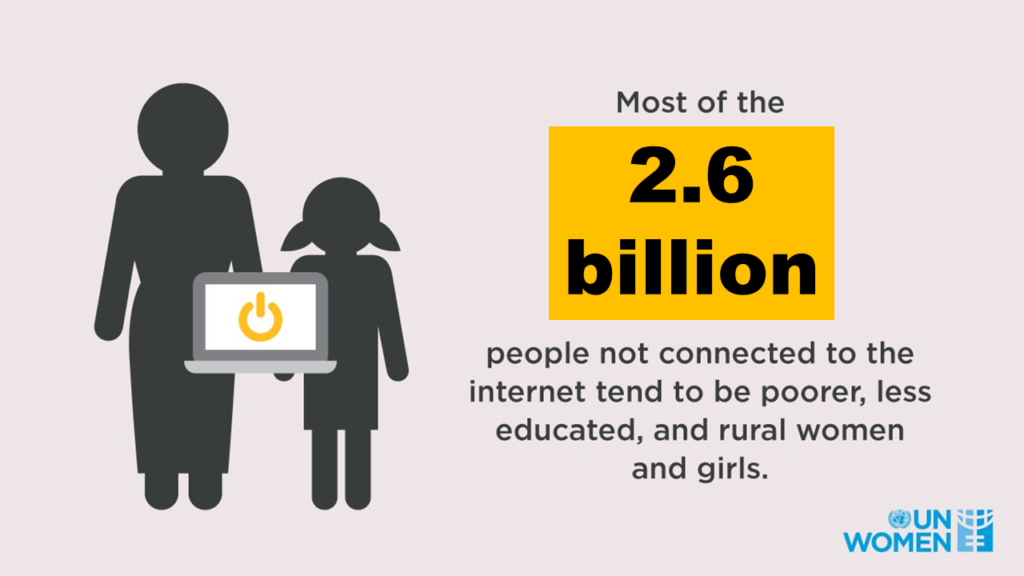
A: That’s a major issue. I’m vice-chair of an International Telecommunication Union (UN ITU) working group that produced the first UN survey looking at how to develop guidance on “how to build a metaverse for all” and address the global digital divide. There are currently about 2.6 billion people – a third of the global population – who don’t have access to the internet. Today, 1.2bn people, mostly in Africa and some parts of Asia, don’t even have stable access to electricity. So, a top issue is energy poverty. That needs massive intergovernmental collaboration, with private investment coming in to support public-private partnerships, to put more infrastructure in place. Because when you don’t even have the energy to cook your daily meals, you’re not going to talk about anything fancy on technology. You’re only thinking about your own survival. So, we need to address that fundamental issue.
Q: As people increasingly move to urban areas, what are the implications for technological advancement and inclusivity for poorer communities?
A: That’s a great question. Today, 55% of the global population live in cities, and by 2050 it’s going to be 80%. I also co-chair the UN ITU task group on pre-standardization for the “CitiVerse.” That term is a combination of “citizen” and “metaverse.” So, we’re looking at how we can develop future cities where we put the needs of the citizens at the center. In the past, smart city developments haven’t always achieved the best outcomes, even though they used some of the most advanced technology available at the time. Sometimes there is a focus on technology for its own sake, rather than on how technology can be used to improve the lives of people. This has led to some smart city projects being expensive, inefficient, and even harmful.
The problem is adoption. Innovation moves so fast, it is not always easy for people to catch up. If people don’t understand how best to utilize the technology for their own benefit, then the technology can’t maximize its positive impact. So, instead of just chasing the latest techno-hype, which moves too fast for most municipal governments to follow in any case, let’s go back to basics and ask what are the key issues all our diverse citizens care about.
Not all smart city technologies have effectively addressed the issue of rising property prices in many capitals, or address the issue of providing better support to their ageing populations. According to the latest figures from the World Bank, the digital divide (access to the internet) is not only between low-income households (64%) and high-income households (92%). It is also between men (82%) and women (64%), and between different locations: urban areas (88%) vs rural ones (73%). There is also a digital divide between younger people, aged 15-24 (94%) and our ageing parents and grandparents who are 65+ years old (74%). It’s between people who have additional special needs (56%) and people who don’t (76%). There are lots of things we need to break down into more detail to provide the additional support required by our diverse communities.
Q: So, if you’re poor in the real world, how do you ensure you’re not equally poor in the digital world?
A: The first thing we need to realize is that we all have to live in the physical world for most of our lives. People are not going to spend 100% of their time in a virtual-reality metaverse; that is a science-fiction dystopia, and it’s not going to happen. The way to bring the greatest value to the metaverse is to always link it to the physical world, to do experiments in the virtual environment which are too costly or too dangerous to realize in the real world. So, the most important thing we need to do is figure out how we can help people in the real world to receive the right kind of training to allow them to figure out how to use these new technologies to bring value to their existing life and work.
Everyone’s worried about their jobs now as a result of AI, but as President Franklin Roosevelt said during the Great Depression (1929–1939), when 24.9% of the total work force in the US (nearly 13 million people) were out of work: “the only thing we have to fear is fear itself.” If we put our fear aside, look at what are the biggest challenges, and break them down into smaller, more manageable tasks, then we can really support people from diverse backgrounds with diverse needs, using new technologies within the wider metaverse ecosystem. And we’re doing that analysis now at the UN ITU working group.
Q: What are the changes that are required to ensure the technology benefits everyone?
A: Training is clearly a very important area, but so is confidence. Every one of us needs to have the confidence to believe in ourselves first before we can help other people to flourish. We human beings, as a species, are extremely adaptable. Also, in the UN ITU task group on the CitiVerse we are proposing a new type of partnership, which we call a public-private-people-planet partnership. Any kind of digital future we are planning and implementing has to ensure that the needs of our diverse people will be at the center. And to make sure everything is sustainable in the longer term, and not at the cost of our planet. We are working in collaboration with many different member states of the UN ITU to look at how we use all kinds of frontier technologies to support people-centered future cities. What will be the roadmap that cities of different sizes, focus, cultures and histories can benefit from? Should we develop a more regional focus? For example, the CitiVerse developed for Europe will be very different from the CitiVerse developed for Africa.
Q: How does technology help achieve that greater equality and greater inclusivity?
A: Everything needs to be more tailored: personalized, regionalized, to cater to the needs of different countries and different industries. I don’t believe that the best metaverse strategy is one-size-fits-all. Instead, there needs to be a metaverse strategy fit for tourism, a metaverse strategy fit for healthcare, another for arts and design, or for the entertainment industry, or for a smart factory, and so on. Rather than trying to build everything from scratch, we need to look at what’s already available out there in the existing system. For any kind of IT implementation or adoption, we can’t just get rid of the existing system, which has been running for decades. Innovation needs to be incremental to be incorporated properly into existing systems.
Q: It’s an evolution, but with people and the planet at the heart of the plan?
A: Absolutely. I would say it will always be people-centered and we need to be very balanced.
Q: You seem very optimistic that there’s a good future ahead for all of us?
A: I’m optimistic because we’ve already tried to map out all the challenges and prepared for the worst scenarios, and therefore we do not have any room left to fear anything. Our focus is to identify the most effective and pragmatic solutions to address any challenges experienced in the process. Data storage, for instance. The European Commission has given €2 million of funding to the ASCEND initiative, part of the Horizon Europe program, to put data centers in Earth orbit, thus minimizing the environmental impacts. And frontier tech companies are looking at putting data storage in the form of synthetic DNA. Like the dinosaur in amber in the film Jurassic Park, DNA is an extremely stable form of data storage. It lasts a very long time — up to 1.5 million years — while the most commonly-used medium for long-term storage, magnetic tape, has to be replaced every 10 years. The storage density potential of DNA is 10 million times that of traditional media such as hard disks and tapes, and it’s carbon emission free, too. Mark Bathe, PhD, an MIT professor of biological engineering, said that if we want to store the whole world’s data in DNA, we could fit all of it inside coffee mug.
Q: Returning to your FDR quote about fear: do we just need to stop worrying and calmly accept that this is where technology is going?
A: Yes. Life is short, and you can choose to live it in a really happy and optimistic way, or a miserable and pessimistic way. Why don’t we focus all our energy on things we can control, and on things we can do to help each other flourish, rather than fighting each other. It doesn’t make sense. Steve Jobs once said, we are here to make a dent in the universe. I think we are here to make a dent in the metaverse!
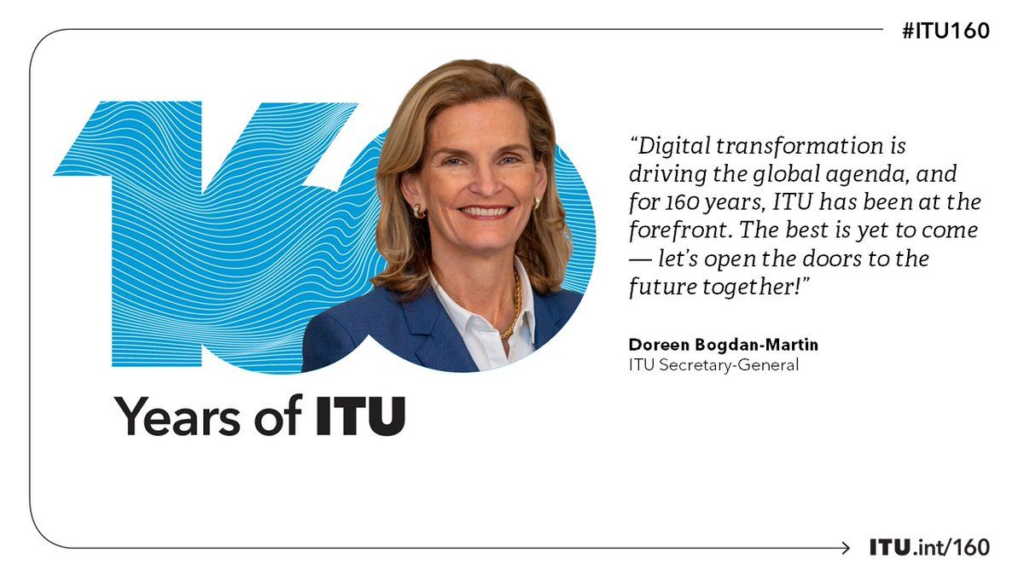
The International Telecommunication Union (ITU) is a specialized agency of the United Nations responsible for many matters related to information and communication technologies (ICTs). It was established on 17 May 1865 as the International Telegraph Union, making it the oldest UN agency. Doreen Bogdan-Martin is the Secretary-General of ITU, the first woman to serve as its head.
The ITU’s main functions are to:
Promote the shared global use of the radio spectrum, which is a finite resource that is essential for wireless communications.
Facilitate international cooperation in assigning satellite orbits, which are also a finite resource that is essential for satellite communications.
Assist in developing and coordinating worldwide technical standards, which ensure that ICT networks and devices can interoperate seamlessly.
Work to improve telecommunication infrastructure in the developing world, to help bridge the digital divide.
The ITU has played a key role in the development of ICTs. It was responsible for the development of the first international telegraph and telephone conventions, and it has continued to play a leading role in the development of new technologies, such as the Internet and mobile communications.
The ITU’s work is essential for the continued development and growth of ICTs. It helps to ensure that ICTs are used in a fair and equitable manner, and it helps to promote the benefits of ICTs for all.
Here are some of the ITU’s key activities:
World Radiocommunication Conferences (WRCs) are held every three to four years to allocate the radio spectrum and satellite orbits.
ITU-T Recommendations are technical standards that ensure that ICT networks and devices can interoperate seamlessly.
ITU-D Development Programmes provide financial and technical assistance to developing countries to improve their telecommunication infrastructure.
The ITU is a global organization with over 193 member states. It also has a number of associate members, such as non-governmental organizations and private sector companies. The ITU’s headquarters are located in Geneva, Switzerland.
ITU’s work on the metaverse
The ITU Telecommunication Standardization Sector (ITU-T) is one of the three Sectors (branches) of the International Telecommunication Union (ITU). It is responsible for coordinating standards for telecommunications and Information Communication Technology such as X.509 for cybersecurity, Y.3172 and Y.3173 for machine learning, and H.264/MPEG-4 AVC for video compression, between its Member States, Private Sector Members, and Academia Members.
Our working group on the metavese analyse the technical requirements of the metaverse to identify fundamental enabling technologies in areas from multimedia and network optimization to digital currencies, Internet of Things, digital twins, and environmental sustainability.
I am Vice Chairman of the Metaverses Working Group on Sustainability, Accessibility and Inclusion. We are working with global stakeholders to address the following issues of the metaverses, such as:
Environmental Sustainability related issues
Accessibility related issues
Social considerations
Diversity, equity and inclusion
Circular economy related issues
The Global Digital Divide
The global digital divide refers to the disparities in access to information and communication technologies (ICTs) between individuals, households, businesses, and geographic areas. These disparities can have significant consequences for individuals’ opportunities for education, employment, and overall well-being.
Here are some key facts and figures about the global digital divide:
🔶 2.6 bn people-33% global population are not connected to the Internet.
🔶 Gender gap in internet access: 17% in 2023-males: 82%; females: 64%
🔶 Socioeconomic gap in internet access: 28% in 2023(low-income households: 64%; high-income households: 92%)
🔶 Age gap: 20%(15-24 years old: 94%; 65+ years old: 74%)
🔶 Disability gap: 20%(people with disabilities: 56%; people without: 76%)
🔶 Mobile phones are playing an increasingly important role in bridging the digital divide. In developing countries, 92% of people have a mobile phone, compared to 66% who have a computer.
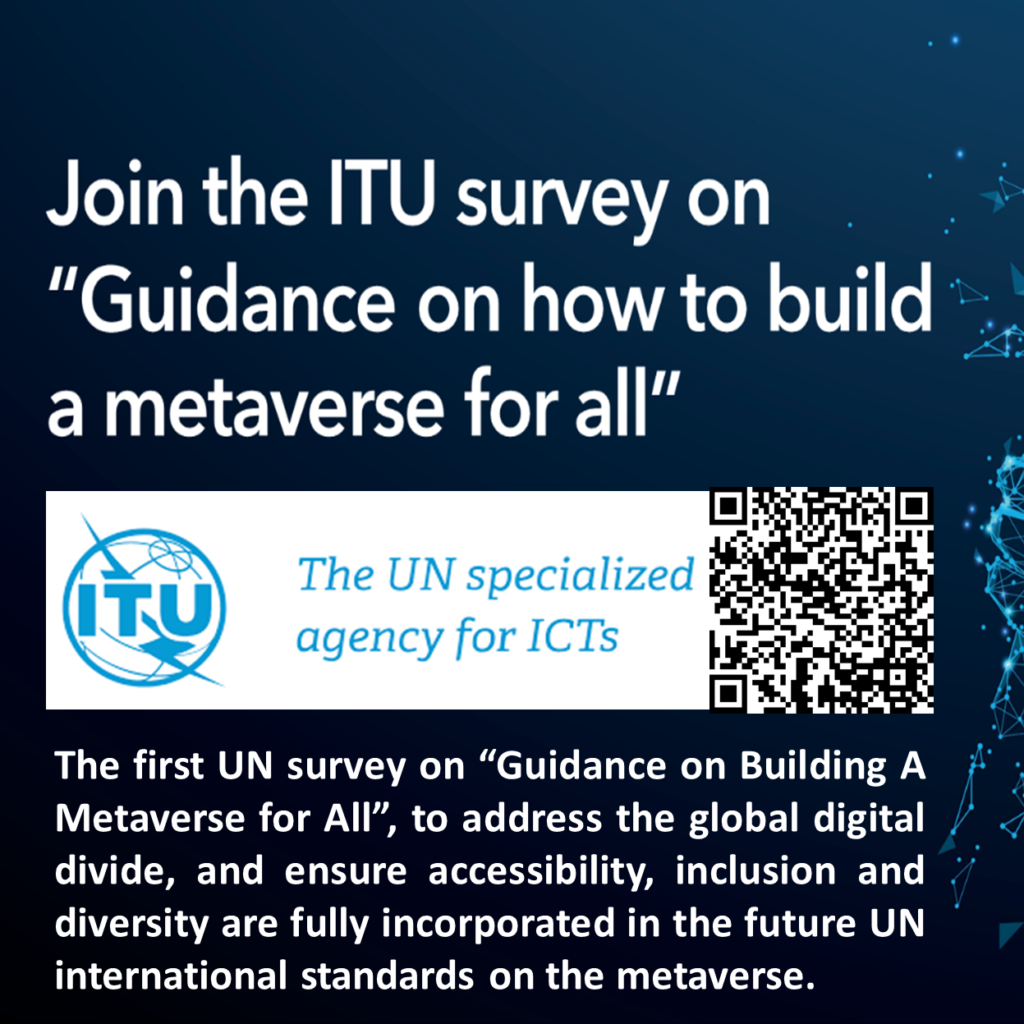
UN Metaverse For All Survey
As Vice-Chair of the ITU Metaverse Working Group on Sustainability, Accessibility, Inclusion, I feel strongly that whatever digital future we are planning to create, whether we use AI, metaverse or quantum technologies etc, it is important that we should ensure that we always have a people-centred approach and ensure no one left behind.
With the great support many amazing leaders at ITU (especially Prof Pilar Orero, Universitat Autònoma de Barcelona, Spain; Nevine Tewfik Loutfi Deputy Director of International Relations Ministry of Communications and Information Technology (MCIT), Egypt; Cristina BuetiCounsellor ITU Focus Group on metaverse), the first UN Survey on Metaverse For All are approved after many rounds of discussions and revisions.
The Metaverse Institute, a leading strategy consulting organization for the metaverse, is inviting everyone to participate in a UN ITU survey to help shape the future of the metaverse. The survey is open to everyone.
The survey takes 15 minutes to complete. It asks participants about their thoughts on the following topics:
Addressing the digital divide in the metaverse
Ensuring that the metaverse is accessible to all
Ensuring diversity, equity, and inclusion in the metaverse
How to use a combination of emerging technologies within the metaverse to create smart, sustainable and inclusive cities, which we call the “CitiVerse”
The results of the survey will be used to develop a report and will contribute to the work of the UN ITU Focus Group on Metaverse which offers a venue to start laying the groundwork for international standards that can help create an inclusive, accessible and sustainable metaverse for all.
Seizo Onoe, Director of the ITU Telecommunication Standardization Bureau, said:
“Our metaverse focus group welcomes your participation in its work to guide us towards an open, inclusive metaverse that benefits everyone, everywhere. Your responses to this survey will make a valuable contribution to our work to ensure that the metaverse supports sustainable development in every part of our highly diverse world.”
Dr Christina Yan Zhang, CEO of The Metaverse institute said:
“The metaverse is in its early stages, but it has the potential to revolutionize how we interact with the world. One-third of the global population is offline, so how can we ensure that emerging technologies leave no one behind? We want to work with the global community to identify ways to ensure inclusivity, accessibility, and sustainability are fully embedded in our digital future for the benefit of all people and countries. By participating in this survey, you can help shape the future of the metaverse ecosystem, including AI, web3, and digital twins, developed through effective public-private-people-planet partnerships, and contribute to the UN Secretary General’s Global Digital Compact for an open, free, and secure digital future for all”.