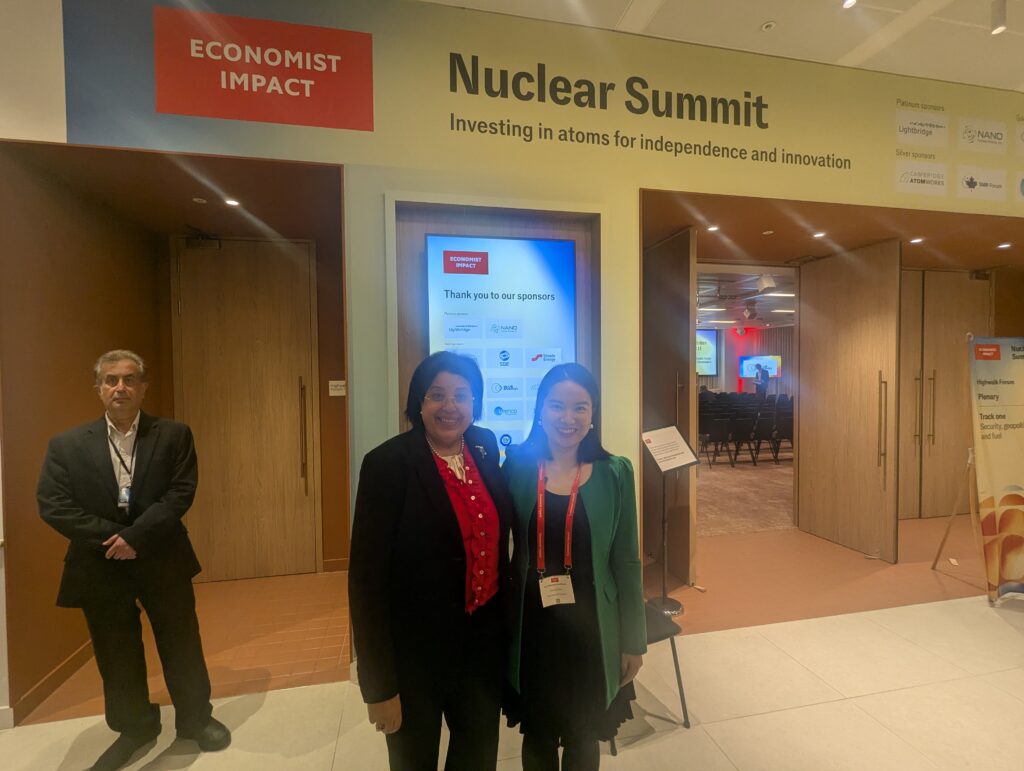
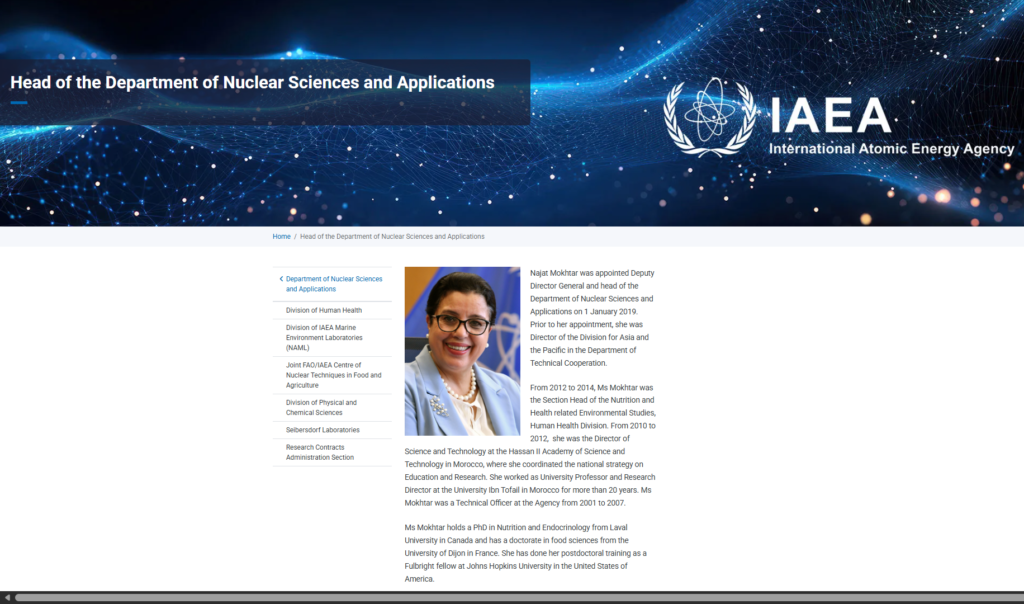
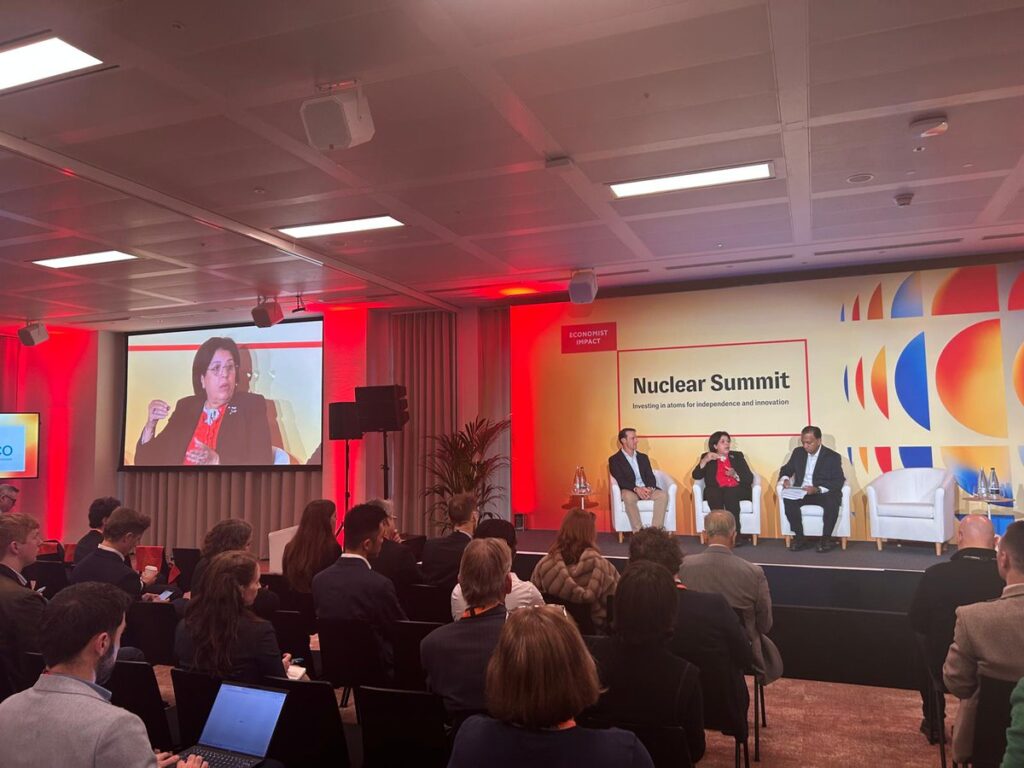
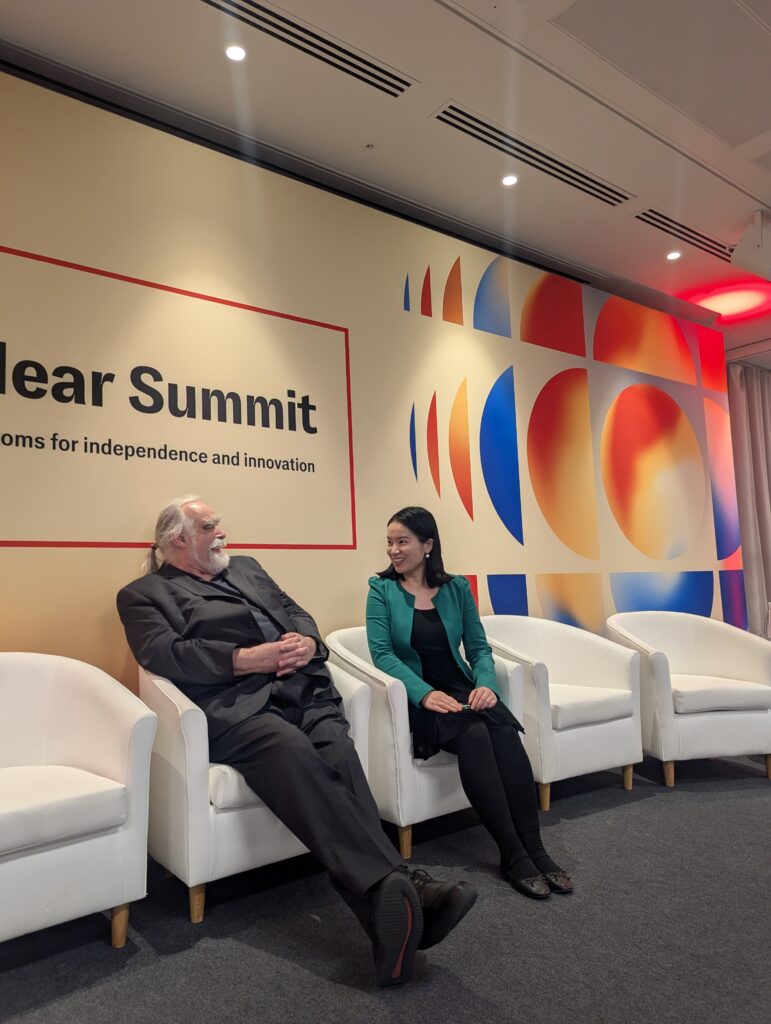
London, UK — April 15, 2026 — The Metaverse Institute participated in a landmark meeting today with Najat Mokhtar, Deputy Director General of the International Atomic Energy Agency (IAEA), during the Economist Impact Nuclear Summit. The discussion centered on the vital intersection of emerging technologies and the global “Nuclear Renaissance.”
Since Marie Curie’s pioneering discovery of Polonium and Radium in 1898, nuclear science has evolved from a laboratory wonder into a global pillar of human survival and equity. As the world seeks to meet aggressive climate targets, the IAEA projects that global nuclear capacity will reach 992 GW(e) by 2050—a 2.6x increase over current levels.
Nuclear for Good: A Global Impact Overview
The IAEA, the world’s “Atoms for Peace and Development” organization, currently oversees a global fleet of 417 operating reactors, with 62 more under construction. Beyond power generation, the agency is spearheading initiatives that address humanity’s most pressing challenges:
Water Security (GloWAL): Supporting 2.4 billion people in water-stressed regions through a network of 100+ labs.
Cancer Care (Rays of Hope): Bridging the “cancer gap” in low- and middle-income countries with a $105M investment across 30 nations.
Plastic Pollution (NUTEC Plastics): Utilizing nuclear technology to track microplastics and upcycle waste, with industrial implementation slated for 2026.
Food Security (Atoms4Food): A 60-year partnership with the FAO to enhance crop yields and soil fertility.
Pandemic Prevention (ZODIAC): An integrated global response system to detect zoonotic pathogens before they reach human populations.
Net Zero (Atoms4NetZero): Modeling energy transitions where nuclear power works in tandem with renewables.
Reflections from the Summit
While popular culture often leans into dystopian imagery, the reality on the ground at the Economist Impact Nuclear Summit was one of inspiration and rigorous safety. Engaging with world leaders revealed a profound commitment to developing peaceful nuclear energy while maintaining ironclad safeguards against weaponization and operational risks.
We extend our deepest thanks to the exceptional team at The Economist, including Helen Ponsford, Vijay Vaitheeswaran, Oliver Morton, and the many others who curated these vital conversations.
The Road to 2050: A Question of Convergence
As we look toward a future where AI demand is projected to consume 20% of global electricity, nuclear energy is expected to provide 17% of that supply. The Metaverse Institute is exploring how we can leverage a “Tech-Nuclear Convergence” to empower 8 billion people:
Agentic Digital Twins & Robotics: Can autonomous maintenance systems reduce human exposure and operational costs?
Quantum & Blockchain: Can Quantum Key Distribution (QKD) and blockchain-enabled safeguards create unhackable tracking for nuclear waste management?
Small Modular Reactors (SMRs): How will localized, scalable power change the landscape for decentralized energy?
The Metaverse Institute remains committed to exploring these digital frontiers to ensure that the Nuclear Renaissance is safe, sustainable, and inclusive with all interested stakeholders.
The Middle East’s largest tech event concluded with unprecedented investments which will boost the region’s digital dominance.
The third edition of Saudi Arabia’s most-attended tech event continued to fuel ambitious innovators and their technology-enabled transformation. Building on over $9 billion of deals signed during the 2023 event, LEAP 2024 concluded with record-breaking investments totaling $13.4 billion and generative AI at the center of the attention. Over 1,800 trailblazers from around the world explored transformative innovations across seven laser-focused content tracks at the four-day event at the Riyadh Exhibition and Convention Center.
This year, LEAP focused intensively on Generative Artificial Intelligence (GenAI). In line with this focus, DeepFest returned on a grander scale in conjunction with LEAP and supported by the Saudi Data and Artificial Intelligence Authority (SDAIA). DeepFest welcomed over 120 companies and showcased government-led AI projects at the forefront of innovation. The wide-ranging events included a leadership conference, specialized track sessions, training workshops, live demonstrations, innovation showcases, start-up pitch sessions, and an exhibition. The exhibition hosted leading global tech companies at the forefront of AI innovation.
The conference witnessed significant investment announcements centered around AI, e-sports and gaming. Amazon Web Services put in a $5.3 billion investment to establish a high-capacity cloud zone while IBM announced a $250 million investment in a software development center. ServiceNow also dropped a $500 million investment to launch its first data hub in the region.
The National Development Fund, in collaboration with the Social Development Bank, launched two venture investment funds in the gaming and e-sports sectors, with a total value of $120 million in collaboration with Mirak Financial and Impact Financial (Impact46) further bolstering Saudi Arabia’s digital infrastructure and entrepreneurship ecosystem.
The far-reaching economic impact of Leap 2024 goes beyond direct investments. It is estimated that the event has infused around $500 million into the local economy, uplifting various sectors, from aviation to hospitality, with hotel occupancy rates in Riyadh surging to 99 percent.
Meanwhile, one of the most exciting highlights at LEAP is the annual Rocket Fuel Startup Pitch Competition, with a total prize pool of $1 million. The third edition of the competition was powered by Saudi Arabia’s National Technology Development Programme (NTDP) in collaboration with the Kingdom’s Ministry of Communications and Information Technology (MCIT) and the Misk Foundation. This year’s Rocket Fuel Startup Pitch Competition saw four expert judges presenting awards across six categories with entrants selected from 90 international startups. American start-up Reme-D Inc. walked away with a prize fund of $250,000 after winning the coveted LEAP Award.
Building new businesses at a turbulent time
Focus on the opportunities brought forward by challenges, and don’t stop investing.
Can Kendi, Senior Partner at McKinsey
The rise of disruptive technologies has reshaped the landscape for new business building. As consumer needs evolve alongside shifting tech trends, business leaders around the world are finding themselves in a turbulent environment. Can Kendi, senior partner at McKinsey points out that challenges bring opportunities. “So don’t stop investing,” he says.
Shared at LEAP 2024, McKinsey’s new annual New Business Building report shed light on the core factors leaders should look at as they navigate this new landscape. New business building refers to the creation of new revenue streams through new products, services, or businesses that require new capabilities and has become a critical priority for business leaders. “[Our report] found that 67 percent of the businesses are topping up the game if they make new business building one of the top three priorities on their agenda,” says Sonia Wedrychowicz, partner at McKinsey.
Sonia Wedrychowicz, Partner at McKinsey
According to the report, over 50 percent of CEOs already consider business building one of their top three priorities. They have good reason to do so because the firm also expects that business building alone will help generate 30 percent of revenues by 2028.
Speaking at a keynote at LEAP 2024, Kendi and Wedrychowicz highlighted the key factors in successful business building. Discipline stands out as a key factor in building efficient and sustainable businesses. “Digital business building hates chaos,” speaking to WIRED, Wedrychowicz points out that, “It loves process and discipline.” McKinsey’s report found that businesses with formal mechanisms are 2.4 times more successful at new business building compared to those without. Experience is another key factor. The report defines an experienced expert builder as a business that launches three or more new businesses per year. Efficiency also plays a key role in successful business building. Around 40 percent of business builders are more likely to close an underperforming business than maintain it, the report says.
Elaborating on the three key factors, Kendi says that it’s crucial to keep fresh blood in the business building team. “Do not try to create a new business with the same old management team,” he advises. “The new business should come with a new and agile mindset with more freedom.” Wedrychowicz adds that business builders should not neglect the importance of partnership on the technical side of business building. “Don’t build it in-house if you can buy it,” she says. According to both Wedrychowicz and Kendi, building a product in-house, while feasible, is deemed to slow down the entire business building process due to structural issues that will inevitably occur along the way.
McKinsey’s report also examined the areas that business builders are looking at. Data, analytics, and AI remain the most anticipated types of new businesses. The report also hints that 45 percent believe the advancement of Generative Artificial Intelligence (Gen AI) could increase their organization’s investment in new business building over the next five years.
Combining digital and physical
How do we bring the metaverse to its world-changing potential?
Dr. Christina Yan Zhang, CEO of The Metaverse Institute
The metaverse, the tech darling of 2022 more recently spurned in favor of AI, still holds a great deal of promise. Yet its quick rise to prominence brought questions for the public (what is the metaverse? Is it the same as the company Meta?), and for experts (how do we make sure hardware and software are on the same level?) alike.
Dr. Christina Yan Zhang of the Metaverse Institute looks at the biggest questions – how do we leverage metaverse to solve global challenges? Zhang has been at the forefront of researching applications of the metaverse and related technologies for over 15 years. The metaverse, in her eyes, is a convergence of new technologies including virtual reality, digital twins and the internet, “coming together to form the next generation of the internet, which is more immersive, interactive and intuitive.”
Zhang highlighted some of her early work using platforms like Second Life to develop international education strategies. She also explored using digital twins to simulate and optimize construction, engineering and architecture projects. “This issue is, like any frontier technology, when you are a little bit too early like me, people don’t always understand what you’re talking about.”
Reflecting on the shift in interest from metaverse to AI, Zhang sees it as a positive. “Instead of saying that generative AI killed the metaverse, generative AI has become the most powerful building block of the metaverse.” She predicts that the next mainstream use for AI will be text to 3D objects, avatars and environments –a boon to metaverse developers which would make the field far more accessible, allowing for unprecedented participation in building out virtual worlds.
Yet the metaverse shouldn’t be purely virtual, she asserts. It should be tied to the physical world using sensors and digital twins. Digital twins, a 3D, digital version of physical objects or locations, use sensors in the real world to transmit data and information digitally. Zhang says the future of the metaverse could include human digital twins.
One challenge she notes is the all-aboard mentality of both people and companies in the face of new technology – rather than questioning the best use for new technologies, it becomes applied in its most rudimentary form, often not reaping any rewards other than the completion of corporate box-ticking. “The challenge is, how do you identify the most effective use case of such frontier technology in a relatively short time?”
Zhang co-chairs a UN task group exploring how technologies can support smart, inclusive cities. Through the Metaverse Institute, she also advises organizations on identifying effective use cases that provide real-world benefits. Some focus areas include using digital twins at various scales from individuals to entire countries and planets.
Ensuring no one is left behind in the digital transformation is a major priority. Over a billion people lack reliable electricity access and billions more are not online. Zhang discussed how technologies may help address global digital divides and bring opportunities to underserved communities.
Public-private partnerships will be crucial to make progress on the UN’s Sustainable Development Goals by 2030. By championing collaborative approaches and using tech for good, emerging technologies can be harnessed to benefit all of humanity according to Zhang.
The future looks promising yet there is still much work to be done to bring this technology to its true potential.
Transforming business with generative AI
Ali Hosseini, Chief Technology Officer at PwC Middle East
Providing clarity on AI’s impact on workforce and business efficiencies is crucial amid the AI revolution.
Artificial intelligence was the hot topic at this year’s LEAP. PwC Middle East, a key player in the Middle East’s ongoing technological transformation, has set its sights on a particularly compelling frontier: Transforming businesses with generative AI (GenAI).
With the technology evolving at lightning speed and players in every industry trying to get in on the act, the AI space is getting crowded and somewhat chaotic, according to Ali Hosseini, Chief Technology Officer at PwC Middle East. Establishing its first AI Centre of Excellence in the city of Riyadh aimed at upskilling and scaling the AI capabilities of Saudi engineers and researchers, PwC believes that providing clarity on AI’s impact on the workforce and business to its clients is the key to maximizing the potential of AI.
“The way I see the impact of AI is two-dimensional,” says Hosseini, “One dimension is the workforce transformation, and the other is AI automation.” AI tools like ChatGPT and Microsoft’s Copilot have significantly increased the efficiency of employees across different industries by freeing them from some of the drudgery of office work, according to Hosseini. However, transforming the entire workforce with AI is not as easy as it sounds. Getting staff to understand what to adopt and how to adopt AI, requires both the understanding of the technology and the domain knowledge, he says. The current state of AI allows for the democratization of knowledge, which empowers individuals, regardless of their technical background, to engage with and leverage the power of these intelligent machines. “I think, first of all, no one is an expert in GenAI. No matter what anyone tells you,” says Moussa Beidas, Partner and Ideation Lead at PwC Middle East. “Every single second, every minute you open up your browser, you open up your phone, there’s something new,” he declares. “So everyone is learning at the same pace, which I think is a fantastic democratizer.”
“The opportunities are massive,” says Beidas when referring to AI’s capability. “Every day people are finding new use cases of how GenAI can impact industries and people’s lives.” Highlighting the future potential of AI automation in financial services, Hosseini shares that “[To automate actions like] account opening, mortgage application, or insurance risk assessment, you would need a technology that combines the knowledge and the actionable solutions,” he says. He points out that this is an evolution of AI from knowledge augmentation to action-oriented automation.
“When it comes to Gen AI, we want to make sure that we build capability at every level,” Hosseini adds. PwC’s long-term investment in AI and its deep, industry-specific knowledge allow it to combine technology and know-how to create customized solutions for its clients.
Positioning itself at the forefront of technological innovation, PwC is determined to remain a leading force in this exciting journey. As it embraces GenAI’s revolutionary potential, it also aims to be the force of change for the region’s future alongside this transformative technology.
Understanding AI
Seth Dobrin, formerly IBM’s first-ever Chief AI Officer, discusses the future of AI.
Seth Dobrin, CEO of Qantm AI
Amidst the hum of innovation and the buzz of anticipation at LEAP 2024, CEO of Qantm AI Seth Dobrin, shared his perspective on the evolving landscape of artificial intelligence and its profound implications for humanity.
Dobrin’s upcoming book, AI IQ for a Human-Focused Future, stands as a testament to his dedication to demystifying AI and its transformative potential. “Over more than decade, I’ve been transforming companies through AI and data,” Dobrin explains. “Tying business strategy to technology and human outcomes.”
When it comes to AI’s impact on human society. Dobrin emphasizes the imperative of fostering a value-based AI future, one that transcends technological advancement to prioritize human well-being and equity. “AI impacts humans,” Dobrin asserts, “and when designing and implementing AI, we must consider its impact on individuals across diverse contexts and cultures. And so the companies need to understand that humans are using it, and others are impacted by it. And when they’re designing and implementing the AI, they need to consider that. And they also need to consider the location of the person, you know, kind of where that person lives. Because there’s different biases that exist in different parts of the world. There’s different moral and ethical constructs. And we can’t inflict Western ethos on the rest of the world,” he says.
Taking it a step further, Dobrin offered up his take on a wide range of biases and how we have to be very careful in creating a more equitable system, “And so what you need to think about is, okay, where do we control things like bias? Now, I think globally, we can agree that gender bias is the thing, and we want to control gender bias. Outside of gender bias, there are different constructs of bias around the world. So in the West, we look at black, brown, we look at race, we’ll get ethnicity, we look at religion. And so while if you’re considering western values baked into and regulated into pre-trained models, you’re ignoring other biases, other bias constructs and inflicting your own on those parts of the world. And you’re essentially in a new type of colonialism. It’s technological colonialism on south of the equator. And so we’re expanding the digital divide. And through these new gender of AI tools, or pre-trained models, we’re going to be expanding the digital divide if we don’t be more inclusive, include these people in the training and development of these models, and even looking in the Middle East.”
Finally, Dobrin shared his aspirations for the future of AI. He spoke passionately about empowering organizations to embrace AI strategies grounded in human-centric values, particularly in regions like the Middle East where technological innovation intersects with societal transformation. “It’s about enabling organizations to chart a course aligned with their broader vision,” Dobrin affirms, underscoring the pivotal role of AI in shaping our collective future.
Merging humanity and technology
How do we leverage technology, while respecting the human condition?
Yonah Welker, Public technologist
At LEAP 2024, Yonah Welker, a serial technologist, and a proponent of cross-cultural collaboration, shared his insights on the symbiotic relationship between technology and humanity, “Two years ago we started the global movement of AI for Humanity. And the main idea behind this movement was that no matter what type of algorithm or system I would love to build, we’d have people and humanity behind it, and it’s why it affects the data, the historical context behind it. The potential biases, positive or negative outcomes,” he says.
Welker’s journey traverses the divide between the western and eastern hemispheres, embodying the essence of a technology ambassador, “My personal focus is algorithms which focus on cognitive, sensory and physical spectrum such as AI for dyslexia, cognitive impairments, autism, medical technologist education, and on one hand, I oversee portfolios in technology transfer in this field on behalf of the government on behalf of my personal projects. Also, I work on policies to better understand how to adopt these technologies.” His mission? To infuse every algorithm and system with the essence of human experience, transcending mere lines of code.
The idea is that it is the worker, the everyday man or woman who will be using AI technologies is better informed, and so Welker works with UNESCO and governments to foster AI education, “I work on policies to better understand how to adopt these technologies. It was not only the system, but the classroom, the teacher or nurse who will use these technologies provide better understanding of literacy in capacities,” he says.
“I still believe that when we work together, then we respect the diversity behind the teams. We can create not only the human centered systems for hospitals, schools, workplaces, but actually solve bigger social challenges for more collaborative cooperation. at national and regional level. That’s my message,” he says.
In navigating the complexities of international collaboration, Welker confronts multifaceted challenges. He acknowledges the nuanced intersectionalities within data, emphasizing the imperative of gender-specific studies and the recognition of historically marginalized communities, “AI is just two lines of code. Everything that happens, whether positive or negative, is actually about society. An algorithm is just a reflection of society. For instance, when we build AI for autism, we discover cognitive impairments unique for girls. We need to conduct gender-specific studies to better understand the data in this area. For years, medical studies primarily focused on men, excluding women and disregarding intersectionality. When discussing cognitive spectrums, we often overlook comorbidities or underlying conditions, as well as how some specific conditions are unique to certain ethnicities, geographical locations, or communities that were historically excluded from access to hospitals and classrooms,” Welker says.
“Two years ago, when I first visited Riyadh and worked on the global AI Summit, the idea of human capacity was at the forefront. Two years ago, the Saudis signed the agreement and declaration of AI ethics with UNESCO. Now, through the Center of AI Ethics and Research here in Riyadh, we can see how it comes in parallel, not only with the EU and AI and digital services, but also actively working with our counterparts globally. We all agree that we should balance the facilitation of technology and the protection of people, because humanity is always behind the system,” he says.
A YouTuber and an AI interviewer
The rise of deepfakes and AI-generated avatars is a cause for concern.
Aaron Jones, co-founder of Yepic AI
At this year’s DeepFest, curious crowds saw Kwebbelkop, one of the world’s biggest gaming YouTubers, getting interviewed by his own AI avatar.
With the recent increase in deepfakes and AI-generated avatars on our social media feeds and messaging threads, Aaron Jones, co-founder of Yepic AI, was keen to stress that “it’s about the realism, to reach beyond novelty, to have an emotive connection, or to offer an experience that either excites and delights.”
Jones was discussing the endless possibilities for, and the inspiration behind, creating and being turned into an AI avatar. Yepic AI had just completed a remarkable project – The creation of an AI interviewer that would talk with YouTube sensation Jordi van den Bussche, aka Kwebbelkop, “[It] came together in a remarkably fast timeframe—literally days. As a company that specializes in this type of technology, we just needed one photo and less than two minutes of Jordan’s voice to create the clone.”
The mind-bending interview between van den Bussche, and a digital avatar based on his YouTube persona, Kwebbelkop, touched on the differences in gamers across the world and whether van den Bussche would like to clone his loved ones. “It’s fascinating to see how certain jokes or video games can be popular in one region but not in another. These cultural nuances definitely make the gaming and streaming landscape diverse and unique across different locations,” says van den Bussche. With regards to cloning a loved one, he agrees that it is “a little bit interesting and strange. But it can help people who have social anxiety or who are very lonely, even those with dementia,” battle with their dwindling grasp on their memory.
Creating an avatar from scratch is not a cakewalk, despite the assumption that it is just “custom promptings and instructions” typed into an AI model. The backend heavy task “is literally millions and millions of frames of people talking in hundreds of languages that create huge datasets that are trained over a long period of time to give us a foundation model that enables us to generate videos like this on the fly in real-time with very little GPU,” says Jones.
Jones even alluded to the possibility that “every single customer-facing knowledge job will be replaced by an avatar,” stating that the most obvious and logistically viable use cases of these AI avatars would be in “customer service and airport kiosks.” As the “smartest video model in the world,” Yepic AI works tirelessly to ensure that “people can access the world through AI avatars without giving over their data sovereignty,” according to Jones. That’s a good thing, considering how widely he anticipates AI avatars to be used.
Yepic AI intends to launch their system, Jordi 2.0, on mainstream platforms soon after its inauguration on the LEAP main stage. The updated avatar is “dynamic and even more lifelike, trained on just a few minutes of video that also works in real-time. Running on an RT x 4080, which requires very little computation, Jones adds that the demo they are “working on right now will run on the new iPhone. So it’s really an exciting time to be at the cutting edge of the new UI.”
Overall, Yepic AI’s goal is simple: to bring APIs (that support 84 percent of the world’s internet) to LLMs in a personified way to create deeper connections.
The Metaverse Institute is delighted to be interviewed by Binsal Abdulkader, Executive Editor of Emirates News Agency WAN during the 13th Annual Investment Meeting(AIM Congress) in Abu Dhabi on using technologies to address the aging society.
AIM Congress: ▶Under the patronage of HH Sheikh Mohamed bin Zayed Al Nahyan, President of UAE, the 13th AIM Congress took place 4-10 May 2023. ▶138 high-level dignitaries including leaders from UN, government ministers, CEOs/Chairmen from investments firms, big tech firms and corporates graced AIM 2024, joining 12,427 visitors from 179 countries. ▶With insights from more than 927 speakers, including industry pioneers, policymakers, and thought leaders, hashtag#AIMCongress 2024 fostered a rich exchange of ideas to drive sustainable economic growth on a global scale.
Facts: ⭕ According to International Telecommunication Union, 2.6 bn people are suffering from the digital divide (access to the internet). The radio between younger people, aged 15-24 (94%) and the aged who are 65+ years (74%). ⭕In 2020, the number of people aged 60+ years outnumbered children younger than 5 years. Between 2015 and 2050, the proportion of the world’s population over 60 years will nearly double from 12% to 22%. ⭕The population ageing – started in high-income countries Japan has 30% population over 60 years old). By 2050, 80% of the world’s population over 60 years will live in low- and middle-income countries.
Our Discussion on using technologies to address the aging society: ✅Using AI and Digital Twins to personalise healthcare, preventing people from getting into long term chronical disease such as diabetics. ✅Using AI and robots to support families with caring responsibilities. ✅Develop human digital twins for busy working professionals who can become complementary companions to their aging parents, grand-parents.
Information and communications technology is key to ending global poverty – but only with universal access to digital skills and platforms, warns leading economist Jeffrey Sachs.
“Advanced digital technologies will play a breakthrough role in raising productivity in every sector of the economy, and hence can be key in accelerating the end of poverty,” claims Prof. Sachs in an interview published in the latest edition of Transform, Huawei’s thought leadership magazine.
Noted economist Prof. Jeffrey Sachs and Dr. Christina Yan Zhang on the cover of Transform #14
“Of course,” Sachs cautions, “If the digital divide widens, ICT can also exacerbate inequalities…¬The key is to ensure universal access to the skills and digital platforms needed across the society.”
In just six years, the United Nations aims to eradicate extreme poverty worldwide and reduce by half the proportion of people living in poverty. Yet more than 700 million people remain stuck at incomes of less than the International Poverty Line of US$2.15 a day, a threshold set by the World Bank.
Information and communications technology (ICT) is recognized as a key factor in helping individuals escape poverty or mitigate its most damaging effects. ICT also helps countries raise living standards by fueling economic growth.
For those and other reasons, the new edition of Transform presents a decidedly optimistic perspective hidden amidst the cautionary tales.
Otaviano Canuto, a former World Bank vice-president and deputy finance minister in Brazil, says that, ideally, ICT will deliver knowledge and enhance people’s capabilities.
“A major function of the World Bank is to play a hummingbird role,” Canuto says. “Hummingbirds pollinate flowers, and these multilateral institutions can also pollinate with knowledge.”
This pollination is especially crucial for people living in cities, where 80% of the world’s population will live by 2050. Christina Yan Zhang, CEO of the Metaverse Institute, says technology will be vital in delivering services to citizens through what she calls the “CitiVerse.”
“That term is a combination of ‘citizen’ and ‘Metaverse,’ she says. “We’re looking at how we can develop future cities where we put the needs of the citizens at the center. In the past, smart city developments haven’t always achieved the best outcomes…Sometimes there is a focus on technology for its own sake, rather than on how technology can be used to improve the lives of people.”
The latest interviews in the magazine and other thought leadership content can be found on the Transform web site.
Note:
Published every two months, Transform is an online and print magazine that runs video interviews, newsmaker profiles, and feature articles that examine the relationship between technology, business, and society. A PDF of the magazine can be downloaded from the web site, and a hard-copy edition is available in some geographic locations and upon request.
Each edition is about one topic. Recent examples include cyber security, healthcare, and finance.
Princess Haifa bint Mohammed bin Saud bin Khalid, Saudi vice minister of Tourism, announced that there are currently 925,000 individuals employed in the tourism sector, of which 45 percent are women. She highlighted the commendable efforts of these individuals in empowering human capital and fostering skills and capabilities for both the present and the future.
These remarks were made during her participation in the ‘Creating a Future-proof Workforce in the Tourism Industry and Beyond’ dialogue session, which took place as part of the Human Capacity Initiative Conference held lately in Riyadh.
The session included other notable participants such as Dr. Christina Yan Zhang, CEO of the Metaverse Institute; Alistair Gosling, founder and CEO of EXTREME International; Hanin Al-Subaie, founder of the Darent application; and Mohammed Al-Mulhim, founder of Pangea Tourism and Adventure Company.
Technological transformation of global jobs
The Vice Minister underscored that, according to the World Economic Forum (WEF), around 33 percent of global jobs will undergo transformation due to technological advancements, necessitating reskilling and skill development. She further explained that technology will play a crucial role in the tourism sector, enabling entry into new domains and necessitating adaptation. By investing in technology and integrating it into the field, those working in tourism can enhance their development and progress, including utilizing data science for informed decision-making.
Investing in future-oriented opportunities in tourism
Throughout the session, the speakers stressed that cities worldwide are striving to develop their tourism sectors and leverage tools to attract diverse groups of tourists. They emphasized the convergence of virtual reality with the real world and the importance of investing in future-oriented opportunities within the field. Furthermore, they highlighted the need for skilled technicians who can fully harness these capabilities and adapt modern technologies to benefit humanity in various aspects of life.
The Saudi Press Agency (SPA), established in 1971, is a prime reference for those interested in local news and events. The agency provides accurate and real-time media content in several languages. It operates according to professional best practices and makes use of the latest effective communication techniques. SPA seeks to be an influential voice of the Kingdom of Saudi Arabia in the Arab and Islamic worlds, as well as globally.
On 29th Feb 2024, Huawei, one of the world’s largest technologies company published its global thought-leadership magazine Transform, featured myself as CEO of The Metaverse Institute and Prof Jeffrey Sachs, President of the UN Sustainable Development Network as the Cover People on the topic of Digital Equity.
What is the Digital Equity?
The United Nations emphasizes the importance of digital equity, especially for older adults. Here’s a breakdown of their perspective with some facts and figures:
Digital Divide: The UN acknowledges the “digital divide,” which refers to the gap between those who have access to information and communication technologies (ICTs) and those who don’t. This can encompass limitations in internet connectivity, digital devices, and essential digital skills.
Importance of Digital Inclusion: The UN highlights that meaningful participation in the digital world is crucial for everyone, regardless of age. Technology can be a powerful tool for progress, supporting areas like education, employment, and overall well-being.
Focus on Older Adults: The UN’s 2021 International Day of Older Persons specifically addressed “Digital Equity for All Ages”. This focus highlights the concern that rapid digitalization might leave older adults behind.
Synergy with Sustainable Development Goals (SDGs): The UN sees bridging the digital divide as essential for achieving the SDGs. Increased digital access can empower people, improve access to information and services, and contribute to a more equitable society.
According to the International Telecommunication Union (ITU): globally, about 1/3 of the global population, that is 3.7 billion people remain unconnected to the internet.
The COVID-19 pandemic further exposed the digital divide, as many essential services shifted online. Those lacking digital access faced greater challenges in areas like education, healthcare, and even basic communication.
The UN’s focus on digital equity serves as a call to action for governments, civil society, and the private sector to work together in bridging this gap. By ensuring everyone has the opportunity to participate in the digital world, we can unlock the full potential of technology for a more inclusive and sustainable future.
Gavin Allen, executive editor-in-chief of Huawei
Gavin Allen, executive editor-in-chief of Huawei approached me for the interview. Gavin joined Huawei in 2021, after nearly two decades at the BBC. He was Head of BBC News Programmes leading the global news teams (c 1,200 people) and controlling a news spend of £140m. As part of this role, he lead the Day-to-day strategic, editorial, financial and managerial operation of BBC all global and UK programmes across all platforms including:
TV 1, 6 & 10 o’clock news;
BBC1 Breakfast show;
Radio 4 Today;
Radio 4 PM ;
Radio 4 1 O’clock News;
BBC World & News Channels,
The Andrew Marr Show,
Radio 5 live,
BBC World Service news programmes,
BBC News Online etc
I have enjoyed a long history with BBC back to 2008. I was one of British Council International Students of the Year Awards Winners and was interviewed many time by top media, including two interviews by BBC. Then, one of the BBC producers invited me to write for BBC on a regular basis which I did between 2008 and 2010.
(In 2008, I was presented the award by Jimmy Choo OBE, Malaysian fashion designer based in the United Kingdom. He co-founded
It is an honour to be invited by a former senior leader from BBC who has such a distinguished career at one of the most respected media organisations in the world. When Gavin approached me asking for an interview on digital equity which we at The Metaverse Institute have been working on, I said yes immediately.
The Interview
The interview took place in Huawei’s London office. Immediately when Gavin picked me up from the reception, the cameraman already started filming how I entered the building and our informal chat.
We enjoyed a great 45 minutes TV interview discussing our work on how different frontier technologies can be used to address the global digital divide and maximise positive impact to benefit all. To my surprise, we also spend another 30 minutes doing photoshoots. I think we must have taken hundreds of photos of me that day, in all kinds of different poses. I started to joke with the photographer that it must be not easy to be a supermodel because they needed to figure out all kinds of interesting poses and expressions to express themselves in line with different contexts. The final interviews are published in both Transform, Huawei’s global thought-leadership magazine, as well as in Video interview on their website.
I did not know that I would become one of the two cover people in the latest issue of Huawei’s magazine. But it is a great honour to be featured alongside world renowned economist Prof. Jeffrey Sachs, President of the UN Sustainable Development Network and other distinguished world leaders who have been committed to use technologies to make our world a better place for all.
Other Cover People of Huawei Transform Magazine since Inception in Feb 2022 including the following:
Bruce Schneier, an internationally renowned security technologist, called a “security guru” by the Economist.
Tony Scott President Barack Obama’s Former Federal Chief Information Officer for the U.S. Government.
Prof Mohan Munasinghe Nobel Peace Prize winner & environment economist
Jimmy Wales co-founder of Wikipedia & internet entrepreneur
Samuel Jerrold “Jerry” Kaplan, an American computer scientist, author, futurist, and entrepreneur. He is best known as a pioneer in the field of pen computing and tablet computers
.
Other leaders who are interviewed on their work on digital equity including the following:
Other prominent leaders featured by Huawei including Irena Bokava, the first female Secretary General of UNESCO.
The full interview
When it comes to the world’s biggest digital twin, the only thing we have to fear is fear itself. Dr. Christina Yan Zhang, CEO of the Metaverse Institute, explains.
Q: What is the Metaverse?
A: The metaverse has increasingly become a convergence of a whole range of technologies, coming together to form the next generation of the internet: more immersive, interactive and intuitive. The most important use case of the metaverse is for simulating and optimizing real-world construction and development projects that are too expensive to fail, so must be got right the first time. The US$500billion mega-smart city in Saudi Arabia, known as Neom, is a good example. Metaverse technologies can be used in a similar way for dangerous operations, such as complicated or experimental surgery. In the future, large-scale digital twin simulations could also be used to model the behavior of large numbers of people in virtual environments – to understand, for instance, how they would evacuate a stadium in the event of a fire, or what would happen if there was an earthquake in a city.
Q: How do you make sure that technological advances and the metaverse benefit everyone?
A: That’s a major issue. I’m vice-chair of an International Telecommunication Union (UN ITU) working group that produced the first UN survey looking at how to develop guidance on “how to build a metaverse for all” and address the global digital divide. There are currently about 2.6 billion people – a third of the global population – who don’t have access to the internet. Today, 1.2bn people, mostly in Africa and some parts of Asia, don’t even have stable access to electricity. So, a top issue is energy poverty. That needs massive intergovernmental collaboration, with private investment coming in to support public-private partnerships, to put more infrastructure in place. Because when you don’t even have the energy to cook your daily meals, you’re not going to talk about anything fancy on technology. You’re only thinking about your own survival. So, we need to address that fundamental issue.
Q: As people increasingly move to urban areas, what are the implications for technological advancement and inclusivity for poorer communities?
A: That’s a great question. Today, 55% of the global population live in cities, and by 2050 it’s going to be 80%. I also co-chair the UN ITU task group on pre-standardization for the “CitiVerse.” That term is a combination of “citizen” and “metaverse.” So, we’re looking at how we can develop future cities where we put the needs of the citizens at the center. In the past, smart city developments haven’t always achieved the best outcomes, even though they used some of the most advanced technology available at the time. Sometimes there is a focus on technology for its own sake, rather than on how technology can be used to improve the lives of people. This has led to some smart city projects being expensive, inefficient, and even harmful.
The problem is adoption. Innovation moves so fast, it is not always easy for people to catch up. If people don’t understand how best to utilize the technology for their own benefit, then the technology can’t maximize its positive impact. So, instead of just chasing the latest techno-hype, which moves too fast for most municipal governments to follow in any case, let’s go back to basics and ask what are the key issues all our diverse citizens care about.
Not all smart city technologies have effectively addressed the issue of rising property prices in many capitals, or address the issue of providing better support to their ageing populations. According to the latest figures from the World Bank, the digital divide (access to the internet) is not only between low-income households (64%) and high-income households (92%). It is also between men (82%) and women (64%), and between different locations: urban areas (88%) vs rural ones (73%). There is also a digital divide between younger people, aged 15-24 (94%) and our ageing parents and grandparents who are 65+ years old (74%). It’s between people who have additional special needs (56%) and people who don’t (76%). There are lots of things we need to break down into more detail to provide the additional support required by our diverse communities.
Q: So, if you’re poor in the real world, how do you ensure you’re not equally poor in the digital world?
A: The first thing we need to realize is that we all have to live in the physical world for most of our lives. People are not going to spend 100% of their time in a virtual-reality metaverse; that is a science-fiction dystopia, and it’s not going to happen. The way to bring the greatest value to the metaverse is to always link it to the physical world, to do experiments in the virtual environment which are too costly or too dangerous to realize in the real world. So, the most important thing we need to do is figure out how we can help people in the real world to receive the right kind of training to allow them to figure out how to use these new technologies to bring value to their existing life and work.
Everyone’s worried about their jobs now as a result of AI, but as President Franklin Roosevelt said during the Great Depression (1929–1939), when 24.9% of the total work force in the US (nearly 13 million people) were out of work: “the only thing we have to fear is fear itself.” If we put our fear aside, look at what are the biggest challenges, and break them down into smaller, more manageable tasks, then we can really support people from diverse backgrounds with diverse needs, using new technologies within the wider metaverse ecosystem. And we’re doing that analysis now at the UN ITU working group.
Q: What are the changes that are required to ensure the technology benefits everyone?
A: Training is clearly a very important area, but so is confidence. Every one of us needs to have the confidence to believe in ourselves first before we can help other people to flourish. We human beings, as a species, are extremely adaptable. Also, in the UN ITU task group on the CitiVerse we are proposing a new type of partnership, which we call a public-private-people-planet partnership. Any kind of digital future we are planning and implementing has to ensure that the needs of our diverse people will be at the center. And to make sure everything is sustainable in the longer term, and not at the cost of our planet. We are working in collaboration with many different member states of the UN ITU to look at how we use all kinds of frontier technologies to support people-centered future cities. What will be the roadmap that cities of different sizes, focus, cultures and histories can benefit from? Should we develop a more regional focus? For example, the CitiVerse developed for Europe will be very different from the CitiVerse developed for Africa.
Q: How does technology help achieve that greater equality and greater inclusivity?
A: Everything needs to be more tailored: personalized, regionalized, to cater to the needs of different countries and different industries. I don’t believe that the best metaverse strategy is one-size-fits-all. Instead, there needs to be a metaverse strategy fit for tourism, a metaverse strategy fit for healthcare, another for arts and design, or for the entertainment industry, or for a smart factory, and so on. Rather than trying to build everything from scratch, we need to look at what’s already available out there in the existing system. For any kind of IT implementation or adoption, we can’t just get rid of the existing system, which has been running for decades. Innovation needs to be incremental to be incorporated properly into existing systems.
Q: It’s an evolution, but with people and the planet at the heart of the plan?
A: Absolutely. I would say it will always be people-centered and we need to be very balanced.
Q: You seem very optimistic that there’s a good future ahead for all of us?
A: I’m optimistic because we’ve already tried to map out all the challenges and prepared for the worst scenarios, and therefore we do not have any room left to fear anything. Our focus is to identify the most effective and pragmatic solutions to address any challenges experienced in the process. Data storage, for instance. The European Commission has given €2 million of funding to the ASCEND initiative, part of the Horizon Europe program, to put data centers in Earth orbit, thus minimizing the environmental impacts. And frontier tech companies are looking at putting data storage in the form of synthetic DNA. Like the dinosaur in amber in the film Jurassic Park, DNA is an extremely stable form of data storage. It lasts a very long time — up to 1.5 million years — while the most commonly-used medium for long-term storage, magnetic tape, has to be replaced every 10 years. The storage density potential of DNA is 10 million times that of traditional media such as hard disks and tapes, and it’s carbon emission free, too. Mark Bathe, PhD, an MIT professor of biological engineering, said that if we want to store the whole world’s data in DNA, we could fit all of it inside coffee mug.
Q: Returning to your FDR quote about fear: do we just need to stop worrying and calmly accept that this is where technology is going?
A: Yes. Life is short, and you can choose to live it in a really happy and optimistic way, or a miserable and pessimistic way. Why don’t we focus all our energy on things we can control, and on things we can do to help each other flourish, rather than fighting each other. It doesn’t make sense. Steve Jobs once said, we are here to make a dent in the universe. I think we are here to make a dent in the metaverse!
We look forward to working UN, governments, investors, corporates and institutions to use all kinds of different frontier technologies to maximise positive impact for all to flourish.
The Smart City Expo World Congress held in Barcelona from Nov. 7-9.
RIYADH: Saudi Arabia will showcase its achievements in building smart townships at a global event in Spain through the participation of its artificial intelligence authority.
According to the Saudi Data and Artificial Intelligence Authority, it will display its AI expertise at the Smart City Expo World Congress to be held in Barcelona on Nov. 7-9.
Essam Al-Wagait, director of the National Information Center, will shed light on SDAIA’s contributions in deploying the latest technologies to enhance the quality of life of the Kingdom’s residents.
As a global event partner, SDAIA will also demonstrate its commitment to aligning with the UN’s sustainable development goals and achieving the objectives outlined in Saudi Vision 2030.
The authority will showcase its efforts in the field of digital transformation, including the national smart cities platforms — Sawaher and Baseer.
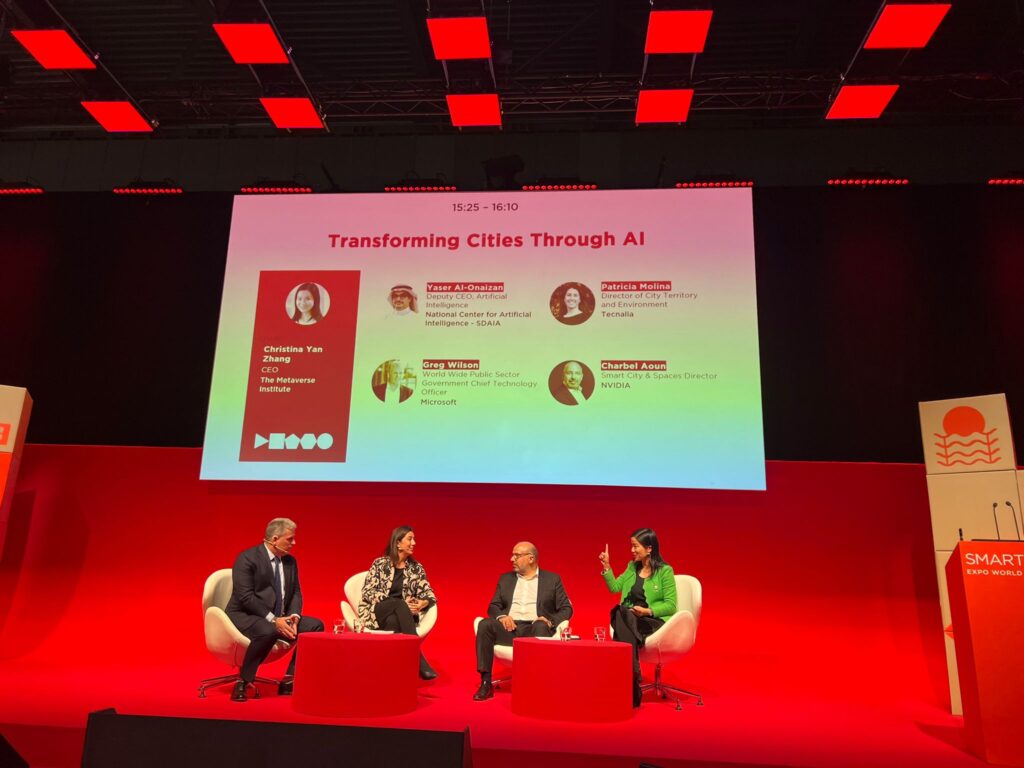
The event will feature sessions on transforming cities through AI, with participation from Yasser Al-Onaizan, deputy CEO of the National Center for Artificial Intelligence at SDAIA, along with other industry experts.
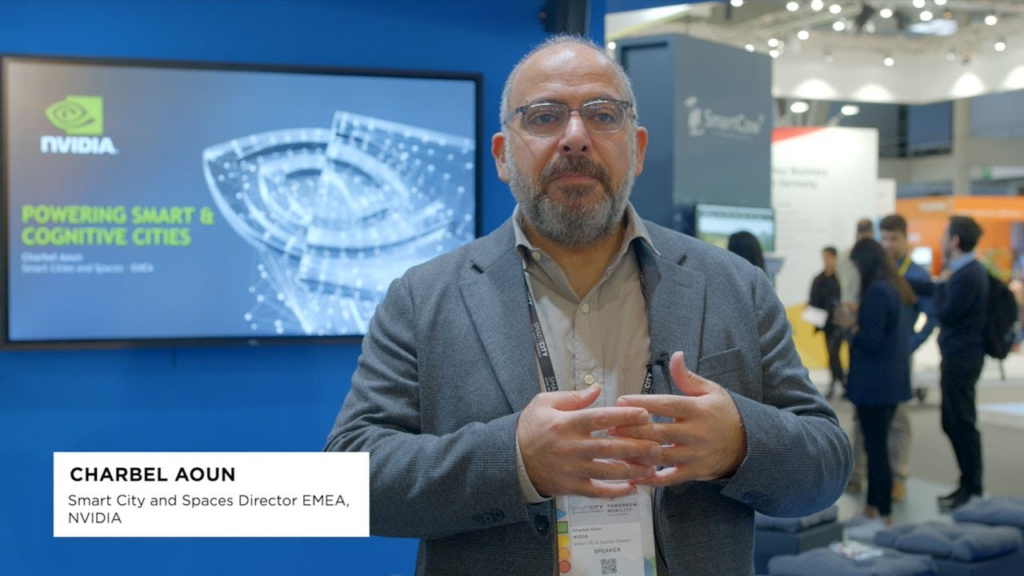
Among them are Christina Yan Zhang, CEO of the Metaverse Institute, and Patricia Molina, who serves as the director of city, territory, and environment at TECNALIA. Additionally, Greg Wilson, who holds the position of worldwide public sector government chief technology officer at Microsoft, and Charbel Aoun, the director of smart city and spaces at NVIDIA.
Another session, titled “Smart Governance Responding to Citizen’s Needs,” will feature Sattam Al-Subaie, CEO of the Smart City Excellence Center at SDAIA, along with other distinguished speakers.
In a separate session focusing on the evolution of modern urban living, experts will emphasize the importance of creating comprehensive ecosystems that cater to the varied needs and aspirations of urban populations.
The Smart City Expo World Congress is one of the largest and most influential gatherings dedicated to urban innovation and cities, with more than 25,000 multi-sectoral participants from 140 countries.
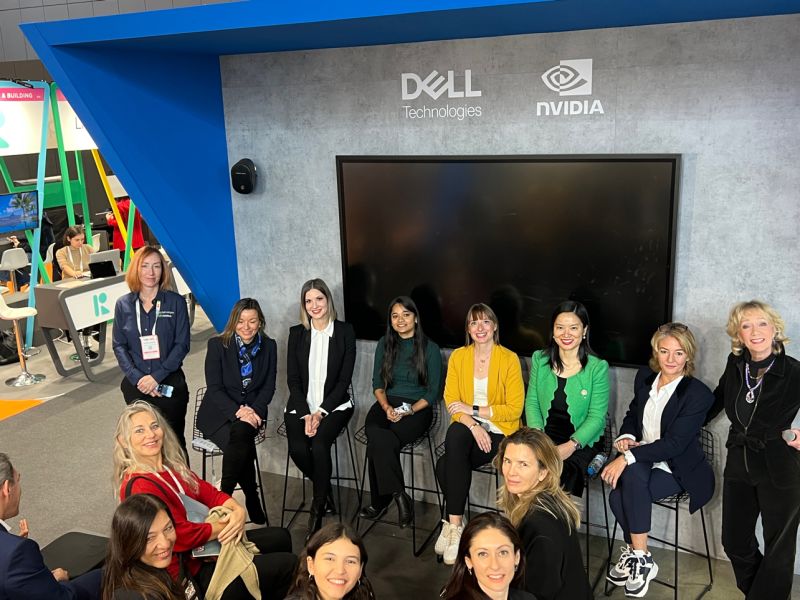
Jointly held with NVIDIA and Dell, the Women in Smart Spaces panel discussion aims to foster an “authentic gender balance” across all city operations around the world.
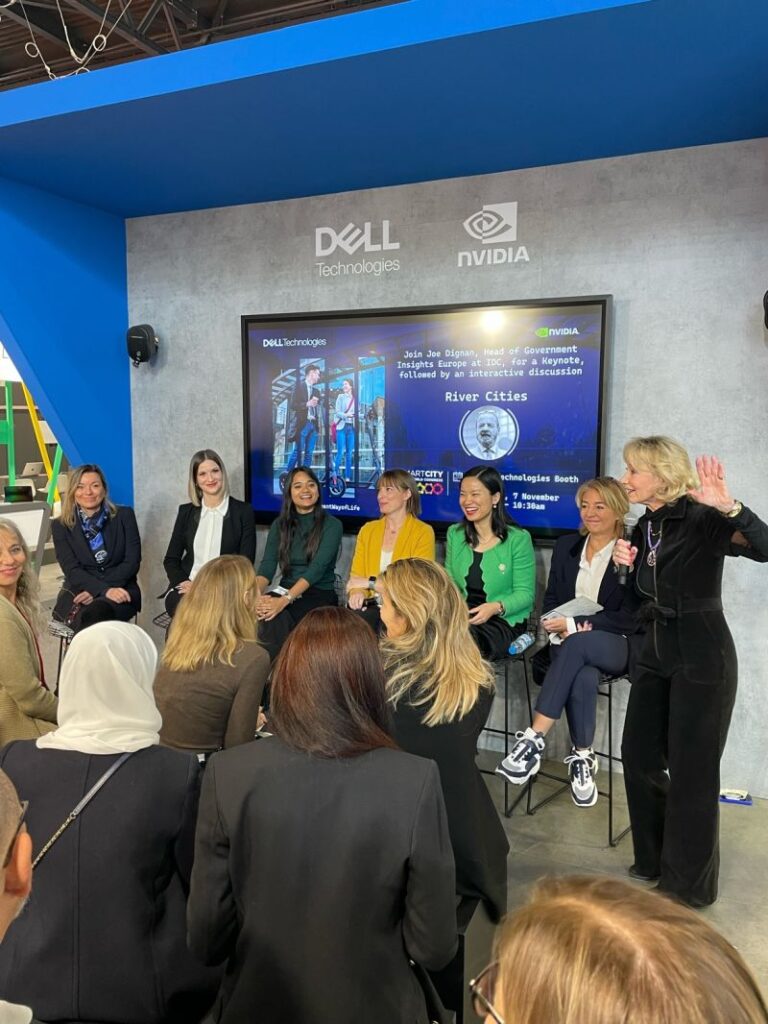
SmartCitiesWorld is joining with technology companies NVIDIA and Dell to host the Women in Smart Spaces panel discussion at Smart City Expo World Congress in Barcelona on Wednesday, 8 November from 9:30 to 10:30am.
The organisers have handpicked a number of top women attending the Expo to tell the story of their journey in the smart city space. Sandra Baer, SmartCitiesWorld ambassador and CEO of Personal Cities, will chair the discussion and explains that the intention is to help foster “authentic gender balance” across all city operations, around the globe.
She adds: “We see it in the real world – an equitable balance of women in smart spaces allows all of us to ‘understand’ the challenges and solutions for cities in an all-encompassing light.”
Top women panellists
The line-up of panellists includes: Eva Labarta, head of public sector, Amazon Web Services (AWS); Christina Yan Zhang, CEO of The Metaverse Institute; Jennifer Sanders, co-founder and executive director, North Texas Innovation Alliance; Pooja Venkatesh, senior product manager, Smart Cow; Maria Galindo Garcia-Delgado, board member of Climate Neutral and Smart Cities Mission for the European Commission; Ekaterina Sirazitdinova, senior deep learning data scientist, NVIDIA.
Panellists will talk about their own smart city experience and discuss some of the barriers they’ve faced as well as their successes. They will also provide advice and recommendations to women everywhere on how they can secure the power, position – and pay – to build a more gender-balanced and equitable smart city space.
“There remains a real need to create more awareness of the challenges women continue to face in sectors such as tech, engineering, science, finance and more,” says Carlota Da Veiga Pestana, chief commercial officer, SmartCitiesWorld.
“If we are to build successful smart and sustainable cities, we need the diversity of thinking, actions, insight and vision that women can bring. We want to inspire women of all ages to make their mark in the smart city space and are delighted to jointly host this panel discussion.”
“We see it in the real world – an equitable balance of women in smart spaces allows all of us to ‘understand’ the challenges and solutions for cities in an all-encompassing light”
Charbel Aoun, director of Smart Spaces and Cities at NVIDIA will kick off the event at 9.30am at the Dell Booth, located in Hall P1, Level 0, Street C, Stand 10, before handing over to Sandra Baer to moderate the conversation.
Smart City Expo World Congress runs 7-9 November at Fira De Barcelona. The SmartCitiesWorld team will be there in force and is hosting a number of events, roundtables, workshops and drinks receptions. We will also be reporting live from the event so if you are launching a new product or service, or announcing any smart city developments, email us at press@smartcitiesworld.net.
SmartCitiesWorld provides a quality, comprehensive and current global content resource for urban leaders and their partners.
Through our platform, we encourage the smart city ecosystem to share their experiences and learn from each other.
SmartCitiesWorld enables connections between smart city challenges, solutions, industry peers, suppliers, and partners at your desk on the move and at our events.
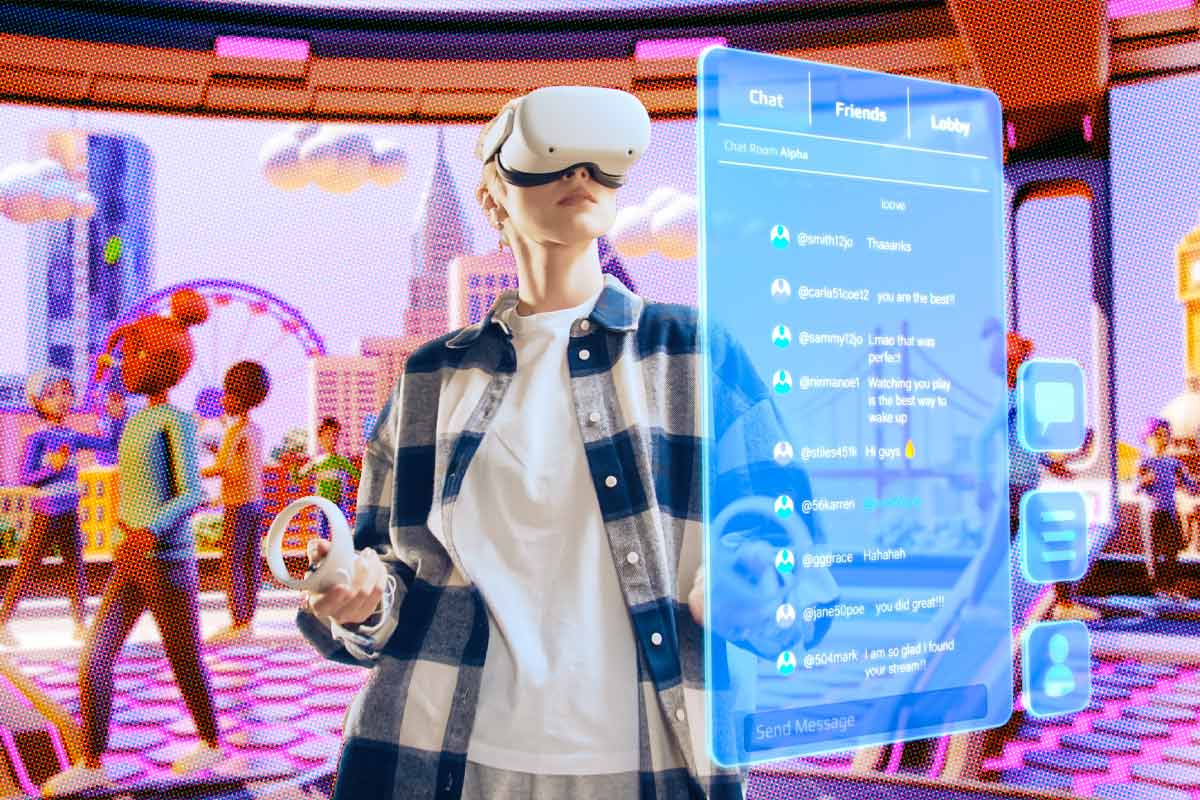
Today, it’s almost impossible to open your phone without scrolling across a mention of the ever-looming virtual worlds. The meteoric rise of Web3, metaverse, and digital twin technologies have led to some brilliant breakthroughs separately, but the real impact of the present and future will be how these technologies converge. These technologies are a new realm that grants infinite access to every experience imaginable, and it feels suddenly closer than we ever thought possible.
Like any innovation, some emerging technologies are characterized by hyperbole and hysteria. The dramatic rise of cryptocurrency and the whole hype bubble bursting in 2022 had many doubting the future of Web3 and declaring the death of the metaverse. However, tech evangelists believe that “initial mistakes” are no reason to throw the technologies out the window.
Changing the Game
“With Web2 (the current version of the web) and other technologies, there was no revelation of what it would be like. Sometimes, like in startup life, you make mistakes, but through trial and error, you get to what it will be as a business model. Something that we are all happy to engage with over a long time,” said Sebastien Borget, Co-Founder of The Sandbox, a unique virtual world built on Web3 concepts.
In games like The Sandbox, where the Web3 principles are embedded into their metaverse design, “true ownership” lies with the player, and anything earned as a gamer or creator can be utilized across not only one but many platforms. “Web3 and blockchain are truly changing the game,” adds Borget.
Anas Bhurtun, CEO and Co-Founder of Arts DAO, a decentralized autonomous organization representing the largest Web3 / NFT community in the Middle East, echoes a similar sentiment.
”Web3 represents a change where the customer effectively owns a stake in the product brand that is issuing something in some sense. That is a huge change in mindset. The real innovation is how the customer becomes passionate about their stake in this instrument.”
But is it too soon to assume that ownership matters to the customer?
Borget believes the idea of ownership underlying it is not necessarily the first thing you sell to someone, but it’s a powerful one. “It’s not just about owning and potentially making money off it. That is part of it. Yes, you can make money as a customer of the underlying token issued by the brand, but there is an incredible tribalistic need in the human condition to be part of something more than just yourself,” adds Bhurtun.
For bigger enterprises, the buzzwords don’t matter. This year, in May, Emirates Group and Amazon Web Services announced a new collaboration to create an immersive extended reality platform tailored for the airline’s personnel in the UAE. This innovative iXR platform, primarily intended to benefit cabin crew, new recruits, and industry collaborators, incorporates 3D virtual hubs, virtual training modules, gamified settings, and simulated experiences.
“Many enterprises approach the technology through a more conservative model, which includes calculating the ROI, the risks involved, the impact on the brand, etc. It is more like sandbox testing so that we are sure whatever we provide to our passengers and internally as an organization is coming in at the right time and in the right form,” said Ismail Issa, Head of Web3 and Metaverse, Emirates Airline.
Experts emphasize that things will take time to build, and Web3, metaverse, and digital twins are bringing real value to businesses.
Twinning into the Metaverse
Giving an example of a real-life situation when a baby is born during a flight or an unexpected fire in the aircraft, Issa said, “When you have an enterprise metaverse or immersive extended platform, it helps with a more realistic experience, and enables the cabin crew to handle the situation better.”
“The metaverse has increasingly become a convergence of a whole new range of technologies. Perhaps among the metaverse environments, the most significant application is digital twin,” said Dr. Christina Yan Zhang, CEO and Founder of UK-based The Metaverse Institute.
“There are many different layers of digital twin that can be utilized on a city level to support people-centered city developments and push sustainability goals,” she added.
The concept of digital twins is not new. It was born at NASA in the 1960s as a “living model” of the Apollo mission. Fast forward to 2022, Singapore became the first nation in the world to clone the entire island into the virtual world.
The European Commission’s flagship initiative, The Destination Earth(DestinE), aims to develop a highly accurate digital model of the Earth with an initial focus on the effects of climate change and extreme weather events, their socio-economic impact, and possible adaptation and mitigation strategies.
“Digital twin is going to be applicable everywhere you can think of –manufacturing, healthcare, retail, financial systems,” said Maher Al Kaabi, Independent Board Member and Advisor to Group Chairman, Alserkal Group.
Airports are a critical link to the global transportation system, and streamlining the operations and making travel seamless for passengers has been a top priority for the airline industry.
“We have pockets of areas called real-time DXB, which is a real-time digital view of every airport, every airplane that lands and takes off, how they park, how they depart. And we have a real-time view of all our guests,” said Tareque Choudhury, Vice President-Technology, Dubai Airports.
“Digital twin is taking all that data and creating a holistic view of all airport operations so that our control center can have a real 3D view for a more contextualized view of airport operations. This will enhance airport operations, give us a lot more safety and security, and optimize passenger experience,” he added.
In Saudi Arabia, real estate group Roshn is leveraging digital twin from an urban design perspective, integrating it with virtual reality and community infrastructure planning.
“We use it to go through the design concept that we have and get feedback from customers in terms of where the improvements are needed,” added Jayesh Maganlal, Group Chief Information and Digital Officer of Roshn.
Global car manufacturer BMW recently partnered with Nvidia to build a digital replica of the company’s 400-hectare plant in Debrecen, Hungary, which will be operational in 2025.
Having a digitally simulated factory for large enterprises before the physical one takes shape helps save millions of dollars by better planning and optimizing industrial processes, mitigates the risk of costly mistakes, and accelerates team effort.
Building something so vast virtually doesn’t come easy and is extremely challenging. A successful digital twin strategy requires a comprehensive collection of personnel, infrastructure, data, and more.
“Simulating the real world is quite a task. It’s time and cost, first and foremost. It’s a huge amount of data that needs to be processed. So, computing capabilities need to be faster and cheaper. And obviously, data transfer must be faster and cheaper to get mass adoption,” said Dr. Hamid Haqparwar, Managing Director, BMW Group, Middle East.
“The other challenge is data security and safety because everything is in the cloud,” he added.
Al Kaabi stresses the need for alignment with the company, stakeholders, and board members. He advised against jumping onto the bandwagon if the company doesn’t have a use case and the importance of training and upskilling talent.
“Having a clear business objective and data strategy, ensuring data quality, privacy and security are key. The outcome is as good as your data,” added Maganlal.
New technologies are growing and will play a more crucial role in the years to come. The best thing organizations can do is to decide what they want, gain some experience and metrics, and identify where they can grow. The leap will be worth the payoff if everyone in the organization is aligned and understands the goals and vision.
As with any emerging technology, it’s crucial to critically assess the potential benefits and challenges while keeping an open mind to their future possibilities. Over time, these technologies evolve, find practical applications, and become more integrated into our daily lives.
_________________________________________________
The NextTech Summit was hosted by MIT SMR Middle East on September 20, 2023. The panels on the virtual worlds were moderated by Paul Dawalibi, CEO, Holodeck Ventures and Riaz Naqvi, Senior Editor, Hill+Knowlton Strategies.
The event had Technology Innovation Institute as the presenting partner and Digital Dubai as the strategic government partner. G42 and Boston Consulting Group joined as the strategic sponsor and the gold sponsor.
The Tampere Metaverse Vision 2040 conceptualizes and presents the possibilities of the metaverse for future urban development, including aspects such as citizens’ well-being and climate actions. This publication is the result of the Data-Driven City for Citizens -development program by the City of Tampere, in partnership with London-based The Metaverse Institute.
Tampere Metaverse Vision 2040 primarily serves as a tool for urban development and Tampere’s workforce. It offers a glimpse into what the city could become in the 2040s.
The Tampere Metaverse Vision 2040 investigates how a metaverse environment composed of various intelligent technologies can be utilized as support for the happiness of citizens, urban governance, sustainability, equality, well-being, and healthcare. This visionary outlook of the future has been realized in collaboration with The Metaverse Institute.
The concept of metaverse holds current relevance for the city of Tampere. It was a central theme at the Tampere Smart City Expo & Conference held at the Nokia Arena in June 2023.
–Metaverse intertwines numerous themes and concepts that are already being pursued and those on the horizon, such as data utilization, digital twins, virtual realities, and artificial intelligence. Hence, the concept is now prominently emerging. For us, the metaverse is not merely a virtual realm, but a continually evolving digital environment seamlessly integrated into the real city, explains Tiia Joki, Development Manager at the City of Tampere, offering insight into the background of Metaverse Vision 2040.
Intelligent Solutions in Support of Human-Centered Approaches
Tampere Metaverse Vision 2040 portrays various future scenarios that provide solutions for both local and global challenges. The vision depicts a future Tampere where artificial intelligence enhances citizens’ well-being by enabling more efficient solutions and personalized services, particularly in education, well-being, and urban environments. The vision envisions that in two decades, metaverse could facilitate tailored housing solutions for individuals and improve citizens’ sense of safety and security.
In this future urban vision, citizens have increased opportunities for influencing decision-making processes. Metaverse has the potential to usher in more participatory urban governance, leading to services that more effectively cater to people’s needs.
The future vision emphasizes the impact of metaverse on the economy and equality. The vision outlines a scenario for the 2040s where companies, tourists, and immigrants can explore the city, learn the language, and engage with business stakeholders even before physically arriving in the city.
According to Tampere Metaverse Vision 2040, as technology advances, the metaverse could provide a solution for achieving a carbon-neutral city. By utilizing digital twins that model the real world, various alternative perspectives can be simulated. This enables authorities, stakeholders, and city residents to test the impact of their everyday choices on people, economy, and the environment.
Metaverse as a Tool for Future Urban Planning
Tampere Metaverse Vision 2040 primarily serves as a tool for urban development and Tampere’s workforce. It offers a glimpse into what the city could become in the 2040s.
–As a city organization, we need to be at the forefront of development. The vision provides guidelines for what could be possible in future Tampere. Our collaboration partners in the business sector, both existing and potential, also benefit from these metaverse guidelines. This is the direction we are headed towards through joint efforts and learning, describes Teppo Rantanen, Executive Director of Growth, Innovation and Competitiveness at the City of Tampere.
–With the exponential development of AI, metaverse, digital twins, quantum technologies and other cutting edge technologies, it is increasingly important to put the wellbeing of citizens, and the prosperity of the human society at the centre of any kind of digital future we are developing. We are delighted to work with the City of Tampere to develop such a forward-thinking vision. Together we are developing pragmatic solutions, looking closely at how these technologies can support the happiness, sustainability, equality, health and wellbeing of our people. Consideration of effective governance is also crucial, in order to maximise the positive impact of those technologies while minimising their risks. We hope this report can be a starting point for governments worldwide who are considering metaverse technologies, to empower citizens to play a more active role in future city development and help achieve the UN Sustainable Development Goals, says Dr. Christina Yan Zhang, CEO of The Metaverse Institute.
London-based The Metaverse Institute is pioneering international research in the field of metaverse and represents the latest example of the city of Tampere’s global collaboration with companies, research, and development institutions.