Seven hundred million people globally live in extreme poverty, subsisting on less than US$2.15 a day. More than half live in sub-Saharan Africa and children are twice as likely as adults to be victims.
By 2030, according to the UN’s Sustainable Development Goal 1, we’ll have stamped out extreme poverty. In reality, says The World Bank, progress has stalled badly and about 600 million will still be caught in the extreme poverty trap.
Little wonder that guests for this edition of Transform, which looks at the impact of digital technology in tackling global poverty and inequity, are united in their skepticism of SDG1’s chances of meeting its own deadline.
But ICT at least offers hope, they say… if it’s delivered universally.
“Advanced digital technologies will play a breakthrough role in raising productivity in every sector of the economy, and hence can be key in accelerating the end of poverty,” claims the celebrated economist Professor Jeffrey Sachs.
But he adds a note of caution: “If the digital divide widens, ICT can also exacerbate inequalities and leave the weaker, poorer, less educated parts of society even further behind.”
That double-edged sword is also highlighted by Otaviano Canuto, a former vice-president of The World Bank and deputy finance minister in Brazil. ICT, he says, has the potential to increase productivity, but – without the right regulatory framework – the potential to misinform and exclude, too.
Acting in harmony will be key: “A major function of the World Bank is to play a hummingbird role. Hummingbirds pollinate flowers, and these multilateral institutions can also pollinate with knowledge,” he says.
For the CEO of the Metaverse Institute, Christina Yan Zhang, the stumbling block is as much about adoption as universality: if people lack the skills to understand the tech, then they can’t reap its benefits.
“Everything needs to be more personalized, regionalized, to cater to the needs of different countries and different industries,” she says. “Rather than trying to build everything from scratch, it all needs to be incorporated properly.”
Also in this edition:
Huawei’s rotating chairman highlights the role of private companies, global cooperation and pooled experience in “making the whole greater than the sum of its parts” and accelerating progress.
UNESCO’s chair in science and education for African food systems reveals why poor people experience more shocks and are less able to protect themselves from them.
An Indian telecoms entrepreneur points to the limitations of government intervention and the role that individuals must play in helping themselves.
A professor and data economist flags the pivotal importance of “informational capabilities” in making people, not tech, the primary focus of policies.
And the founder of the Digital Poverty Alliance explains why connecting the 3 billion unconnected makes economic as well as moral sense: “The more you can enable customers to engage with you, the better your business will be.”
Hummingbirds, swords, shocks and skills: the challenges in solving global poverty are plenty. But the prize is a great one – not just for the sake of the poorest in the world, but in the long-term interests of all of us.
When it comes to the world’s biggest digital twin, the only thing we have to fear is fear itself. Dr. Christina Yan Zhang, CEO of the Metaverse Institute, explains.
Q: What is the Metaverse?
A: The metaverse has increasingly become a convergence of a whole range of technologies, coming together to form the next generation of the internet: more immersive, interactive and intuitive. The most important use case of the metaverse is for simulating and optimizing real-world construction and development projects that are too expensive to fail, so must be got right the first time. The US$500billion mega-smart city in Saudi Arabia, known as Neom, is a good example. Metaverse technologies can be used in a similar way for dangerous operations, such as complicated or experimental surgery. In the future, large-scale digital twin simulations could also be used to model the behavior of large numbers of people in virtual environments – to understand, for instance, how they would evacuate a stadium in the event of a fire, or what would happen if there was an earthquake in a city.
Q: How do you make sure that technological advances and the metaverse benefit everyone?
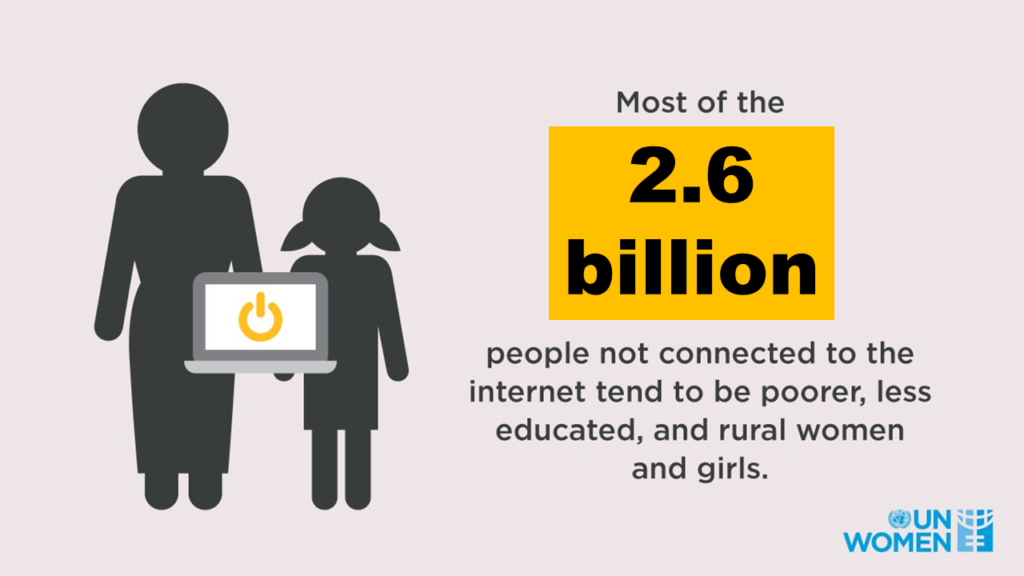
A: That’s a major issue. I’m vice-chair of an International Telecommunication Union (UN ITU) working group that produced the first UN survey looking at how to develop guidance on “how to build a metaverse for all” and address the global digital divide. There are currently about 2.6 billion people – a third of the global population – who don’t have access to the internet. Today, 1.2bn people, mostly in Africa and some parts of Asia, don’t even have stable access to electricity. So, a top issue is energy poverty. That needs massive intergovernmental collaboration, with private investment coming in to support public-private partnerships, to put more infrastructure in place. Because when you don’t even have the energy to cook your daily meals, you’re not going to talk about anything fancy on technology. You’re only thinking about your own survival. So, we need to address that fundamental issue.
Q: As people increasingly move to urban areas, what are the implications for technological advancement and inclusivity for poorer communities?
A: That’s a great question. Today, 55% of the global population live in cities, and by 2050 it’s going to be 80%. I also co-chair the UN ITU task group on pre-standardization for the “CitiVerse.” That term is a combination of “citizen” and “metaverse.” So, we’re looking at how we can develop future cities where we put the needs of the citizens at the center. In the past, smart city developments haven’t always achieved the best outcomes, even though they used some of the most advanced technology available at the time. Sometimes there is a focus on technology for its own sake, rather than on how technology can be used to improve the lives of people. This has led to some smart city projects being expensive, inefficient, and even harmful.
The problem is adoption. Innovation moves so fast, it is not always easy for people to catch up. If people don’t understand how best to utilize the technology for their own benefit, then the technology can’t maximize its positive impact. So, instead of just chasing the latest techno-hype, which moves too fast for most municipal governments to follow in any case, let’s go back to basics and ask what are the key issues all our diverse citizens care about.
Not all smart city technologies have effectively addressed the issue of rising property prices in many capitals, or address the issue of providing better support to their ageing populations. According to the latest figures from the World Bank, the digital divide (access to the internet) is not only between low-income households (64%) and high-income households (92%). It is also between men (82%) and women (64%), and between different locations: urban areas (88%) vs rural ones (73%). There is also a digital divide between younger people, aged 15-24 (94%) and our ageing parents and grandparents who are 65+ years old (74%). It’s between people who have additional special needs (56%) and people who don’t (76%). There are lots of things we need to break down into more detail to provide the additional support required by our diverse communities.
Q: So, if you’re poor in the real world, how do you ensure you’re not equally poor in the digital world?
A: The first thing we need to realize is that we all have to live in the physical world for most of our lives. People are not going to spend 100% of their time in a virtual-reality metaverse; that is a science-fiction dystopia, and it’s not going to happen. The way to bring the greatest value to the metaverse is to always link it to the physical world, to do experiments in the virtual environment which are too costly or too dangerous to realize in the real world. So, the most important thing we need to do is figure out how we can help people in the real world to receive the right kind of training to allow them to figure out how to use these new technologies to bring value to their existing life and work.
Everyone’s worried about their jobs now as a result of AI, but as President Franklin Roosevelt said during the Great Depression (1929–1939), when 24.9% of the total work force in the US (nearly 13 million people) were out of work: “the only thing we have to fear is fear itself.” If we put our fear aside, look at what are the biggest challenges, and break them down into smaller, more manageable tasks, then we can really support people from diverse backgrounds with diverse needs, using new technologies within the wider metaverse ecosystem. And we’re doing that analysis now at the UN ITU working group.
Q: What are the changes that are required to ensure the technology benefits everyone?
A: Training is clearly a very important area, but so is confidence. Every one of us needs to have the confidence to believe in ourselves first before we can help other people to flourish. We human beings, as a species, are extremely adaptable. Also, in the UN ITU task group on the CitiVerse we are proposing a new type of partnership, which we call a public-private-people-planet partnership. Any kind of digital future we are planning and implementing has to ensure that the needs of our diverse people will be at the center. And to make sure everything is sustainable in the longer term, and not at the cost of our planet. We are working in collaboration with many different member states of the UN ITU to look at how we use all kinds of frontier technologies to support people-centered future cities. What will be the roadmap that cities of different sizes, focus, cultures and histories can benefit from? Should we develop a more regional focus? For example, the CitiVerse developed for Europe will be very different from the CitiVerse developed for Africa.
Q: How does technology help achieve that greater equality and greater inclusivity?
A: Everything needs to be more tailored: personalized, regionalized, to cater to the needs of different countries and different industries. I don’t believe that the best metaverse strategy is one-size-fits-all. Instead, there needs to be a metaverse strategy fit for tourism, a metaverse strategy fit for healthcare, another for arts and design, or for the entertainment industry, or for a smart factory, and so on. Rather than trying to build everything from scratch, we need to look at what’s already available out there in the existing system. For any kind of IT implementation or adoption, we can’t just get rid of the existing system, which has been running for decades. Innovation needs to be incremental to be incorporated properly into existing systems.
Q: It’s an evolution, but with people and the planet at the heart of the plan?
A: Absolutely. I would say it will always be people-centered and we need to be very balanced.
Q: You seem very optimistic that there’s a good future ahead for all of us?
A: I’m optimistic because we’ve already tried to map out all the challenges and prepared for the worst scenarios, and therefore we do not have any room left to fear anything. Our focus is to identify the most effective and pragmatic solutions to address any challenges experienced in the process. Data storage, for instance. The European Commission has given €2 million of funding to the ASCEND initiative, part of the Horizon Europe program, to put data centers in Earth orbit, thus minimizing the environmental impacts. And frontier tech companies are looking at putting data storage in the form of synthetic DNA. Like the dinosaur in amber in the film Jurassic Park, DNA is an extremely stable form of data storage. It lasts a very long time — up to 1.5 million years — while the most commonly-used medium for long-term storage, magnetic tape, has to be replaced every 10 years. The storage density potential of DNA is 10 million times that of traditional media such as hard disks and tapes, and it’s carbon emission free, too. Mark Bathe, PhD, an MIT professor of biological engineering, said that if we want to store the whole world’s data in DNA, we could fit all of it inside coffee mug.
Q: Returning to your FDR quote about fear: do we just need to stop worrying and calmly accept that this is where technology is going?
A: Yes. Life is short, and you can choose to live it in a really happy and optimistic way, or a miserable and pessimistic way. Why don’t we focus all our energy on things we can control, and on things we can do to help each other flourish, rather than fighting each other. It doesn’t make sense. Steve Jobs once said, we are here to make a dent in the universe. I think we are here to make a dent in the metaverse!
The International Telecommunication Union (ITU) is a specialized agency of the United Nations responsible for many matters related to information and communication technologies (ICTs). It was established on 17 May 1865 as the International Telegraph Union, making it the oldest UN agency. Doreen Bogdan-Martin is the Secretary-General of ITU, the first woman to serve as its head.
The ITU’s main functions are to:
Promote the shared global use of the radio spectrum, which is a finite resource that is essential for wireless communications.
Facilitate international cooperation in assigning satellite orbits, which are also a finite resource that is essential for satellite communications.
Assist in developing and coordinating worldwide technical standards, which ensure that ICT networks and devices can interoperate seamlessly.
Work to improve telecommunication infrastructure in the developing world, to help bridge the digital divide.
The ITU has played a key role in the development of ICTs. It was responsible for the development of the first international telegraph and telephone conventions, and it has continued to play a leading role in the development of new technologies, such as the Internet and mobile communications.
The ITU’s work is essential for the continued development and growth of ICTs. It helps to ensure that ICTs are used in a fair and equitable manner, and it helps to promote the benefits of ICTs for all.
Here are some of the ITU’s key activities:
World Radiocommunication Conferences (WRCs) are held every three to four years to allocate the radio spectrum and satellite orbits.
ITU-T Recommendations are technical standards that ensure that ICT networks and devices can interoperate seamlessly.
ITU-D Development Programmes provide financial and technical assistance to developing countries to improve their telecommunication infrastructure.
The ITU is a global organization with over 193 member states. It also has a number of associate members, such as non-governmental organizations and private sector companies. The ITU’s headquarters are located in Geneva, Switzerland.
ITU’s work on the metaverse
The ITU Telecommunication Standardization Sector (ITU-T) is one of the three Sectors (branches) of the International Telecommunication Union (ITU). It is responsible for coordinating standards for telecommunications and Information Communication Technology such as X.509 for cybersecurity, Y.3172 and Y.3173 for machine learning, and H.264/MPEG-4 AVC for video compression, between its Member States, Private Sector Members, and Academia Members.
Our working group on the metavese analyse the technical requirements of the metaverse to identify fundamental enabling technologies in areas from multimedia and network optimization to digital currencies, Internet of Things, digital twins, and environmental sustainability.
I am Vice Chairman of the Metaverses Working Group on Sustainability, Accessibility and Inclusion. We are working with global stakeholders to address the following issues of the metaverses, such as:
Environmental Sustainability related issues
Accessibility related issues
Social considerations
Diversity, equity and inclusion
Circular economy related issues
The Global Digital Divide
The global digital divide refers to the disparities in access to information and communication technologies (ICTs) between individuals, households, businesses, and geographic areas. These disparities can have significant consequences for individuals’ opportunities for education, employment, and overall well-being.
Here are some key facts and figures about the global digital divide:
🔶 2.6 bn people-33% global population are not connected to the Internet.
🔶 Gender gap in internet access: 17% in 2023-males: 82%; females: 64%
🔶 Socioeconomic gap in internet access: 28% in 2023(low-income households: 64%; high-income households: 92%)
🔶 Age gap: 20%(15-24 years old: 94%; 65+ years old: 74%)
🔶 Disability gap: 20%(people with disabilities: 56%; people without: 76%)
🔶 Mobile phones are playing an increasingly important role in bridging the digital divide. In developing countries, 92% of people have a mobile phone, compared to 66% who have a computer.
UN Metaverse For All Survey
As Vice-Chair of the ITU Metaverse Working Group on Sustainability, Accessibility, Inclusion, I feel strongly that whatever digital future we are planning to create, whether we use AI, metaverse or quantum technologies etc, it is important that we should ensure that we always have a people-centred approach and ensure no one left behind.
With the great support many amazing leaders at ITU (especially Prof Pilar Orero, Universitat Autònoma de Barcelona, Spain; Nevine Tewfik Loutfi Deputy Director of International Relations Ministry of Communications and Information Technology (MCIT), Egypt; Cristina BuetiCounsellor ITU Focus Group on metaverse), the first UN Survey on Metaverse For All are approved after many rounds of discussions and revisions.
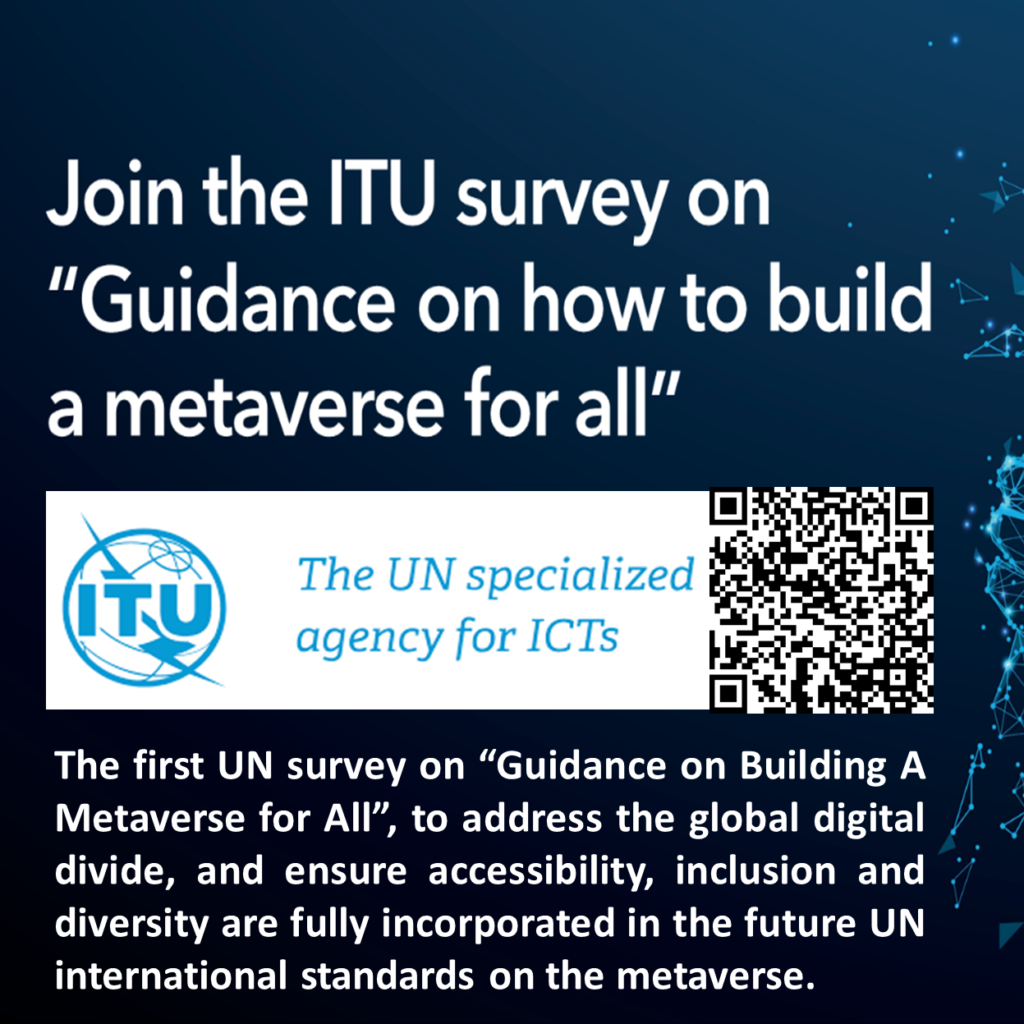
The Metaverse Institute, a leading strategy consulting organization for the metaverse, is inviting everyone to participate in a UN ITU survey to help shape the future of the metaverse. The survey is open to everyone.
The survey takes 15 minutes to complete. It asks participants about their thoughts on the following topics:
Addressing the digital divide in the metaverse
Ensuring that the metaverse is accessible to all
Ensuring diversity, equity, and inclusion in the metaverse
How to use a combination of emerging technologies within the metaverse to create smart, sustainable and inclusive cities, which we call the “CitiVerse”
The results of the survey will be used to develop a report and will contribute to the work of the UN ITU Focus Group on Metaverse which offers a venue to start laying the groundwork for international standards that can help create an inclusive, accessible and sustainable metaverse for all.
Seizo Onoe, Director of the ITU Telecommunication Standardization Bureau, said:
“Our metaverse focus group welcomes your participation in its work to guide us towards an open, inclusive metaverse that benefits everyone, everywhere. Your responses to this survey will make a valuable contribution to our work to ensure that the metaverse supports sustainable development in every part of our highly diverse world.”
Dr Christina Yan Zhang, CEO of The Metaverse institute said:
“The metaverse is in its early stages, but it has the potential to revolutionize how we interact with the world. One-third of the global population is offline, so how can we ensure that emerging technologies leave no one behind? We want to work with the global community to identify ways to ensure inclusivity, accessibility, and sustainability are fully embedded in our digital future for the benefit of all people and countries. By participating in this survey, you can help shape the future of the metaverse ecosystem, including AI, web3, and digital twins, developed through effective public-private-people-planet partnerships, and contribute to the UN Secretary General’s Global Digital Compact for an open, free, and secure digital future for all”.