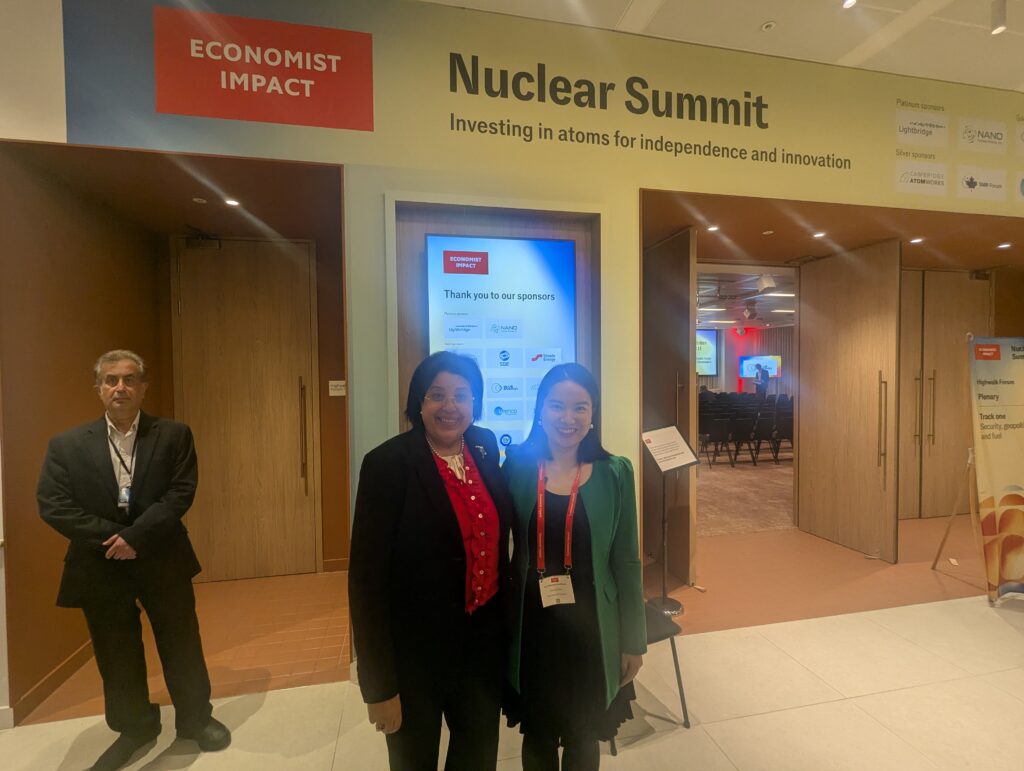
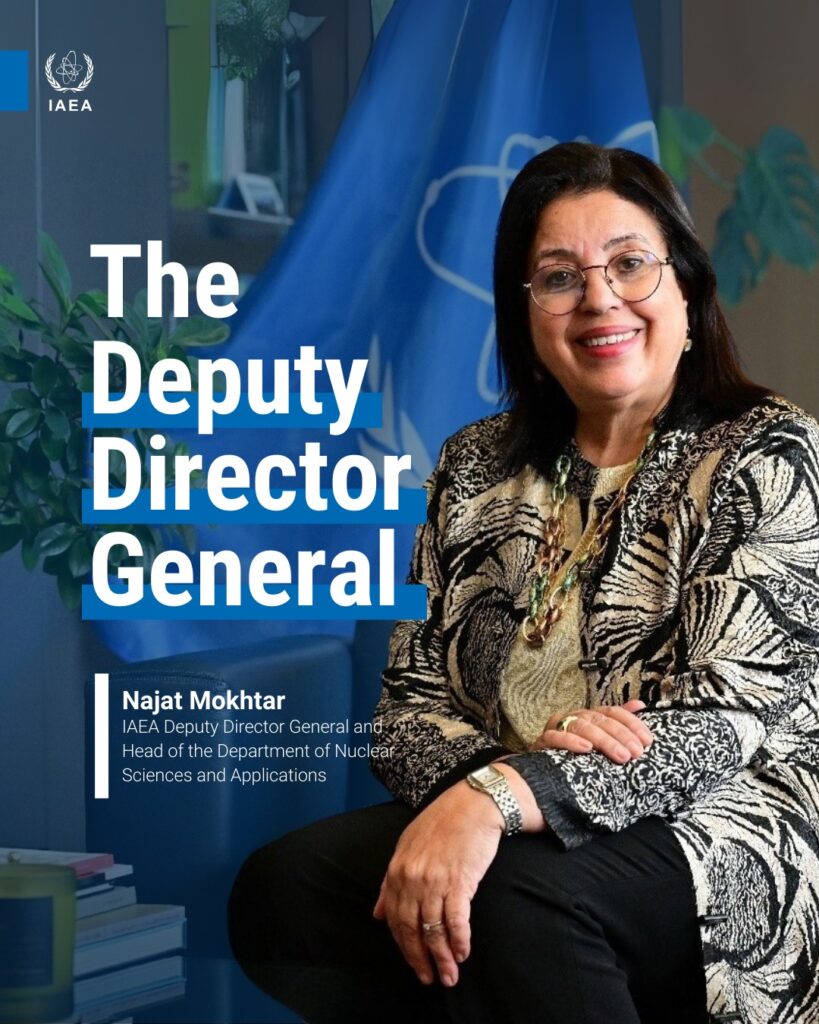
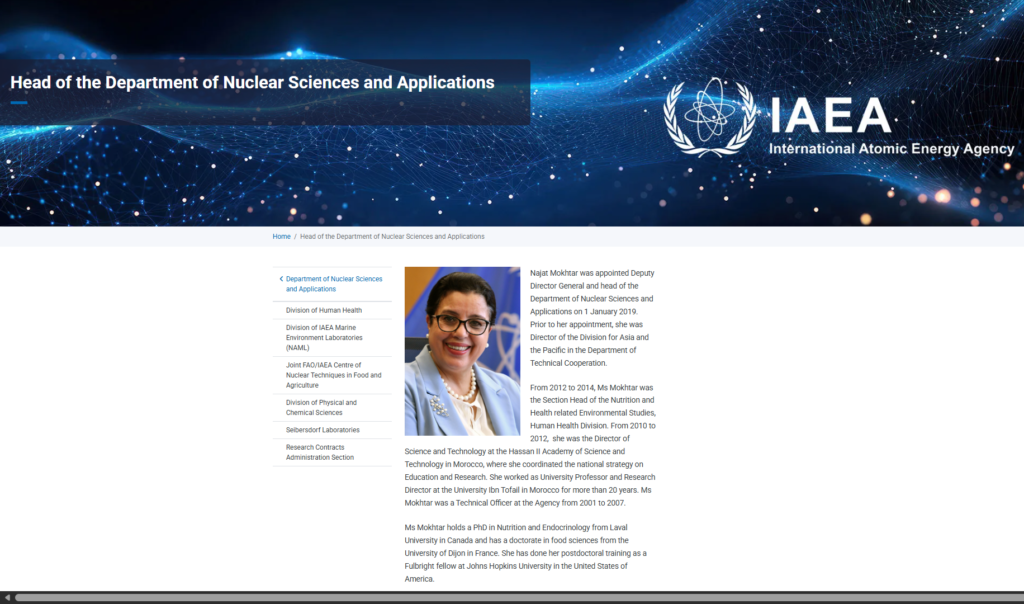
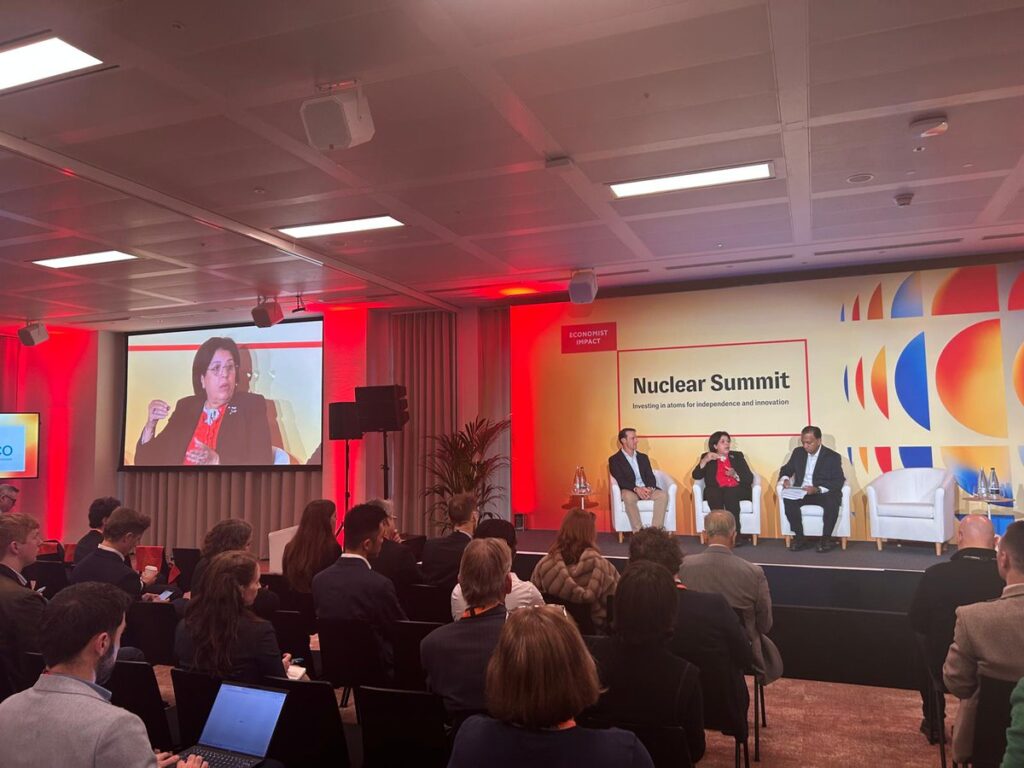
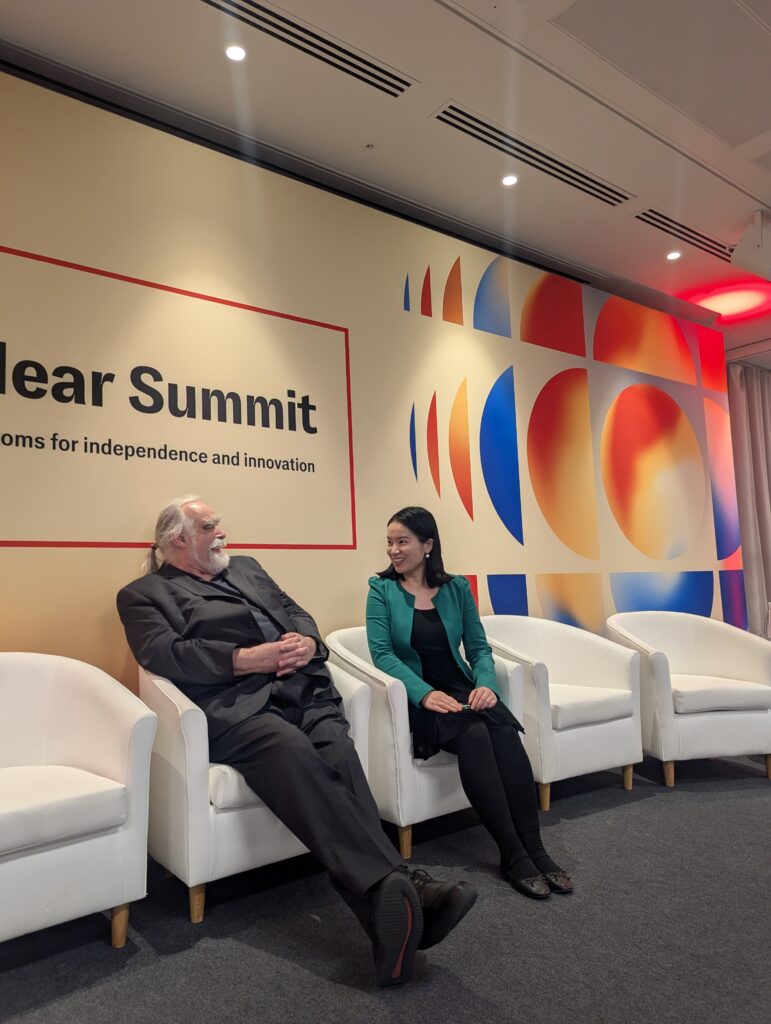
London, UK — April 15, 2026 — The Metaverse Institute participated in a landmark meeting today with Najat Mokhtar, Deputy Director General of the International Atomic Energy Agency (IAEA), during the Economist Impact Nuclear Summit. The discussion centered on the vital intersection of emerging technologies and the global “Nuclear Renaissance.”
Since Marie Curie’s pioneering discovery of Polonium and Radium in 1898, nuclear science has evolved from a laboratory wonder into a global pillar of human survival and equity. As the world seeks to meet aggressive climate targets, the IAEA projects that global nuclear capacity will reach 992 GW(e) by 2050—a 2.6x increase over current levels.
Nuclear for Good: A Global Impact Overview
The IAEA, the world’s “Atoms for Peace and Development” organization, currently oversees a global fleet of 417 operating reactors, with 62 more under construction. Beyond power generation, the agency is spearheading initiatives that address humanity’s most pressing challenges:
Water Security (GloWAL): Supporting 2.4 billion people in water-stressed regions through a network of 100+ labs.
Cancer Care (Rays of Hope): Bridging the “cancer gap” in low- and middle-income countries with a $105M investment across 30 nations.
Plastic Pollution (NUTEC Plastics): Utilizing nuclear technology to track microplastics and upcycle waste, with industrial implementation slated for 2026.
Food Security (Atoms4Food): A 60-year partnership with the FAO to enhance crop yields and soil fertility.
Pandemic Prevention (ZODIAC): An integrated global response system to detect zoonotic pathogens before they reach human populations.
Net Zero (Atoms4NetZero): Modeling energy transitions where nuclear power works in tandem with renewables.
Reflections from the Summit
While popular culture often leans into dystopian imagery, the reality on the ground at the Economist Impact Nuclear Summit was one of inspiration and rigorous safety. Engaging with world leaders revealed a profound commitment to developing peaceful nuclear energy while maintaining ironclad safeguards against weaponization and operational risks.
We extend our deepest thanks to the exceptional team at The Economist, including Helen Ponsford, Vijay Vaitheeswaran, Oliver Morton, and the many others who curated these vital conversations.
The Road to 2050: A Question of Convergence
As we look toward a future where AI demand is projected to consume 20% of global electricity, nuclear energy is expected to provide 17% of that supply. The Metaverse Institute is exploring how we can leverage a “Tech-Nuclear Convergence” to empower 8 billion people:
Agentic Digital Twins & Robotics: Can autonomous maintenance systems reduce human exposure and operational costs?
Quantum & Blockchain: Can Quantum Key Distribution (QKD) and blockchain-enabled safeguards create unhackable tracking for nuclear waste management?
Small Modular Reactors (SMRs): How will localized, scalable power change the landscape for decentralized energy?
The Metaverse Institute remains committed to exploring these digital frontiers to ensure that the Nuclear Renaissance is safe, sustainable, and inclusive with all interested stakeholders.
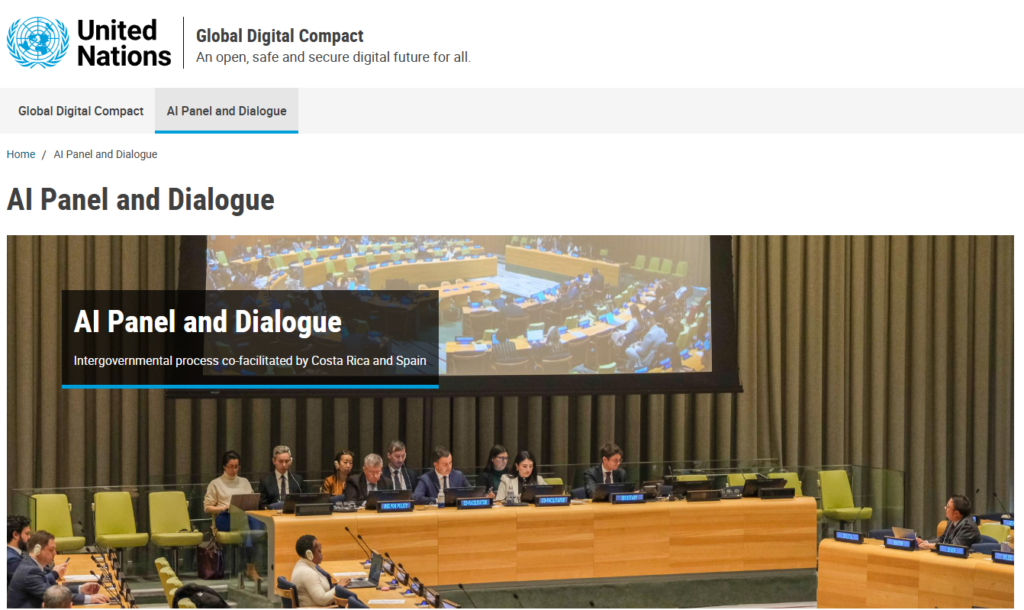
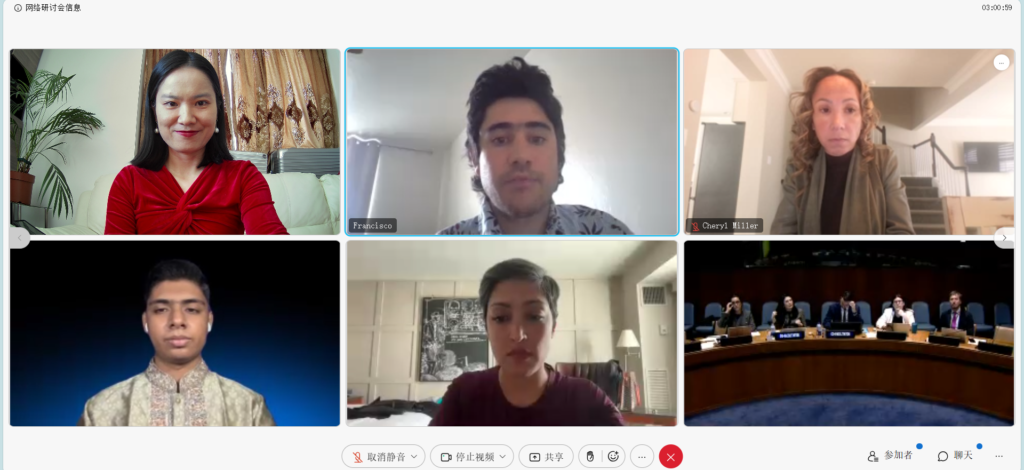
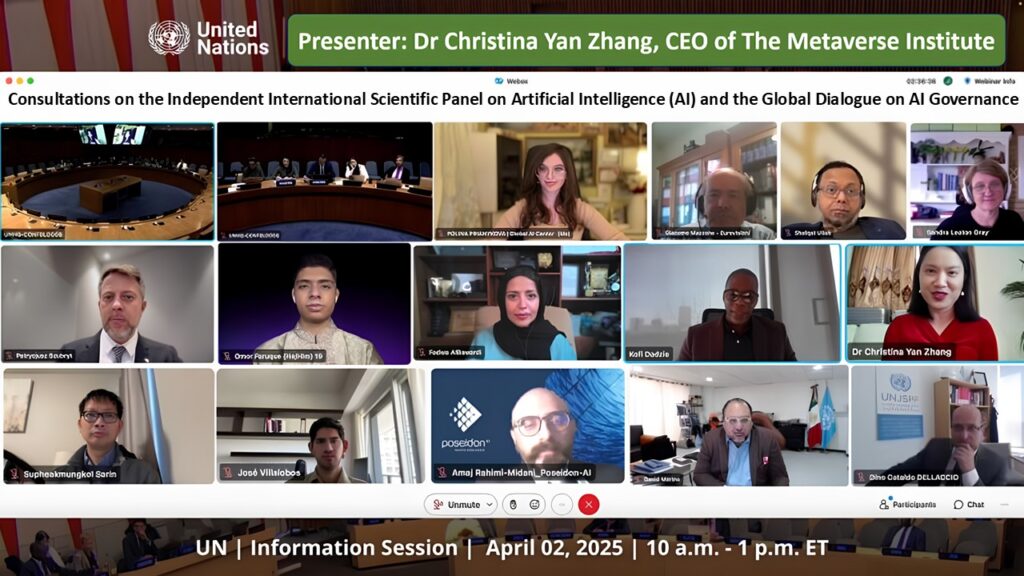
On April 2nd, 2025, amidst a complex global backdrop marked by new US tariff announcements potentially signaling heightened trade tensions, the United Nations hosted a crucial Information Session with Stakeholders on AI Governance. The Metaverse Institute was honoured to contribute to this vital dialogue, represented by CEO Dr. Christina Yan Zhang. The session underscored the urgent need for international cooperation on Artificial Intelligence, even as geopolitical friction persists.
The timing was stark: as discussions unfolded on harnessing AI for global good, headlines reflected a world grappling with economic nationalism. This juxtaposition highlights the central challenge of our time – how can we build unprecedented global collaboration required to manage AI’s profound potential and perils?
The UN, through initiatives like the Global Digital Compact, is laying the groundwork. Member States have agreed to establish an Independent International Scientific Panel on AI and foster a Global Dialogue on AI Governance, with Costa Rica and Spain commendably co-facilitating this process. These steps are crucial, but the path forward requires navigating significant hurdles.
In her address, Dr. Zhang echoed warnings from leading AI figures like Geoffrey Hinton, emphasizing the critical need for collective action to ensure the race towards Artificial General Intelligence (AGI) – AI smarter than humans – does not inadvertently lead humanity towards existential risks. Key concerns raised included:
Existential Threats & Global Safety: Prioritizing international collaboration to steer AGI development away from potential catastrophic outcomes.
Sustainability Imperative: While AI offers tools to combat climate change, its own environmental footprint – water and energy consumption, e-waste generation, carbon emissions – demands rigorous evaluation and mitigation strategies.
Societal Transformation: Proactively exploring effective governance models to address the sweeping societal impacts of AGI, including job displacement, the future of warfare, the feasibility of universal basic income, and the exacerbation of the digital divide.
The session brought together influential voices from across the AI ecosystem – policymakers, technical experts, civil society leaders, and international organizations – fostering essential dialogue. We extend sincere gratitude for the leadership shown by Costa Rica’s Ambassador to the UN, H.E. Maritza Chan, Spain’s Ambassador to the UN, H.E. Héctor Gómez, the UN Office for Digital and Emerging Technologies, particularly Lucia Velasco (Head AI Policy) and Rebekah Hayoung Woo (Policy Officer), for their significant support in advancing these critical conversations. Engaging with fellow leaders dedicated to responsible AI deployment was both insightful and encouraging.
This brings us to the pivotal question facing the international community:
How can we, as a global collective, forge the unprecedented international cooperation needed to maximize AI’s transformative power for innovation, efficiency, and solving global challenges, while simultaneously mitigating its inherent and significant risks – including sustainability challenges, a widening digital divide, and potential existential threats – especially within a climate of increasing geopolitical tension and potential trade conflicts?
Achieving this delicate balance requires more than technical solutions; it demands political will, shared ethical frameworks, and a commitment to global solidarity that transcends national interests. The path forward is complex, but the stakes – shaping a future where AI serves humanity safely and equitably – could not be higher.
Information and communications technology is key to ending global poverty – but only with universal access to digital skills and platforms, warns leading economist Jeffrey Sachs.
“Advanced digital technologies will play a breakthrough role in raising productivity in every sector of the economy, and hence can be key in accelerating the end of poverty,” claims Prof. Sachs in an interview published in the latest edition of Transform, Huawei’s thought leadership magazine.
Noted economist Prof. Jeffrey Sachs and Dr. Christina Yan Zhang on the cover of Transform #14
“Of course,” Sachs cautions, “If the digital divide widens, ICT can also exacerbate inequalities…¬The key is to ensure universal access to the skills and digital platforms needed across the society.”
In just six years, the United Nations aims to eradicate extreme poverty worldwide and reduce by half the proportion of people living in poverty. Yet more than 700 million people remain stuck at incomes of less than the International Poverty Line of US$2.15 a day, a threshold set by the World Bank.
Information and communications technology (ICT) is recognized as a key factor in helping individuals escape poverty or mitigate its most damaging effects. ICT also helps countries raise living standards by fueling economic growth.
For those and other reasons, the new edition of Transform presents a decidedly optimistic perspective hidden amidst the cautionary tales.
Otaviano Canuto, a former World Bank vice-president and deputy finance minister in Brazil, says that, ideally, ICT will deliver knowledge and enhance people’s capabilities.
“A major function of the World Bank is to play a hummingbird role,” Canuto says. “Hummingbirds pollinate flowers, and these multilateral institutions can also pollinate with knowledge.”
This pollination is especially crucial for people living in cities, where 80% of the world’s population will live by 2050. Christina Yan Zhang, CEO of the Metaverse Institute, says technology will be vital in delivering services to citizens through what she calls the “CitiVerse.”
“That term is a combination of ‘citizen’ and ‘Metaverse,’ she says. “We’re looking at how we can develop future cities where we put the needs of the citizens at the center. In the past, smart city developments haven’t always achieved the best outcomes…Sometimes there is a focus on technology for its own sake, rather than on how technology can be used to improve the lives of people.”
The latest interviews in the magazine and other thought leadership content can be found on the Transform web site.
Note:
Published every two months, Transform is an online and print magazine that runs video interviews, newsmaker profiles, and feature articles that examine the relationship between technology, business, and society. A PDF of the magazine can be downloaded from the web site, and a hard-copy edition is available in some geographic locations and upon request.
Each edition is about one topic. Recent examples include cyber security, healthcare, and finance.
Seven hundred million people globally live in extreme poverty, subsisting on less than US$2.15 a day. More than half live in sub-Saharan Africa and children are twice as likely as adults to be victims.
By 2030, according to the UN’s Sustainable Development Goal 1, we’ll have stamped out extreme poverty. In reality, says The World Bank, progress has stalled badly and about 600 million will still be caught in the extreme poverty trap.
Little wonder that guests for this edition of Transform, which looks at the impact of digital technology in tackling global poverty and inequity, are united in their skepticism of SDG1’s chances of meeting its own deadline.
But ICT at least offers hope, they say… if it’s delivered universally.
“Advanced digital technologies will play a breakthrough role in raising productivity in every sector of the economy, and hence can be key in accelerating the end of poverty,” claims the celebrated economist Professor Jeffrey Sachs.
But he adds a note of caution: “If the digital divide widens, ICT can also exacerbate inequalities and leave the weaker, poorer, less educated parts of society even further behind.”
That double-edged sword is also highlighted by Otaviano Canuto, a former vice-president of The World Bank and deputy finance minister in Brazil. ICT, he says, has the potential to increase productivity, but – without the right regulatory framework – the potential to misinform and exclude, too.
Acting in harmony will be key: “A major function of the World Bank is to play a hummingbird role. Hummingbirds pollinate flowers, and these multilateral institutions can also pollinate with knowledge,” he says.
For the CEO of the Metaverse Institute, Christina Yan Zhang, the stumbling block is as much about adoption as universality: if people lack the skills to understand the tech, then they can’t reap its benefits.
“Everything needs to be more personalized, regionalized, to cater to the needs of different countries and different industries,” she says. “Rather than trying to build everything from scratch, it all needs to be incorporated properly.”
Also in this edition:
Huawei’s rotating chairman highlights the role of private companies, global cooperation and pooled experience in “making the whole greater than the sum of its parts” and accelerating progress.
UNESCO’s chair in science and education for African food systems reveals why poor people experience more shocks and are less able to protect themselves from them.
An Indian telecoms entrepreneur points to the limitations of government intervention and the role that individuals must play in helping themselves.
A professor and data economist flags the pivotal importance of “informational capabilities” in making people, not tech, the primary focus of policies.
And the founder of the Digital Poverty Alliance explains why connecting the 3 billion unconnected makes economic as well as moral sense: “The more you can enable customers to engage with you, the better your business will be.”
Hummingbirds, swords, shocks and skills: the challenges in solving global poverty are plenty. But the prize is a great one – not just for the sake of the poorest in the world, but in the long-term interests of all of us.
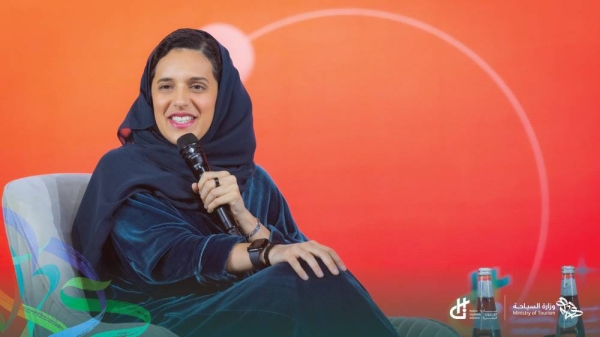
Princess Haifa bint Mohammed bin Saud bin Khalid, Saudi vice minister of Tourism, announced that there are currently 925,000 individuals employed in the tourism sector, of which 45 percent are women. She highlighted the commendable efforts of these individuals in empowering human capital and fostering skills and capabilities for both the present and the future.
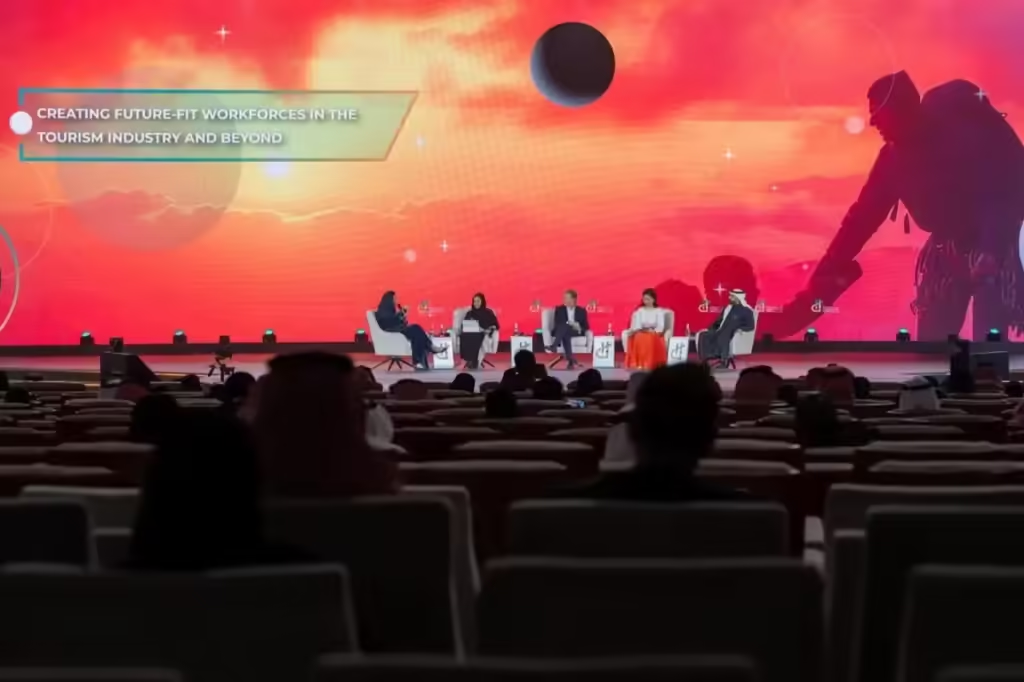
These remarks were made during her participation in the ‘Creating a Future-proof Workforce in the Tourism Industry and Beyond’ dialogue session, which took place as part of the Human Capacity Initiative Conference held lately in Riyadh.
The session included other notable participants such as Dr. Christina Yan Zhang, CEO of the Metaverse Institute; Alistair Gosling, founder and CEO of EXTREME International; Hanin Al-Subaie, founder of the Darent application; and Mohammed Al-Mulhim, founder of Pangea Tourism and Adventure Company.
Technological transformation of global jobs
The Vice Minister underscored that, according to the World Economic Forum (WEF), around 33 percent of global jobs will undergo transformation due to technological advancements, necessitating reskilling and skill development. She further explained that technology will play a crucial role in the tourism sector, enabling entry into new domains and necessitating adaptation. By investing in technology and integrating it into the field, those working in tourism can enhance their development and progress, including utilizing data science for informed decision-making.
Investing in future-oriented opportunities in tourism
Throughout the session, the speakers stressed that cities worldwide are striving to develop their tourism sectors and leverage tools to attract diverse groups of tourists. They emphasized the convergence of virtual reality with the real world and the importance of investing in future-oriented opportunities within the field. Furthermore, they highlighted the need for skilled technicians who can fully harness these capabilities and adapt modern technologies to benefit humanity in various aspects of life.
The Saudi Press Agency (SPA), established in 1971, is a prime reference for those interested in local news and events. The agency provides accurate and real-time media content in several languages. It operates according to professional best practices and makes use of the latest effective communication techniques. SPA seeks to be an influential voice of the Kingdom of Saudi Arabia in the Arab and Islamic worlds, as well as globally.
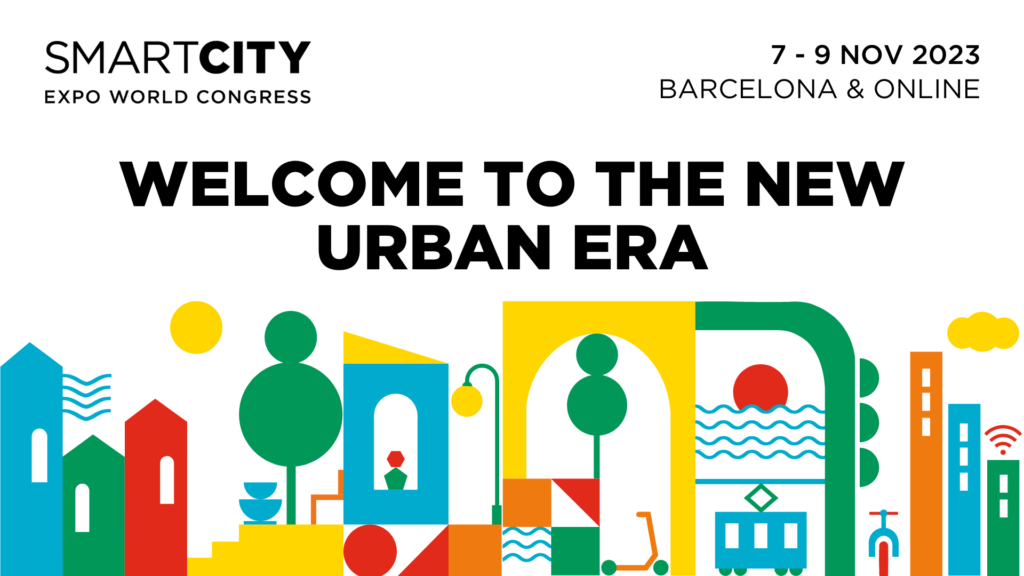
The Smart City Expo World Congress held in Barcelona from Nov. 7-9.
RIYADH: Saudi Arabia will showcase its achievements in building smart townships at a global event in Spain through the participation of its artificial intelligence authority.
According to the Saudi Data and Artificial Intelligence Authority, it will display its AI expertise at the Smart City Expo World Congress to be held in Barcelona on Nov. 7-9.
Essam Al-Wagait, director of the National Information Center, will shed light on SDAIA’s contributions in deploying the latest technologies to enhance the quality of life of the Kingdom’s residents.
As a global event partner, SDAIA will also demonstrate its commitment to aligning with the UN’s sustainable development goals and achieving the objectives outlined in Saudi Vision 2030.
The authority will showcase its efforts in the field of digital transformation, including the national smart cities platforms — Sawaher and Baseer.
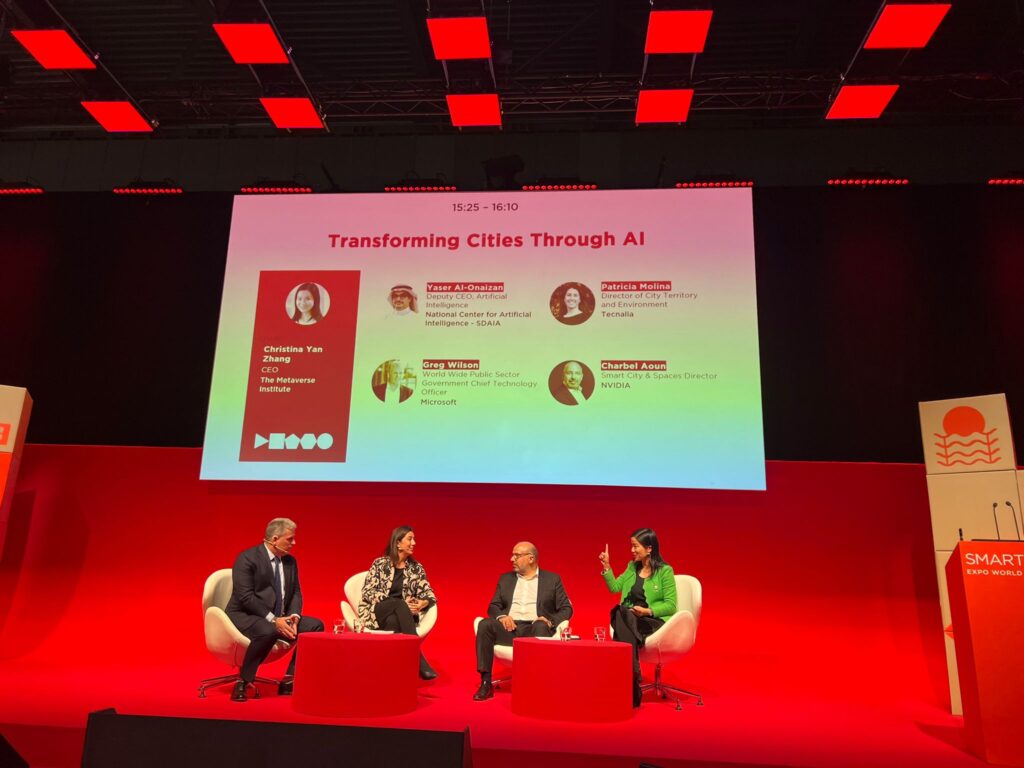
The event will feature sessions on transforming cities through AI, with participation from Yasser Al-Onaizan, deputy CEO of the National Center for Artificial Intelligence at SDAIA, along with other industry experts.
Among them are Christina Yan Zhang, CEO of the Metaverse Institute, and Patricia Molina, who serves as the director of city, territory, and environment at TECNALIA. Additionally, Greg Wilson, who holds the position of worldwide public sector government chief technology officer at Microsoft, and Charbel Aoun, the director of smart city and spaces at NVIDIA.
Another session, titled “Smart Governance Responding to Citizen’s Needs,” will feature Sattam Al-Subaie, CEO of the Smart City Excellence Center at SDAIA, along with other distinguished speakers.
In a separate session focusing on the evolution of modern urban living, experts will emphasize the importance of creating comprehensive ecosystems that cater to the varied needs and aspirations of urban populations.
The Smart City Expo World Congress is one of the largest and most influential gatherings dedicated to urban innovation and cities, with more than 25,000 multi-sectoral participants from 140 countries.
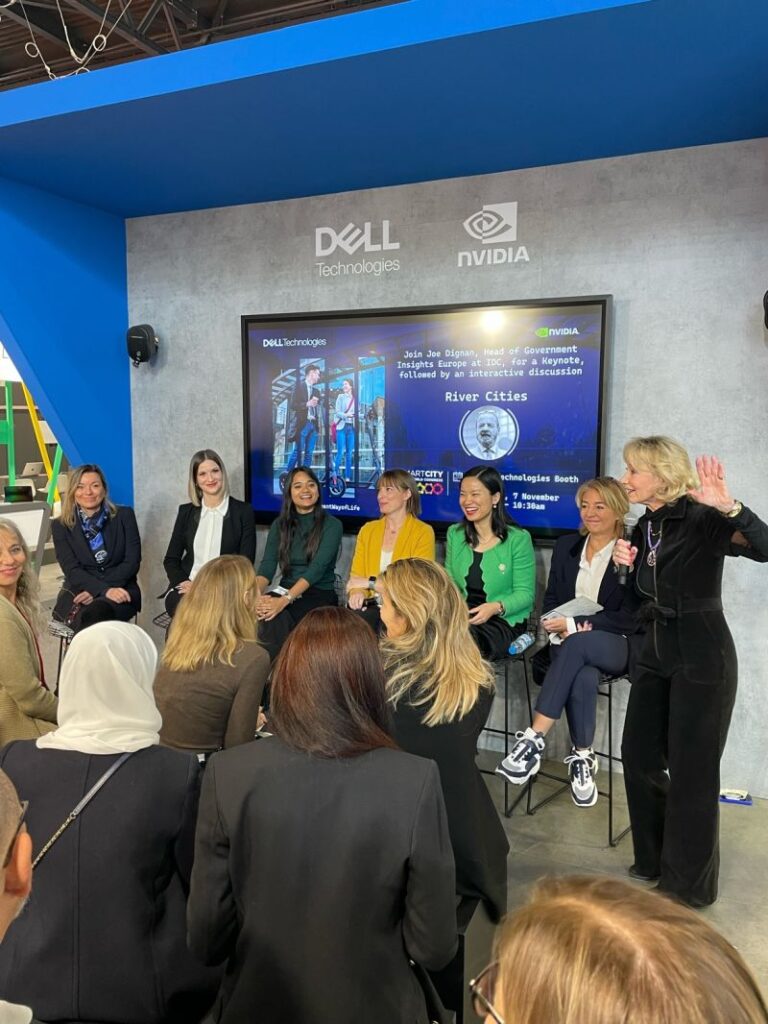
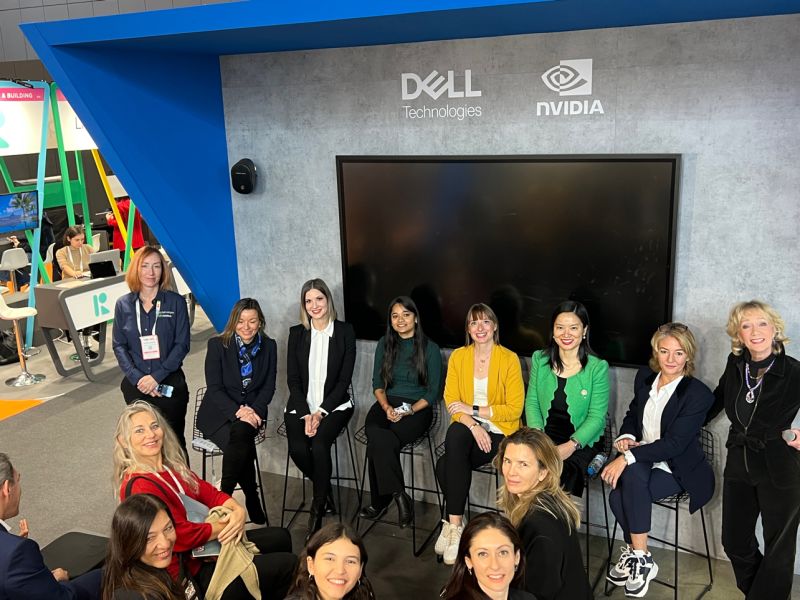
Jointly held with NVIDIA and Dell, the Women in Smart Spaces panel discussion aims to foster an “authentic gender balance” across all city operations around the world.
SmartCitiesWorld is joining with technology companies NVIDIA and Dell to host the Women in Smart Spaces panel discussion at Smart City Expo World Congress in Barcelona on Wednesday, 8 November from 9:30 to 10:30am.
The organisers have handpicked a number of top women attending the Expo to tell the story of their journey in the smart city space. Sandra Baer, SmartCitiesWorld ambassador and CEO of Personal Cities, will chair the discussion and explains that the intention is to help foster “authentic gender balance” across all city operations, around the globe.
She adds: “We see it in the real world – an equitable balance of women in smart spaces allows all of us to ‘understand’ the challenges and solutions for cities in an all-encompassing light.”
Top women panellists
The line-up of panellists includes: Eva Labarta, head of public sector, Amazon Web Services (AWS); Christina Yan Zhang, CEO of The Metaverse Institute; Jennifer Sanders, co-founder and executive director, North Texas Innovation Alliance; Pooja Venkatesh, senior product manager, Smart Cow; Maria Galindo Garcia-Delgado, board member of Climate Neutral and Smart Cities Mission for the European Commission; Ekaterina Sirazitdinova, senior deep learning data scientist, NVIDIA.
Panellists will talk about their own smart city experience and discuss some of the barriers they’ve faced as well as their successes. They will also provide advice and recommendations to women everywhere on how they can secure the power, position – and pay – to build a more gender-balanced and equitable smart city space.
“There remains a real need to create more awareness of the challenges women continue to face in sectors such as tech, engineering, science, finance and more,” says Carlota Da Veiga Pestana, chief commercial officer, SmartCitiesWorld.
“If we are to build successful smart and sustainable cities, we need the diversity of thinking, actions, insight and vision that women can bring. We want to inspire women of all ages to make their mark in the smart city space and are delighted to jointly host this panel discussion.”
“We see it in the real world – an equitable balance of women in smart spaces allows all of us to ‘understand’ the challenges and solutions for cities in an all-encompassing light”
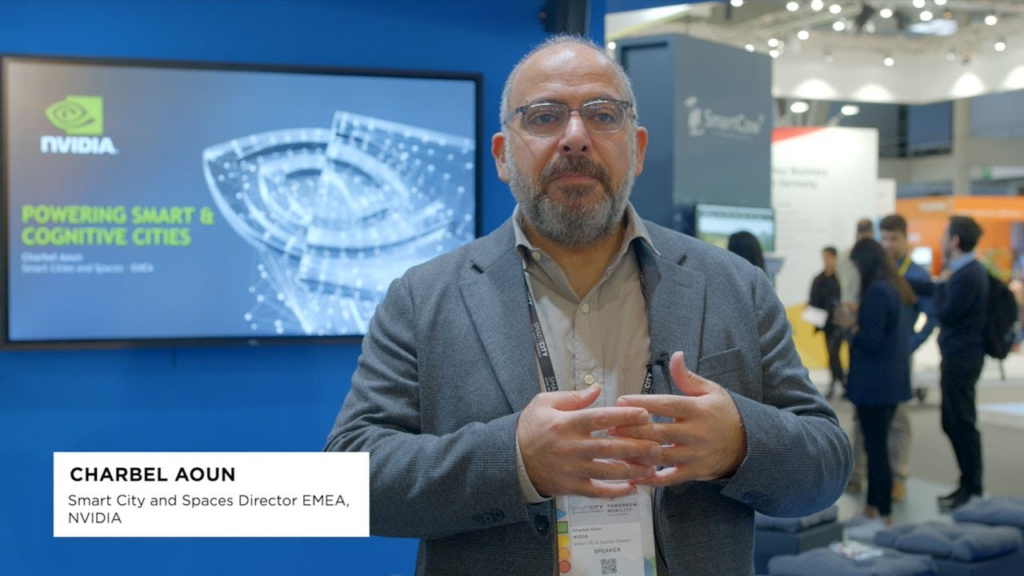
Charbel Aoun, director of Smart Spaces and Cities at NVIDIA will kick off the event at 9.30am at the Dell Booth, located in Hall P1, Level 0, Street C, Stand 10, before handing over to Sandra Baer to moderate the conversation.
Smart City Expo World Congress runs 7-9 November at Fira De Barcelona. The SmartCitiesWorld team will be there in force and is hosting a number of events, roundtables, workshops and drinks receptions. We will also be reporting live from the event so if you are launching a new product or service, or announcing any smart city developments, email us at press@smartcitiesworld.net.
SmartCitiesWorld provides a quality, comprehensive and current global content resource for urban leaders and their partners.
Through our platform, we encourage the smart city ecosystem to share their experiences and learn from each other.
SmartCitiesWorld enables connections between smart city challenges, solutions, industry peers, suppliers, and partners at your desk on the move and at our events.
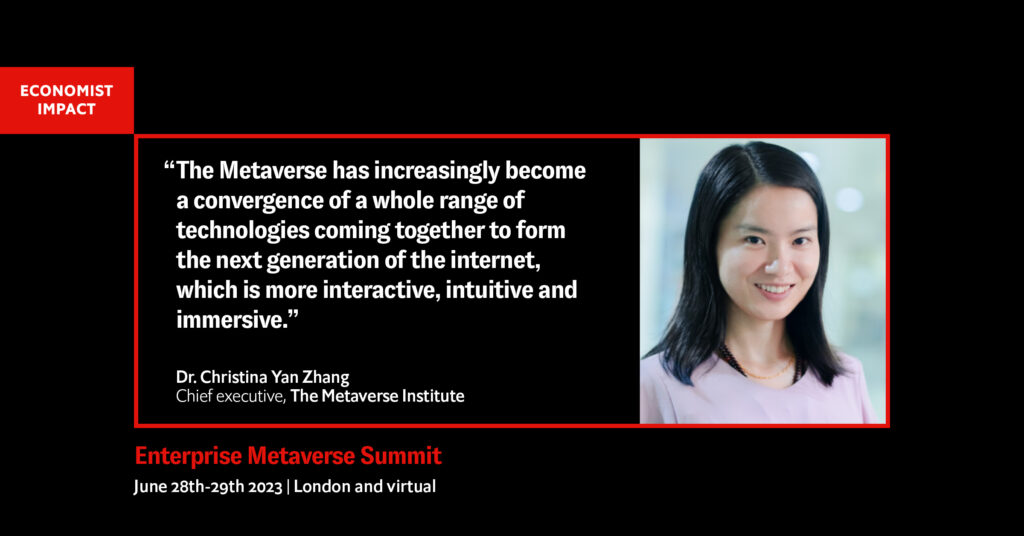
Hosted at the Hilton London Bankside on 28 June, the widely-read publication will kick off the two-day event and host attendees from the global tech community.
Speakers, thought leaders, panellists, companies, and organisations will attend the Summit to explore the industrial metaverse: a key component of Industry 4.0 that analysts predict will reach nearly $48 billion USD in value, according to research from McKinsey.
Critical points of discussion will include industrial use cases, digital twins, immersive hardware and software, and theoretical and ethical considerations for developing the industrial metaverse. Many of the technologies involved will lead to greater workplace safety, increased training efficacy, and facilitated collaborative efforts.
Across the virtual, augmented, mixed, and extended reality (VR/AR/MR/XR) sectors, the Enterprise Metaverse Summit will feature some of the world’s top frontrunners for the industrial metaverse and related technologies.
Additional technologies will include 5G, the blockchain, cryptocurrencies, artificial intelligence (AI), and more.
Overall, the event will host more than 100 global speakers, over 60 main and breakaway sessions, and an attendee list surpassing 300 people.
Sponsors for the stellar event also include Meta Platforms, PricewaterhouseCoopers (PwC), VRARA London, Siemens, HTC VIVE, Deloitte, Aveva, and BGC X.
Enterprise Metaverse Summit Speaker Lineup
The event will host a stellar roster of speakers, organisations, academics, and companies. Some of the top speakers attending the Summit are:
Eva Maydell, Member of the European Parliament
Sudeep Shetty, Global Chief Information and Transformation Officer, BRITVIC PLC
Dr Lisa Cameron MP, Chair, Crypto and Digital Assets, All Party Parliamentary Group, UK Parliament
Holly Landry, Chief data officer, Maersk
Lisa Smith, Partner, Inclusion Lead, Unlimited Reality, Deloitte
Gerhard Kress, Vice-President, Xcelerator Portfolio and Digital Business, Siemens
Christine Trodella, Vice-President, Meta Reality Labs, Meta
Nathan Naidoo, Director of Public Policy, Meta
Emmanuelle Rivet, Vice-Chair, US TMT & global technology leader, PwC
John Dabill, John Dabill, Director, EMEA, HTC VIVE
Jay Koganti, Vice-President, Supply Chain COE, The Estée Lauder Companies
Joan O’Hara, Senior Vice-President, Public Policy, XR Association
Sebastian Pedro Bea, President, Coinbase Asset Management
Dr Muhsinah Morris, Metaversity Director and Assistant Professor, Morehouse College and Chief Executive, Metaverse United
Dr Christina Yan Zhang, Chief Executive, The Metaverse Institute
The Finnish city used Tampere Smart City Expo to showcase how it aims to combine the digital and physical worlds to enhance the lives of city dwellers.
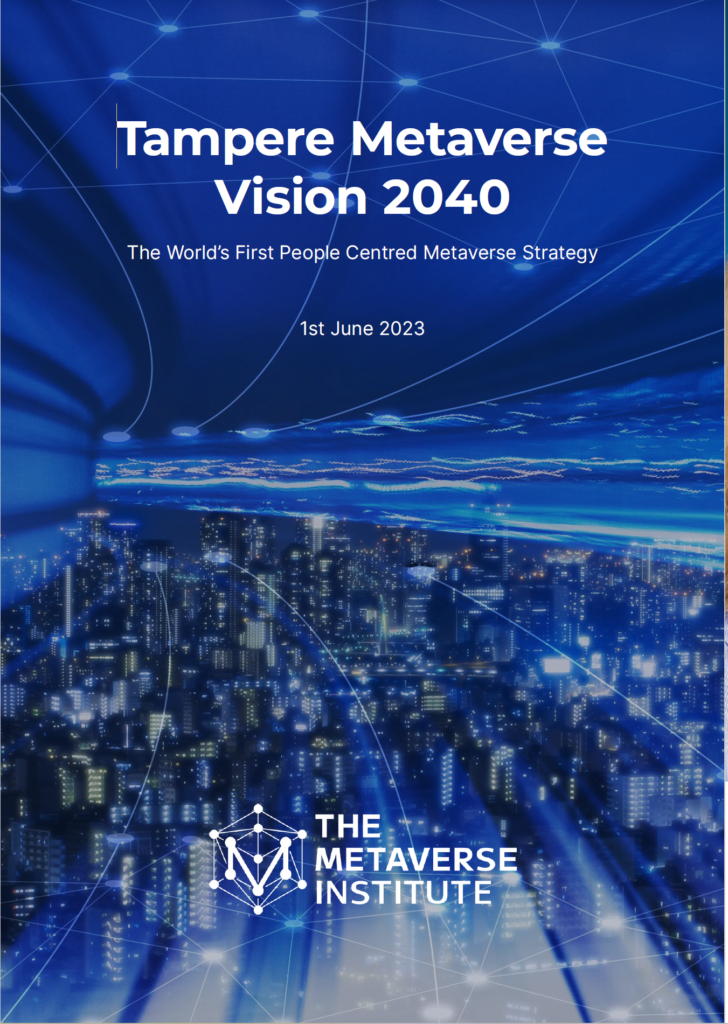
The Finnish city of Tampere is inviting companies to test their smart city solutions as it takes its first steps to becoming “a human-centric metaverse city”.
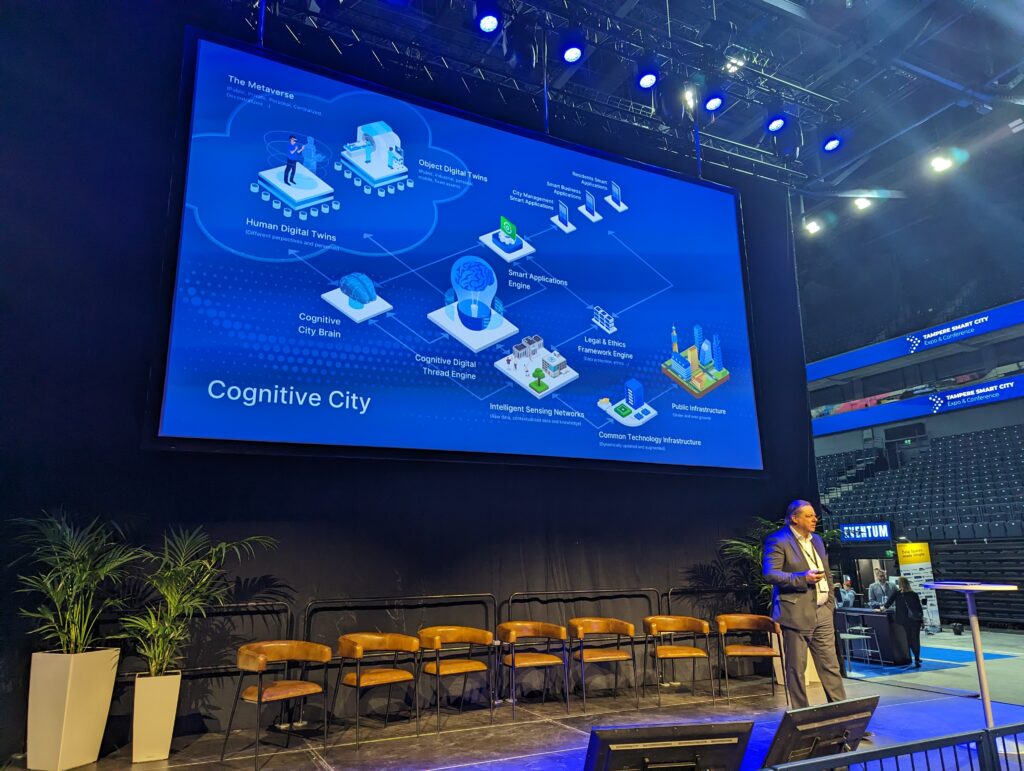
It used the recent Tampere Smart City Expo & Conference to showcase how it aims to combine the digital and physical worlds and create a vibrant digital environment that enhances the lives of city dwellers.
The metaverse and digital twins
The international Tampere Smart City Expo & Conference convened experts from around the world to share ideas in areas such as Web3 technology, sustainability, artificial intelligence and mobility.
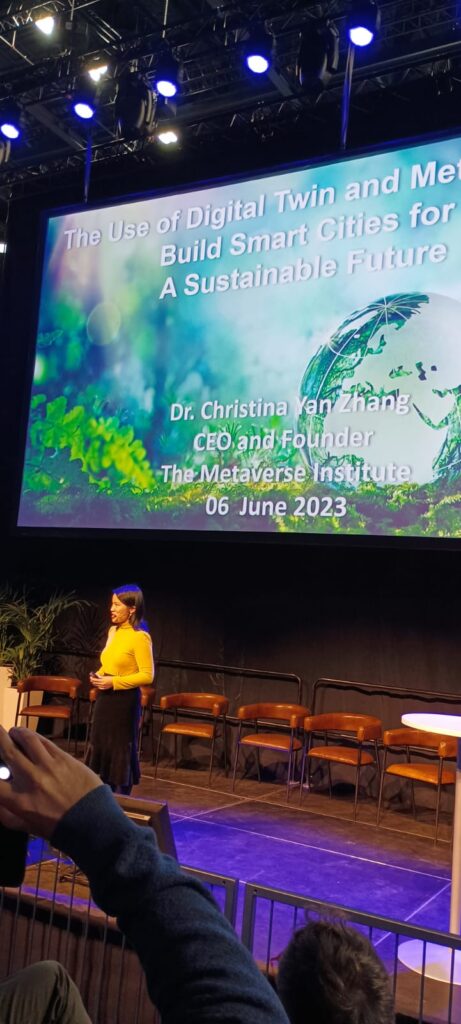
Keynote speakers included Christina Yan Zhang, CEO of the Metaverse Institute, whose speech focused on the use of digital twin and metaverse technology to build smart and sustainable cities. The event was opened by Kalervo Kummola, mayor of Tampere.
“Through intelligent solutions, our goal is to enhance the wellbeing of citizens, provide a positive urban experience, and create favourable conditions for people’s everyday lives”
The development of Tampere’s metaverse is a result of collaborations with industry-leading companies. Through partnerships with VTT Technical Research centre of Finland and global technology giants such as Microsoft and Nokia, it aims to harness the potential of the metaverse in areas such as urban planning and citizen wellbeing.
“We invite companies to test their solutions in Tampere. The city acts as a testing platform and an open partner for businesses and research,” said Teppo Rantanen, the executive director of growth, innovation and competitiveness at the City of Tampere.
“Through intelligent solutions, our goal is to enhance the wellbeing of citizens, provide a positive urban experience, and create favourable conditions for people’s everyday lives.”
The city said it is committed to sustainability, responsible data utilisation, and ethical metaverse practices. With a focus on human-centricity and stated that technological advancements must serve as catalysts for positive urban experiences.
Tampere’s metaverse-vision is driven by the belief that collaboration between cities, businesses, and ecosystem partners is essential to unlock the full potential of the technology. By embracing this collaborative approach, Tampere hopes to inspire and invite other cities and organisations to join forces in shaping the future of urban, human-centric living.
Tampere Smart City Expo & Conference will take place again next year 11-12 June.
Speakers from Airbus, bp, Barclays, Netflix and more will be discussing new internet of things developments
IoT Tech Expo Europe will provide a cross-industry view of the latest internet of things (IoT) innovations when it takes place on 26-27 September in Amsterdam, the Netherlands.
Speakers for the event will include Garima Singh, chief architect at Sandvik, who will be delivering a keynote presentation on digital twin technology and its evolution and will be a part of a panel on digital twins.
Nicolás Torralba, head of IoT, platforms and digital solutions at Airbus, will be presenting on implementing IoT inside aircrafts; Bhavdeep Magar, principal service engineer of IoT projects at bp, will discuss IoT innovation for the industrial and marine industries; and Mufeed Patel, assistant vice president and data scientist at Barclays, will explore how machine learning technology can be used as part of the ultimate IoT infrastructure.
Several Microsoft partners will also host presentations at the event, including Stephane Quetglas, embedded solutions marketing director at Thales, who will deliver a keynote about simplifying IoT deployments.
Other speakers include TJ Mead, technology continuity programme manager at Netflix; Dr. Christina Yan Zhang, CEO of The Metaverse Institute; Robert Bakelaar, IoT solution architect at Royal Vopak; and Unilever’s head of global customer experience and data analytics Karinna Calin, who will discuss industrial digitisation. Sessions will cover a range of subjects such as using IoT to make supply chains more sustainable, building automation and examining the current IoT security landscape.
IoT Tech Expo Europe will also have over 200 exhibitors showcasing the latest solutions and products in the IoT sector, as well as a VIP networking party for the 6,000 attendees expected at the event that will be hosted at Strandzuid Boathouse.
“IoT Tech Expo Europe presents a unique platform for senior-level representatives to explore the latest applications of IoT technology, engage with industry leaders, and discover cutting-edge solutions,” said Olivia Reid, head of operations at TechEx.
Attendees with Gold and Ultimate passes will have access to event’s application, powered by artificial intelligence, to provide personalised recommendations of industry sessions and potential connections they may want to meet.
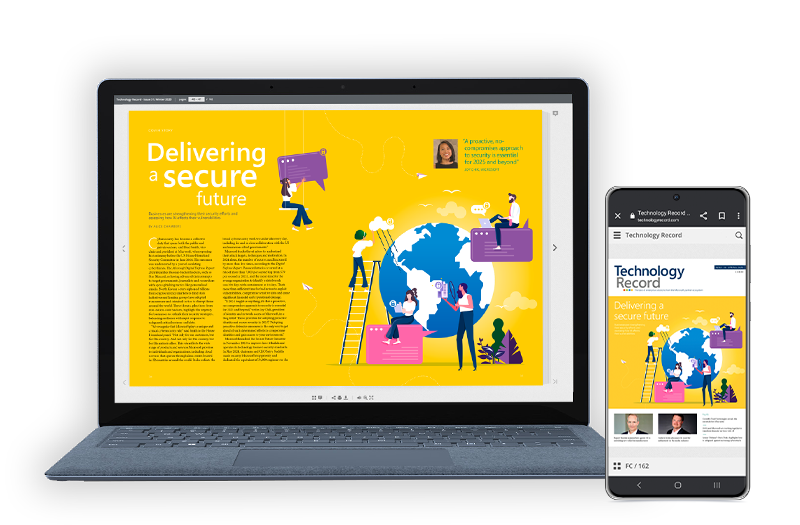
Technology Record provides news and thought leadership on how solutions from the Microsoft partner ecosystem are being used to address challenges faced by enterprise-sized organisations in all industries, with a particular focus on: financial services; industrials and manufacturing; media and communication; public sector; and retail and consumer goods. Technology Record also reports on industry trends, product launches, customer deployments and industry events.
The quarterly Technology Record magazine is available in print and digital formats and you can also sign up to a monthly newsletter that provides a digest of some of our best recent content.
For those working in enterprise organisations, Technology Record provides a wealth of information about how solutions from Microsoft partners can address your most pressing challenges. For Microsoft partners, Technology Record provides a valuable channel to communicate news about your solutions, share case studies and deliver insight to our readership.
Technology Record is produced by UK-based publisher Tudor Rose, with the support and guidance of Microsoft.