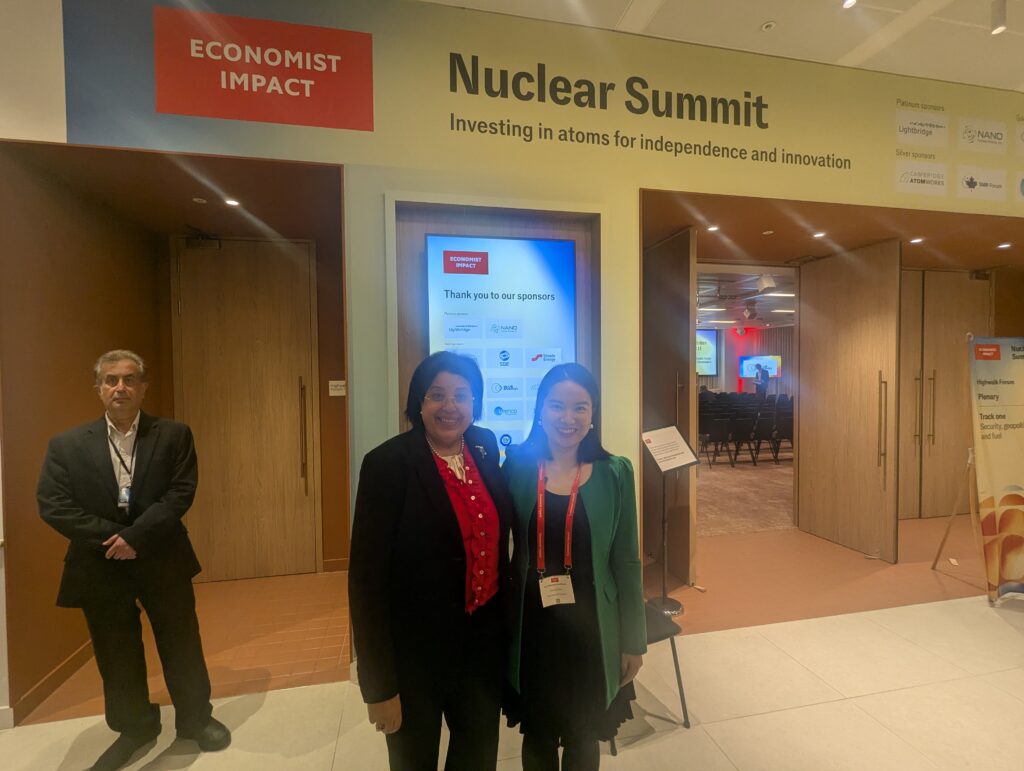
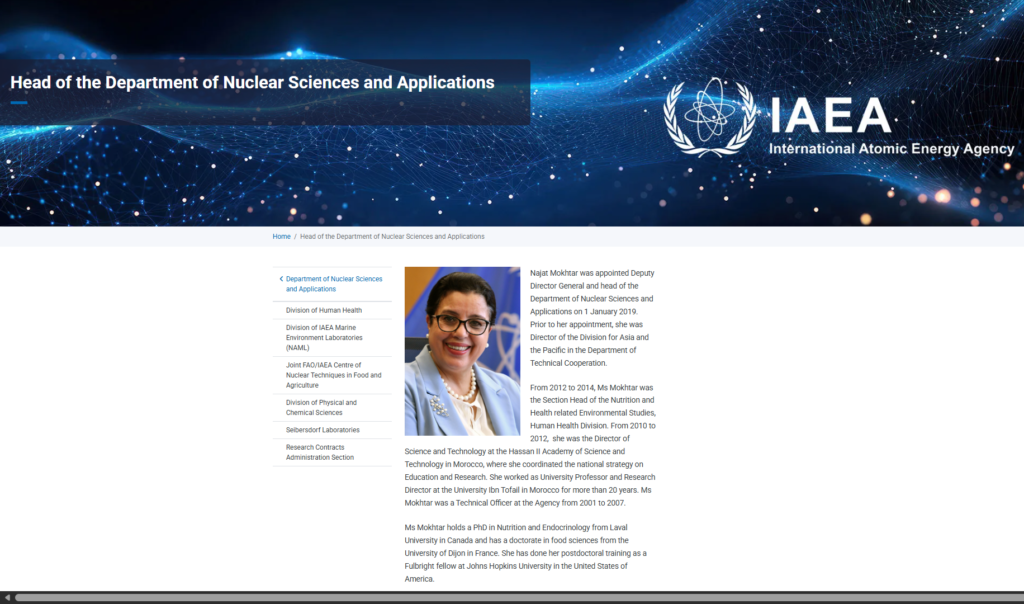
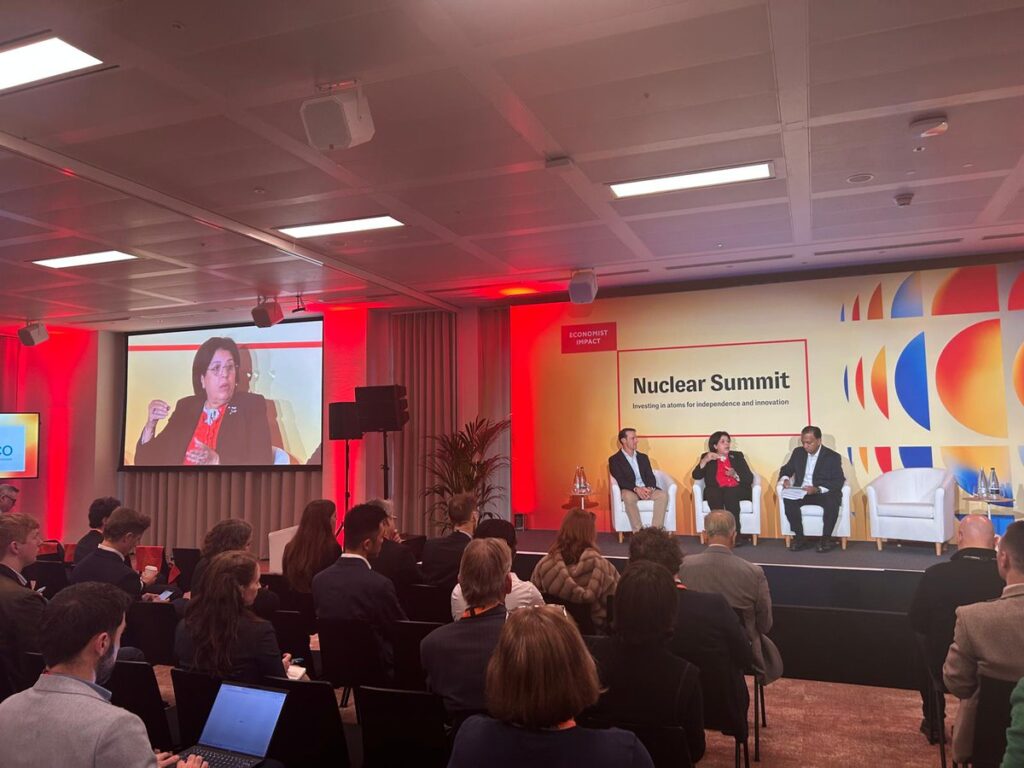
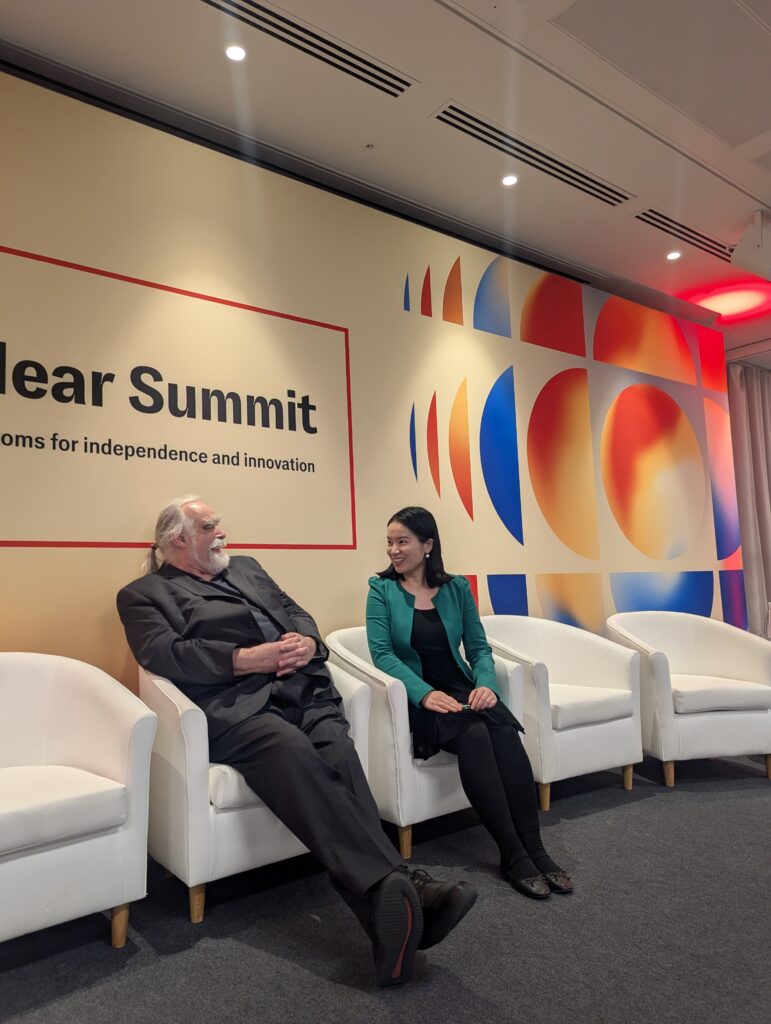
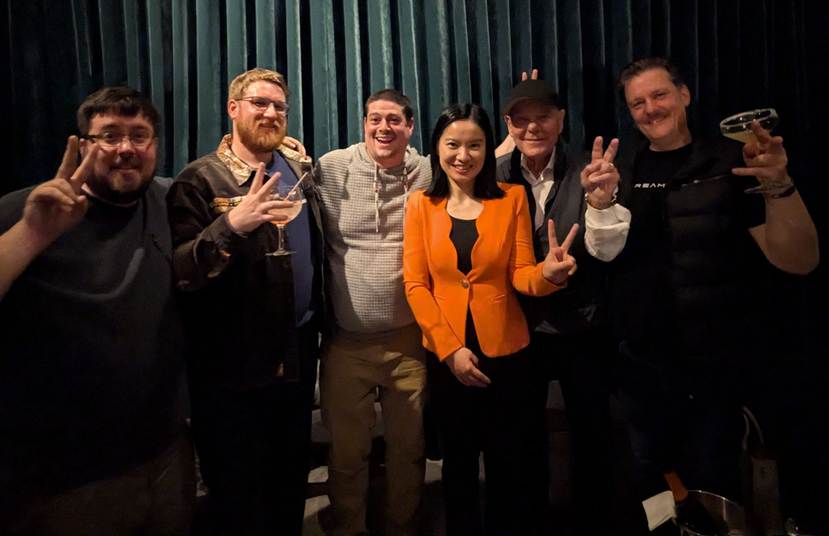
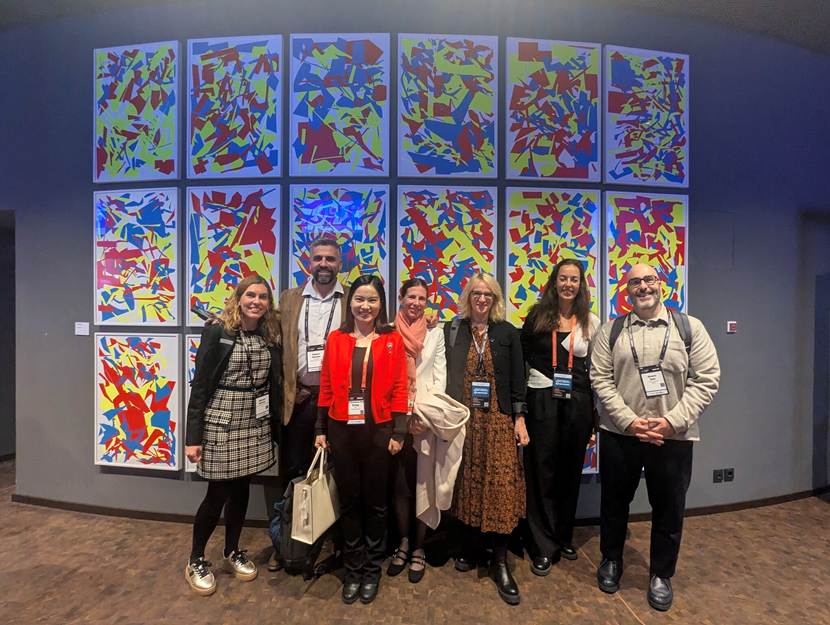
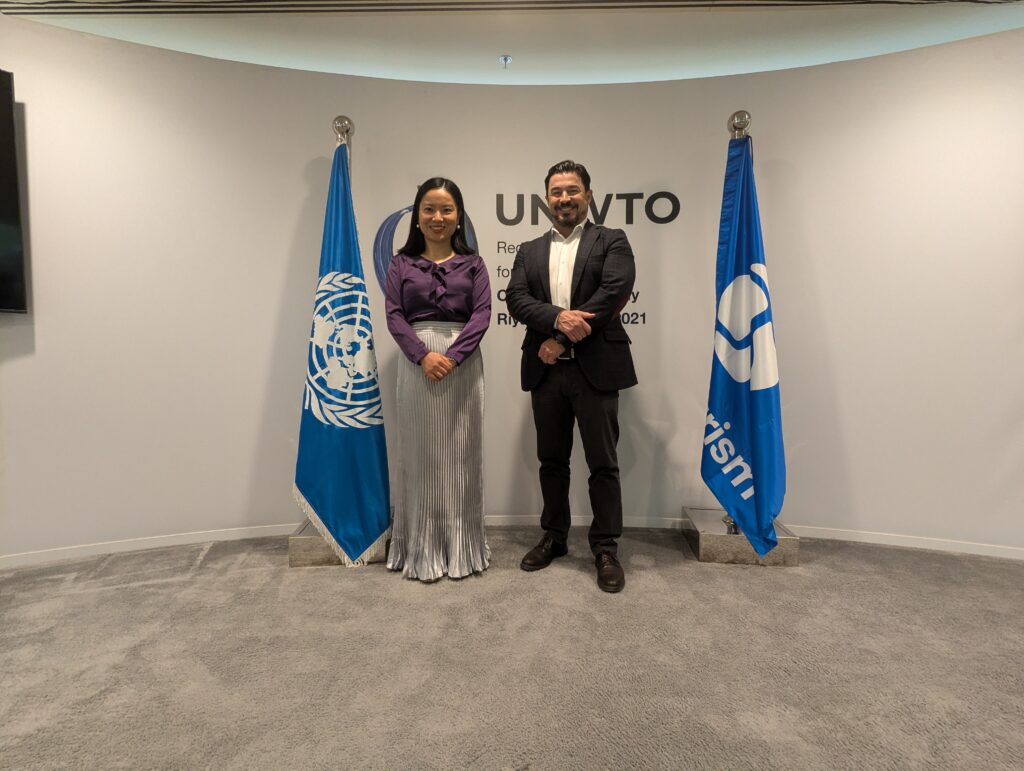
London, UK — April 15, 2026 — The Metaverse Institute participated in a landmark meeting today with Najat Mokhtar, Deputy Director General of the International Atomic Energy Agency (IAEA), during the Economist Impact Nuclear Summit. The discussion centered on the vital intersection of emerging technologies and the global “Nuclear Renaissance.”
Since Marie Curie’s pioneering discovery of Polonium and Radium in 1898, nuclear science has evolved from a laboratory wonder into a global pillar of human survival and equity. As the world seeks to meet aggressive climate targets, the IAEA projects that global nuclear capacity will reach 992 GW(e) by 2050—a 2.6x increase over current levels.
Nuclear for Good: A Global Impact Overview
The IAEA, the world’s “Atoms for Peace and Development” organization, currently oversees a global fleet of 417 operating reactors, with 62 more under construction. Beyond power generation, the agency is spearheading initiatives that address humanity’s most pressing challenges:
Water Security (GloWAL): Supporting 2.4 billion people in water-stressed regions through a network of 100+ labs.
Cancer Care (Rays of Hope): Bridging the “cancer gap” in low- and middle-income countries with a $105M investment across 30 nations.
Plastic Pollution (NUTEC Plastics): Utilizing nuclear technology to track microplastics and upcycle waste, with industrial implementation slated for 2026.
Food Security (Atoms4Food): A 60-year partnership with the FAO to enhance crop yields and soil fertility.
Pandemic Prevention (ZODIAC): An integrated global response system to detect zoonotic pathogens before they reach human populations.
Net Zero (Atoms4NetZero): Modeling energy transitions where nuclear power works in tandem with renewables.
Reflections from the Summit
While popular culture often leans into dystopian imagery, the reality on the ground at the Economist Impact Nuclear Summit was one of inspiration and rigorous safety. Engaging with world leaders revealed a profound commitment to developing peaceful nuclear energy while maintaining ironclad safeguards against weaponization and operational risks.
We extend our deepest thanks to the exceptional team at The Economist, including Helen Ponsford, Vijay Vaitheeswaran, Oliver Morton, and the many others who curated these vital conversations.
The Road to 2050: A Question of Convergence
As we look toward a future where AI demand is projected to consume 20% of global electricity, nuclear energy is expected to provide 17% of that supply. The Metaverse Institute is exploring how we can leverage a “Tech-Nuclear Convergence” to empower 8 billion people:
Agentic Digital Twins & Robotics: Can autonomous maintenance systems reduce human exposure and operational costs?
Quantum & Blockchain: Can Quantum Key Distribution (QKD) and blockchain-enabled safeguards create unhackable tracking for nuclear waste management?
Small Modular Reactors (SMRs): How will localized, scalable power change the landscape for decentralized energy?
The Metaverse Institute remains committed to exploring these digital frontiers to ensure that the Nuclear Renaissance is safe, sustainable, and inclusive with all interested stakeholders.
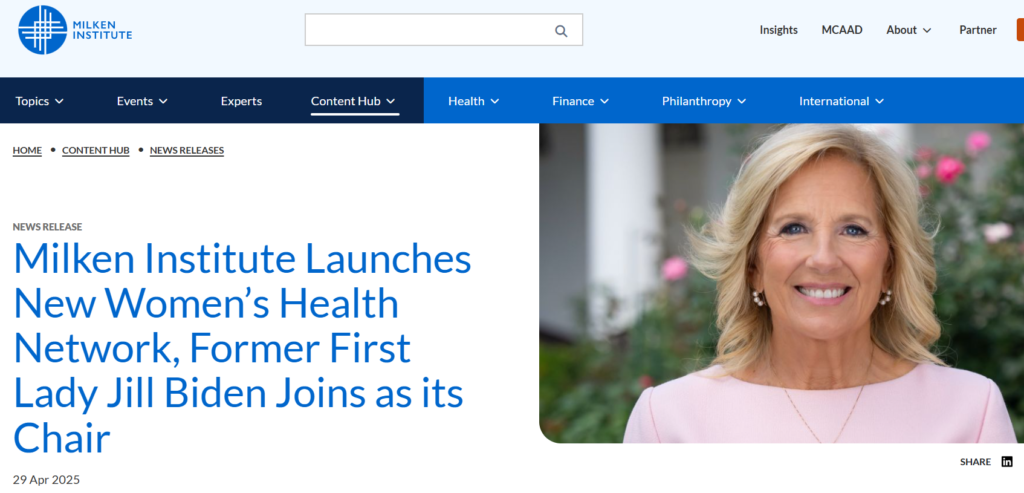
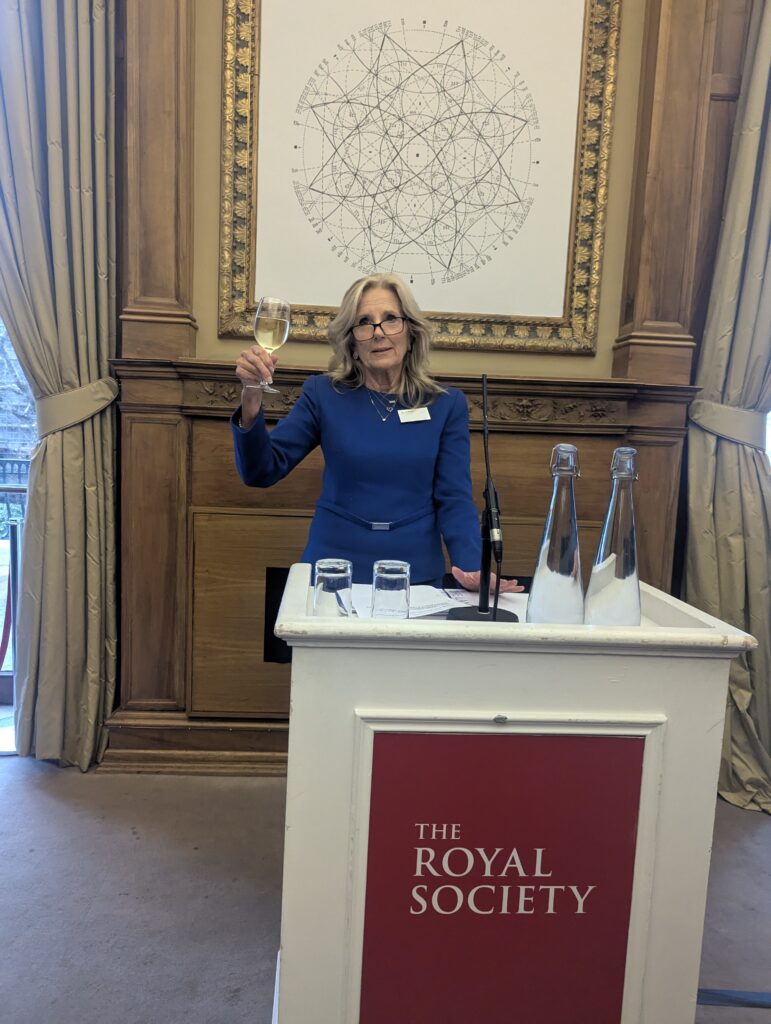
London, UK — February 10, 2026 — The Metaverse Institute participated in an exclusive roundtable today hosted by the Milken Institute Women’s Health Network, led by Dr. Jill Biden, Chair of the Network and Former First Lady. Alongside 50 high-level global leaders, the discussion focused on a critical economic and humanitarian imperative: closing the gender health gap.
The Case for Investment
Data presented at the summit highlighted a stark reality. While women represent 50% of the global population, their health needs currently receive only 6% of private investment. This neglect has profound consequences:
Economic Impact: Closing the gender health gap could inject $1 trillion annually into the global economy by 2040.
The “Health Gap”: Women spend 25% more of their lives in poor health compared to men.
Dementia & Breast Cancer: In 2026, 71 million people are living with dementia, 65% of whom are women. Furthermore, breast cancer remains the #1 diagnosed cancer for women in 157 countries, with 2.5 million new cases annually.
Bold Ideas: The “10-Point Plan” and “Financial Rails”
During the roundtable, the Metaverse Institute proposed a transformative vision to support Dr. Biden’s mission of raising $1 billion for women’s health research and innovation. The proposal focused on two “bold ideas”:
The 10-Point Ecosystem Plan: A strategic roadmap designed to empower global champions and create a unified infrastructure for women’s health advocacy.
Systemic De-risking: Building the “financial rails” necessary for institutional investors—including sovereign wealth funds, pension funds, and family offices—to deploy capital into women’s health at scale.
The proposal sparked a “palpable shift in energy” in the room, receiving immediate applause from fellow investors who characterized the model as the “bold bridge” required to move capital into this underserved sector.
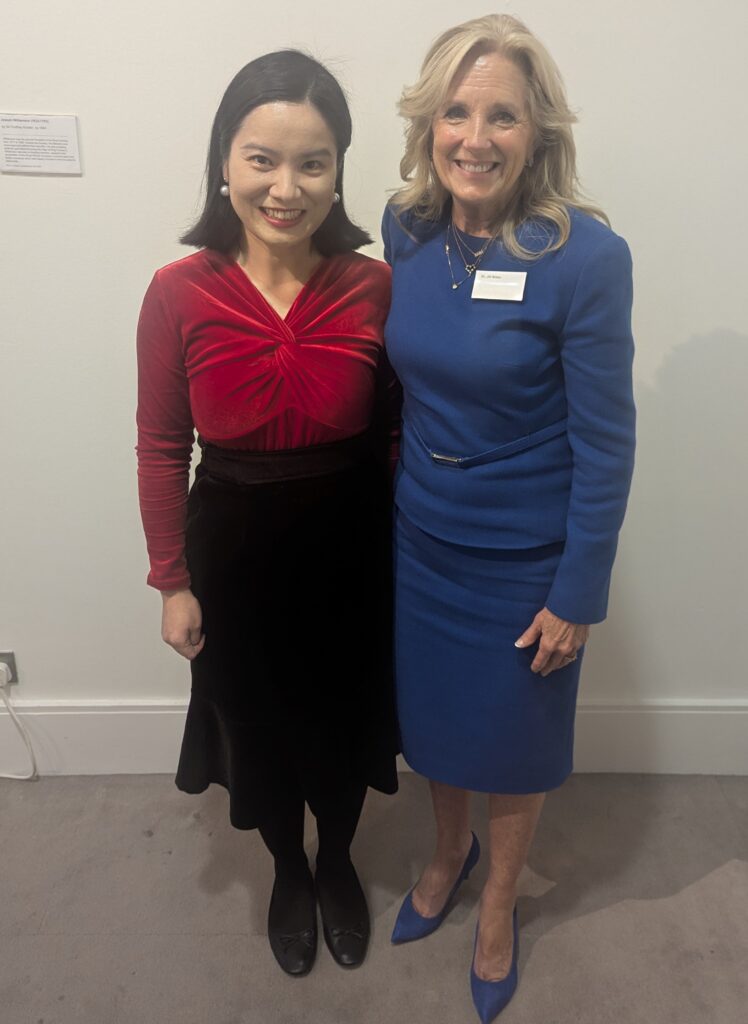
Following the session, Dr Christina Yan Zhang, CEO of The Metaverse Institute held a private, 15-minute one-to-one meeting with Dr. Jill Biden to discuss the implementation of these digital and financial frameworks.
A Full-Circle Journey
For the Metaverse Institute’s leadership, this meeting represented a significant milestone in a decades-long relationship with U.S. institutions. From serving as the International Students Officer for the National Union of Students UK and working with the Fulbright Commission (2008-12), to being recommended as a Fulbright Visiting Scholar at MIT in 2023 to teach AI, this collaboration marks a new chapter in strengthening UK-US ties through innovation.
Looking Ahead: The $150 Trillion Question
The meeting concluded with a call to action for the global financial community. With $150 trillion in global assets currently under management, the challenge remains: how do we create the safe, high-impact pathways needed for this capital to reach 4.05 billion women?
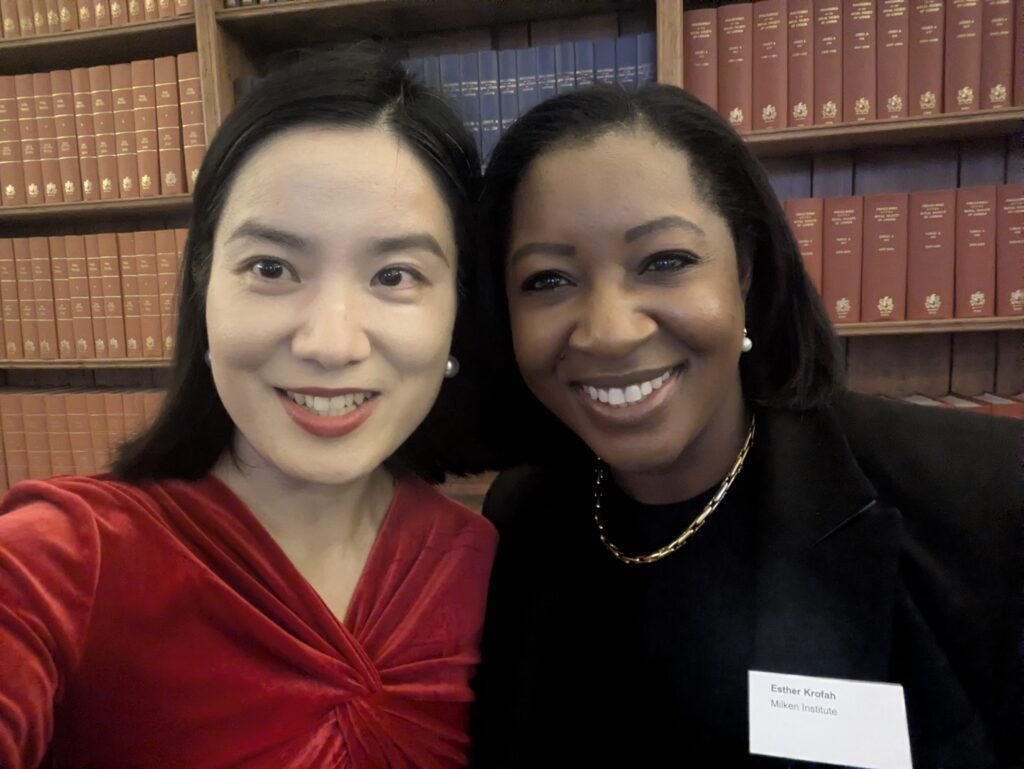
The Metaverse Institute extends its deepest gratitude to the Milken Institute leadership team—including Esther Krofah, Richard Ditizio, and Jenica Patterson—and to Bryan Stirewalt (former CEO of the Dubai Financial Services Authority, Co-chair for Basal Consultative Group, Bank for International Settlement) for his invaluable strategic guidance.
Together, we are committed to making women’s health the world’s most impactful investment for the next century.
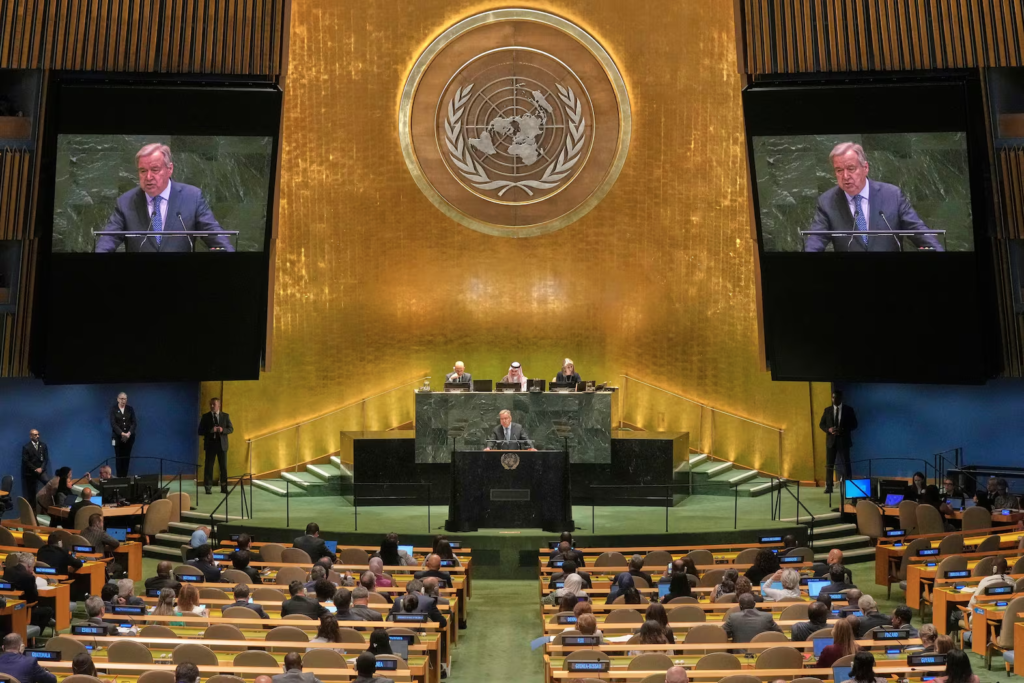
The United Nations is inviting global stakeholders to a milestone public consultation on its first pre-implementation tool for AI and virtual worlds in urban environments. This framework serves as a strategic bridge for cities, providing the necessary standards and risk-assessment protocols to deploy Citiverse technologies safely and inclusively.
Bridging the Gap
From 2D Intelligence to 3D Reality This initiative arrives at a critical juncture as AI evolves from 2D Large Language Models (LLMs)—which process text and code—into 3D Large World Models (LWMs) that understand physical space. While 2D AI has transformed how we manage information, 3D LWMs provide the spatial common sense required to build a people-centered, planet-friendly digital future. By integrating these advancements, the UN framework ensures that cities dont just build virtual replicas, but use intelligent 3D environments to simulate climate resilience, optimize resources, and guarantee inclusive access before a single physical brick is laid.
The 2025 Pivot to Physical: A Strategic Briefing on Large World Models (LWMs)
The AI industry is reaching a definitive turning point in 2025. The era of scaling pure language models is evolving into a pursuit of Artificial General Intelligence (AGI) through Large World Models (LWMs).
Unlike their predecessors, LWMs are engineered to perceive and simulate the 3D physical world—mastering geometry, physics, and complex cause-and-effect relationships. This technological evolution provides the critical link to a people-centered, planet-friendly digital future: by moving from 2D text to 3D spatial intelligence, the Citiverse can now simulate real-world environmental impacts and human needs with unprecedented accuracy.
The global race has shifted: the leaders of tomorrow will be those who successfully build this ‘common sense’ layer, allowing AI to understand and interact with the physical reality we inhabit to solve our most pressing urban and climate challenges.
1. NVIDIA: The “Cosmos” Ecosystem – Architecting the Physical AI Stack
Core Philosophy: NVIDIA is successfully transitioning from a semiconductor leader to the definitive “operating system for the physical world.” By moving beyond 1D language processing, NVIDIA is building the spatial “common sense” required for AI to inhabit and interact with 3D reality.
Measurable Developments & Strategic Impact:
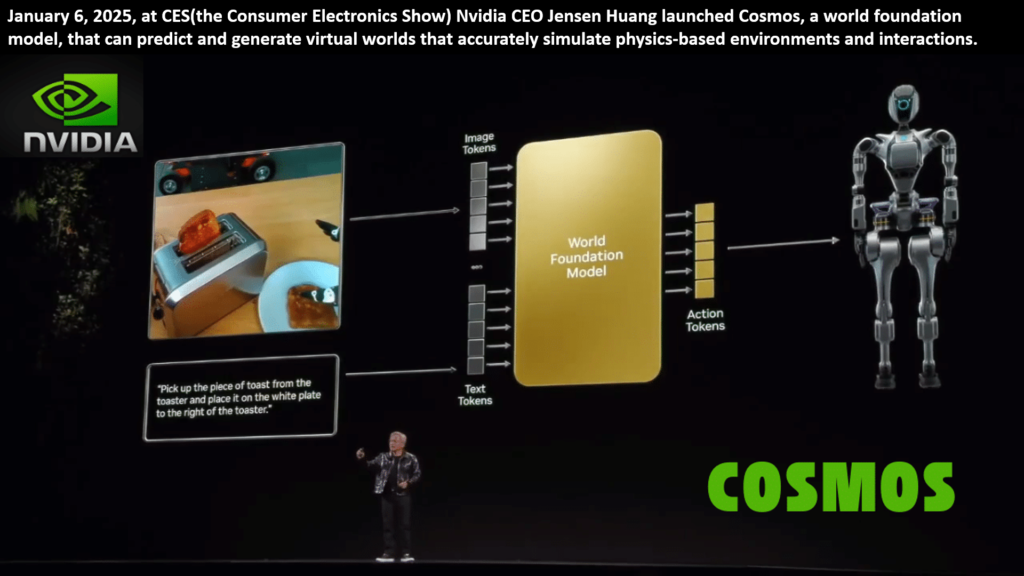
Launch & Scale of Project Cosmos: Unveiled in early 2025, NVIDIA Cosmos is a unified platform for World Foundation Models (WFMs). These models are trained on over 20 million hours of real-world video, allowing AI to master object permanence and physically based interactions across industrial and urban settings.
The 12x Performance Breakthrough: A cornerstone of this stack is the NVIDIA Cosmos Tokenizer. It delivers 8x more total compression and processes data 12x faster than previous industry standards. This speed allows for the real-time generation of physically accurate world states, transforming years of data processing into just weeks.
The $50 Trillion Opportunity: CEO Jensen Huang has identified Physical AI as the catalyst for a $50 trillion revolution in manufacturing and logistics. NVIDIA’s “three-computer” architecture—DGX for training, Omniverse for simulation, and AGX for deployment—serves as the essential infrastructure for this transition.
Synthetic Data & The GR00T Blueprint: In March 2025, the Isaac GR00T Blueprint demonstrated a paradigm shift in training efficiency. NVIDIA generated 780,000 synthetic robot trajectories in just 11 hours—a task that previously required 9 months of human demonstration. This synthetic data injection boosted robot performance by 40%.
Synthesis: Why this Matters for the Citiverse
NVIDIA’s 2025 advancements provide the high-fidelity engine for the UN’s Citiverse initiative. By replacing statistical guesses with physically grounded simulations, cities can use NVIDIA’s stack to:
Eliminate Risk: Use Cosmos Predict to simulate traffic impacts before a single physical change is made.
Scale Inclusivity: Train urban service robots using GR00T synthetic data to ensure they navigate diverse neighborhoods safely.
Drive Sustainability: Leverage Omniverse to optimize energy grids and climate resilience with scientific precision.
This video provides a deep dive into NVIDIA’s 2025 “Cosmos” announcement, demonstrating how visual tokenizers and world foundation models are being used to train the next generation of physical AI.
2. World Labs (Fei-Fei Li): The Venture-Backed Bet on Spatial Intelligence
Core Philosophy: Spearheaded by Dr. Fei-Fei Li, World Labs is moving AI beyond “wordsmiths in the dark” to systems that possess Spatial Intelligence. The goal is to endow AI with a “North Star” of physical grounding—the ability to link imagination, perception, and action in 3D worlds.
Measurable Developments & Impact:
Commercial Launch of Marble: In November 2025, World Labs moved from research to product with the public launch of Marble, their first commercial World Model.
Funding & Valuation: Following a $230 million Series A in late 2024, World Labs entered 2025 with a “unicorn” valuation exceeding $1 billion. Investors include heavyweights like Andreessen Horowitz (a16z), Radical Ventures, and NVentures (NVIDIA), signaling a unified industry bet on spatial AI.
The RTFM Breakthrough: In October 2025, the team integrated RTFM (Real-Time Frame Model) into Marble. This allows the system to generate and render 3D space in real-time as a user interacts with it, effectively serving as a “spatial memory” that maintains world consistency even as a user explores endlessly.
Ecosystem Integration: World Labs has already secured partnerships to power spatial learning (EON Reality) and is compatible with mainstream XR hardware like Apple Vision Pro and Meta Quest 3, positioning its world models as the primary content engine for the spatial computing era.
Synthesis: Why this Matters for the Citiverse
Fei-Fei Li’s “Spatial Intelligence” provides the human-centric interface for the Citiverse. While NVIDIA provides the industrial backbone, World Labs enables:
Democratized Design: Allowing non-technical city planners to “sketch” a new public square and immediately walk through it in 3D to evaluate social inclusivity.
Visual Grounding: Ensuring that Citiverse AI isn’t just hallucinating data, but is grounded in the actual 3D layout and “interact-ability” of a specific urban neighborhood.
Embodied Learning: Providing the high-fidelity simulators needed to train the next generation of urban service robots in a safe, virtual environment.
This interview with Fei-Fei Li explores the shift from language-centric AI to spatial intelligence and the “world modeling” phase of the industry.
3. Google DeepMind: AGI via Scientific Simulation and Generalist Agents
Core Philosophy: Google DeepMind operates on the conviction that “World Models are the prerequisite for AGI.” CEO Demis Hassabis advocates for a balanced path where AI doesn’t just predict text, but understands the fundamental physical laws of the universe. This “spatial common sense” is the foundation for creating agents that can safely navigate both virtual and real-world cities.
Measurable Developments & Impact:
SIMA 2: The Generalist Urban Agent: In November 2025, DeepMind released SIMA 2 (Scalable Instructable Multiworld Agent). Unlike standard AI, SIMA 2 can follow complex, natural-language instructions in 3D environments (e.g., “Find the nearest recycling point”) by perceiving the world like a human. It demonstrates a 2x performance leap in task success over its predecessor.
Genie 2: The Interactive World Engine: Launched in late 2025, Genie 2 is a foundation world model that can generate physically consistent, interactive 3D environments from a single image. This serves as the “infinite training ground” for Citiverse simulations, allowing city planners to generate millions of “what-if” scenarios for urban traffic or emergency response.
The “Scientific Research Closed Loop”: DeepMind has successfully pioneered an AI Co-Scientist framework. In 2025, this system used world models to simulate millions of parallel experiments in materials science, leading to the discovery of new superconductor materials and more efficient battery chemistries for green city grids.
Strategic Resource Allocation: To bridge the gap between theory and reality, DeepMind maintains a strict 50/50 resource split:
Synthesis: Why this Matters for the Citiverse
Google DeepMind provides the analytical brain of the Citiverse. While other players focus on the “view,” DeepMind focuses on the “logic” of the city:
Smarter Public Services: Using SIMA 2 logic to power helpful, safe AI agents that assist citizens in navigating complex urban services.
Climate Resilience: Leveraging WeatherNext 2 to simulate local micro-climates within the Citiverse, allowing cities to prepare for extreme weather with hour-by-hour precision.
Automated Urban Policy: DeepMind’s work with the UK government on “Extract” transforms legacy planning documents into digital data in 40 seconds (down from 2 hours), accelerating the “ex-ante” evaluation process.
This video provides an expert breakdown of why the shift to world models is considered the “next frontier” for AI and how it enables deeper interaction with our physical environment.
4. Yann LeCun’s New Venture (AMI): The Bet on Non-Generative World Models
Core Philosophy: Yann LeCun asserts that Large Language Models (LLMs) are a dead end for AGI because they lack physical grounding. He advocates for Advanced Machine Intelligence (AMI)—systems that learn like a human (or even a house cat) through observation and interaction, rather than just predicting the next word in a sentence.
Measurable Developments amp; Impact:
The Great Decoupling: In late 2025, Yann LeCun announced his departure from Meta to found Advanced Machine Intelligence (AMI) Labs. This move crystallized a philosophical split: while Meta’s Superintelligence Lab doubles down on generative models (Project Mango and Avocado), AMI Labs is dedicated to non-generative World Models.
The €3 Billion Valuation: Despite being pre-product, AMI Labs is targeting a valuation of €3 billion ($3.5 billion), securing early support from European and Silicon Valley investors who view spatial intelligence as the next multi-trillion-dollar frontier.
Technical Foundation (JEPA): The venture is built on the Joint Embedding Predictive Architecture (JEPA). Unlike generative AI that hallucinates pixels, JEPA-based models learn to predict latent features—the underlying rules of physics, geometry, and causality—within video and spatial data.Leadership amp; Structure: LeCun serves as Executive Chairman, bringing on Alexandre LeBrun (founder of Nabla) as CEO. Based in Paris, the lab is positioned as a European hub for AGI research that remains independent of the generative hypnosis of Silicon Valley.
Ecosystem Partnership: Meta remains a technical partner, providing compute resources and datasets, while AMI Labs pursues high-stakes applications in robotics, transportation, and autonomous urban services.
Synthesis: Why this Matters for the Citiverse
Yann LeCun’s AMI Labs provides the reliability layer for the Citiverse. While generative models are good for visualizing ideas, JEPA-based models are required for governing physical spaces:
Hallucination-Free Planning: JEPA models do not make things up; they predict physical reality. This ensures that Citiverse traffic simulations are based on the actual laws of motion, not statistical guesses.
Autonomous Urban Maintenance: For robots to clean streets or fix infrastructure, they need the common sense to understand that a cardboard box is empty but a glass bottle is fragile—a level of reasoning AMI Labs aims to solve.
Sustainable Logistics: By mastering cause-and-effect, these models can optimize city-wide logistics and supply chains with a degree of physical accuracy that LLMs cannot reach.
In this lecture, Yann LeCun provides the deep technical reasoning behind why current AI models fail at physical tasks and how his JEPA architecture serves as the foundation for future “World Aware” systems.
Why This Matters Now
The AI industry is undergoing a foundational pivot: we are moving from AI that talks to AI that understands and acts within the physical world.
In 2025, success is no longer measured by text fluency or the ability to mimic human conversation. Instead, the new benchmarks for intelligence are simulation accuracy, spatial reasoning, and the ability to solve high-stakes challenges in the real world—from autonomous robotics to the discovery of new sustainable materials.
The New Frontier of AGI
The race to Artificial General Intelligence (AGI) has officially become a race to build the best World Model.
Beyond Book Smarts: While 2D models are book smart, they lack the street smarts needed to navigate a complex urban environment safely.
Physical Mastery: Success now depends on an AI’s ability to master the common sense of our reality—geometry, physics, and cause-and-effect.
Industrial Transformation: This shift is already redefining a $50 trillion economy, transforming how we design cities, manage global supply chains, and protect our planet.
The concept of using persistent 3D virtual worlds to simulate dangerous, expensive, or life-threatening scenarios—what some have called the “metaverse”—has never fundamentally changed because it addresses a basic human necessity: to model, understand, and solve complex systemic problems before confronting them in reality.
The branding may shift—from Digital Twins and CAD/BIM to Spatial Computing and Large World Models—but the core mission remains constant. What was dismissed as a “dead metaverse” was merely the premature packaging of this essential capability, lacking the foundational AI required to make it real.
The Unchanging Why: The Necessity of Safe Simulation
We have always needed to:
Test aircraft designs without crashing them.
Practice complex surgeries without risking lives.
Model climate impacts without waiting decades.
Plan cities without costly physical prototypes.
Train soldiers and first responders without real danger.
This isn’t entertainment—it’s civilizational infrastructure. The most complex systemic challenges of our time—climate adaptation, pandemic response, fusion energy development, resilient supply chains—cannot be solved through trial and error in the physical world. They require infinite, risk-free experimentation in parallel simulated worlds.
How Large World Models (LWMs) Finally Deliver on the Decades-Old Promise
Previous tools like CAD or BIM created static models. LWMs create living simulations with inherent understanding of physics, cause-and-effect, and 3D space. Here’s the transformation:
The Fundamental Shift: From Building Worlds to Growing Ecosystems
LWMs don’t just create prettier virtual spaces—they create credible alternative realities where systemic relationships can be understood:
Emergent Behavior Modeling: Simulate how a new financial policy affects not just markets but urban development, traffic patterns, and social dynamics over 20 years.
Crisis Compression: Run 1,000 years of pandemic variants in a week to identify robust public health strategies.
Existential Risk Testing: Model asteroid deflection scenarios or geoengineering climate interventions with full atmospheric, oceanic, and ecological feedback loops.
Conclusion: The Simulated Layer of Civilization
The “metaverse” branding may fade, but the simulation imperative grows more urgent. LWMs are becoming the operating system for pre-emptive problem-solving—the indispensable layer where we work through our most dangerous, expensive, and complex challenges.
What we’re witnessing isn’t the rebirth of a failed consumer trend, but the maturation of humanity’s most critical cognitive technology: our ability to create parallel realities where failure is instructive, not catastrophic. Whether called industrial metaverse, spatial intelligence, or Large World Models, this capability is transitioning from optional to essential infrastructure—the proving ground where we solve problems too big, dangerous, or expensive for our single physical reality to bear.
The fundamental proposition remains unchanged and more vital than ever: If we cannot safely simulate our systemic crises, we cannot survive them. LWMs are the first technology suite capable of delivering on this proposition at civilization-scale.
UN Initiative on Metaverse and Citiverse
UN Task Group for The Pre-standardisation for the Citiverse
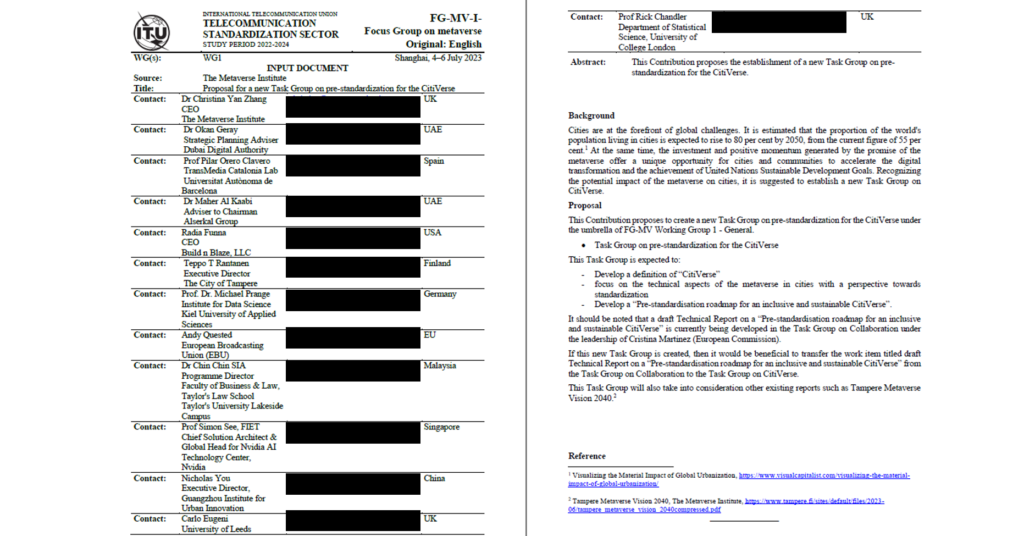
In Feb 2023, The Metaverse Institute submit a proposal to The International Telecommunication Union to set up a new task group for the Pre-standardisation for the Citiverse together with a group of other supporting organisations including Digital Dubai, The City of Tampere, Nvidia etc. This was approved in July 2023. I was appointed co-chairman alongside Cristina Martinez, then Deputy Head of Smart Technologies for communities at European Commission, leading the EU Citiverse initiative.
We have been heavily involved in the development of the UN metaverse standardisation process around the metaverse and citiverse. The UN approved definition of Metaverse was approved in Dec 2023 as the following:
“An integrative ecosystem of virtual worlds offering immersive experiences to users, that modify pre-existing and create new value from economic, environmental, social and cultural perspectives. NOTE – A metaverse can be virtual, augmented, representative of, or associated with the physical world.
I am one of four co-authors who wrote the UN definition of the metaverse.
According to the ITU Technical Report “Definitions of CitiVerse” (approved June 2024), the term is defined as:
The Simplified Definition: “Metaverse for cities.”
The Complete Definition: “Metaverse for cities, prioritizing a human-centred approach and promoting sustainable development “
For the UN definition of citiverse, I am one of four contributors acknowledged in the document.
As Co-chairman of the UN Task Group for The Pre-standardisation for the Citiverse, I authored the first UN technical report on the Building a “People-centred Citiverse” which was approved in July 2024.
In the first UN report on the citiverse, we introduced eight levels of entry points for stakeholders to start their citizen-centred digital futures using AI and digital twins powered simulations.
The Global Initiative on Virtual Worlds and AI – Discovering the Citiverse
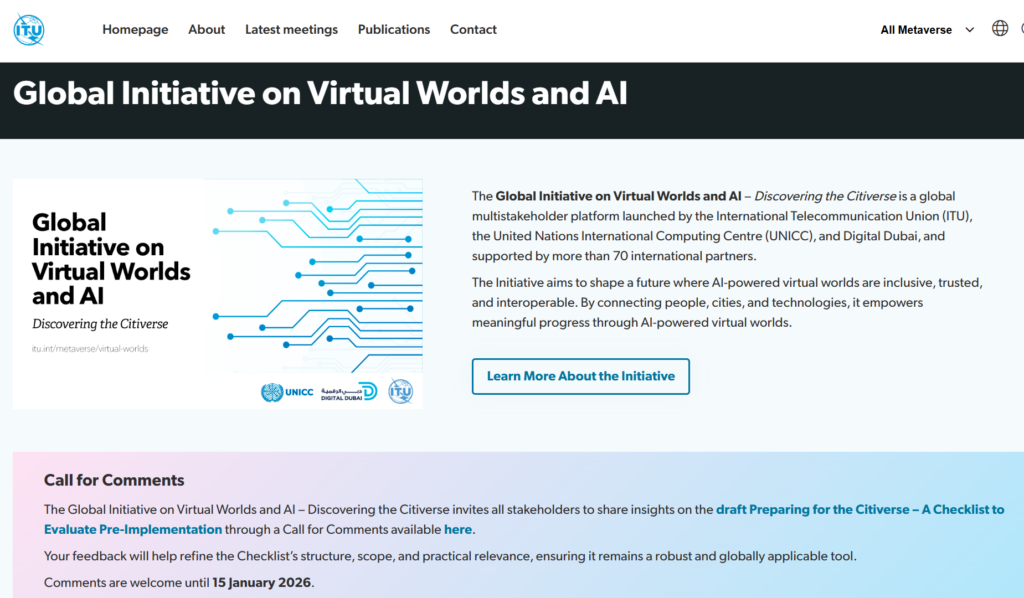
The Global Initiative on Virtual Worlds and AI – Discovering the Citiverse is a global multistakeholder platform launched by the International Telecommunication Union (ITU), the United Nations International Computing Centre (UNICC), and Digital Dubai in July 2024, and supported by more than 70 international partners.
The Initiative aims to shape a future where AI-powered virtual worlds are inclusive, trusted, and interoperable. By connecting people, cities, and technologies, it empowers meaningful progress through AI-powered virtual worlds.
“Preparing for the Citiverse(Virtual Worlds and AI for Cities)- a Checklist to Evaluate Pre-Implementation”
This development of this deliverable “Preparing for the Citiverse – A Checklist to Evaluate Pre-Implementation ” is led and coordinated by myself, Dr Christina Yan Zhang, CEO of The Metaverse Institute, as the leader for Track 5 – Evaluation and Assessment at The Global Initiative on Virtual Worlds and AI – Discovering the Citiverse.
A very special thank you to Nicholas You, Executive Director at Guangzhou Institute of Urban Innovation, a world-renowned leader of best practices for cities with decades of UN experience, and the Founder and Honorary Chairman of the Steering Committee of the UN-Habitat World Urban Campaign. Nicholas’s visionary insight in proposing the practical tool for mayors laid the foundational idea for this crucial deliverable.
A tremendous acknowledgment to Dino Cataldo Dell’Accio, Deputy Chief Executive United Nations Joint Staff Pension Fund, whose brilliant architectural expertise was fundamental in developing the core of this tool, and who graciously submitted it on behalf of Track 5 to the Secretariat, bringing Nicholas’s foundational concept to life through meticulous development.
We also want to express our profound gratitude and immense pride in each and every one of our 27 distinguished world leading authorities in Track 5 Evaluation and Assessment for their dedication, intellectual rigor, and collaborative spirit have made this Mission Impossible possible:
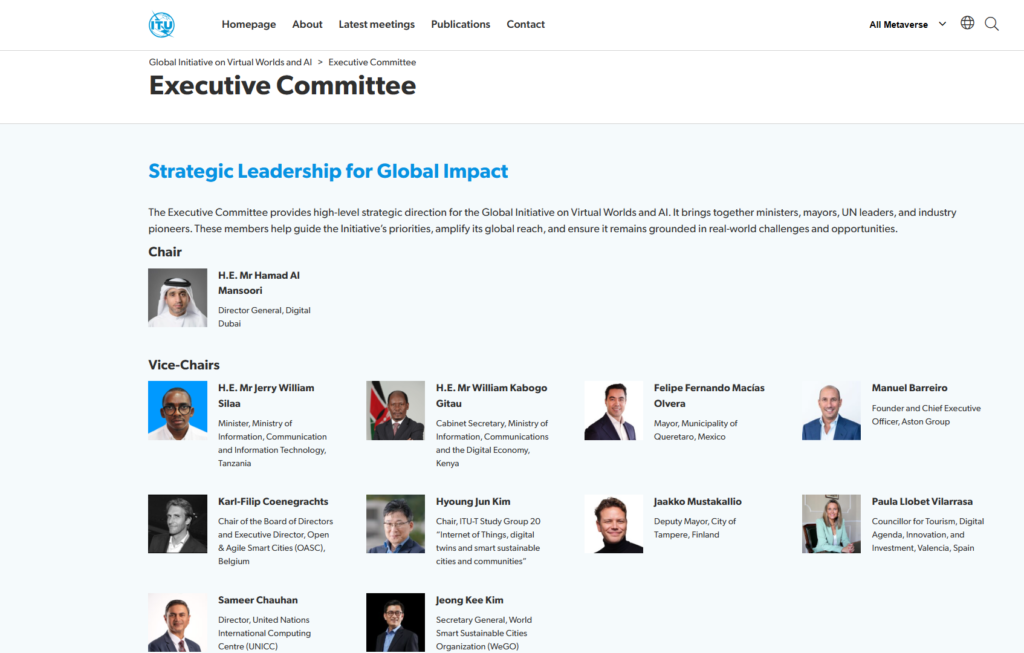
We also extend our sincere thanks to the Executive Committee of The Global Initiative on Virtual Worlds and AI – Discovering the Citiverse for their visionary leadership:
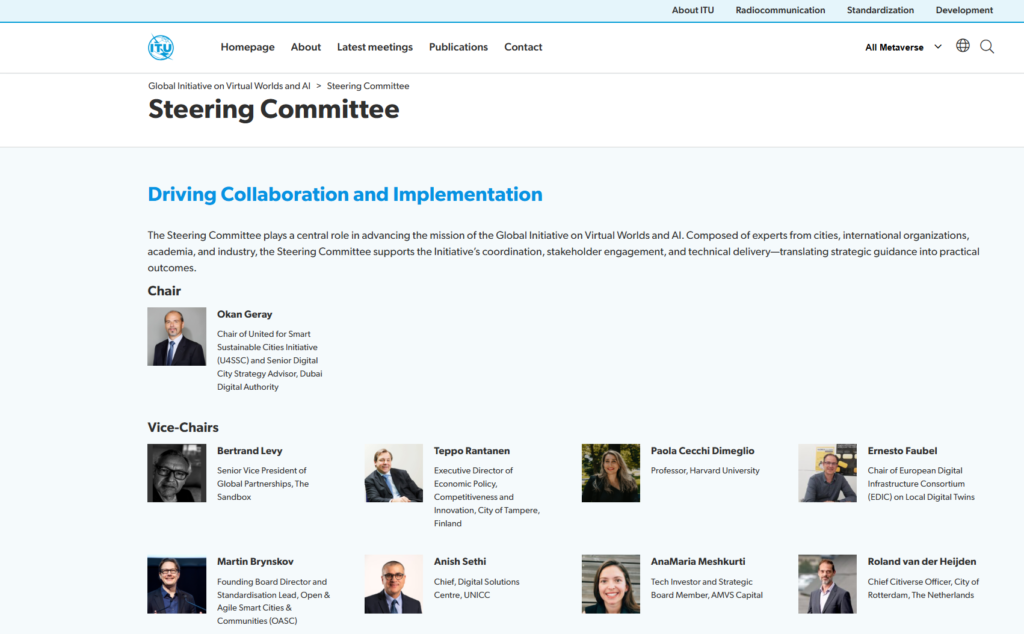
We are also grateful to Steering Committee of The Global Initiative on Virtual Worlds and AI – Discovering the Citiverse for their guidance and support:
Finally, we want to extend our deepest gratitude to the world-class Secretariat of the United Nations especially at the International Telecommunication Union(ITU) and UNICC Their expert stewardship and relentless commitment—far exceeding expectations—have been the catalytic force guiding us through this significant global landmark. We celebrate their continued support and the visionary excellence they bring to the Global Initiative on Virtual Worlds and AI.
Cristina Bueti Counsellor on Smart Sustainable Cities, Citiverse & Virtual worlds ITU
Chiara Co Study Group Administration Assistant ITU
Franca Vinci Head Learning Services Porfolio UNICC
Having had the honour to work with them over recent years, we are genuinely touched and consistently impressed by their profound dedication and the exceptional lengths they go to support experts like us. They are truly the unsung heroes who work incredibly hard behind the scenes, providing detailed guidance and unwavering support to every single one of us. It is through their consistent efforts and the amazing opportunity they provide that we have been able to collaborate and develop such an impactful tool for the wider Citiverse Initiative and for mayors globally.
Preparing for the Citiverse- A Checklist to Evaluate Pre-Implementation
This milestone—the culmination of the Citiverse Pre-Implementation Evaluation—stands as a powerful testament to global collaboration and the dedication of experts worldwide.
At its core, the Citiverse embodies a democratic vision for the future of urban life: digital ecosystems that are truly by the people, for the people, and of the people. These human-centric solutions, anchored in planet-friendly foundations, harness technology not as a tool for exclusion, but as a force for universal empowerment.
We are profoundly optimistic about the transformative potential of the Citiverse to assist cities in building inclusive, resilient digital futures. We eagerly anticipate the positive global impact that will follow its widespread adoption.
The Evaluation Framework at a Glance
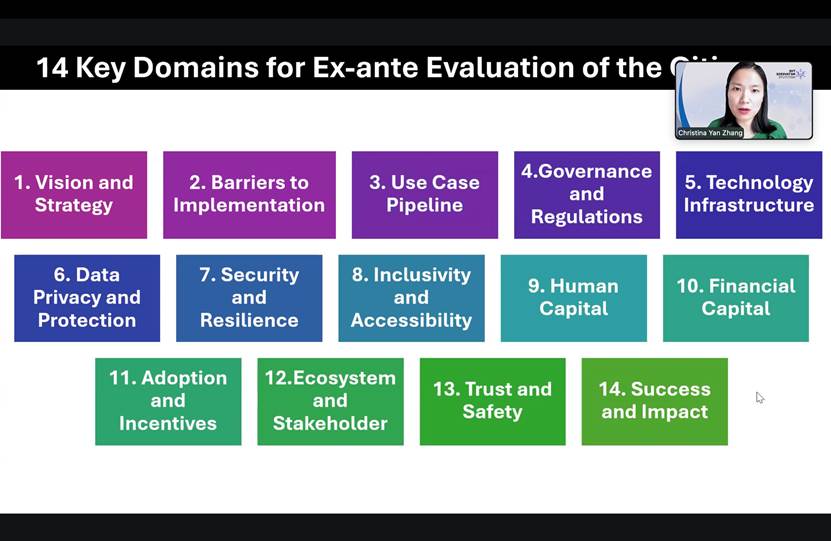
To ensure rigorous and measurable progress, the framework provides a comprehensive diagnostic toolkit consisting of 130 indicators across 14 strategic domains. Each indicator utilizes a five-level maturity assessment to help cities benchmark their current state and define clear targets for growth.
The 14 Dimensions of Readiness
Vision: Defining the long-term urban digital roadmap.
Governance: Establishing ethical and legal guardrails.
Infrastructure: Ensuring technical and interoperable readiness.
Data Protection: Safeguarding citizen privacy and sovereignty.
Security: Building resilience against digital threats.
Inclusivity: Guaranteeing accessibility for all.
Human Capital: Developing the skills for a digital workforce.
Finance: Securing sustainable investment models.
Adoption: Driving engagement through user-centric design.
Stakeholders: Fostering collaboration across sectors.
Trust: Ensuring transparency and accountability.
Impact: Measuring the social and ecological outcomes.
Each indicator features a detailed assessment prompt designed to guide data collection and validation. Users are required to provide documented evidence to justify their selections, establishing a verifiable baseline for the current score and a clear roadmap for the target score. This structured approach ensures that the transition from initial stages to continuous improvement is both transparent and measurable.
The framework employs a five-stage maturity model to evaluate indicator-specific progress. By mapping maturity scores to pre-implementation risk levels, it delivers a robust ex-ante analysis, highlighting critical gaps and ensuring a transparent roadmap for continuous urban improvement. The progression typically follows this logic:
Level 1 (Ad-hoc): High pre-implementation risk due to lack of formal processes.
Level 2 (Developing): Moderate-high risk; basic pilots exist but lack integration.
Level 3 (Defined): Moderate risk; strategy and infrastructure are standardized.
Level 4 (Managed): Low-moderate risk; data-driven and proactive management in place.
Level 5 (Optimizing): Lowest risk; continuous improvement and resilient systems.
Key Strategic Benefits
Risk Mitigation: Identifying low-maturity areas allows for targeted resource allocation early in the project lifecycle.
Stakeholder Alignment: Provides a common language for technical teams and city leaders to discuss “readiness.”
Comparative Baseline: Enables cities to benchmark themselves against global standards (like ITU-T or ISO) to track their Citiverse journey.
The Summary Dashboard consolidates all checklist results into a unified analytical view. Its primary functions include:
Visualizing Gaps: Highlighting the variance between current and target performance averages.
Prioritization: Identifying critical performance gaps to help city leaders focus resources on high-impact areas.
The Action Plan
To ensure the assessment leads to tangible progress, the Action Plan translates results into practical, transparent steps:
Strategic Focus: Includes high-priority items identified during the checklist phase.
Accountability: Tracks implementation progress regularly and updates status as actions are completed.
The Citiverse methodology is intentionally designed not as a one-time audit, but as a cyclical, iterative process. This “living” approach ensures that cities can adapt to the rapid evolution of 3D spatial intelligence and Large World Models (LWMs).
The Citiverse Continuous Improvement Cycle
Rather than a linear start-to-finish path, the framework functions as a feedback loop. Each cycle refines the city’s digital maturity and reduces pre-implementation risk.
Assess (Checklist Phase): Cities use the 130 indicators to establish their current maturity baseline.
Analyze (Dashboard Phase): The Summary Dashboard identifies variance between current and target scores, highlighting critical performance gaps.
Act (Implementation Phase): The Action Plan translates gaps into concrete projects with budgets, timelines, and owners.
Evolve (Review Phase): As Large World Models (LWMs) advance—such as new breakthroughs from NVIDIA or World Labs—cities re-enter the assessment phase to update their targets and integrate new technological “common sense.”
Why a Cyclical Process is Essential
Technological Velocity: In the shift from 2D to 3D AI, a static plan becomes obsolete in months. A cyclical approach allows cities to pivot as “Physical AI” matures.
Dynamic Risk Management: By regularly revisiting the ex-ante risk assessment, cities can catch emerging security or data protection threats before they manifest in the physical environment.
Planet-Friendly Adaptation: Real-world environmental data (flood risks, heat islands) changes over time. Continuous reassessment ensures the Citiverse remains an accurate “predictive sandbox” for climate resilience.
People-Centered Refinement: Feedback from citizens during the “Adoption” and “Stakeholder” phases is fed back into the next cycle’s “Vision” and “Use Case” domains, ensuring the technology continues to serve the public good.
Strategic Note: The UN framework is designed to move a city from Level 1 (Reactive) to Level 5 (Optimizing). Reaching Level 5 is not the end; it represents the point where the city has institutionalized this cyclical process for permanent, data-driven innovation.
Open for Public Consultation: Shaping the Future of the Citiverse
We are pleased to invite global stakeholders to share their insights on the first-ever pre-implementation tool for AI and Virtual Worlds in cities. Your feedback is essential to ensuring this framework remains a robust, inclusive, and globally applicable standard.
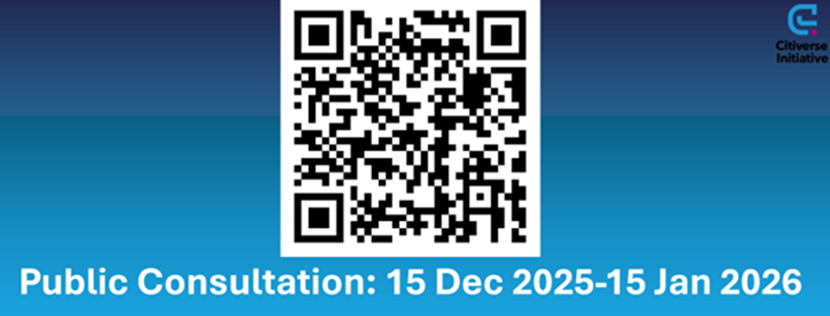
Consultation Period: 15 December 2025 – 15 January 2026
In July 2024, the UN approved our new Public-Private-People-Planet-Partnership (5P) framework, originally proposed in the inaugural technical report on the Citiverse.
Our goal is clear: utilize emerging technologies to support the UN SDGs through a model that prioritizes both humanity and the environment. We are seeking to work with global stakeholders—from institutional investors, technology solution providers, to governments—to implement the 5P principle worldwide.
Let’s build a future that works for all 8 billion of us. Reach out to discuss how we can partner.
❓My Question:
Large world model is the future of AI, how can we improve the UN citiverse framework to benefit 8bn people in the world?
Feel free to like, comment and share with your network. Thanks. 😊
The Metaverse Institute was invited to speak in a United Nations webinar, “Co-governing the Citiverse,” focusing on the integration of digital twin technology, artificial intelligence (AI), and urban governance. The virtual event, scheduled for 5 December 2025 from 14:30 to 15:30 CET, is organized by the International Telecommunication Union (ITU) and the Global Cities Hub (GCH).
About the Organizers
International Telecommunication Union (ITU)
A UN specialized agency for information and communication technologies (ICTs).
Founded in 1865, it is the oldest existing international organization and became a UN Specialized Agency in 1947.
Comprises 194 member states and over 1,000 sector members.
Global Cities Hub (GCH)
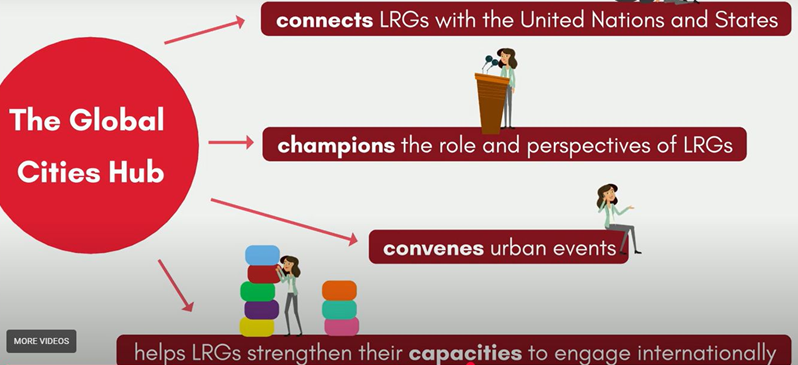
A Geneva-based NGO dedicated to connecting cities and local/regional governments (LRGs) to the UN and multilateral system.
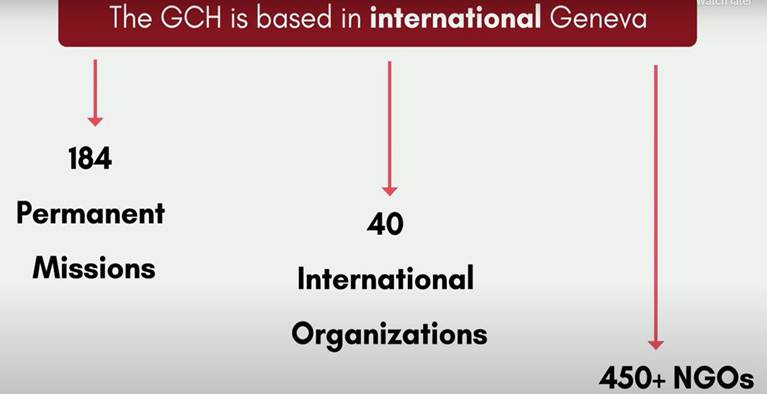
Facilitates engagement between LRGs and 184 permanent country missions, 40 international organizations, and 450 NGOs.
The Citiverse Initiative
The webinar will spotlight the Citiverse, a global multistakeholder platform launched by ITU, the United Nations International Computing Centre (UNICC), and Digital Dubai, with support from 70 international partners. The initiative seeks to shape a future where AI-powered virtual worlds are inclusive, trusted, and interoperable, connecting people, cities, and technologies to drive meaningful progress.
Webinar Agenda
The session will provide a briefing on outcomes from “Citiverse Rising: Virtual Worlds and AI Agents for Urban Transformation,” held on 4 November 2025 during the Smart City Expo World Congress. It will outline how and why LRGs should engage in multistakeholder processes, featuring key topics:
Self-assessment: “Virtual Worlds and AI – Evaluation and Assessment” by Christina Yan Zhang.
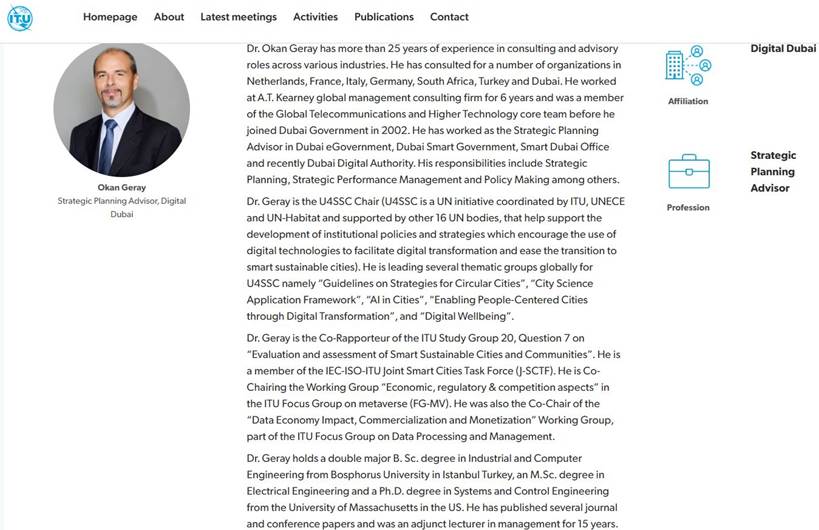
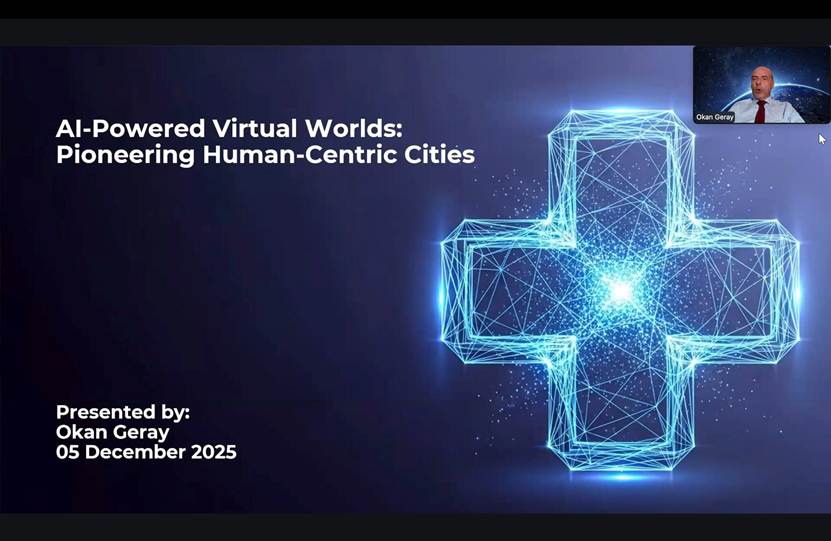
Multistakeholder Collaboration: “United for Smart Sustainable Cities (U4SSC)” by Okan Geray.
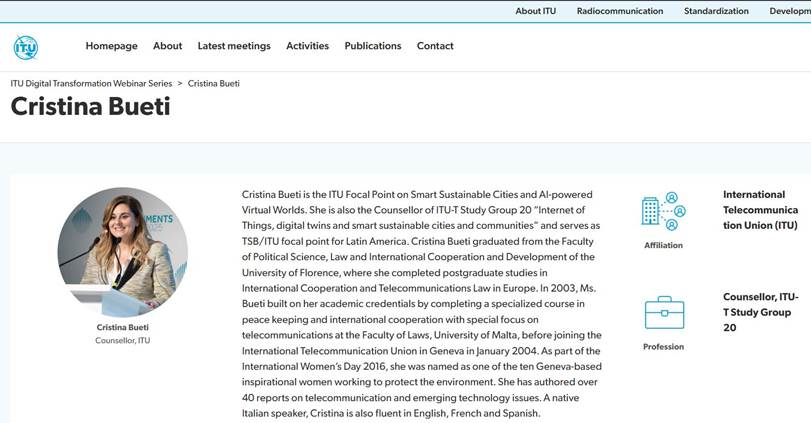
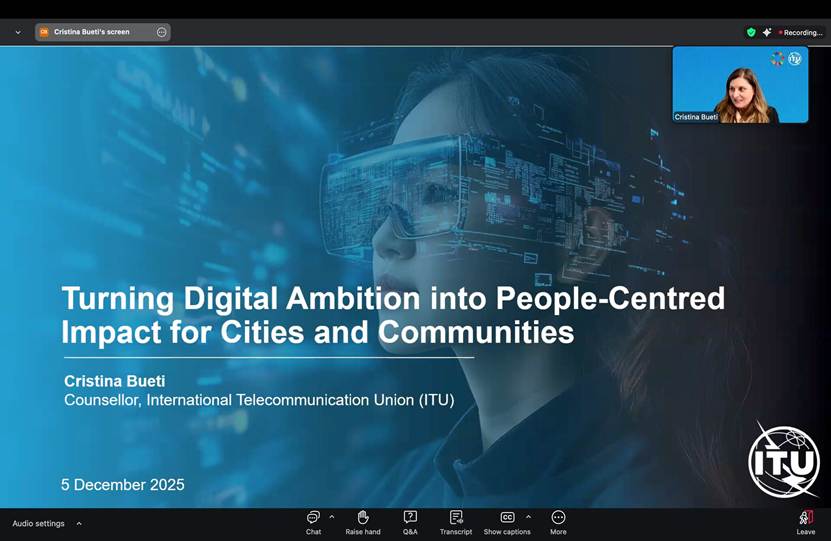
Global Regulation: “UN Virtual Worlds Day and the Citiverse Assembly” by Cristina Bueti.
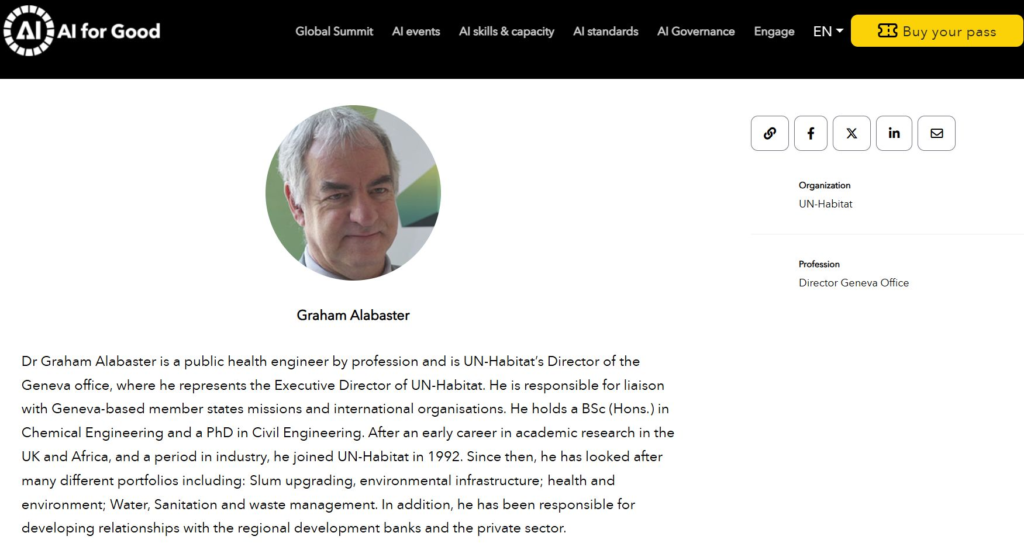
Graham Alabaster, Chief of Geneva Office, UN-Habitat
Cristina Bueti, ITU Focal Point on Smart Sustainable Cities and AI-powered Virtual Worlds
Okan Geray, Chairman of the Global Initiative on Virtual Worlds and AI Steering Committee, Chairman of United for Smart Sustainable Cities, and Senior Strategy Adviser, Digital Dubai
A Question for the Future: Prioritizing People and Planet
The dialogue takes place amid growing discourse on AI’s societal impact. On 20 November 2025, entrepreneur Elon Musk predicted that AI could make “jobs optional, money irrelevant” within 10–20 years. In response, urban planners, policymakers, and technologists are asking a critical question:
How can cities use AI-powered digital twins to explicitly prioritize human flourishing, civic identity, and sustainable co-existence, ensuring that technology serves people and the planet?
Digital twins—virtual replicas of physical environments—offer cities powerful tools for simulation, planning, and management. When guided by human-centered principles, they can:
Enhance Human Flourishing By modeling urban systems—from transportation to healthcare—digital twins can optimize for well-being, accessibility, and equity rather than mere efficiency.
Strengthen Civic Identity Through inclusive participatory design, digital twins can incorporate community voices, preserving cultural heritage and fostering a sense of belonging in rapidly evolving urban landscapes.
Promote Sustainable Co-existence Digital twins can simulate environmental impacts, support climate resilience, and model circular economies, aligning urban development with planetary boundaries.
Expert Perspectives
Cristina Bueti of ITU emphasized, “The Citiverse is not about technology for technology’s sake. It is about creating ethical, interoperable digital spaces that empower communities and protect our shared future.”
Okan Geray added, “Multistakeholder collaboration is essential. Cities, the private sector, and citizens must co-create these tools to ensure they address real human needs.”
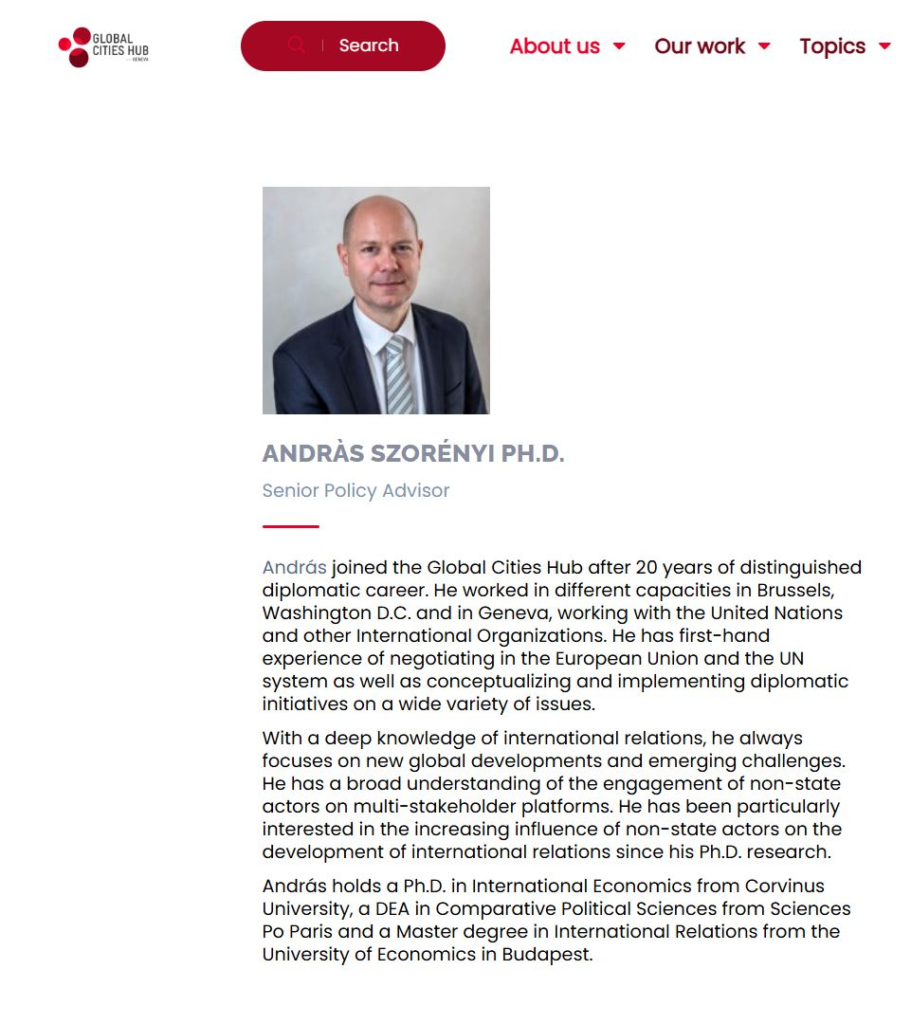
The Metaverse Institute extends gratitude to Andras Szorenyi, Kamelia Kemileva, Anh Thu Duong, Simone Sessolo, and Cristina Bueti for their contributions to this event.
Key takeaways for governments, investors, corporates and innovators:
Speakers at the “Co-governing the Citiverse” webinar provided a virtual tour of multilateral processes and their main outcomes in the realm of smart cities, virtual worlds and AI, and the citiverse.
Following the opening remarks by Cristina Bueti of ITU and Graham Alabaster from UN-Habitat, the interventions explained the ongoing activities in three related workstreams – helping the audience discover how technological development, including the virtual worlds are transforming the way cities are designed, governed, and experienced. Cristina Bueti, Christina Yan Zhang and Okan Geray shared their vision on how public institutions may progress through their respective digital journeys.
Look at the recording if you have missed the live session.
ITU guides, frameworks and insights support cities to benefit from the capabilities of a smart city. U4SSC, a UN initiative led by ITU which encourages the use of digital technologies, facilitate digital transformation and ease the transition to smart sustainable cities. U4SSC thematic groups cover among others such important topics, as:
Use of Artificial Intelligence in Cities
Digital Public Infrastructure for Cities
Enabling People-Centred Cities through Digital Transformation
Future Foresight for Cities
Social-cultural Sustainability in People-centred City Governance
The deployment of digital technology, and especially the creation of virtual worlds using AI leads us into a new era of urban development where systems become more autonomous. We can benefit from the increased capacity of these systems to build more inclusive and resilient cities and communities if we think together and translate it to public value.
All speakers of the Geneva Urban Debate agreed that technology is a tool to address humanity’s challenges. It is our responsibility to define the clear purpose of using it to advance human-centred development. Mayors and city officials need to make sure that the developments meet the local agenda and are relevant to people’s needs on the ground. Ideally, they are also aligned with global frameworks, such as the SDGs and with national development plans to maximize synergy.
As explained, the evolution of spatial computing enables us to create virtual worlds, such as the citiverse, where human-centric municipal services are easily accessible and easy to use. If developed properly they can contribute to reducing the cognitive gap as well.
However, citiverse is not an aim in itself. It is a totally new way of how we can address local issues. The community should decide on the key priorities and local leaders should take action to realize them. The different tools developed by international organizations, especially ITU and UN Habitat help assess where the city is and how to get where it wants to be.
Mayors are expected to offer a vision, a strategy, an implementation framework and take concrete steps. Embracing the new technology contribute to delivering results. Peer-to-peer dialogue can help overcome fear from the unknown. Initiatives by international organizations, such as the “Global Initiative on Virtual Worlds and AI – Discovering the Citiverse” help expedite the digital journey by avoiding the repetition of missteps and unnecessary reinventing of processes. Its evaluation and assessment track offers a pre-implementation checklist. A public consultation starts on 15 December 2025 till 15 January 2026 by the UN.
Following the United Nations webinar “Co-governing the Citiverse,” The Metaverse Institute extends its sincere gratitude to the key contributors who made the dialogue possible, acknowledging their dedication to shaping an inclusive digital future.
Special Thanks
The Institute extends particular appreciation to:
Andras Szorenyi, Ph.D., Senior Policy Advisor, Global Cities Hub
Kamelia Kemileva, Co-Director, Global Cities Hub
Anh Thu Duong, Co-Director, Global Cities Hub
Simone Sessolo, Event and Digital Content Coordinator
Cristina Bueti, Counsellor, International Telecommunication Union
Their collective efforts facilitated a crucial multilateral conversation on governing AI and virtual worlds in service of sustainable urban development.
An Open Question for Urban Futures
The webinar’s discussions arrive amid profound global reflections on artificial intelligence’s societal role. On 20 November 2025, technologist Elon Musk predicted that AI could render “jobs optional, money irrelevant” within 10–20 years.
This provocation raises a foundational question for city leaders, planners, and citizens worldwide:
“How can cities use AI-powered digital twins to explicitly prioritize human flourishing, civic identity, and sustainable co-existence, thereby ensuring technology serves people and the planet?”
Pathways Forward
Insights from the webinar suggest several guiding principles:
Purpose-Driven Design Digital twins must be developed with clear social and ecological outcomes—such as enhancing well-being, preserving cultural heritage, or modeling climate resilience—not merely operational efficiency.
Civic Governance & Co-Creation To counter corporate-dominated virtual spaces, cities should establish participatory governance models, enabling communities to shape digital twin deployments that reflect local values and needs.
Assessment Before Action Tools like the Institutional Readiness Self-Assessment Tool (IRSAT) can help cities evaluate their capacity to deploy technology ethically and inclusively, ensuring they “go slow to go right.”
Alignment with Global Frameworks Linking digital twin strategies to the UN Sustainable Development Goals and local sustainability plans can ensure technology advances broad public value, not isolated commercial interests.
Your Perspective Matters
As spatial computing, AI agents, and virtual worlds become urban reality, the question of “why” matters more than “how.” The Citiverse is not an end in itself, but a means to address enduring human needs: belonging, agency, equity, and ecological stewardship.
We invite policymakers, technologists, urbanists, and engaged citizens to share their views: How should cities steward these powerful tools to foster societies where technology amplifies our humanity rather than diminishes it?
Responses and continued dialogue can be directed to the event organizers and participating institutions.
*This article was prepared following the UN webinar “Co-governing the Citiverse,” held on 5 December 2025 and organized by ITU and the Global Cities Hub. The views expressed are intended to stimulate further public discussion.*
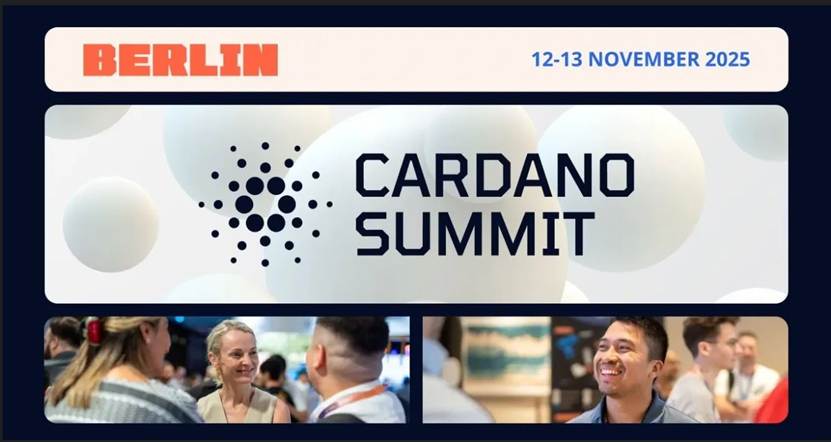
Cardano Summit 2025: Charting the Convergence of AI, Blockchain, and a Trust-Based Digital Economy
Berlin, Nov 13 2025 — The Cardano Summit 2025 concluded as a landmark event for the global blockchain ecosystem, attracting over 25,000 online participants and convening 800 regulators, investors, innovators, and enterprise leaders from 70 countries. Among the key voices was The Metaverse Institute, which participated actively in dialogues shaping the next generation of digital infrastructure.
The summit’s overwhelming scale—featuring 140 speakers—signalled a decisive shift: blockchain technology has moved beyond theoretical debate into a phase of robust, institutional adoption aimed at rebuilding the foundations of the global economy.
Core Insights: Where AI Meets Blockchain Infrastructure
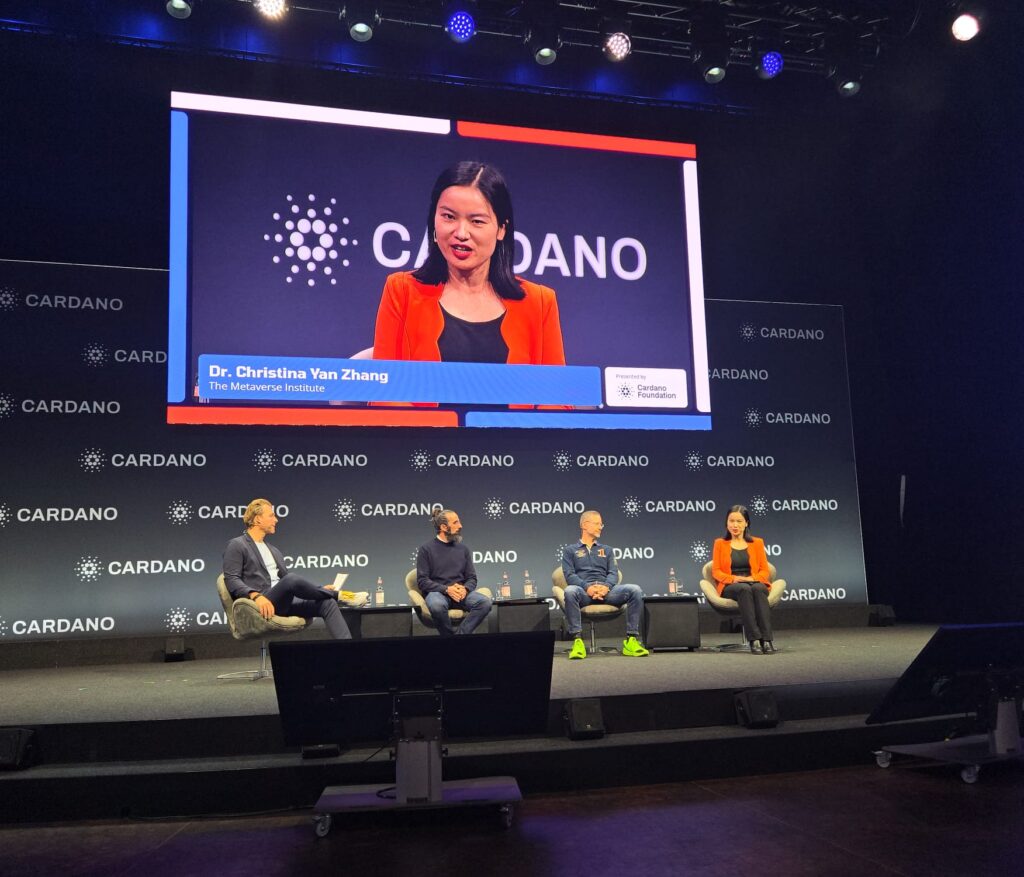
In a dedicated session, Dr Christina Yan Zhang, CEO of The Metaverse Institute delved into the critical infrastructure supporting artificial intelligence, a discussion featuring Domingo Nofre (CTO, Infomineo), Dr. Daniel Diemers (Chairman, SNGLR Group), and Florian Krüger-Herbert (Head of Innovation, Johnson & Johnson). The conversation tackled foundational challenges:
The imperative for nuclear-powered, carbon-free electricity to sustainably power AI workloads.
Innovations in next-generation data storage technology.
Addressing the growing water scarcity crisis exacerbated by data centres.
Navigating the hype cycle and systemic risks inherent in rapid AI advancement.
(Dr Christina Yan Zhang, CEO of The Metaverse Institute spoke on the critical infrastructure supporting artificial intelligence, a discussion featuring Domingo Nofre (CTO, Infomineo), Dr. Daniel Diemers (Chairman, SNGLR Group), and Florian Krüger-Herbert (Head of Innovation, Johnson & Johnson).
The dialogue underscored that AI’s future is inextricably linked to physical and digital infrastructure—and that blockchain is poised to play a crucial role in securing its integrity.
You can watch the full discussion here.
Key Takeaways from the Summit
1. The Foundational Vision: Trust as the New Digital Imperative
The summit established a core thesis: in an age of AI and digital complexity, blockchain’s ultimate value is as a global trust infrastructure.
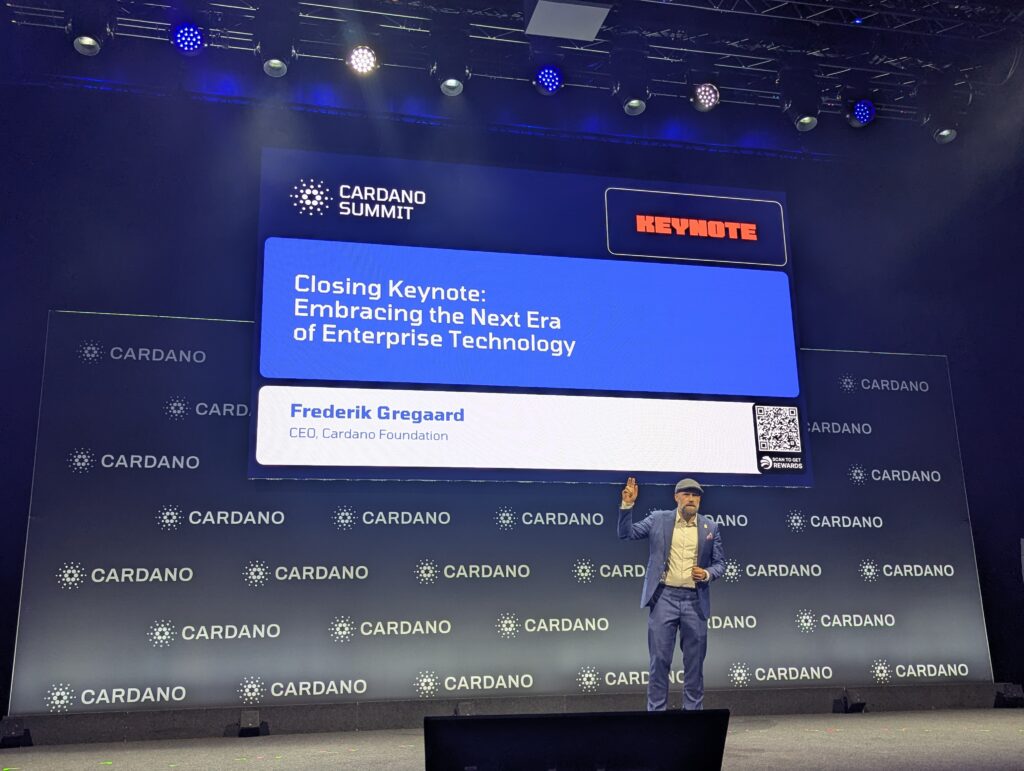
An Army of Changemakers: Frederik Gregaard, CEO of the Cardano Foundation, framed the movement as an “army of changemakers” actively rebuilding the digital economy’s foundations.
The Architecture of Trust: Doug Heintzman of the Blockchain Research Institute introduced a five-layer Digital Trust Infrastructure designed to embed verifiable trust into the fabric of global commerce.
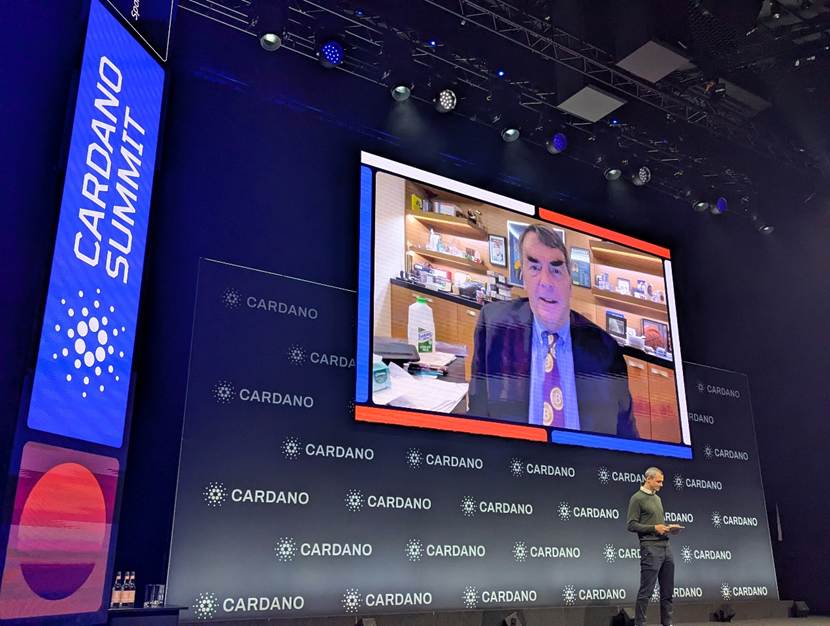
The Trust of Decentralization: Echoing this, investor Tim Draper argued that decentralization itself is the highest form of trust, as it distributes power and fosters innovation.
2. The Core Use Case: Digital Identity Driving Enterprise Adoption
A unanimous theme was that Digital Trust and Identity (DID) are the primary drivers for enterprise blockchain integration.
Solving the Security Crisis: Thomas A. Mayfield (Cardano Foundation) and Robby Yung (Animoca Brands) highlighted that compromised identity causes 80% of data breaches, positioning zero-knowledge proofs (ZK-proofs) as the critical “silver bullet” for privacy.
The Path to 2030: Experts from Gartner and the Global Legal Entity Identifier Foundation (GLEIF) mapped a clear path to widespread DID adoption by 2030, with Cardano’s Veridian identity solution detailed as a key player.
Enterprise Readiness: Giorgio Zinetti (Cardano Foundation CTO) and Stefan Schmitt (Blockdaemon) urged corporations to prepare for a new era of verifiable trade and payments on scalable, secure infrastructure.
Tim Draper Founder Draper Associates, speaking at the Cardano summit
3. The Strategic Convergence: AI Meets Blockchain
The summit highlighted a powerful synergy between AI and blockchain, with Cardano positioned as the ideal foundation.
The Verifiable Backbone for AI: Florian Krueger-Herbert of Johnson & Johnson stated that blockchain is the essential backbone for verifying data used by AI agents, particularly for critical decision-making in fields like healthcare.
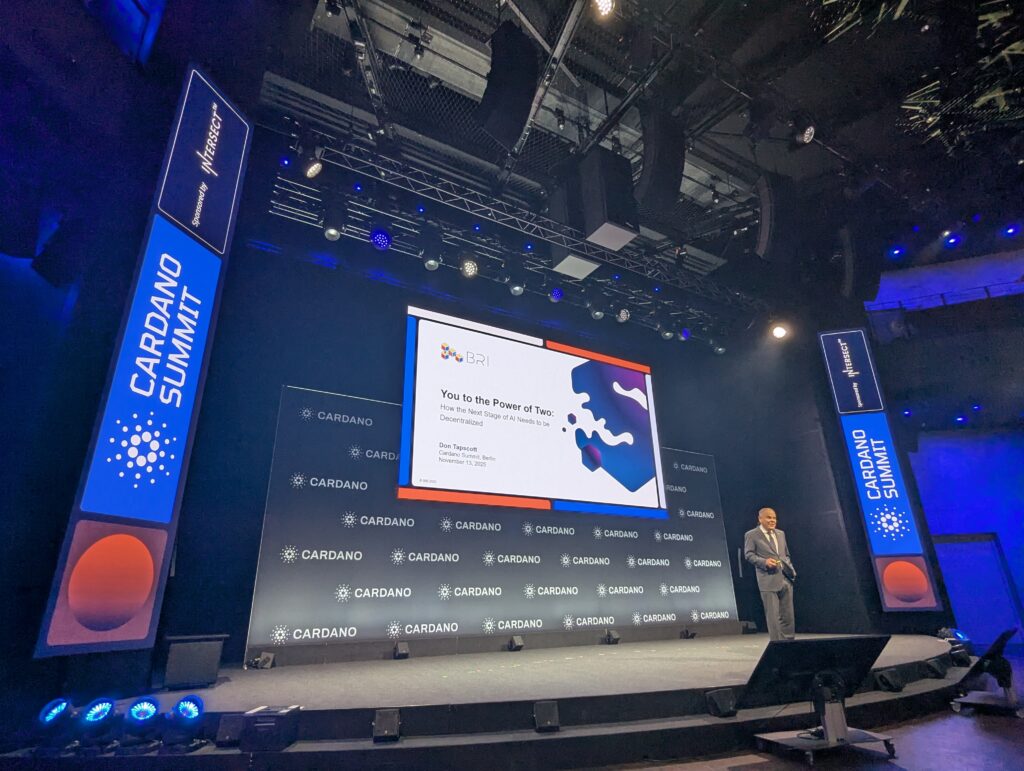
Foundations for the Agentic Economy: Sebastian Küpers (Plan.Net Group & Masumi) declared Cardano the “best foundation for the agentic economy,” a vision expanded by Don Tapscott (Blockchain Research Institute), who unveiled Identic AI—a concept for Web3-powered personal digital agents.
4. Real-World Utility: Finance, Assets, and Global Impact
Discussions moved beyond theory to showcase tangible adoption and utility.
Traditional Finance’s Tipping Point: Dr. Bernhard Kronfellner (BCG) observed a seismic shift, where traditional finance has moved from “if” to “how fast” to integrate digital assets, driven by regulatory clarity and “FOMO.”
Stablecoins Enter the Mainstream: Christian Rau (Mastercard) and Kwon Park (Crypto.com) confirmed that stablecoins are now solving real-world problems like cross-border payroll, treasury management, and efficient payments.
Tokenizing the Physical World: The focus on Real-World Asset (RWA) tokenization was clear. André Vanyi-Robin (Plastiks) discussed its application for the EU’s Digital Product Passport, while Monty Metzger (LCX) announced Toto Finance’s integration with Cardano for tokenized commodities.
Blockchain for Global Governance: Francine Pickup of the UNDP highlighted the UN’s use of blockchain for transparent and auditable aid distribution, proving its utility for public good.
(Don Tapscott, Godfather of Digital Economy gave the closing keynote speech at the Annual Cardano Summit 2025 where he mentioned the name of Dr Christina Yan Zhang, CEO of The Metaverse Institute a few times. You can see his video here.
5. Ecosystem Growth: The 2026 Roadmap and Tools for Builders
The summit concluded with a clear action plan for the ecosystem’s growth, backed by new capital and products.
The Strategic Roadmap: The Cardano ecosystem’s 2026 priorities are DeFi liquidity, seamless Web3 integration, and enterprise-grade RWA tokenization.
Fueling Adoption & Innovation: Frederik Gregaard announced the Cardano Accelerator Program and the Cardano x Draper Dragon ecosystem fund (with Samiz Bayan), signaling major institutional backing for future growth.
Building for Permanence: Ward Pennemans (Tokenance) emphasized blockchain’s unique capability for verifiable data retention that “outlives systems,” ensuring long-term integrity for enterprise use.
This synthesis captures the summit’s momentum: Cardano is evolving from a pioneering blockchain into a trusted public infrastructure for a decentralized, AI-assisted, and verifiably fair digital economy.
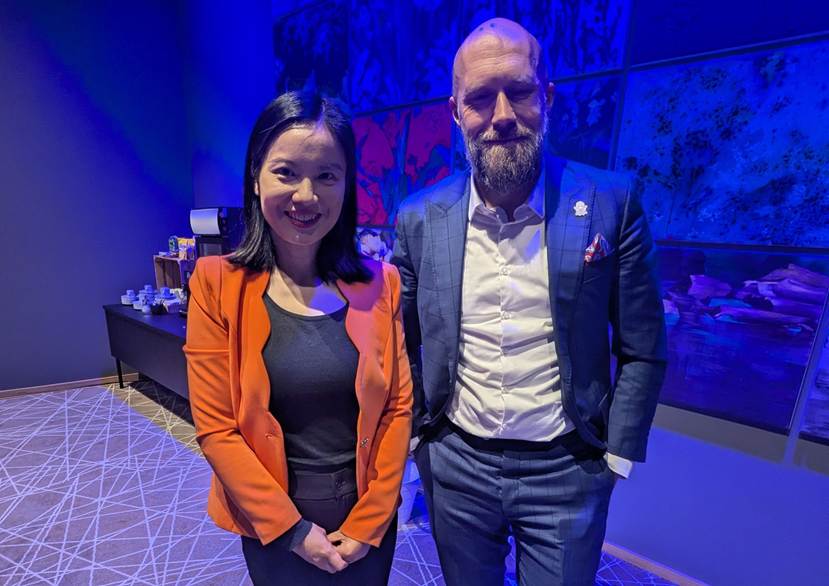
(Dr Christina Yan Zhang, CEO of The Metaverse Institute met meeting with Frederik Gregaard CEO Cardano Foundation to collaborate on web3 for global impact at The Annual Cardano Summit 2025)
Strategic Engagements and Forward Momentum
The Metaverse Institute forged significant connections during the summit:
A productive meeting with Frederik Gregaard, CEO of the Cardano Foundation, explored collaborations on leveraging Web3 for global impact, facilitated by Sandro Tarchini, Global Head of Business Development.
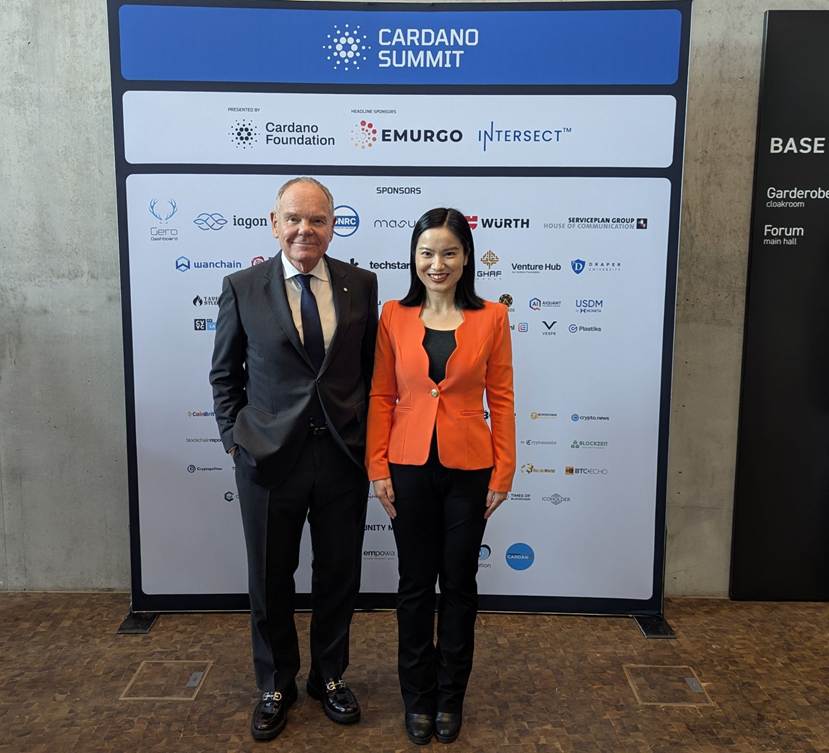
An honor to connect with Don Tapscott, Chairman of the Blockchain Research Institute, a pioneer who has championed the digital economy for three decades. In his closing keynote on safeguarding privacy in an era of personal digital twins, Tapscott generously highlighted the Institute’s work.
A stimulating 30-minute interview with Cardano’s Alexander F. Moser extended into a invitation for a deeper, three-hour dialogue on applying Web3 to address the world’s most pressing challenges.
(Dr Christina Yan Zhang, CEO of The Metaverse Institute with Don Tapscott, Godfather of Digital Economy at The Annual Cardano Summit 2025)
The Pivotal Question: Tokenizing the Future
The summit’s discussions culminated in a critical forward-looking question posed by Dr Christina Yan Zhang, CEO of The Metaverse Institute:
“Given the institutional tokenization momentum—exemplified by Nasdaq’s filing for a platform targeting $500 billion in daily volume and Standard Charterer’s forecast of a $30 trillion tokenized market—can Cardano’s peer-reviewed, scientifically rigorous architecture provide the trustworthy blockchain layer to tokenize the world’s $97 trillion government debt market? Could this unlock unprecedented global liquidity to fund the major AI infrastructure developments the world urgently needs?”
(Dr Christina Yan Zhang, CEO of The Metaverse Institute and Don Tapscott, Godfather of Digital Economy handed out with Cardano team after the Annual Cardano Summit 2025)
This inquiry sits at the nexus of finance, technology, and global development, challenging the ecosystem to translate its principles of trust and verification into solutions for macroeconomic scale.
The Cardano Summit 2025 has made it clear: the builders are here, the institutions are engaged, and the framework for a new digital economy is being actively constructed.
(Dr Christina Yan Zhang, The Metaverse Institute with the speakers from different UN agencies at the Cardano Annual Summit)
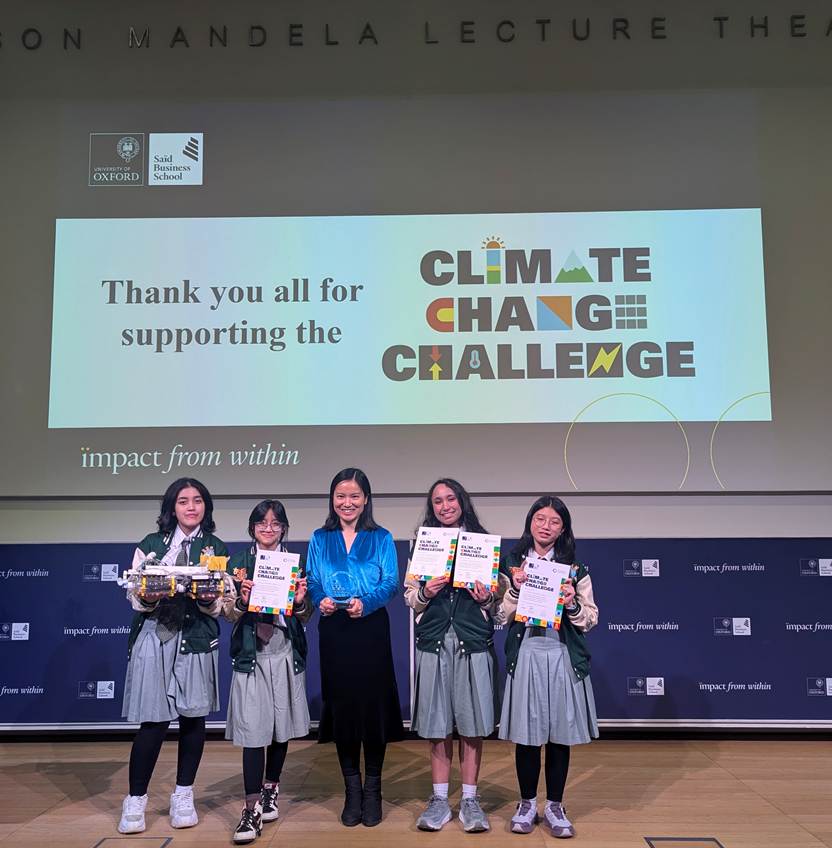
OXFORD, U.K. — In a landmark victory for youth-led innovation, a team of four Indonesian high school students has claimed the top prize at one of the world’s most prestigious academic climate challenges. Their project, a coral-regenerating robot named “Boom Bloom Bio,” was named the global winner of the 2025 Oxford Saïd Global Climate Change Challenge in a ceremony at the University of Oxford, prevailing in an elite field of over 1,600 international entries.
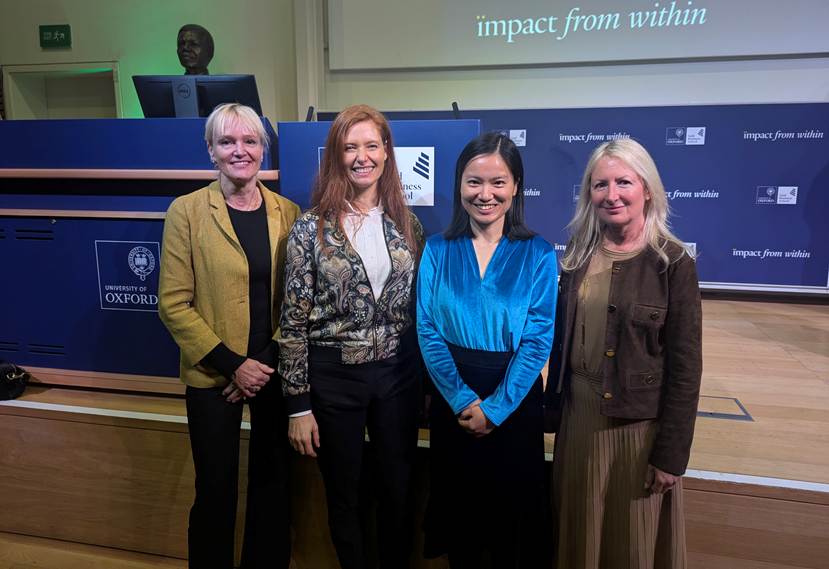
The competition, hosted by the University of Oxford’s renowned Saïd Business School, convenes a select panel of global experts to identify the most promising sustainability solutions from the next generation. This year’s final judging panel included Dr. Christina Yan Zhang, CEO of The Metaverse Institute, who was invited to lend her expertise in technology and innovation to the rigorous selection process.
The Pinnacle of Youth-Led Sustainability Innovation
Now in its third year, the Oxford Global Climate Change Challenge has established itself as a premier global platform, recognized for its academic rigor and its mission to identify scalable, real-world solutions. The finals represent the culmination of a highly selective process, where only the most thoroughly researched and impactful proposals proceed.
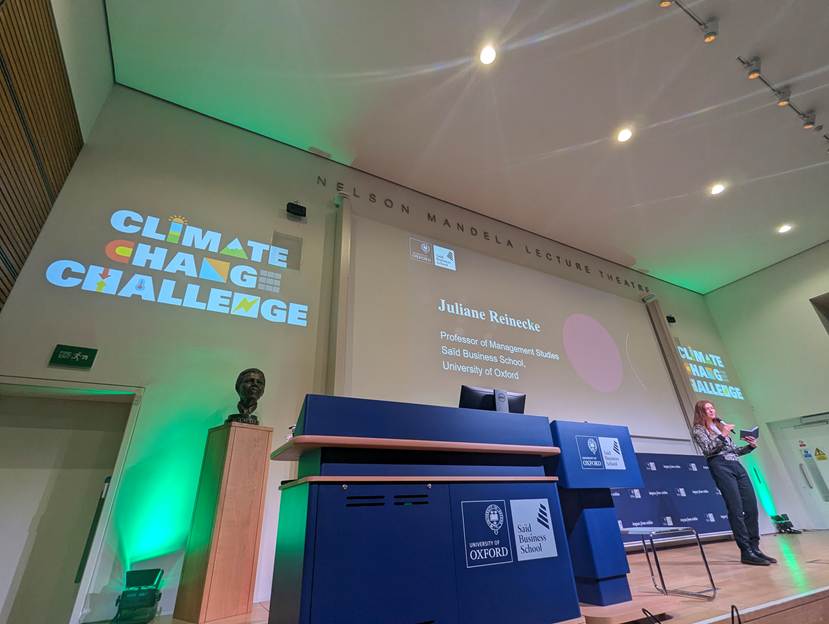
“The depth of innovation and scientific understanding displayed by these students is truly extraordinary,” said Professor Juliane Reinecke, Professor of Management Studies at Oxford Saïd and Chair of the Judging Panel. “They made our job profoundly difficult. Winning this challenge signifies that their work is not only creative but is grounded in research with genuine potential for impact.”
The winning team from Penabur Gading Serpong Christian High School in Indonesia developed “Boom Bloom Bio” to address the critical crisis of coral reef degradation. Their solution impressed the judges by directly tackling marine biodiversity loss—a complex ecological problem—with a precise, technology-enabled approach.
(The prestigious Oxford Climate Change Prize 2025 was awarded to the “Boom Bloom Bio” team—students Raisa, Merlin, Renata, and Cheryl from Penabur Gading Serpong Christian High School in Indonesia. Their winning project, an innovative algae dispersion robot designed for coral regeneration and biodiversity recovery, impressed the judges. Dr. Christina Yan Zhang, CEO of The Metaverse Institute, is pictured here celebrating with the young innovators.)
An Elite Judging Assembly and Educational Leadership
The competition’s prestige is underscored by the distinction of its final jury, comprising leaders from top-tier academic institutions, global media, and industry:
Professor Juliane Reinecke, Professor of Management Studies, Oxford Saïd (Chair)
Dr. Abrar Chaudhury, Oxford Saïd
Josephine Fawkes, Director of Global Inclusion and Youth Education, Oxford Saïd
Frances Lloyd, Fellow and Director of Sustainability, Wadham College, Oxford
Dr. Christina Yan Zhang, CEO, The Metaverse Institute
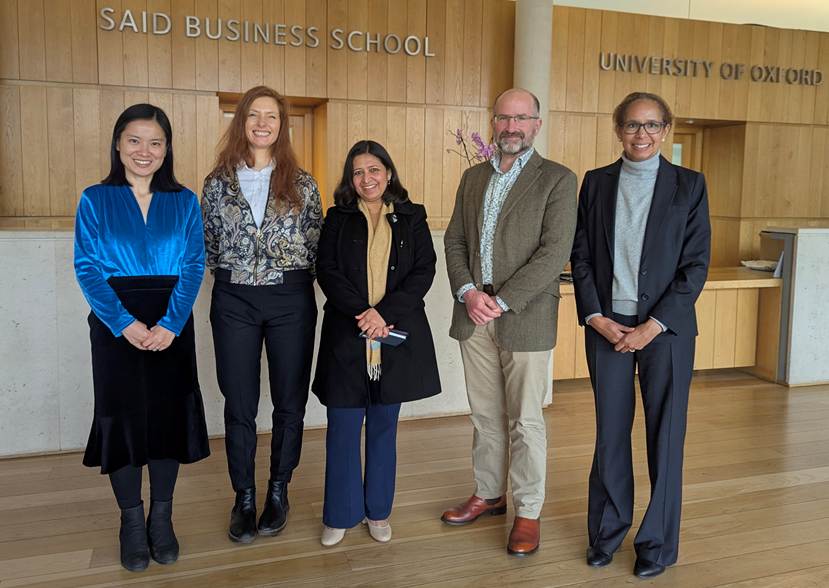
(The competition’s prestige is underscored by the distinction of its final jury, comprising leaders from top-tier academic institutions, global media, and industry, including Professor Juliane Reinecke, Professor of Management Studies, Oxford Saïd (Chair); Dr. Abrar Chaudhury, Oxford Saïd; Josephine Fawkes, Director of Global Inclusion and Youth Education, Oxford Saïd; Frances Lloyd, Fellow and Director of Sustainability, Wadham College, Oxford; Dr. Christina Yan Zhang, CEO, The Metaverse Institute; Rob Pavey, Headteacher, Cheney School, Oxford; and Subhra Priyadarshini, Chief Editor, Nature Portfolio)
The award for Best Lesson Plan was awarded to Zhaoxia Chen of Jinling High School Hexi Campus in Nanjing, whose curriculum trains students in high-stakes international diplomacy simulations focused on food security. This award highlights the challenge’s dual focus on groundbreaking student projects and transformative educational methods.
(Zhaoxia Chen, a teacher from Jinling High School Hexi Campus in Nanjing, was honored with the award for Best Lesson Plan.)
“Participating in this jury was an honor,” stated Dr. Christina Yan Zhang. “The Oxford challenge is unique in its ability to attract and identify truly exceptional talent. Evaluating these entries alongside some of the world’s foremost academic and sustainability thinkers was a powerful experience. The winning project from Indonesia is a stellar example of how global youth are applying deep tech understanding to solve our planet’s most pressing issues.”
(Honouring educational excellence: Dr. Christina Yan Zhang with Zhaoxia Chen, awarded Best Lesson Plan at the Oxford Saïd Global Climate Change Challenge 2025 for her immersive “Model UN” curriculum on food security
A Launchpad for Future Global Leaders
The prizes offered reflect the competition’s role as a career-defining launchpad. The Indonesian student winners—Raisa, Merlin, Renata, and Cheryl—receive full bursaries to the Future Climate Innovators Summer School at the University of Oxford in 2026, an immersive programme taught by the University’s world-renowned academics. Teacher winner Zhaoxia Chen earns a place on a competitive Oxford Saïd Executive Education programme.
Runners-up included the collaborative MycoFuture project (USA and South Korea) and the Canadian team EcoCoil, alongside teaching innovators Chris Rowley (Chengdu) and Roudaina Mohsen Kassam (Lebanon).
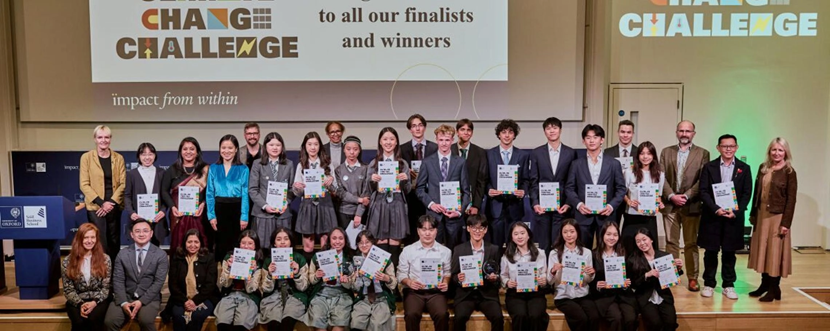
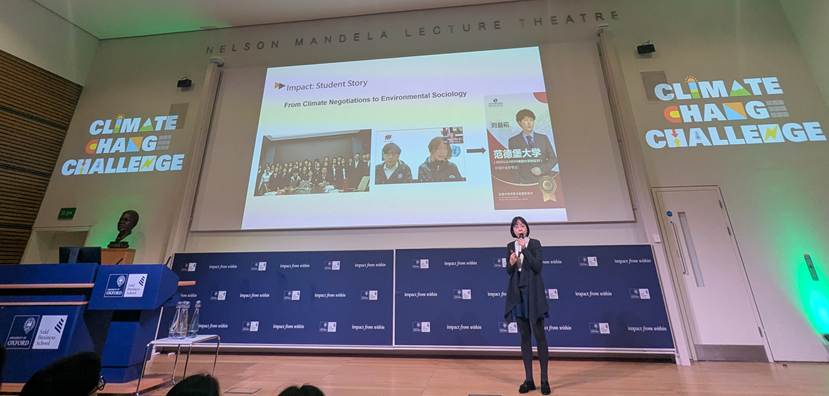
(Jo Fawkes, Director at Saïd Business School, University of Oxford welcomed all the global finalists of the Oxford Global Climate Change Challenge 2025)
The competition’s impact extends beyond prizes. Jo Fawkes, Director at Oxford Saïd, noted: “Over the past three years, the Challenge has grown into a global platform – connecting students and teachers across continents, languages and disciplines. It has brought forward extraordinary ideas, and even more importantly, it has built a community that believes education and innovation can, together, accelerate the transition to a sustainable world.”
For Dr. Zhang, participating as a judge underscored the critical role of cross-sector collaboration in empowering the next generation. “Witnessing this fusion of deep research, technological imagination, and educational passion from young people across the globe is profoundly inspiring,” she stated. “It is a powerful reminder that the most scalable solutions for our planetary challenges will come from investing in and connecting this emerging generation of innovators.”
Professor Mette Morsing, Interim Dean of Oxford Saïd, connected the winners to the school’s core mission: “We speak of creating ‘impact from within’—nurturing individuals who use their insight and compassion to transform systems. That philosophy lives at the heart of everything we do, from our research to this youth education challenge. These winners embody that spirit entirely.”
The full recording of the final competition can be found here.
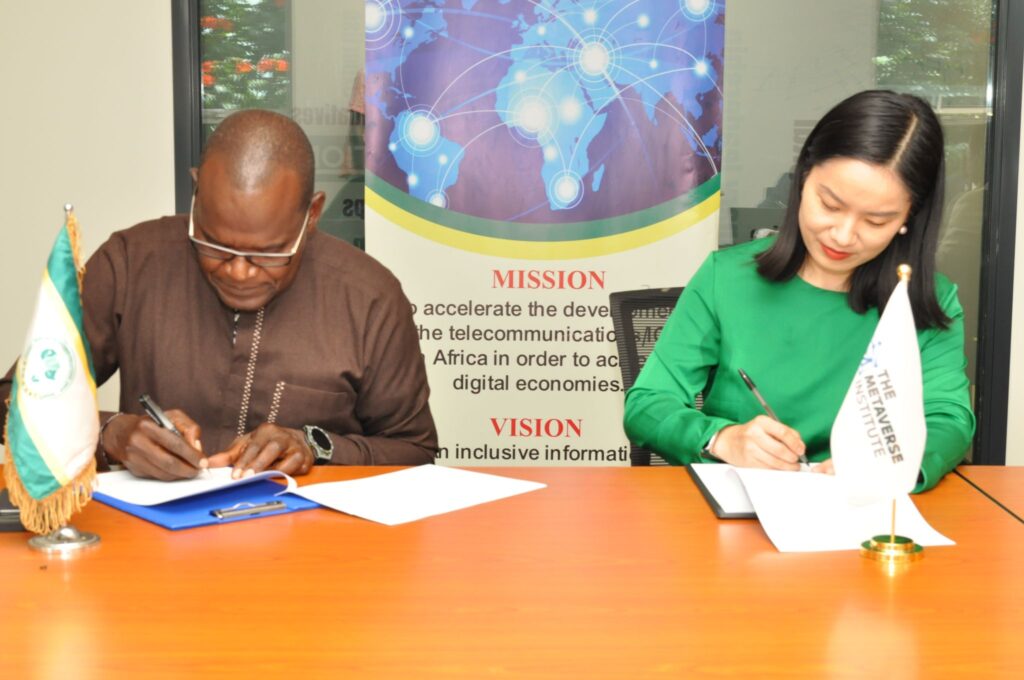
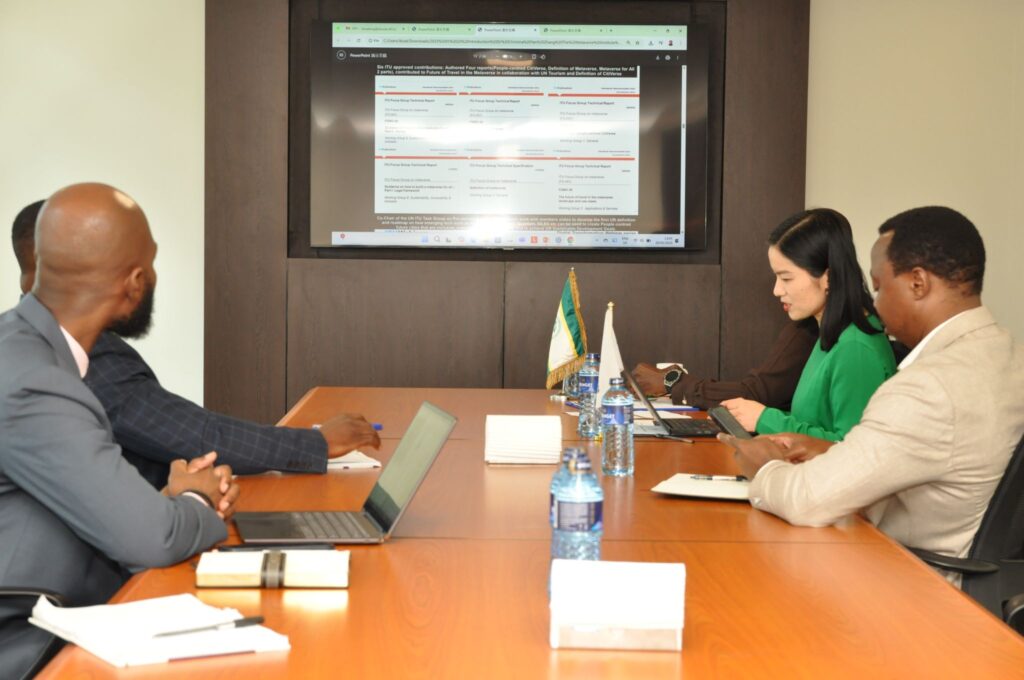
Nairobi, Kenya – 21st May 2025: Africa’s intergovernmental ICT policy body, the African Telecommunications Union (ATU), and The Metaverse Institute – made up of leading pioneers and thought leaders in the Metaverse, artificial intelligence, and smart cities related technologies, today inked a landmark Memorandum of Understanding (MoU) at ATU’s headquarters in Nairobi.
The strategic partnership commits both organizations to establish an African governance and adoption framework for the metaverse – an integrative ecosystem of virtual worlds offering immersive experiences to users, that modify pre-existing and create new value from economic, environmental, social and cultural perspectives to the next generation of the 3D internet.
With a staggering USD 5 trillion specifically projected for training humanoid robots in safe, cost-effective virtual environments, the metaverse offers Africa a transformative pathway to overcome its most pressing challenges. This integrative ecosystem of virtual worlds provides solutions for issues that are currently too expensive—such as the iterative development of smart cities infrastructure—and too bold, like facilitating risk-free surgical training, medical simulations, or the safe training of humanoid robots.
It also addresses challenges that are too complex by enabling dynamic platforms for intricate climate change simulations, and tackles those that are critical for human capital, such as advancing food security through virtual agricultural planning and revolutionizing the quality and accessibility of education. This immersive 3D internet will bridge geographical divides, democratize access to world-class knowledge and skills, and thereby empower Africa’s burgeoning youth.
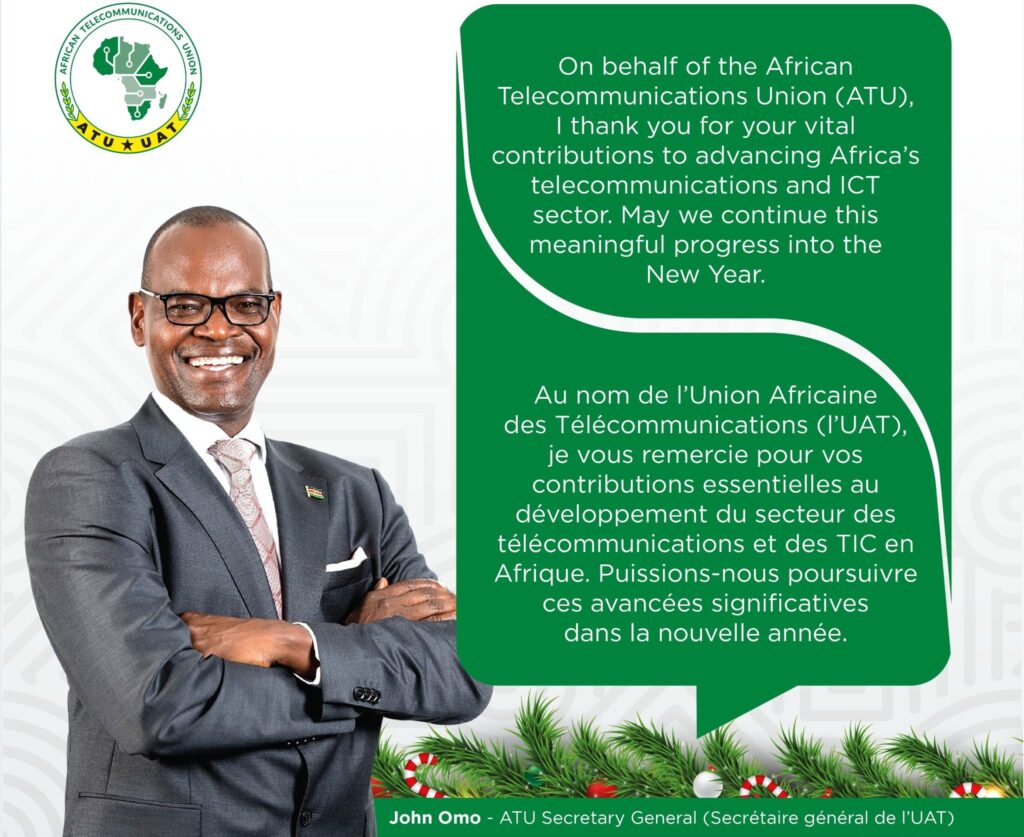
The partnership also provides for cooperation on capacity-building and joint project oversight. ATU Secretary-General John Omo and The Metaverse Institute, CEO Dr. Christina Yan Zhang, led the signing ceremony which was themed around the shared urgency to accelerate Africa’s digital transformation.
Under the MoU, the partners will further develop continent-wide policies and technical standards to guide metaverse development in various sectors. They will launch training programs to build virtual-reality and blockchain skills, and set up a joint oversight body to monitor pilot projects across the fifty-two (52) Member States of ATU.
John Omo called the agreement “a historic step in our digital journey that positions Africa to lead in the next generation of internet platforms.” He added, “Our youth are entering a new world of opportunity. We must act now to build safe, inclusive virtual economies and communities”.
These goals are timely given the share of Africans using the Internet jumped from about 28.6% in 2019 to 38% in 2024, adding tens of millions of new users in just five years. The global organization representing the interests of mobile network operators, the GSMA, notes that 27 operators in 16 markets have launched 5G networks, and mobile technologies now contribute over 8% (about $170 billion) to Africa’s GDP. Conversely, Africa which accounts for roughly 18% of the world’s population holds under 1% of global data centre capacity.
Dr. Zhang said, “With UN figures projecting that by 2100, nearly half the world’s youth will be African, our partnership with ATU is critical. We are honoured to comprehensively evaluate the impact of emerging technologies and the virtual worlds ecosystem on the continent, delivering pragmatic recommendations to maximize Africa’s global competitiveness. Together, we envision a digitally empowered Africa by 2063, a global leader in the digital revolution, where innovation serves humanity to forge a prosperous, inclusive and sustainable future for all”.
The ATU and The Metaverse Institute will in the next few months convene joint working groups to draft the governance framework and launch training initiatives.
Ends
About the African Telecommunications Union (ATU)
An Inter-Governmental Organization (IGO), ATU is the specialised organ of the African Union in the field of Telecommunications/ICTs, and also the International Telecommunications Union’s regional telecommunications organization (RTO) for Africa. The Union represents 52 African countries forming its Member States, and 56 Associate Members comprised of ICT operators in the region. It is an autonomous, membership driven organization whose mission is to promote digital transformation in Africa and ensure the continent is an equal-player in global digital matters. More on the website https://atuuat.africa/
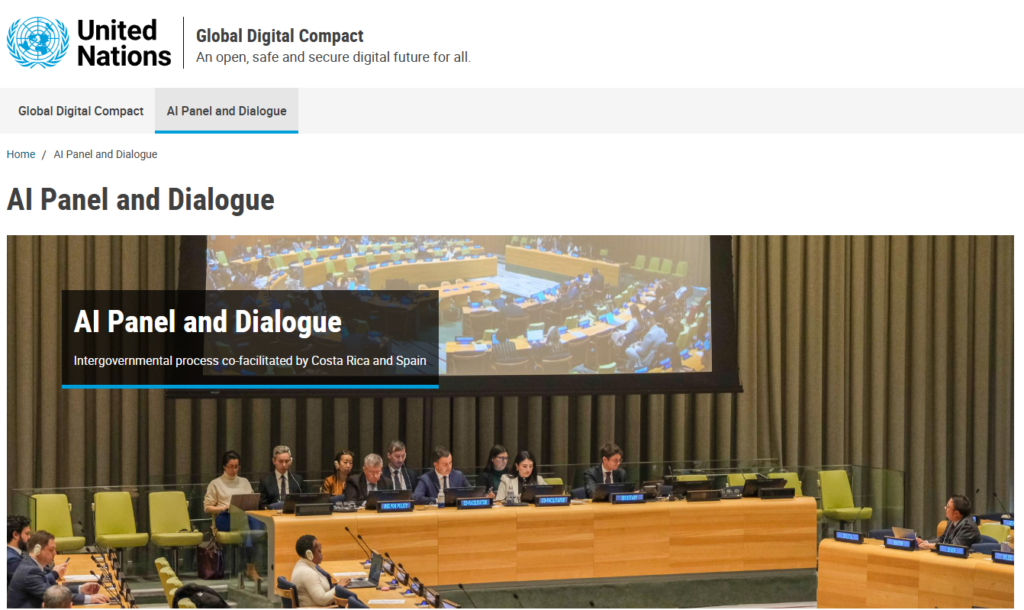
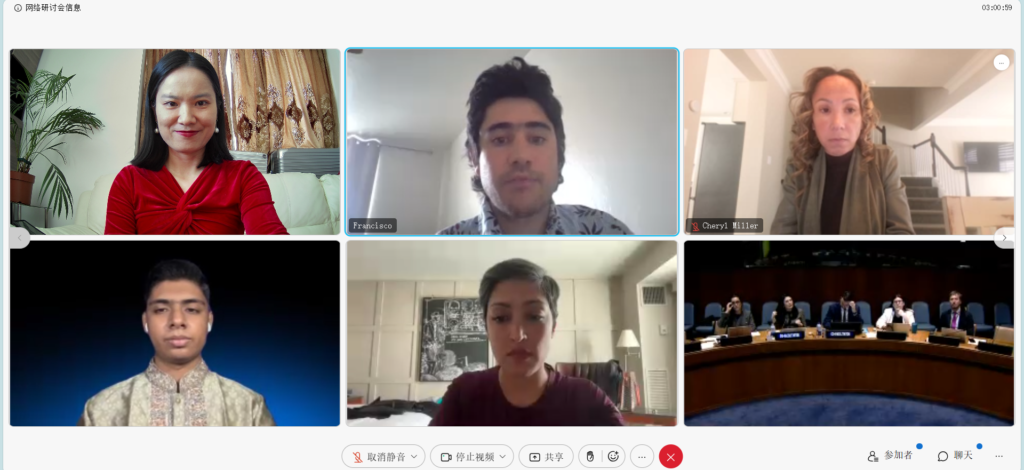
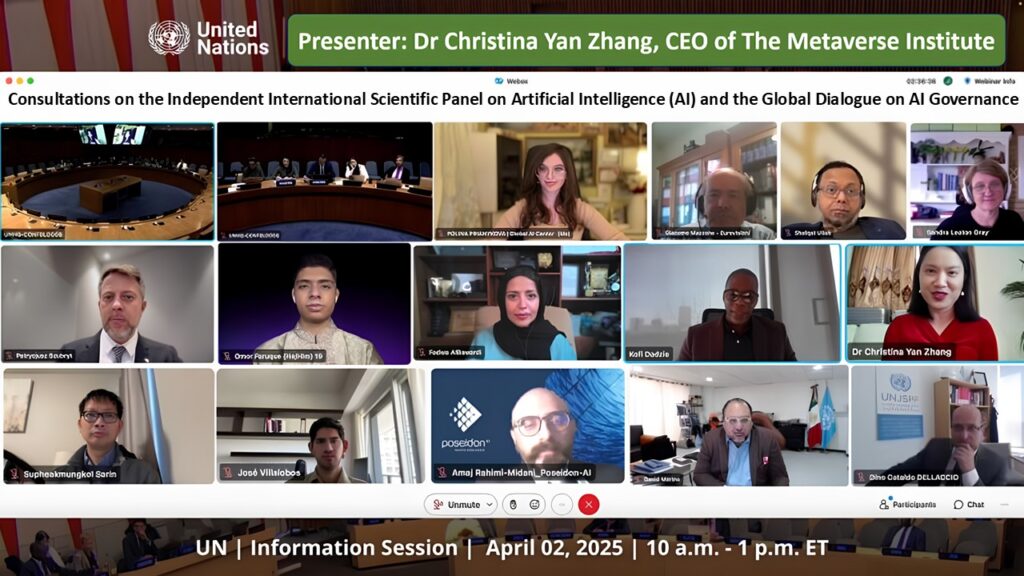
On April 2nd, 2025, amidst a complex global backdrop marked by new US tariff announcements potentially signaling heightened trade tensions, the United Nations hosted a crucial Information Session with Stakeholders on AI Governance. The Metaverse Institute was honoured to contribute to this vital dialogue, represented by CEO Dr. Christina Yan Zhang. The session underscored the urgent need for international cooperation on Artificial Intelligence, even as geopolitical friction persists.
The timing was stark: as discussions unfolded on harnessing AI for global good, headlines reflected a world grappling with economic nationalism. This juxtaposition highlights the central challenge of our time – how can we build unprecedented global collaboration required to manage AI’s profound potential and perils?
The UN, through initiatives like the Global Digital Compact, is laying the groundwork. Member States have agreed to establish an Independent International Scientific Panel on AI and foster a Global Dialogue on AI Governance, with Costa Rica and Spain commendably co-facilitating this process. These steps are crucial, but the path forward requires navigating significant hurdles.
In her address, Dr. Zhang echoed warnings from leading AI figures like Geoffrey Hinton, emphasizing the critical need for collective action to ensure the race towards Artificial General Intelligence (AGI) – AI smarter than humans – does not inadvertently lead humanity towards existential risks. Key concerns raised included:
Existential Threats & Global Safety: Prioritizing international collaboration to steer AGI development away from potential catastrophic outcomes.
Sustainability Imperative: While AI offers tools to combat climate change, its own environmental footprint – water and energy consumption, e-waste generation, carbon emissions – demands rigorous evaluation and mitigation strategies.
Societal Transformation: Proactively exploring effective governance models to address the sweeping societal impacts of AGI, including job displacement, the future of warfare, the feasibility of universal basic income, and the exacerbation of the digital divide.
The session brought together influential voices from across the AI ecosystem – policymakers, technical experts, civil society leaders, and international organizations – fostering essential dialogue. We extend sincere gratitude for the leadership shown by Costa Rica’s Ambassador to the UN, H.E. Maritza Chan, Spain’s Ambassador to the UN, H.E. Héctor Gómez, the UN Office for Digital and Emerging Technologies, particularly Lucia Velasco (Head AI Policy) and Rebekah Hayoung Woo (Policy Officer), for their significant support in advancing these critical conversations. Engaging with fellow leaders dedicated to responsible AI deployment was both insightful and encouraging.
This brings us to the pivotal question facing the international community:
How can we, as a global collective, forge the unprecedented international cooperation needed to maximize AI’s transformative power for innovation, efficiency, and solving global challenges, while simultaneously mitigating its inherent and significant risks – including sustainability challenges, a widening digital divide, and potential existential threats – especially within a climate of increasing geopolitical tension and potential trade conflicts?
Achieving this delicate balance requires more than technical solutions; it demands political will, shared ethical frameworks, and a commitment to global solidarity that transcends national interests. The path forward is complex, but the stakes – shaping a future where AI serves humanity safely and equitably – could not be higher.
Tokenisation is reshaping key financial sectors, enabling efficiency and accessibility.
The financial industry is seeing a fundamental shift with tokenisation, a blockchain-based approach to creating digital representations of real-world assets. As blockchain matures, banks, fintechs and regulators are increasingly looking to leverage this technology to build cross-border, multi-jurisdictional networks, enabling new efficiencies and amplifying access to a wider array of assets. Tokenisation’s potential to streamline processes, democratise ownership and enhance liquidity is reshaping finance, but scaling these projects to real-world applications involves navigating significant regulatory and operational challenges.
Tokenisation in finance involves creating a digital version of physical or financial assets that can be recorded and tracked on a blockchain. This enables assets ranging from real estate and commodities to government bonds to be broken down into smaller, tradeable units. Blockchain, as a decentralised digital ledger, records ownership and transactions in a transparent, immutable way, which is critical in an industry where accountability and transparency are paramount.
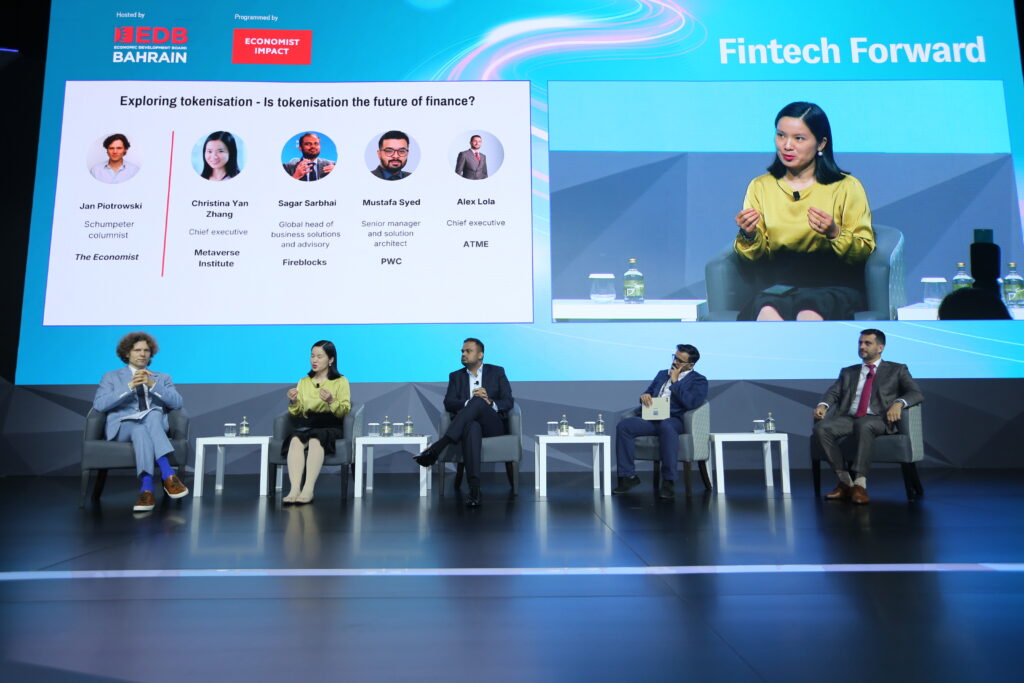
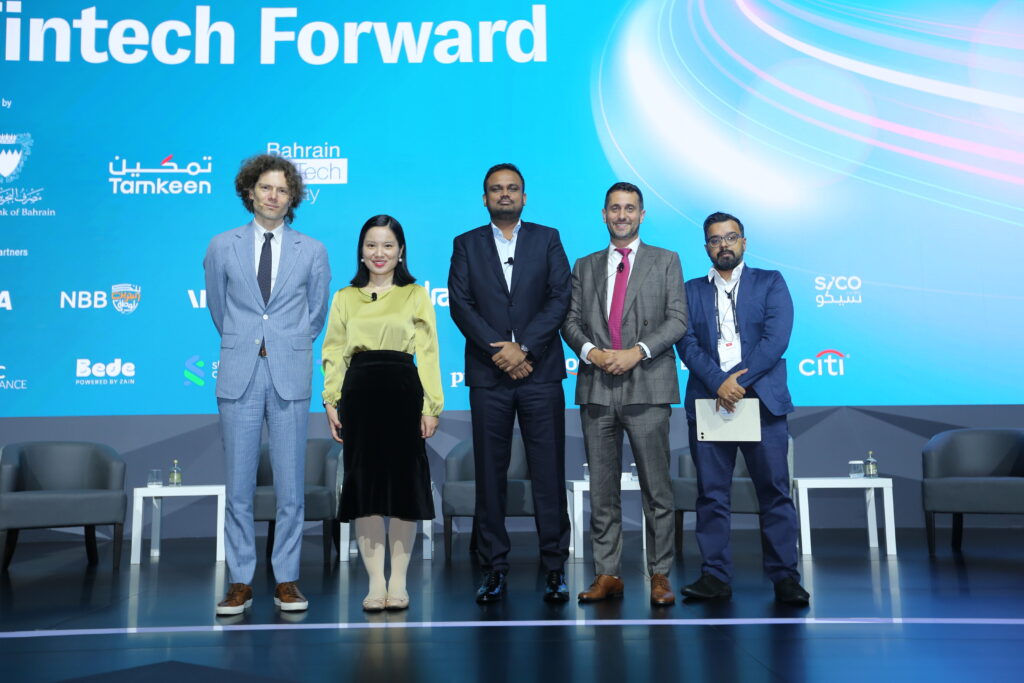
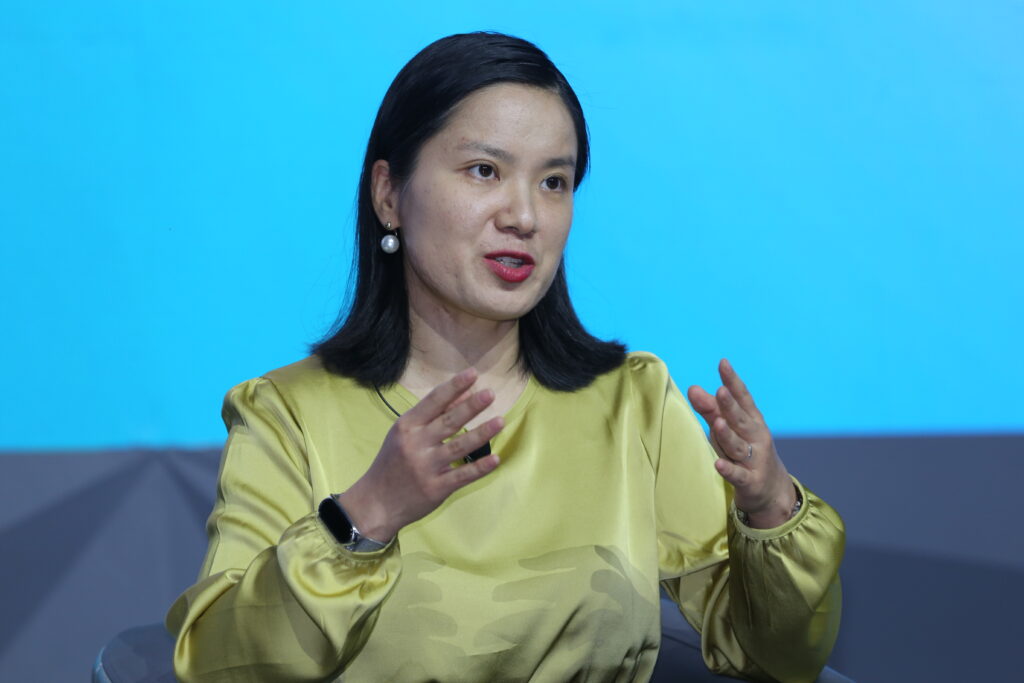
“Tokenisation means we create a digital representation of real-world assets on blockchain,” said Christina Yan Zhang, CEO of the Metaverse Institute. “It can be any kind of traditional financing, equities, debt, bond, or even physical assets like real estate and art.” Zhang’s comments reflect a broader industry consensus that blockchain’s transparency could solve persistent inefficiencies in traditional financial systems, especially in high-value markets with limited liquidity and accessibility.
Whether it’s tokenised deposits, stablecoins or central bank digital currencies, that really will power the entire ecosystem and the adoption of tokenised assetsSagar Sarbhai
According to Mustafa Syed, Senior Manager and Solution Architect at PwC tokenisation has, so far, found the greatest traction in payment solutions and digital currencies, driven by increasing interest from central banks and private institutions. “If we look at the growth of digital currency, that has been the most prominent use case for tokenisation in the last six to seven years,” Syed explained at the Bahrain Fintech Forward summit. This trend is especially evident in the Middle East, where the UAE and Bahrain have rolled out frameworks regulating private forms of digital tokens, such as stablecoins, paving the way for tokenised cross-border transactions.
Expanding beyond payments
The financial services sector is currently seeing the most benefits from tokenisation in payment systems, where stablecoins and central bank digital currencies (CBDCs) are being trialled as part of new tokenised frameworks. The global stablecoin market, according to estimates from PwC, has already grown to a range of $140-$260 billion, reflecting the appetite for digital assets that combine the speed of blockchain with the stability of traditional assets.
Sagar Sarbhai, Global Head of Business Solutions and Advisory at Fireblocks, noted that tokenisation’s scope is expanding from speculative crypto trading into utility-driven applications like money markets, digital payments and lending. “Whether it’s tokenised deposits, stablecoins or central bank digital currencies, that really will power the entire ecosystem and the adoption of tokenised assets,” he said. Tokenised bonds, such as the money market fund issued by BlackRock via Securitize, exemplify tokenisation’s utility in finance, where digitisation lowers entry costs for investors and opens previously illiquid markets to smaller investors.
Real estate and commodities
Beyond financial assets, tokenisation has enabled fractional ownership in traditionally high-value sectors like real estate and commodities, where investment was once limited to wealthy investors. Real estate, for instance, requires high capital commitments, making it inaccessible to most individual investors. Tokenisation allows these large assets to be divided into smaller, affordable units, which can then be traded more flexibly. This creates new access points for investors and enhances liquidity in the real estate market, which traditionally sees longer holding periods and limited secondary market trading.
We are in the middle of this tokenisation journey or cycle, and we think there’s tremendous opportunity, but we do need close regulatory oversightMustafa Syed
Earlier this year, ATME, a Bahrain-based company licensed by the Central Bank of Bahrain, launched tokenised investments in commodities such as precious metals and aircraft, making these assets accessible to retail investors. “Each token represents a title right to the metal,” explained its CEO Alex Lola. Unlike ETFs that only provide derivative exposure, tokenised assets give investors a direct ownership interest in the underlying asset, avoiding the management fees and counterparty risks associated with ETFs. The fractionalised ownership structure lowers the entry barrier for smaller investors, making tokenised assets more accessible while still aligning with regulatory frameworks.
Bond markets and automated compliance
Tokenised bonds are another area where blockchain technology is transforming finance. In traditional bond markets, issuing and servicing bonds involve significant administrative overhead, including manual processing and compliance checks, which can lead to errors and delays. Tokenised bonds simplify these processes, allowing issuers to automate compliance through smart contracts that self-execute predefined actions, such as dividend payments or interest payouts, based on the terms embedded in the blockchain.
This automation offers significant cost reductions and improved accuracy, which are crucial for high-volume markets. BlackRock’s $1.35 billion tokenised money market fund has demonstrated tokenisation’s potential to provide both cost efficiencies and enhanced liquidity, something that is especially valuable for smaller retail investors who have historically been excluded from these markets.
A similar approach is being tested in corporate debt markets, where tokenisation allows for tokenised bonds to be issued on blockchain networks, reducing settlement times and lowering transaction costs. In high-interest environments, where timing and liquidity are critical, this reduction in settlement times can be a powerful incentive for institutional adoption.
Central bank initiatives and BIS
Tokenisation’s expansion into mainstream finance, however, hinges on regulatory frameworks and compliance standards. While the technology’s transparency and efficiency appeal to institutions, regulatory bodies need to create guidelines addressing security, volatility and operational risk concerns. In this regard, collaborative efforts like the Bank for International Settlements (BIS) Project Mariana are working to develop tokenised financial frameworks that integrate CBDCs and commercial bank deposits onto a single programmable ledger, allowing cross-border, multi-jurisdictional transactions.
The BIS initiative, supported by central banks from regions as diverse as Europe, Asia and Latin America, represents a step towards global standards for digital currencies. These standardisations are essential if tokenised assets are to achieve mass adoption, as cross-border transactions and international investments will require a level of regulatory interoperability that current systems lack.
In the Middle East, regulators are making strides in providing frameworks that allow for tokenised assets, with countries like the UAE and Qatar adopting regulatory measures that encourage the growth of tokenised payment systems. Syed said that tokenisation’s growth in these regions reflects a unique alignment between government-backed initiatives and private sector interest. “We are in the middle of this tokenisation journey or cycle, and we think there’s tremendous opportunity, but we do need close regulatory oversight,” he added, stressing the importance of risk-sensitive approaches to protect consumers and financial stability.
Institutional dynamics
While transformative, tokenisation raises questions for traditional financial institutions that derive their market power from centralised systems and relationships with clients. Banks and asset managers are now assessing whether tokenisation represents a competitive threat or an opportunity for collaboration. As Sarbhai noted, tokenisation allows banks and other financial institutions to “reduce settlement times and lower costs,” potentially letting banks to streamline cross-border payments, which historically rely on intermediaries like SWIFT.
This isn’t just about replacing traditional finance; it’s about finding where tokenisation can add value in the existing structureChristina Yan Zhang
The tokenised financial ecosystem is seeing early adoption by institutions such as BlackRock, which has shown how blockchain can enhance the efficiency of money market funds and create liquidity in traditionally illiquid markets. Still, fully integrating tokenisation into the financial industry will require that traditional institutions redefine their role, likely balancing tokenised services with conventional financial products to meet client demand while managing risks.
Some experts argue that tokenisation is less about disruption than integration. As Zhang from the Metaverse Institute put it, “This isn’t just about replacing traditional finance; it’s about finding where tokenisation can add value in the existing structure.” Tokenisation could, therefore, operate as a complementary system that works alongside traditional financial infrastructure, gradually shifting certain high-cost or complex processes to blockchain networks while retaining established systems for risk management and large-scale transactions.
Government debt and infrastructure
While tokenisation is seeing its strongest adoption in finance, its application is spreading to other sectors, including government debt and public infrastructure. In parts of Africa, governments have partnered with private providers to tokenise national bonds backed by real assets, such as natural resources, as a way to reduce reliance on traditional lenders. By tokenising government debt, these countries can attract global investors, providing more liquidity to their economies while managing the political and economic risks often associated with sovereign debt.
The use of blockchain and smart contracts also ensures that bondholders receive their interest or principal payments regardless of potential political changes. “It gave a lot more trust,” said Zhang, referring to the increased confidence international investors gain from blockchain’s security and transparency features. This approach demonstrates tokenisation’s potential to provide financial stability in markets where traditional financing may be limited due to risk concerns.
United Nations initiatives are exploring tokenisation as a means to fund infrastructure in emerging markets, particularly in smart city projects that require substantial capital and long-term investments. Zhang co-chairs a UN working group focused on frontier technology for smart cities, which is investigating how tokenising national or municipal debt could facilitate financing for local governments to build physical and digital infrastructure. This model could prove essential as urbanisation accelerates and emerging economies seek new financing models to support sustainable growth.
While tokenisation’s advantages are clear, the transition from experimental proof-of-concept projects to full-scale, real-world applications requires further developments in regulation, infrastructure and institutional collaboration. As more central banks, financial institutions, and regulatory bodies work together to define standards, tokenisation is likely to gain traction across finance and beyond. However, reaching mass adoption will depend on establishing regulatory frameworks that protect investors, ensure transparency, and minimise operational risks.
If successful, tokenisation could redefine financial products and services, streamlining transactions, reducing fees, and opening up access to new asset classes for a broader range of investors.
The Metaverse Institute is honoured to join a meeting in Riyadh, capital of Saudi Arabia with representatives from UN Tourism Regional Office in the Middle East. Dr Christina Yan Zhang, CEO of The Metaverse Institute was invited to meet representatives from UN Tourism Regional Office in The Middle East to discuss collaborations opportunities.
Luis Nicolas Barrios Medina-Montoya Regional Manager UN Tourism met with Dr Christina Yan Zhang of The Metaverse Institute together with other UN Tourism Colleagues such as MD Khorshed Alam Senior Specialist – Innovation, Education & Investments, Peter Janetch, Coordinator, Deputy Director, as well as Megha Paul, Senior Communications Specialist.
About UN Tourism ▶is a specialised agency of the UN which promotes responsible, sustainable and universally-accessible tourism. ▶has 160 Member States ▶headquartered in Madrid, Spain ▶its middle east headquarter is in Riyadh, Capital of Saudi Arabia
About The Global Tourism Industry ▶contributes 9.1% Global GDPs in 2023 ▶In the first seven months of 2024, 790 million tourists traveled internationally, 11% more than in 2023, though 4% less than in 2019. ▶Export revenues from international tourism reached $ 1.8 trillion in 2023, almost matching pre-pandemic levels ▶Tourism’s direct contribution to GDP recovered to pre-pandemic levels in 2023, reaching an $ 3.4 trillion ▶The Middle East remained the strongest-growing region, with international arrivals climbing 26% above 2019 levels.
About Saudi Arabia Tourism ▶ranked 12th by UN Tourism Barometre, 15 more places than before ▶welcomed 17.5 million international tourists in the first seven months of 2024, 73% increase compared to the same period in 2019. ▶International tourism revenue in Saudi Arabia surged by 207%. ▶achieved target of attracting 100 million tourists in 2023, seven years ahead of schedule.