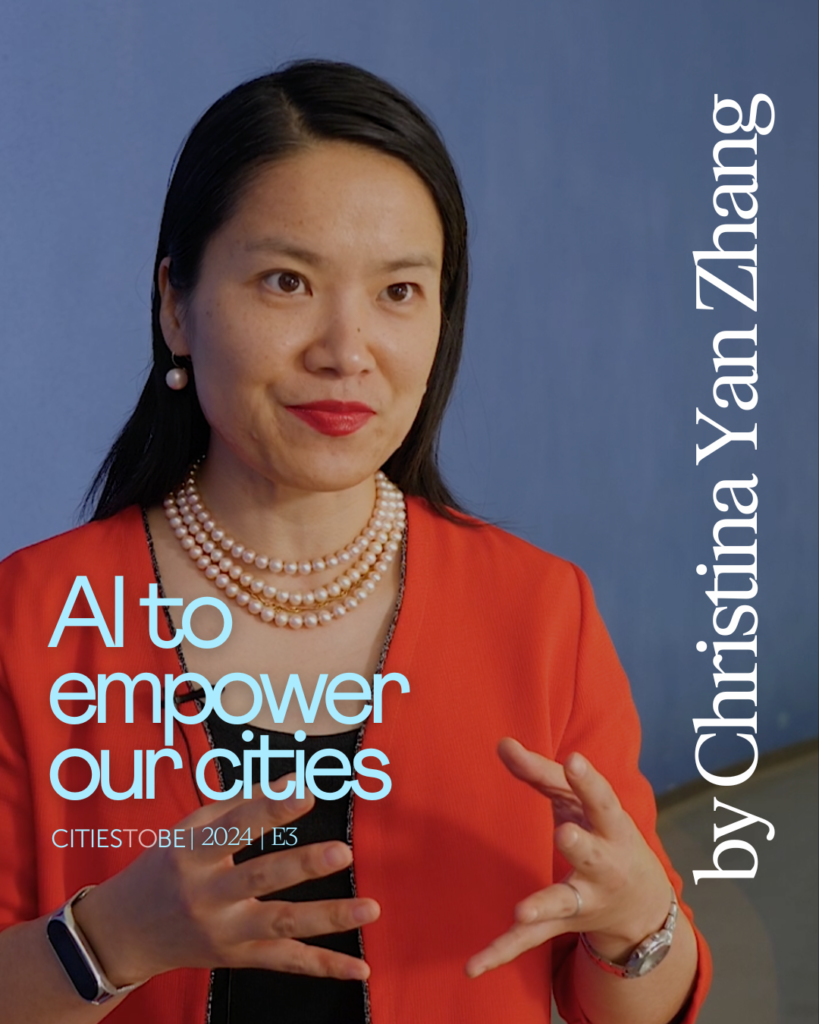
Applying the latest and more fancy technologies to cities sounds tempting. But sometimes, they can drive us apart from the fundamental purpose of cities: serving their citizens and giving them an enjoyable environment in which they can explore all their potential.
What risks arise from AI growing application in urban realities? How can we make AI a trusted asset for the future? In a new episode of our series of conversations on the trends defining today’s urban world, we discuss AI to empower our cities with Dr. Christina Yan Zhang, CEO of The Metaverse Institute& Co-chairperson of the International Telecommunication Union’s Task Group on Pre-standardization for the CitiVerse.
#ExpertVoices | 2024 x E03
AI to empower our cities — by Christina Yan Zhang —
What role should emerging tech play in urban development?
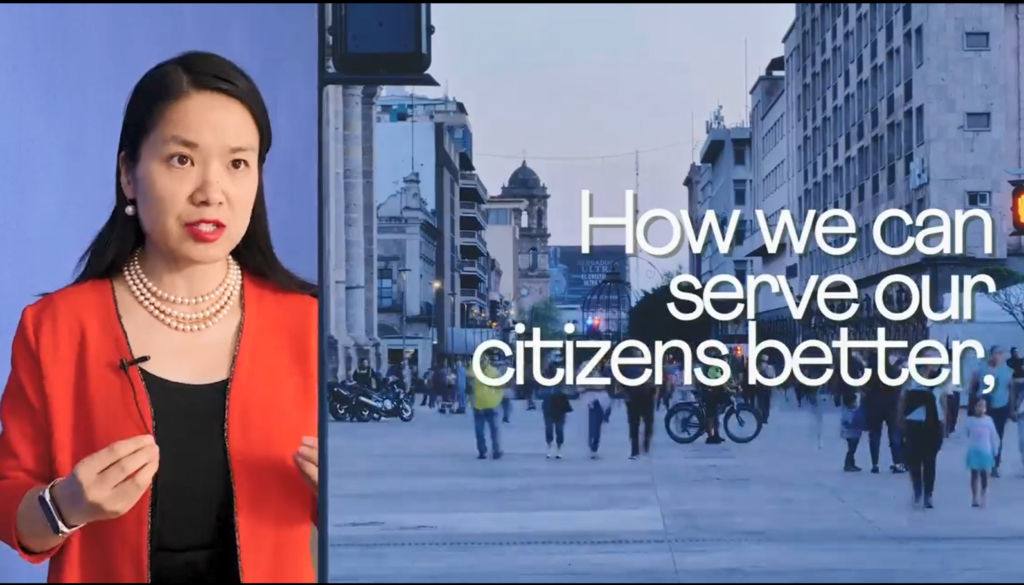
As we increasingly realize, building the future Smart City shouldn’t be about the fancy technology we have at any given moment. Instead, we should focus on the very fundamentals of cities: how we can better serve our citizens, meet their fundamental needs, and make cities happier, more enjoyable, and inclusive. By harnessing the power of emerging technologies—whether it’s artificial intelligence, digital twins, or the metaverse (which was very popular last year)—we can achieve these goals. Now, there seems to be more emphasis on digital twins and content technologies.
How we can optimize Digital Twins for futureproof our cities?
For any kind of digital twin, visualization, or building information modeling (BIM)—the name doesn’t matter because digital twins have been around since the 1960s—what really needs to be addressed is functionality. How can we allow people to identify the most effective use cases for digital twins, not just by governments? If we want to simulate the whole city of Barcelona to improve future urban planning from a citizen-centered perspective, we need to see how each of us can use that tool. For example, if we consume more responsibly, ensure we never waste food, and recycle more, we can examine the long-term climate impact on Barcelona. Could these actions delay global warming in the city by 0.5 degrees Celsius over the next five years? If we can all contribute, I think that can be very powerful.
What risks arise from AI growing application in urban realities?
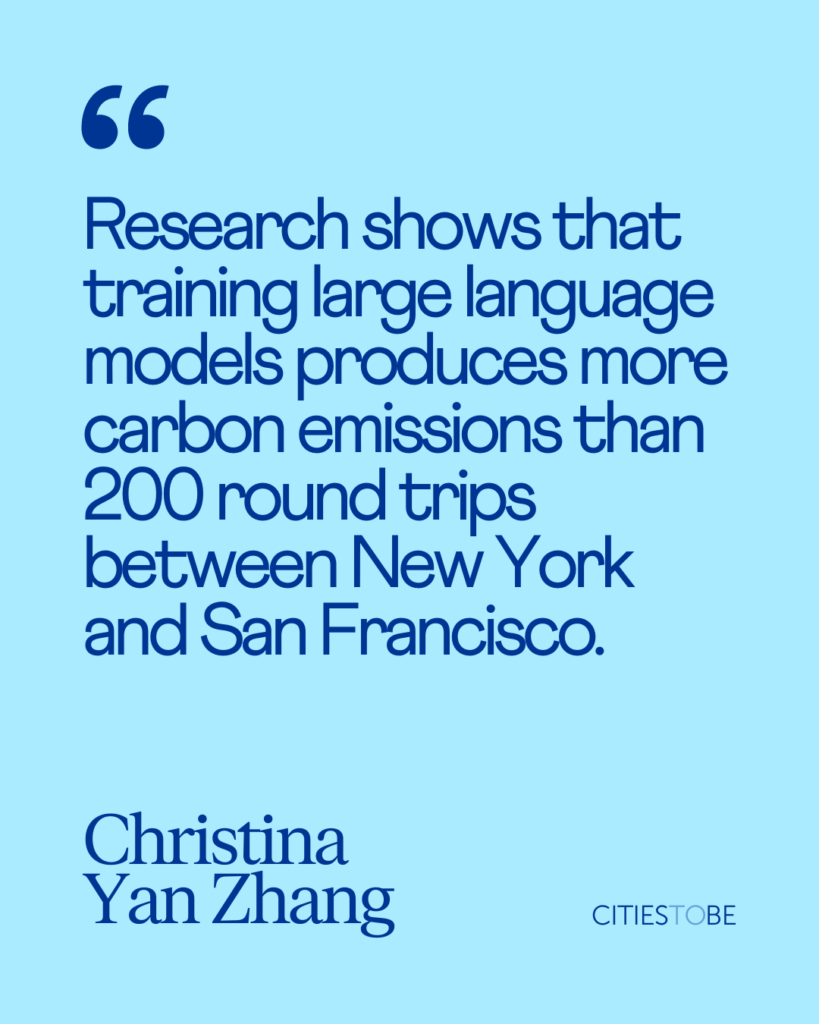
The energy consumption of training AI is actually quite significant. Research conducted by the University of Massachusetts found that training large language models produces five times the carbon emissions of an American car and more than 200 round trips between New York and San Francisco. This kind of conversation is not really taking place. Everyone is talking about concerns over AI automating jobs and ensuring AI doesn’t become smarter than humans. These conversations are important, but considering the increasing global temperatures, we should also focus on addressing the issue of AI and sustainability. AI can help mitigate climate change, but it also consumes a lot of computing power, with data centers emitting large amounts of heat. So, how can we find a balance? Like with any technology, we need to balance maximizing its potential for all human beings and minimizing risks to ensure a sustainable, inclusive, and participatory city for everyone.
How can we make AI a trusted asset for the future?
«I envision cities that offer excellent training and educational opportunities for our younger generation, ensuring they are prepared for a future where automation won’t lead to mass unemployment. Instead, we should teach them to coexist with robots and utilize AI to pursue noble purposes, rather than struggle with daily challenges that hinder their ability to appreciate life’s beauty. Aligned with Maslow’s hierarchy of needs, this vision empowers individuals to contribute more meaningfully to society. That is my dream.
Interview and edition by Sergio García i Rodríguez, Head of Communication at Anteverti & CitiesToBe Executive Editor, Martina Jané i Curtu, Comms specialist at Anteverti, and Marta Bugés.
Video by Eloy Calvo and Cristóbal Sarría Chitty
CitiesToBe is a knowledge platform for city lovers, experts and urbanites to discuss the present and the future of cities.
A common space to think about today’s urban challenges, and share innovative ideas and experiences that help make cities better for people.
CitiesToBe is a platform powered by Anteverti, curator of Smart City Expo World Congress where 25,000 leaders from 140+ countries, 850 cities are getting together in Barcelona every year to discuss everything and anything about urban futures.)
When it comes to the world’s biggest digital twin, the only thing we have to fear is fear itself. Dr. Christina Yan Zhang, CEO of the Metaverse Institute, explains.
Q: What is the Metaverse?
A: The metaverse has increasingly become a convergence of a whole range of technologies, coming together to form the next generation of the internet: more immersive, interactive and intuitive. The most important use case of the metaverse is for simulating and optimizing real-world construction and development projects that are too expensive to fail, so must be got right the first time. The US$500billion mega-smart city in Saudi Arabia, known as Neom, is a good example. Metaverse technologies can be used in a similar way for dangerous operations, such as complicated or experimental surgery. In the future, large-scale digital twin simulations could also be used to model the behavior of large numbers of people in virtual environments – to understand, for instance, how they would evacuate a stadium in the event of a fire, or what would happen if there was an earthquake in a city.
Q: How do you make sure that technological advances and the metaverse benefit everyone?
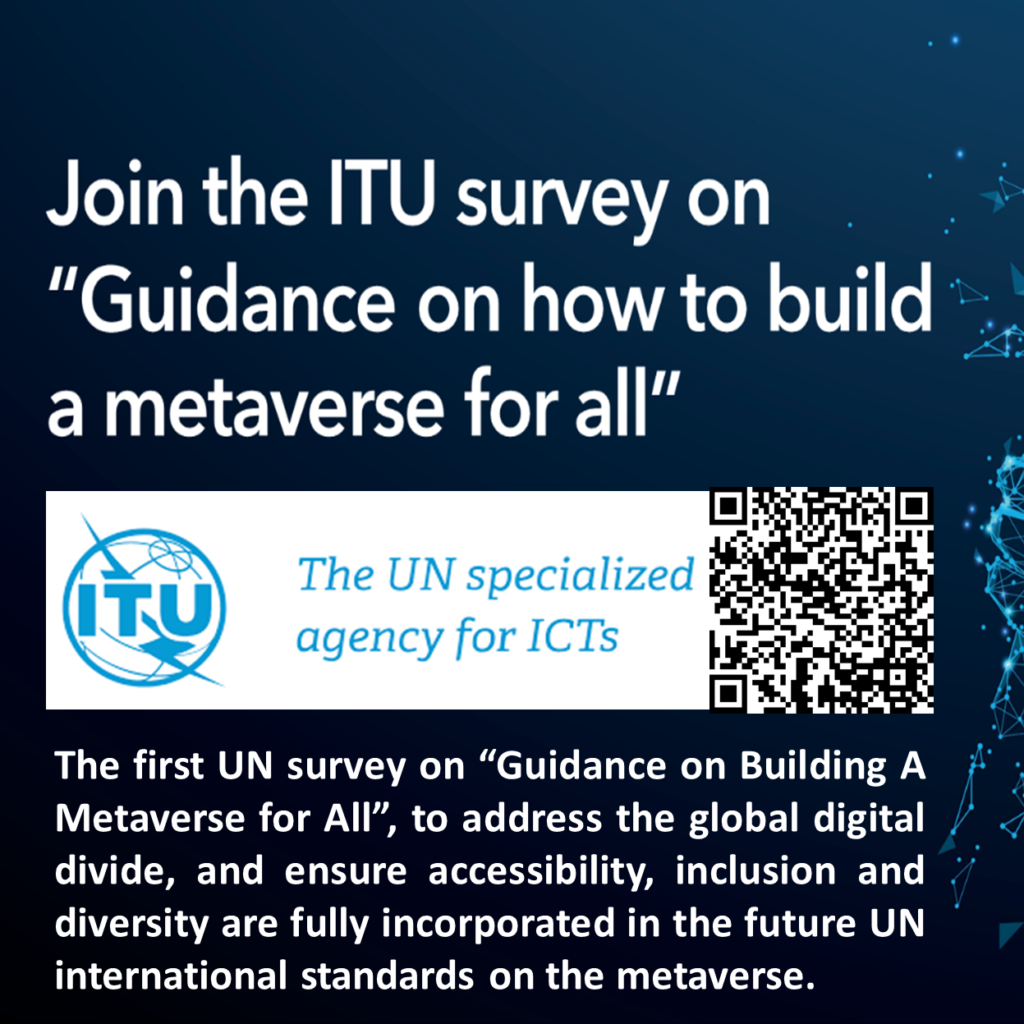
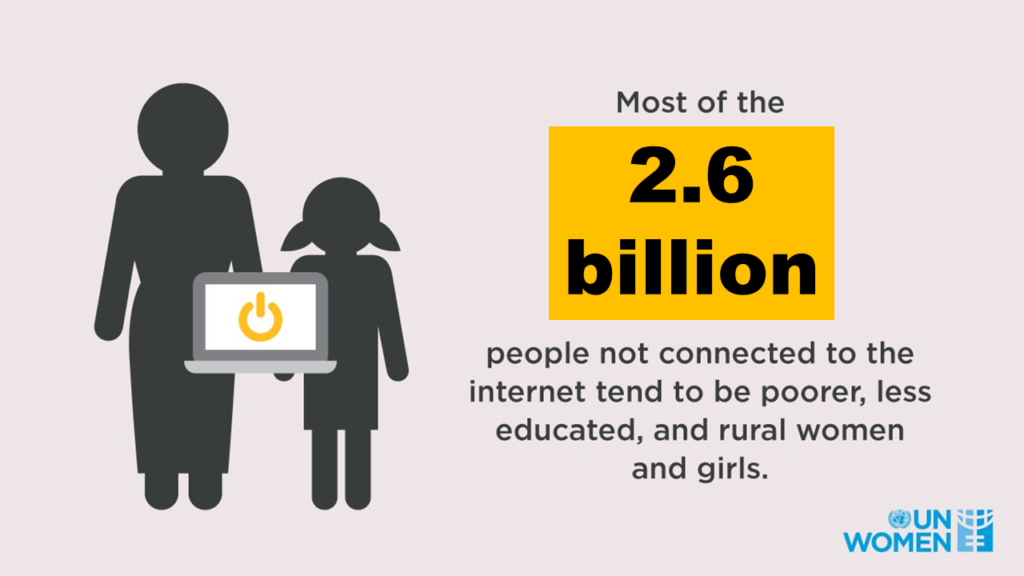
A: That’s a major issue. I’m vice-chair of an International Telecommunication Union (UN ITU) working group that produced the first UN survey looking at how to develop guidance on “how to build a metaverse for all” and address the global digital divide. There are currently about 2.6 billion people – a third of the global population – who don’t have access to the internet. Today, 1.2bn people, mostly in Africa and some parts of Asia, don’t even have stable access to electricity. So, a top issue is energy poverty. That needs massive intergovernmental collaboration, with private investment coming in to support public-private partnerships, to put more infrastructure in place. Because when you don’t even have the energy to cook your daily meals, you’re not going to talk about anything fancy on technology. You’re only thinking about your own survival. So, we need to address that fundamental issue.
Q: As people increasingly move to urban areas, what are the implications for technological advancement and inclusivity for poorer communities?
A: That’s a great question. Today, 55% of the global population live in cities, and by 2050 it’s going to be 80%. I also co-chair the UN ITU task group on pre-standardization for the “CitiVerse.” That term is a combination of “citizen” and “metaverse.” So, we’re looking at how we can develop future cities where we put the needs of the citizens at the center. In the past, smart city developments haven’t always achieved the best outcomes, even though they used some of the most advanced technology available at the time. Sometimes there is a focus on technology for its own sake, rather than on how technology can be used to improve the lives of people. This has led to some smart city projects being expensive, inefficient, and even harmful.
The problem is adoption. Innovation moves so fast, it is not always easy for people to catch up. If people don’t understand how best to utilize the technology for their own benefit, then the technology can’t maximize its positive impact. So, instead of just chasing the latest techno-hype, which moves too fast for most municipal governments to follow in any case, let’s go back to basics and ask what are the key issues all our diverse citizens care about.
Not all smart city technologies have effectively addressed the issue of rising property prices in many capitals, or address the issue of providing better support to their ageing populations. According to the latest figures from the World Bank, the digital divide (access to the internet) is not only between low-income households (64%) and high-income households (92%). It is also between men (82%) and women (64%), and between different locations: urban areas (88%) vs rural ones (73%). There is also a digital divide between younger people, aged 15-24 (94%) and our ageing parents and grandparents who are 65+ years old (74%). It’s between people who have additional special needs (56%) and people who don’t (76%). There are lots of things we need to break down into more detail to provide the additional support required by our diverse communities.
Q: So, if you’re poor in the real world, how do you ensure you’re not equally poor in the digital world?
A: The first thing we need to realize is that we all have to live in the physical world for most of our lives. People are not going to spend 100% of their time in a virtual-reality metaverse; that is a science-fiction dystopia, and it’s not going to happen. The way to bring the greatest value to the metaverse is to always link it to the physical world, to do experiments in the virtual environment which are too costly or too dangerous to realize in the real world. So, the most important thing we need to do is figure out how we can help people in the real world to receive the right kind of training to allow them to figure out how to use these new technologies to bring value to their existing life and work.
Everyone’s worried about their jobs now as a result of AI, but as President Franklin Roosevelt said during the Great Depression (1929–1939), when 24.9% of the total work force in the US (nearly 13 million people) were out of work: “the only thing we have to fear is fear itself.” If we put our fear aside, look at what are the biggest challenges, and break them down into smaller, more manageable tasks, then we can really support people from diverse backgrounds with diverse needs, using new technologies within the wider metaverse ecosystem. And we’re doing that analysis now at the UN ITU working group.
Q: What are the changes that are required to ensure the technology benefits everyone?
A: Training is clearly a very important area, but so is confidence. Every one of us needs to have the confidence to believe in ourselves first before we can help other people to flourish. We human beings, as a species, are extremely adaptable. Also, in the UN ITU task group on the CitiVerse we are proposing a new type of partnership, which we call a public-private-people-planet partnership. Any kind of digital future we are planning and implementing has to ensure that the needs of our diverse people will be at the center. And to make sure everything is sustainable in the longer term, and not at the cost of our planet. We are working in collaboration with many different member states of the UN ITU to look at how we use all kinds of frontier technologies to support people-centered future cities. What will be the roadmap that cities of different sizes, focus, cultures and histories can benefit from? Should we develop a more regional focus? For example, the CitiVerse developed for Europe will be very different from the CitiVerse developed for Africa.
Q: How does technology help achieve that greater equality and greater inclusivity?
A: Everything needs to be more tailored: personalized, regionalized, to cater to the needs of different countries and different industries. I don’t believe that the best metaverse strategy is one-size-fits-all. Instead, there needs to be a metaverse strategy fit for tourism, a metaverse strategy fit for healthcare, another for arts and design, or for the entertainment industry, or for a smart factory, and so on. Rather than trying to build everything from scratch, we need to look at what’s already available out there in the existing system. For any kind of IT implementation or adoption, we can’t just get rid of the existing system, which has been running for decades. Innovation needs to be incremental to be incorporated properly into existing systems.
Q: It’s an evolution, but with people and the planet at the heart of the plan?
A: Absolutely. I would say it will always be people-centered and we need to be very balanced.
Q: You seem very optimistic that there’s a good future ahead for all of us?
A: I’m optimistic because we’ve already tried to map out all the challenges and prepared for the worst scenarios, and therefore we do not have any room left to fear anything. Our focus is to identify the most effective and pragmatic solutions to address any challenges experienced in the process. Data storage, for instance. The European Commission has given €2 million of funding to the ASCEND initiative, part of the Horizon Europe program, to put data centers in Earth orbit, thus minimizing the environmental impacts. And frontier tech companies are looking at putting data storage in the form of synthetic DNA. Like the dinosaur in amber in the film Jurassic Park, DNA is an extremely stable form of data storage. It lasts a very long time — up to 1.5 million years — while the most commonly-used medium for long-term storage, magnetic tape, has to be replaced every 10 years. The storage density potential of DNA is 10 million times that of traditional media such as hard disks and tapes, and it’s carbon emission free, too. Mark Bathe, PhD, an MIT professor of biological engineering, said that if we want to store the whole world’s data in DNA, we could fit all of it inside coffee mug.
Q: Returning to your FDR quote about fear: do we just need to stop worrying and calmly accept that this is where technology is going?
A: Yes. Life is short, and you can choose to live it in a really happy and optimistic way, or a miserable and pessimistic way. Why don’t we focus all our energy on things we can control, and on things we can do to help each other flourish, rather than fighting each other. It doesn’t make sense. Steve Jobs once said, we are here to make a dent in the universe. I think we are here to make a dent in the metaverse!
On 29th Feb 2024, Huawei, one of the world’s largest technologies company published its global thought-leadership magazine Transform, featured myself as CEO of The Metaverse Institute and Prof Jeffrey Sachs, President of the UN Sustainable Development Network as the Cover People on the topic of Digital Equity.
What is the Digital Equity?
The United Nations emphasizes the importance of digital equity, especially for older adults. Here’s a breakdown of their perspective with some facts and figures:
Digital Divide: The UN acknowledges the “digital divide,” which refers to the gap between those who have access to information and communication technologies (ICTs) and those who don’t. This can encompass limitations in internet connectivity, digital devices, and essential digital skills.
Importance of Digital Inclusion: The UN highlights that meaningful participation in the digital world is crucial for everyone, regardless of age. Technology can be a powerful tool for progress, supporting areas like education, employment, and overall well-being.
Focus on Older Adults: The UN’s 2021 International Day of Older Persons specifically addressed “Digital Equity for All Ages”. This focus highlights the concern that rapid digitalization might leave older adults behind.
Synergy with Sustainable Development Goals (SDGs): The UN sees bridging the digital divide as essential for achieving the SDGs. Increased digital access can empower people, improve access to information and services, and contribute to a more equitable society.
According to the International Telecommunication Union (ITU): globally, about 1/3 of the global population, that is 3.7 billion people remain unconnected to the internet.
The COVID-19 pandemic further exposed the digital divide, as many essential services shifted online. Those lacking digital access faced greater challenges in areas like education, healthcare, and even basic communication.
The UN’s focus on digital equity serves as a call to action for governments, civil society, and the private sector to work together in bridging this gap. By ensuring everyone has the opportunity to participate in the digital world, we can unlock the full potential of technology for a more inclusive and sustainable future.
Gavin Allen, executive editor-in-chief of Huawei
Gavin Allen, executive editor-in-chief of Huawei approached me for the interview. Gavin joined Huawei in 2021, after nearly two decades at the BBC. He was Head of BBC News Programmes leading the global news teams (c 1,200 people) and controlling a news spend of £140m. As part of this role, he lead the Day-to-day strategic, editorial, financial and managerial operation of BBC all global and UK programmes across all platforms including:
TV 1, 6 & 10 o’clock news;
BBC1 Breakfast show;
Radio 4 Today;
Radio 4 PM ;
Radio 4 1 O’clock News;
BBC World & News Channels,
The Andrew Marr Show,
Radio 5 live,
BBC World Service news programmes,
BBC News Online etc
I have enjoyed a long history with BBC back to 2008. I was one of British Council International Students of the Year Awards Winners and was interviewed many time by top media, including two interviews by BBC. Then, one of the BBC producers invited me to write for BBC on a regular basis which I did between 2008 and 2010.
(In 2008, I was presented the award by Jimmy Choo OBE, Malaysian fashion designer based in the United Kingdom. He co-founded
It is an honour to be invited by a former senior leader from BBC who has such a distinguished career at one of the most respected media organisations in the world. When Gavin approached me asking for an interview on digital equity which we at The Metaverse Institute have been working on, I said yes immediately.
The Interview
The interview took place in Huawei’s London office. Immediately when Gavin picked me up from the reception, the cameraman already started filming how I entered the building and our informal chat.
We enjoyed a great 45 minutes TV interview discussing our work on how different frontier technologies can be used to address the global digital divide and maximise positive impact to benefit all. To my surprise, we also spend another 30 minutes doing photoshoots. I think we must have taken hundreds of photos of me that day, in all kinds of different poses. I started to joke with the photographer that it must be not easy to be a supermodel because they needed to figure out all kinds of interesting poses and expressions to express themselves in line with different contexts. The final interviews are published in both Transform, Huawei’s global thought-leadership magazine, as well as in Video interview on their website.
I did not know that I would become one of the two cover people in the latest issue of Huawei’s magazine. But it is a great honour to be featured alongside world renowned economist Prof. Jeffrey Sachs, President of the UN Sustainable Development Network and other distinguished world leaders who have been committed to use technologies to make our world a better place for all.
Other Cover People of Huawei Transform Magazine since Inception in Feb 2022 including the following:
Bruce Schneier, an internationally renowned security technologist, called a “security guru” by the Economist.
Tony Scott President Barack Obama’s Former Federal Chief Information Officer for the U.S. Government.
Prof Mohan Munasinghe Nobel Peace Prize winner & environment economist
Jimmy Wales co-founder of Wikipedia & internet entrepreneur
Samuel Jerrold “Jerry” Kaplan, an American computer scientist, author, futurist, and entrepreneur. He is best known as a pioneer in the field of pen computing and tablet computers
.
Other leaders who are interviewed on their work on digital equity including the following:
Other prominent leaders featured by Huawei including Irena Bokava, the first female Secretary General of UNESCO.
The full interview
When it comes to the world’s biggest digital twin, the only thing we have to fear is fear itself. Dr. Christina Yan Zhang, CEO of the Metaverse Institute, explains.
Q: What is the Metaverse?
A: The metaverse has increasingly become a convergence of a whole range of technologies, coming together to form the next generation of the internet: more immersive, interactive and intuitive. The most important use case of the metaverse is for simulating and optimizing real-world construction and development projects that are too expensive to fail, so must be got right the first time. The US$500billion mega-smart city in Saudi Arabia, known as Neom, is a good example. Metaverse technologies can be used in a similar way for dangerous operations, such as complicated or experimental surgery. In the future, large-scale digital twin simulations could also be used to model the behavior of large numbers of people in virtual environments – to understand, for instance, how they would evacuate a stadium in the event of a fire, or what would happen if there was an earthquake in a city.
Q: How do you make sure that technological advances and the metaverse benefit everyone?
A: That’s a major issue. I’m vice-chair of an International Telecommunication Union (UN ITU) working group that produced the first UN survey looking at how to develop guidance on “how to build a metaverse for all” and address the global digital divide. There are currently about 2.6 billion people – a third of the global population – who don’t have access to the internet. Today, 1.2bn people, mostly in Africa and some parts of Asia, don’t even have stable access to electricity. So, a top issue is energy poverty. That needs massive intergovernmental collaboration, with private investment coming in to support public-private partnerships, to put more infrastructure in place. Because when you don’t even have the energy to cook your daily meals, you’re not going to talk about anything fancy on technology. You’re only thinking about your own survival. So, we need to address that fundamental issue.
Q: As people increasingly move to urban areas, what are the implications for technological advancement and inclusivity for poorer communities?
A: That’s a great question. Today, 55% of the global population live in cities, and by 2050 it’s going to be 80%. I also co-chair the UN ITU task group on pre-standardization for the “CitiVerse.” That term is a combination of “citizen” and “metaverse.” So, we’re looking at how we can develop future cities where we put the needs of the citizens at the center. In the past, smart city developments haven’t always achieved the best outcomes, even though they used some of the most advanced technology available at the time. Sometimes there is a focus on technology for its own sake, rather than on how technology can be used to improve the lives of people. This has led to some smart city projects being expensive, inefficient, and even harmful.
The problem is adoption. Innovation moves so fast, it is not always easy for people to catch up. If people don’t understand how best to utilize the technology for their own benefit, then the technology can’t maximize its positive impact. So, instead of just chasing the latest techno-hype, which moves too fast for most municipal governments to follow in any case, let’s go back to basics and ask what are the key issues all our diverse citizens care about.
Not all smart city technologies have effectively addressed the issue of rising property prices in many capitals, or address the issue of providing better support to their ageing populations. According to the latest figures from the World Bank, the digital divide (access to the internet) is not only between low-income households (64%) and high-income households (92%). It is also between men (82%) and women (64%), and between different locations: urban areas (88%) vs rural ones (73%). There is also a digital divide between younger people, aged 15-24 (94%) and our ageing parents and grandparents who are 65+ years old (74%). It’s between people who have additional special needs (56%) and people who don’t (76%). There are lots of things we need to break down into more detail to provide the additional support required by our diverse communities.
Q: So, if you’re poor in the real world, how do you ensure you’re not equally poor in the digital world?
A: The first thing we need to realize is that we all have to live in the physical world for most of our lives. People are not going to spend 100% of their time in a virtual-reality metaverse; that is a science-fiction dystopia, and it’s not going to happen. The way to bring the greatest value to the metaverse is to always link it to the physical world, to do experiments in the virtual environment which are too costly or too dangerous to realize in the real world. So, the most important thing we need to do is figure out how we can help people in the real world to receive the right kind of training to allow them to figure out how to use these new technologies to bring value to their existing life and work.
Everyone’s worried about their jobs now as a result of AI, but as President Franklin Roosevelt said during the Great Depression (1929–1939), when 24.9% of the total work force in the US (nearly 13 million people) were out of work: “the only thing we have to fear is fear itself.” If we put our fear aside, look at what are the biggest challenges, and break them down into smaller, more manageable tasks, then we can really support people from diverse backgrounds with diverse needs, using new technologies within the wider metaverse ecosystem. And we’re doing that analysis now at the UN ITU working group.
Q: What are the changes that are required to ensure the technology benefits everyone?
A: Training is clearly a very important area, but so is confidence. Every one of us needs to have the confidence to believe in ourselves first before we can help other people to flourish. We human beings, as a species, are extremely adaptable. Also, in the UN ITU task group on the CitiVerse we are proposing a new type of partnership, which we call a public-private-people-planet partnership. Any kind of digital future we are planning and implementing has to ensure that the needs of our diverse people will be at the center. And to make sure everything is sustainable in the longer term, and not at the cost of our planet. We are working in collaboration with many different member states of the UN ITU to look at how we use all kinds of frontier technologies to support people-centered future cities. What will be the roadmap that cities of different sizes, focus, cultures and histories can benefit from? Should we develop a more regional focus? For example, the CitiVerse developed for Europe will be very different from the CitiVerse developed for Africa.
Q: How does technology help achieve that greater equality and greater inclusivity?
A: Everything needs to be more tailored: personalized, regionalized, to cater to the needs of different countries and different industries. I don’t believe that the best metaverse strategy is one-size-fits-all. Instead, there needs to be a metaverse strategy fit for tourism, a metaverse strategy fit for healthcare, another for arts and design, or for the entertainment industry, or for a smart factory, and so on. Rather than trying to build everything from scratch, we need to look at what’s already available out there in the existing system. For any kind of IT implementation or adoption, we can’t just get rid of the existing system, which has been running for decades. Innovation needs to be incremental to be incorporated properly into existing systems.
Q: It’s an evolution, but with people and the planet at the heart of the plan?
A: Absolutely. I would say it will always be people-centered and we need to be very balanced.
Q: You seem very optimistic that there’s a good future ahead for all of us?
A: I’m optimistic because we’ve already tried to map out all the challenges and prepared for the worst scenarios, and therefore we do not have any room left to fear anything. Our focus is to identify the most effective and pragmatic solutions to address any challenges experienced in the process. Data storage, for instance. The European Commission has given €2 million of funding to the ASCEND initiative, part of the Horizon Europe program, to put data centers in Earth orbit, thus minimizing the environmental impacts. And frontier tech companies are looking at putting data storage in the form of synthetic DNA. Like the dinosaur in amber in the film Jurassic Park, DNA is an extremely stable form of data storage. It lasts a very long time — up to 1.5 million years — while the most commonly-used medium for long-term storage, magnetic tape, has to be replaced every 10 years. The storage density potential of DNA is 10 million times that of traditional media such as hard disks and tapes, and it’s carbon emission free, too. Mark Bathe, PhD, an MIT professor of biological engineering, said that if we want to store the whole world’s data in DNA, we could fit all of it inside coffee mug.
Q: Returning to your FDR quote about fear: do we just need to stop worrying and calmly accept that this is where technology is going?
A: Yes. Life is short, and you can choose to live it in a really happy and optimistic way, or a miserable and pessimistic way. Why don’t we focus all our energy on things we can control, and on things we can do to help each other flourish, rather than fighting each other. It doesn’t make sense. Steve Jobs once said, we are here to make a dent in the universe. I think we are here to make a dent in the metaverse!
We look forward to working UN, governments, investors, corporates and institutions to use all kinds of different frontier technologies to maximise positive impact for all to flourish.
The International Telecommunication Union (ITU) is a specialized agency of the United Nations responsible for many matters related to information and communication technologies (ICTs). It was established on 17 May 1865 as the International Telegraph Union, making it the oldest UN agency. Doreen Bogdan-Martin is the Secretary-General of ITU, the first woman to serve as its head.
The ITU’s main functions are to:
Promote the shared global use of the radio spectrum, which is a finite resource that is essential for wireless communications.
Facilitate international cooperation in assigning satellite orbits, which are also a finite resource that is essential for satellite communications.
Assist in developing and coordinating worldwide technical standards, which ensure that ICT networks and devices can interoperate seamlessly.
Work to improve telecommunication infrastructure in the developing world, to help bridge the digital divide.
The ITU has played a key role in the development of ICTs. It was responsible for the development of the first international telegraph and telephone conventions, and it has continued to play a leading role in the development of new technologies, such as the Internet and mobile communications.
The ITU’s work is essential for the continued development and growth of ICTs. It helps to ensure that ICTs are used in a fair and equitable manner, and it helps to promote the benefits of ICTs for all.
Here are some of the ITU’s key activities:
World Radiocommunication Conferences (WRCs) are held every three to four years to allocate the radio spectrum and satellite orbits.
ITU-T Recommendations are technical standards that ensure that ICT networks and devices can interoperate seamlessly.
ITU-D Development Programmes provide financial and technical assistance to developing countries to improve their telecommunication infrastructure.
The ITU is a global organization with over 193 member states. It also has a number of associate members, such as non-governmental organizations and private sector companies. The ITU’s headquarters are located in Geneva, Switzerland.
ITU’s work on the metaverse
The ITU Telecommunication Standardization Sector (ITU-T) is one of the three Sectors (branches) of the International Telecommunication Union (ITU). It is responsible for coordinating standards for telecommunications and Information Communication Technology such as X.509 for cybersecurity, Y.3172 and Y.3173 for machine learning, and H.264/MPEG-4 AVC for video compression, between its Member States, Private Sector Members, and Academia Members.
Our working group on the metavese analyse the technical requirements of the metaverse to identify fundamental enabling technologies in areas from multimedia and network optimization to digital currencies, Internet of Things, digital twins, and environmental sustainability.
I am Vice Chairman of the Metaverses Working Group on Sustainability, Accessibility and Inclusion. We are working with global stakeholders to address the following issues of the metaverses, such as:
Environmental Sustainability related issues
Accessibility related issues
Social considerations
Diversity, equity and inclusion
Circular economy related issues
The Global Digital Divide
The global digital divide refers to the disparities in access to information and communication technologies (ICTs) between individuals, households, businesses, and geographic areas. These disparities can have significant consequences for individuals’ opportunities for education, employment, and overall well-being.
Here are some key facts and figures about the global digital divide:
🔶 2.6 bn people-33% global population are not connected to the Internet.
🔶 Gender gap in internet access: 17% in 2023-males: 82%; females: 64%
🔶 Socioeconomic gap in internet access: 28% in 2023(low-income households: 64%; high-income households: 92%)
🔶 Age gap: 20%(15-24 years old: 94%; 65+ years old: 74%)
🔶 Disability gap: 20%(people with disabilities: 56%; people without: 76%)
🔶 Mobile phones are playing an increasingly important role in bridging the digital divide. In developing countries, 92% of people have a mobile phone, compared to 66% who have a computer.
UN Metaverse For All Survey
As Vice-Chair of the ITU Metaverse Working Group on Sustainability, Accessibility, Inclusion, I feel strongly that whatever digital future we are planning to create, whether we use AI, metaverse or quantum technologies etc, it is important that we should ensure that we always have a people-centred approach and ensure no one left behind.
With the great support many amazing leaders at ITU (especially Prof Pilar Orero, Universitat Autònoma de Barcelona, Spain; Nevine Tewfik Loutfi Deputy Director of International Relations Ministry of Communications and Information Technology (MCIT), Egypt; Cristina BuetiCounsellor ITU Focus Group on metaverse), the first UN Survey on Metaverse For All are approved after many rounds of discussions and revisions.
The Metaverse Institute, a leading strategy consulting organization for the metaverse, is inviting everyone to participate in a UN ITU survey to help shape the future of the metaverse. The survey is open to everyone.
The survey takes 15 minutes to complete. It asks participants about their thoughts on the following topics:
Addressing the digital divide in the metaverse
Ensuring that the metaverse is accessible to all
Ensuring diversity, equity, and inclusion in the metaverse
How to use a combination of emerging technologies within the metaverse to create smart, sustainable and inclusive cities, which we call the “CitiVerse”
The results of the survey will be used to develop a report and will contribute to the work of the UN ITU Focus Group on Metaverse which offers a venue to start laying the groundwork for international standards that can help create an inclusive, accessible and sustainable metaverse for all.
Seizo Onoe, Director of the ITU Telecommunication Standardization Bureau, said:
“Our metaverse focus group welcomes your participation in its work to guide us towards an open, inclusive metaverse that benefits everyone, everywhere. Your responses to this survey will make a valuable contribution to our work to ensure that the metaverse supports sustainable development in every part of our highly diverse world.”
Dr Christina Yan Zhang, CEO of The Metaverse institute said:
“The metaverse is in its early stages, but it has the potential to revolutionize how we interact with the world. One-third of the global population is offline, so how can we ensure that emerging technologies leave no one behind? We want to work with the global community to identify ways to ensure inclusivity, accessibility, and sustainability are fully embedded in our digital future for the benefit of all people and countries. By participating in this survey, you can help shape the future of the metaverse ecosystem, including AI, web3, and digital twins, developed through effective public-private-people-planet partnerships, and contribute to the UN Secretary General’s Global Digital Compact for an open, free, and secure digital future for all”.
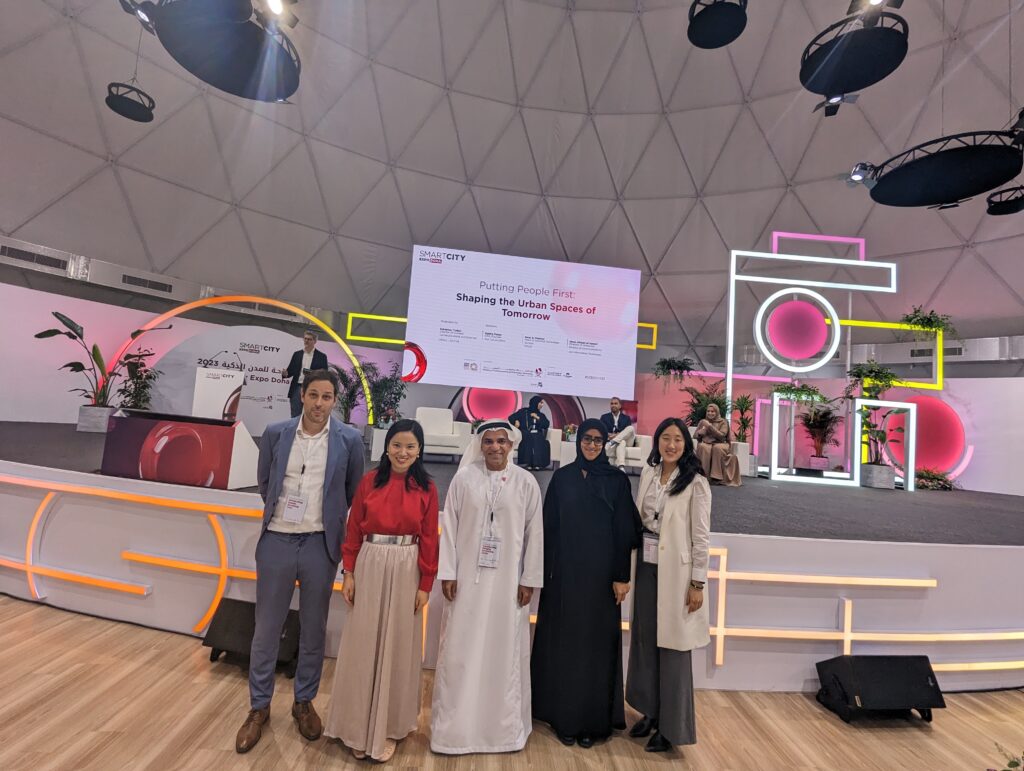
Qatar Country Senior Partner, PwC Middle East Bassam Hajhamad (left) and CEO of The Metaverse Institute in London Dr. Christina Yan Zhang.
Doha, Qatar: Smart Expo City Doha 2023 witnessed an array of sessions, unfolding new insights into creating thriving, next-generation cities and communities by harnessing emerging technology and the power of data.
The event attracted high-profile personalities across the region and more than 4,500 individuals took part in-person at the Culture Zone’s Congress Center at Al Bidda Park, where Expo Doha 2023 is currently being hosted.
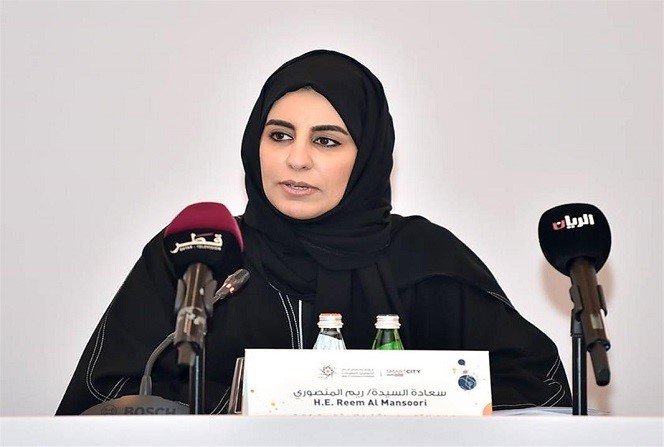
Assistant Undersecretary of Digital Industry Affairs at the Ministry of Communications and Information Technology (MCIT) H E Reem Mohammed Al Mansoori, stated: “Through the success of this event, Qatar has firmly staked its claim to be a regional force in the global dialogue on the fostering of smart cities and sustainable urban initiatives.”
She further commented: “The inspirational insights offered by experts from diverse disciplines and cultures will play a pivotal role in achieving the Qatar National Vision 2030 goals.”
“These perspectives are set to ignite positive changes across a spectrum of economic and social sectors and have the potential to share transformative policies for the future.”
“Congress outcomes include the start of partnerships which are likely to result in pioneering and innovative approaches to the way we do business, work, learn and live in what promises to be an exciting and more sustainable and connected data-driven future,” Al Mansoori added.
Speaking to The Peninsula on the sidelines of the event, Bassam Hajhamad, Qatar Country Senior Partner, PwC Middle East said: “Today, we are seeing how technology and data are revolutionising our cities. This evolution towards ‘cognitive cities’ – urban centres enhanced by data and smart technology – is a significant change in how we think about and build our urban spaces. These cities are not just more efficient; they are designed to respond better to the needs of their residents, making urban living more adaptable and connected.”
Bassam Hajhammad highlighted that this movement towards Smart Cities and embracing digital transformation is crucial for Qatar’s economic growth. It’s expected to boost the nation’s GDP, create more jobs, and lead to communities that are not only technologically advanced but also socially enriched and more cohesive.
The occasion also witnessed over 40 organisations presenting smart solutions on the Digital Enablement Platform. The discussions were also focused on citizen-centric data governance to shape a progressive e-government landscape.
Experts underlined the vitality of cultural intelligence for inclusive and sustainable transformations in cognitive cities.
However, the overall objective of the sessions was to advance e-governance and urban intelligence for the future.
CEO of The Metaverse Institute in London Dr. Christina Yan Zhang, called for a new approach to public-private-people-planet partnership to foster an inclusive, participatory, and sustainable people-centric digital future during the Smart City Expo Doha conference.
As the newly appointed Co-Chairman of the United Nations International Telecommunications Union’s (ITU) Task Group on Pre-standardization for the CitiVerse, Dr. Zhang is leading a groundbreaking UN initiative to engage 193 member states in developing a comprehensive definition and roadmap for utilising cutting-edge technologies to establish citizen-centered future cities, paving the way for international standards.
Recognising the emphasis on human development in Qatar Vision 2030, Dr. Zhang said: “This is my first visit to Qatar, and I have been impressed by the country’s notable progress over the years. Her Highness Sheikha Moza bint Nasser has been an influential role model for women internationally. I am privileged to witness the transformative effects of visionary leadership in this nation of 2.8 million people, which has emerged as the world’s second-richest country in terms of GDP per capita.”
“We are committed to working with Qatar to advance the innovative public-private-people-planet partnerships under the UN’s CitiVerse project and leverage technological advancements to establish a people-centered digital future that benefits all people,” Dr. Zhang remarked.
The Peninsula, one of the leading English dailies in Qatar, was launched in 1996. In the past 25 years, The Peninsula has been successfully providing our readers extensive news coverage from around the world with a primary focus on life in Qatar.
With over 65 million pageviews in 2020, thepeninsula.qa (thepeninsulaqatar.com), we can proudly say, is the top news website – in both English and Arabic – in Qatar.
Last year they had over 8.5 million users visit our website and good majority of the visitors are from Qatar, making them a very hyper local website.
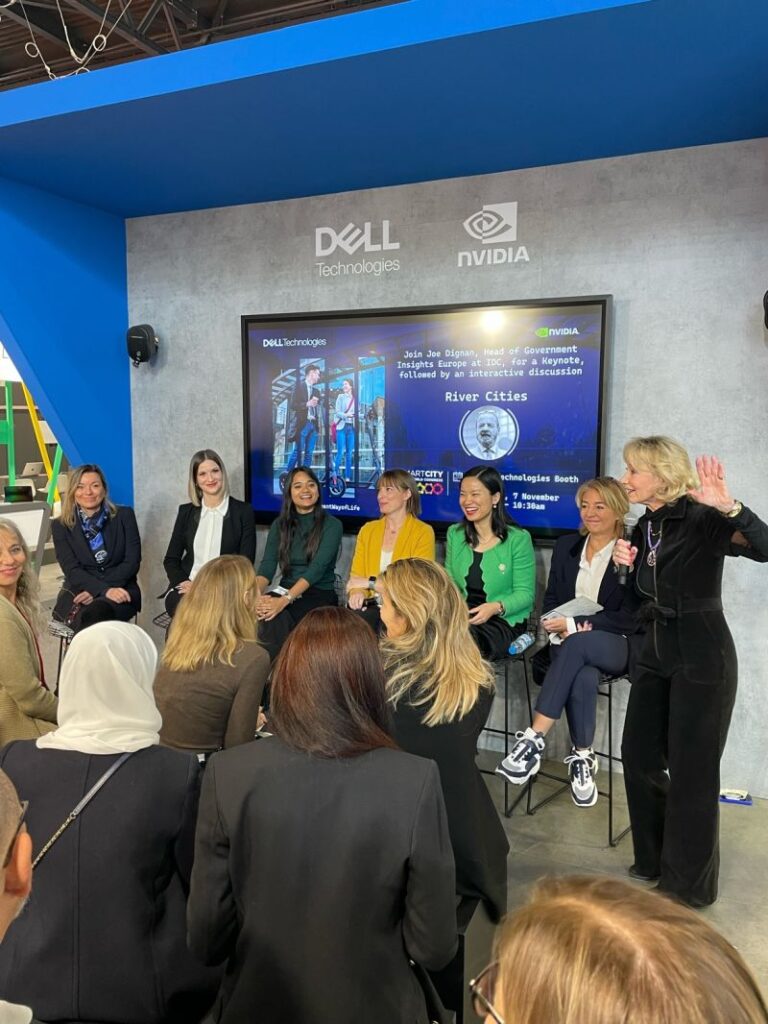
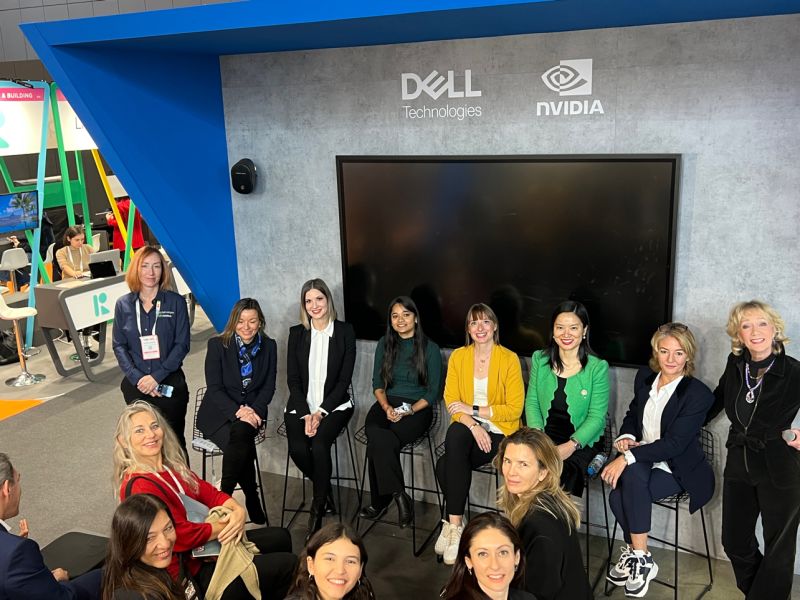
Jointly held with NVIDIA and Dell, the Women in Smart Spaces panel discussion aims to foster an “authentic gender balance” across all city operations around the world.
SmartCitiesWorld is joining with technology companies NVIDIA and Dell to host the Women in Smart Spaces panel discussion at Smart City Expo World Congress in Barcelona on Wednesday, 8 November from 9:30 to 10:30am.
The organisers have handpicked a number of top women attending the Expo to tell the story of their journey in the smart city space. Sandra Baer, SmartCitiesWorld ambassador and CEO of Personal Cities, will chair the discussion and explains that the intention is to help foster “authentic gender balance” across all city operations, around the globe.
She adds: “We see it in the real world – an equitable balance of women in smart spaces allows all of us to ‘understand’ the challenges and solutions for cities in an all-encompassing light.”
Top women panellists
The line-up of panellists includes: Eva Labarta, head of public sector, Amazon Web Services (AWS); Christina Yan Zhang, CEO of The Metaverse Institute; Jennifer Sanders, co-founder and executive director, North Texas Innovation Alliance; Pooja Venkatesh, senior product manager, Smart Cow; Maria Galindo Garcia-Delgado, board member of Climate Neutral and Smart Cities Mission for the European Commission; Ekaterina Sirazitdinova, senior deep learning data scientist, NVIDIA.
Panellists will talk about their own smart city experience and discuss some of the barriers they’ve faced as well as their successes. They will also provide advice and recommendations to women everywhere on how they can secure the power, position – and pay – to build a more gender-balanced and equitable smart city space.
“There remains a real need to create more awareness of the challenges women continue to face in sectors such as tech, engineering, science, finance and more,” says Carlota Da Veiga Pestana, chief commercial officer, SmartCitiesWorld.
“If we are to build successful smart and sustainable cities, we need the diversity of thinking, actions, insight and vision that women can bring. We want to inspire women of all ages to make their mark in the smart city space and are delighted to jointly host this panel discussion.”
“We see it in the real world – an equitable balance of women in smart spaces allows all of us to ‘understand’ the challenges and solutions for cities in an all-encompassing light”
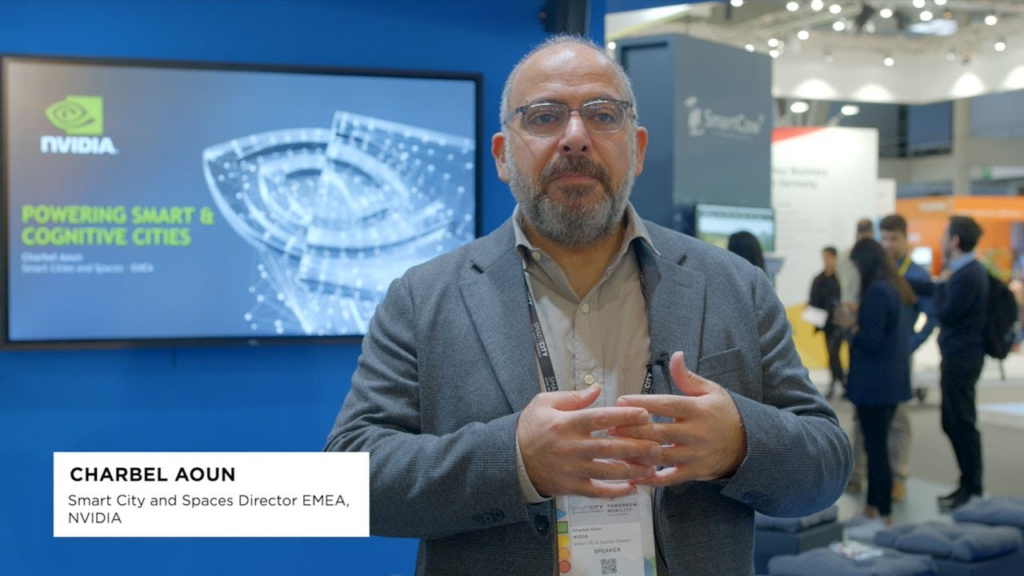
Charbel Aoun, director of Smart Spaces and Cities at NVIDIA will kick off the event at 9.30am at the Dell Booth, located in Hall P1, Level 0, Street C, Stand 10, before handing over to Sandra Baer to moderate the conversation.
Smart City Expo World Congress runs 7-9 November at Fira De Barcelona. The SmartCitiesWorld team will be there in force and is hosting a number of events, roundtables, workshops and drinks receptions. We will also be reporting live from the event so if you are launching a new product or service, or announcing any smart city developments, email us at press@smartcitiesworld.net.
SmartCitiesWorld provides a quality, comprehensive and current global content resource for urban leaders and their partners.
Through our platform, we encourage the smart city ecosystem to share their experiences and learn from each other.
SmartCitiesWorld enables connections between smart city challenges, solutions, industry peers, suppliers, and partners at your desk on the move and at our events.