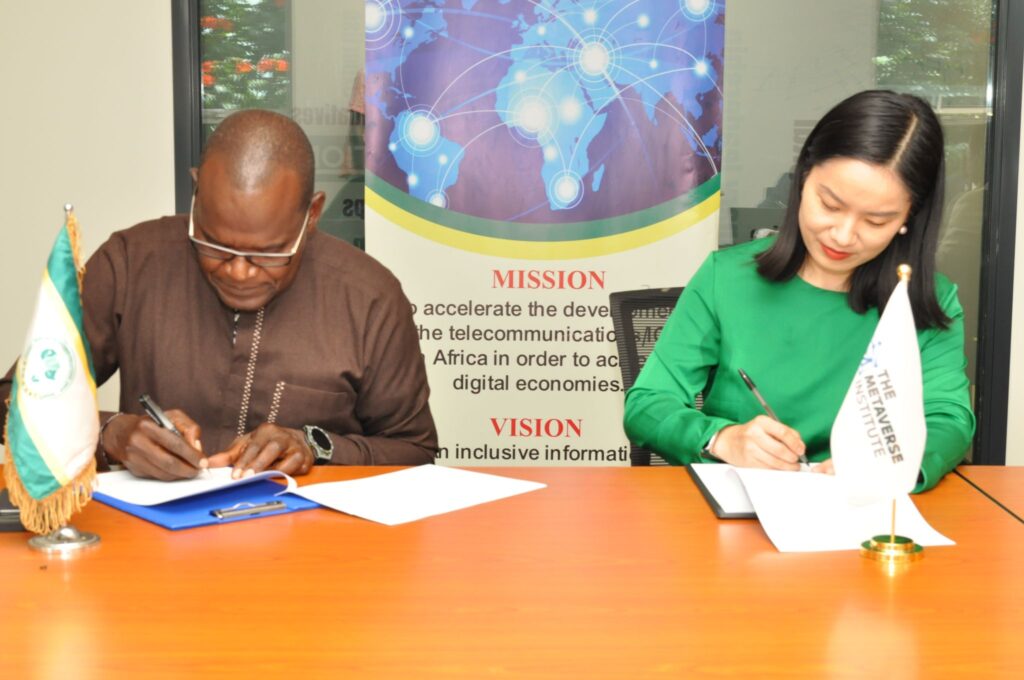
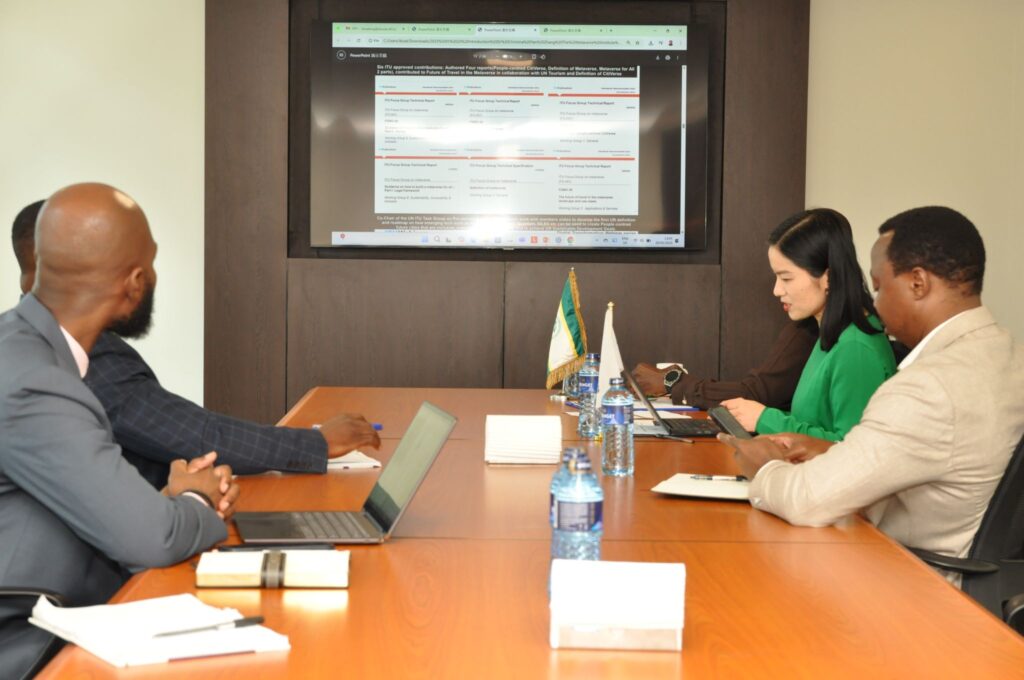
Nairobi, Kenya – 21st May 2025: Africa’s intergovernmental ICT policy body, the African Telecommunications Union (ATU), and The Metaverse Institute – made up of leading pioneers and thought leaders in the Metaverse, artificial intelligence, and smart cities related technologies, today inked a landmark Memorandum of Understanding (MoU) at ATU’s headquarters in Nairobi.
The strategic partnership commits both organizations to establish an African governance and adoption framework for the metaverse – an integrative ecosystem of virtual worlds offering immersive experiences to users, that modify pre-existing and create new value from economic, environmental, social and cultural perspectives to the next generation of the 3D internet.
With a staggering USD 5 trillion specifically projected for training humanoid robots in safe, cost-effective virtual environments, the metaverse offers Africa a transformative pathway to overcome its most pressing challenges. This integrative ecosystem of virtual worlds provides solutions for issues that are currently too expensive—such as the iterative development of smart cities infrastructure—and too bold, like facilitating risk-free surgical training, medical simulations, or the safe training of humanoid robots.
It also addresses challenges that are too complex by enabling dynamic platforms for intricate climate change simulations, and tackles those that are critical for human capital, such as advancing food security through virtual agricultural planning and revolutionizing the quality and accessibility of education. This immersive 3D internet will bridge geographical divides, democratize access to world-class knowledge and skills, and thereby empower Africa’s burgeoning youth.
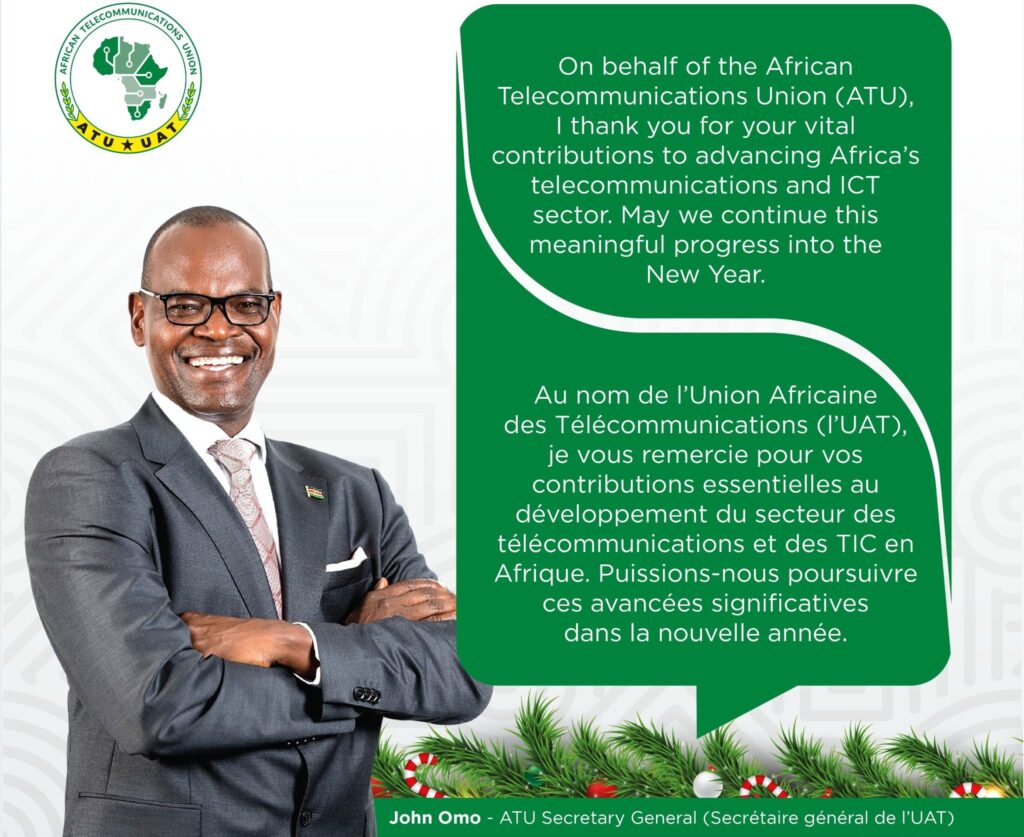
The partnership also provides for cooperation on capacity-building and joint project oversight. ATU Secretary-General John Omo and The Metaverse Institute, CEO Dr. Christina Yan Zhang, led the signing ceremony which was themed around the shared urgency to accelerate Africa’s digital transformation.
Under the MoU, the partners will further develop continent-wide policies and technical standards to guide metaverse development in various sectors. They will launch training programs to build virtual-reality and blockchain skills, and set up a joint oversight body to monitor pilot projects across the fifty-two (52) Member States of ATU.
John Omo called the agreement “a historic step in our digital journey that positions Africa to lead in the next generation of internet platforms.” He added, “Our youth are entering a new world of opportunity. We must act now to build safe, inclusive virtual economies and communities”.
These goals are timely given the share of Africans using the Internet jumped from about 28.6% in 2019 to 38% in 2024, adding tens of millions of new users in just five years. The global organization representing the interests of mobile network operators, the GSMA, notes that 27 operators in 16 markets have launched 5G networks, and mobile technologies now contribute over 8% (about $170 billion) to Africa’s GDP. Conversely, Africa which accounts for roughly 18% of the world’s population holds under 1% of global data centre capacity.
Dr. Zhang said, “With UN figures projecting that by 2100, nearly half the world’s youth will be African, our partnership with ATU is critical. We are honoured to comprehensively evaluate the impact of emerging technologies and the virtual worlds ecosystem on the continent, delivering pragmatic recommendations to maximize Africa’s global competitiveness. Together, we envision a digitally empowered Africa by 2063, a global leader in the digital revolution, where innovation serves humanity to forge a prosperous, inclusive and sustainable future for all”.
The ATU and The Metaverse Institute will in the next few months convene joint working groups to draft the governance framework and launch training initiatives.
Ends
About the African Telecommunications Union (ATU)
An Inter-Governmental Organization (IGO), ATU is the specialised organ of the African Union in the field of Telecommunications/ICTs, and also the International Telecommunications Union’s regional telecommunications organization (RTO) for Africa. The Union represents 52 African countries forming its Member States, and 56 Associate Members comprised of ICT operators in the region. It is an autonomous, membership driven organization whose mission is to promote digital transformation in Africa and ensure the continent is an equal-player in global digital matters. More on the website https://atuuat.africa/
The International Telecommunication Union (ITU) is a specialized agency of the United Nations responsible for many matters related to information and communication technologies (ICTs). It was established on 17 May 1865 as the International Telegraph Union, making it the oldest UN agency. Doreen Bogdan-Martin is the Secretary-General of ITU, the first woman to serve as its head.
The ITU’s main functions are to:
Promote the shared global use of the radio spectrum, which is a finite resource that is essential for wireless communications.
Facilitate international cooperation in assigning satellite orbits, which are also a finite resource that is essential for satellite communications.
Assist in developing and coordinating worldwide technical standards, which ensure that ICT networks and devices can interoperate seamlessly.
Work to improve telecommunication infrastructure in the developing world, to help bridge the digital divide.
The ITU has played a key role in the development of ICTs. It was responsible for the development of the first international telegraph and telephone conventions, and it has continued to play a leading role in the development of new technologies, such as the Internet and mobile communications.
The ITU’s work is essential for the continued development and growth of ICTs. It helps to ensure that ICTs are used in a fair and equitable manner, and it helps to promote the benefits of ICTs for all.
Here are some of the ITU’s key activities:
World Radiocommunication Conferences (WRCs) are held every three to four years to allocate the radio spectrum and satellite orbits.
ITU-T Recommendations are technical standards that ensure that ICT networks and devices can interoperate seamlessly.
ITU-D Development Programmes provide financial and technical assistance to developing countries to improve their telecommunication infrastructure.
The ITU is a global organization with over 193 member states. It also has a number of associate members, such as non-governmental organizations and private sector companies. The ITU’s headquarters are located in Geneva, Switzerland.
ITU’s work on the metaverse
The ITU Telecommunication Standardization Sector (ITU-T) is one of the three Sectors (branches) of the International Telecommunication Union (ITU). It is responsible for coordinating standards for telecommunications and Information Communication Technology such as X.509 for cybersecurity, Y.3172 and Y.3173 for machine learning, and H.264/MPEG-4 AVC for video compression, between its Member States, Private Sector Members, and Academia Members.
Our working group on the metavese analyse the technical requirements of the metaverse to identify fundamental enabling technologies in areas from multimedia and network optimization to digital currencies, Internet of Things, digital twins, and environmental sustainability.
I am Vice Chairman of the Metaverses Working Group on Sustainability, Accessibility and Inclusion. We are working with global stakeholders to address the following issues of the metaverses, such as:
Environmental Sustainability related issues
Accessibility related issues
Social considerations
Diversity, equity and inclusion
Circular economy related issues
The Global Digital Divide
The global digital divide refers to the disparities in access to information and communication technologies (ICTs) between individuals, households, businesses, and geographic areas. These disparities can have significant consequences for individuals’ opportunities for education, employment, and overall well-being.
Here are some key facts and figures about the global digital divide:
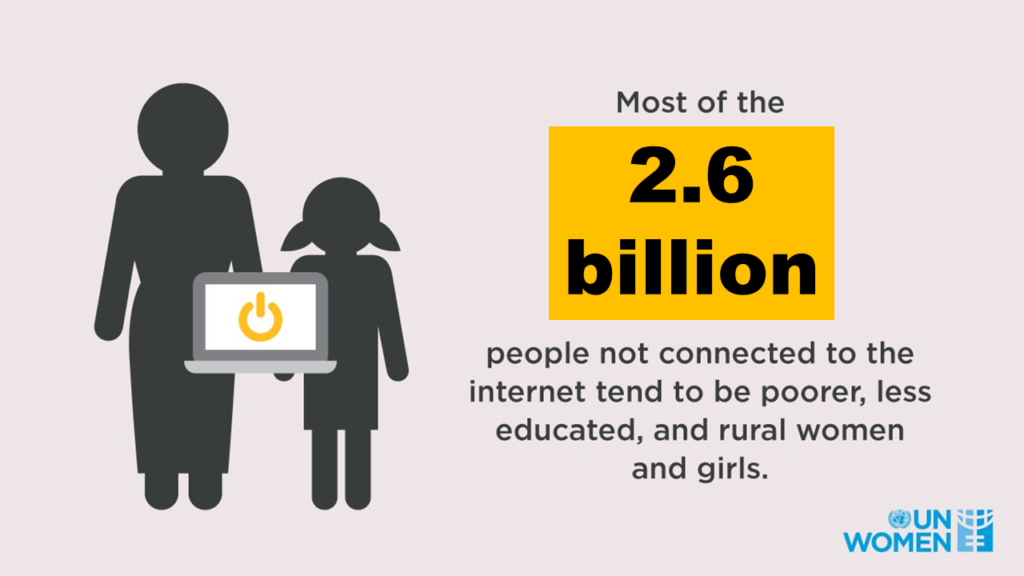
🔶 2.6 bn people-33% global population are not connected to the Internet.
🔶 Gender gap in internet access: 17% in 2023-males: 82%; females: 64%
🔶 Socioeconomic gap in internet access: 28% in 2023(low-income households: 64%; high-income households: 92%)
🔶 Age gap: 20%(15-24 years old: 94%; 65+ years old: 74%)
🔶 Disability gap: 20%(people with disabilities: 56%; people without: 76%)
🔶 Mobile phones are playing an increasingly important role in bridging the digital divide. In developing countries, 92% of people have a mobile phone, compared to 66% who have a computer.
UN Metaverse For All Survey
As Vice-Chair of the ITU Metaverse Working Group on Sustainability, Accessibility, Inclusion, I feel strongly that whatever digital future we are planning to create, whether we use AI, metaverse or quantum technologies etc, it is important that we should ensure that we always have a people-centred approach and ensure no one left behind.
With the great support many amazing leaders at ITU (especially Prof Pilar Orero, Universitat Autònoma de Barcelona, Spain; Nevine Tewfik Loutfi Deputy Director of International Relations Ministry of Communications and Information Technology (MCIT), Egypt; Cristina BuetiCounsellor ITU Focus Group on metaverse), the first UN Survey on Metaverse For All are approved after many rounds of discussions and revisions.
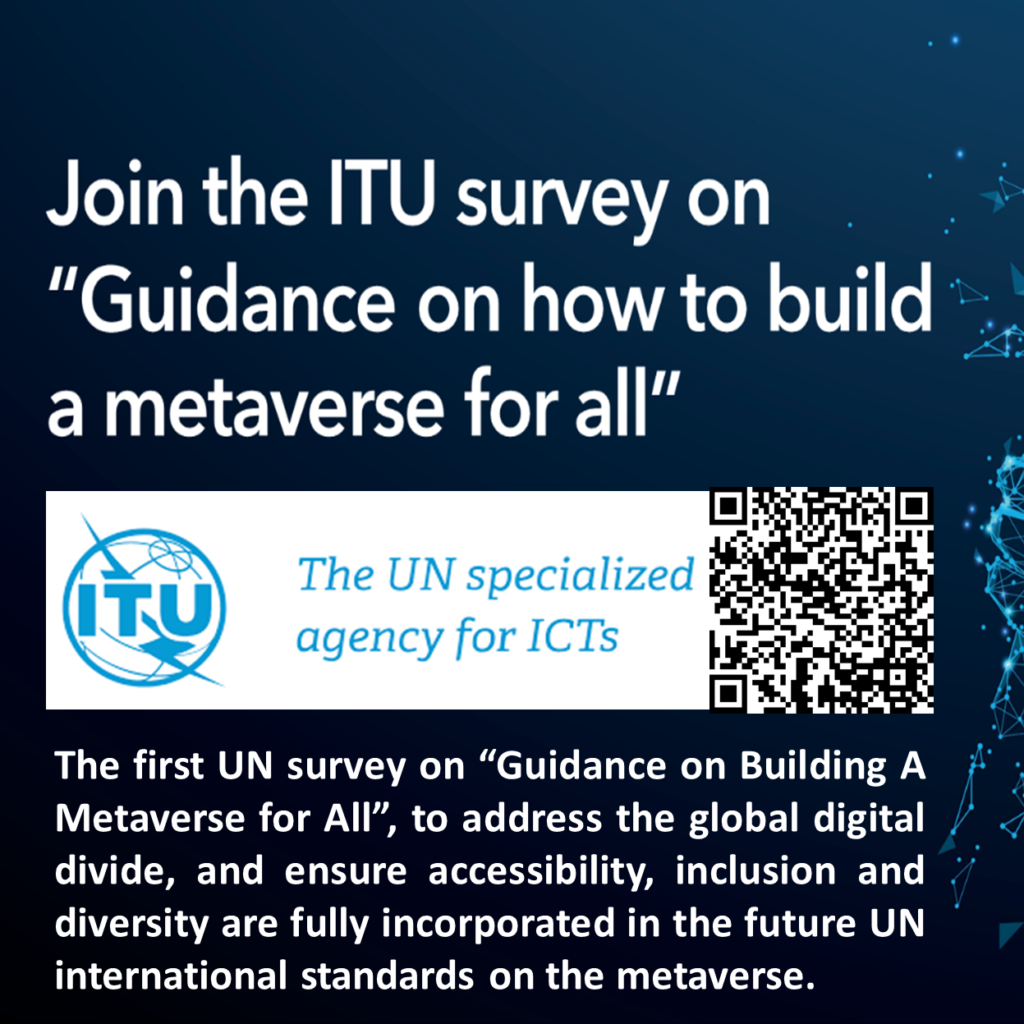
The Metaverse Institute, a leading strategy consulting organization for the metaverse, is inviting everyone to participate in a UN ITU survey to help shape the future of the metaverse. The survey is open to everyone.
The survey takes 15 minutes to complete. It asks participants about their thoughts on the following topics:
Addressing the digital divide in the metaverse
Ensuring that the metaverse is accessible to all
Ensuring diversity, equity, and inclusion in the metaverse
How to use a combination of emerging technologies within the metaverse to create smart, sustainable and inclusive cities, which we call the “CitiVerse”
The results of the survey will be used to develop a report and will contribute to the work of the UN ITU Focus Group on Metaverse which offers a venue to start laying the groundwork for international standards that can help create an inclusive, accessible and sustainable metaverse for all.
Seizo Onoe, Director of the ITU Telecommunication Standardization Bureau, said:
“Our metaverse focus group welcomes your participation in its work to guide us towards an open, inclusive metaverse that benefits everyone, everywhere. Your responses to this survey will make a valuable contribution to our work to ensure that the metaverse supports sustainable development in every part of our highly diverse world.”
Dr Christina Yan Zhang, CEO of The Metaverse institute said:
“The metaverse is in its early stages, but it has the potential to revolutionize how we interact with the world. One-third of the global population is offline, so how can we ensure that emerging technologies leave no one behind? We want to work with the global community to identify ways to ensure inclusivity, accessibility, and sustainability are fully embedded in our digital future for the benefit of all people and countries. By participating in this survey, you can help shape the future of the metaverse ecosystem, including AI, web3, and digital twins, developed through effective public-private-people-planet partnerships, and contribute to the UN Secretary General’s Global Digital Compact for an open, free, and secure digital future for all”.