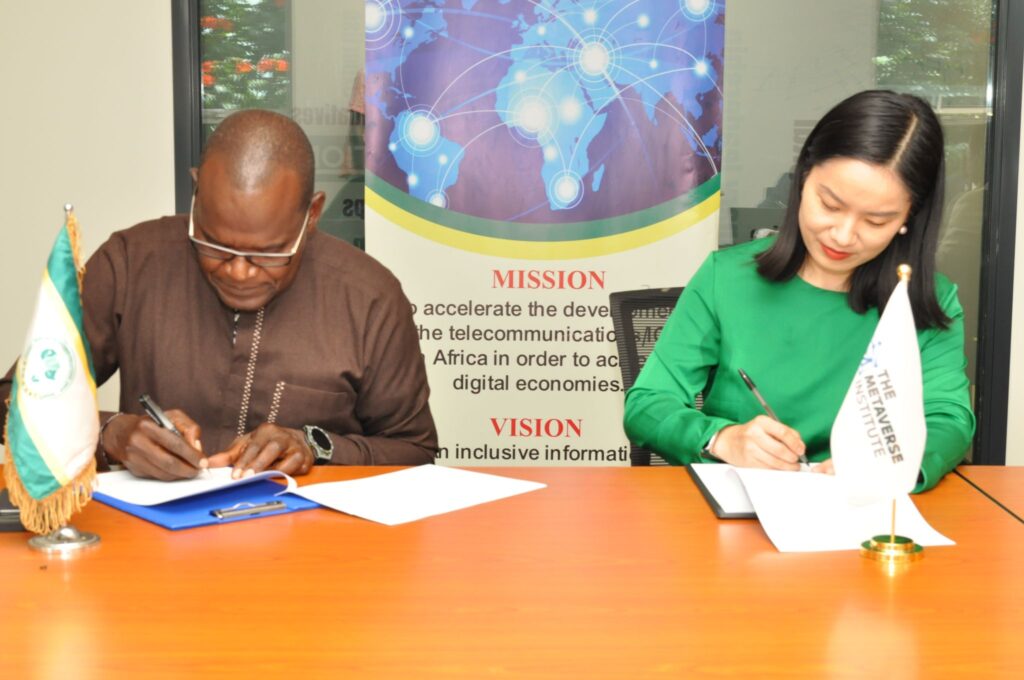
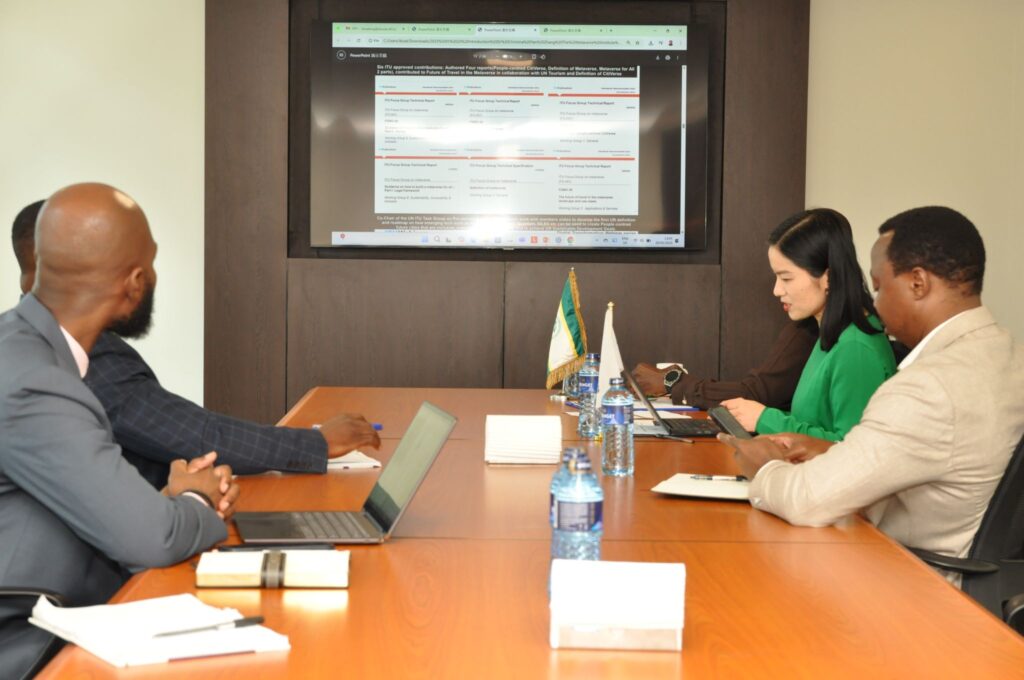
Nairobi, Kenya – 21st May 2025: Africa’s intergovernmental ICT policy body, the African Telecommunications Union (ATU), and The Metaverse Institute – made up of leading pioneers and thought leaders in the Metaverse, artificial intelligence, and smart cities related technologies, today inked a landmark Memorandum of Understanding (MoU) at ATU’s headquarters in Nairobi.
The strategic partnership commits both organizations to establish an African governance and adoption framework for the metaverse – an integrative ecosystem of virtual worlds offering immersive experiences to users, that modify pre-existing and create new value from economic, environmental, social and cultural perspectives to the next generation of the 3D internet.
With a staggering USD 5 trillion specifically projected for training humanoid robots in safe, cost-effective virtual environments, the metaverse offers Africa a transformative pathway to overcome its most pressing challenges. This integrative ecosystem of virtual worlds provides solutions for issues that are currently too expensive—such as the iterative development of smart cities infrastructure—and too bold, like facilitating risk-free surgical training, medical simulations, or the safe training of humanoid robots.
It also addresses challenges that are too complex by enabling dynamic platforms for intricate climate change simulations, and tackles those that are critical for human capital, such as advancing food security through virtual agricultural planning and revolutionizing the quality and accessibility of education. This immersive 3D internet will bridge geographical divides, democratize access to world-class knowledge and skills, and thereby empower Africa’s burgeoning youth.
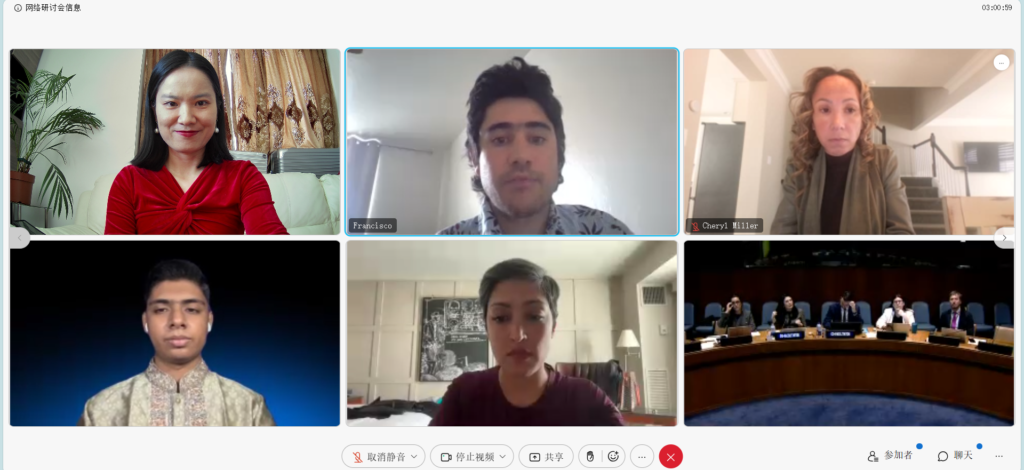
The partnership also provides for cooperation on capacity-building and joint project oversight. ATU Secretary-General John Omo and The Metaverse Institute, CEO Dr. Christina Yan Zhang, led the signing ceremony which was themed around the shared urgency to accelerate Africa’s digital transformation.
Under the MoU, the partners will further develop continent-wide policies and technical standards to guide metaverse development in various sectors. They will launch training programs to build virtual-reality and blockchain skills, and set up a joint oversight body to monitor pilot projects across the fifty-two (52) Member States of ATU.
John Omo called the agreement “a historic step in our digital journey that positions Africa to lead in the next generation of internet platforms.” He added, “Our youth are entering a new world of opportunity. We must act now to build safe, inclusive virtual economies and communities”.
These goals are timely given the share of Africans using the Internet jumped from about 28.6% in 2019 to 38% in 2024, adding tens of millions of new users in just five years. The global organization representing the interests of mobile network operators, the GSMA, notes that 27 operators in 16 markets have launched 5G networks, and mobile technologies now contribute over 8% (about $170 billion) to Africa’s GDP. Conversely, Africa which accounts for roughly 18% of the world’s population holds under 1% of global data centre capacity.
Dr. Zhang said, “With UN figures projecting that by 2100, nearly half the world’s youth will be African, our partnership with ATU is critical. We are honoured to comprehensively evaluate the impact of emerging technologies and the virtual worlds ecosystem on the continent, delivering pragmatic recommendations to maximize Africa’s global competitiveness. Together, we envision a digitally empowered Africa by 2063, a global leader in the digital revolution, where innovation serves humanity to forge a prosperous, inclusive and sustainable future for all”.
The ATU and The Metaverse Institute will in the next few months convene joint working groups to draft the governance framework and launch training initiatives.
Ends
About the African Telecommunications Union (ATU)
An Inter-Governmental Organization (IGO), ATU is the specialised organ of the African Union in the field of Telecommunications/ICTs, and also the International Telecommunications Union’s regional telecommunications organization (RTO) for Africa. The Union represents 52 African countries forming its Member States, and 56 Associate Members comprised of ICT operators in the region. It is an autonomous, membership driven organization whose mission is to promote digital transformation in Africa and ensure the continent is an equal-player in global digital matters. More on the website https://atuuat.africa/
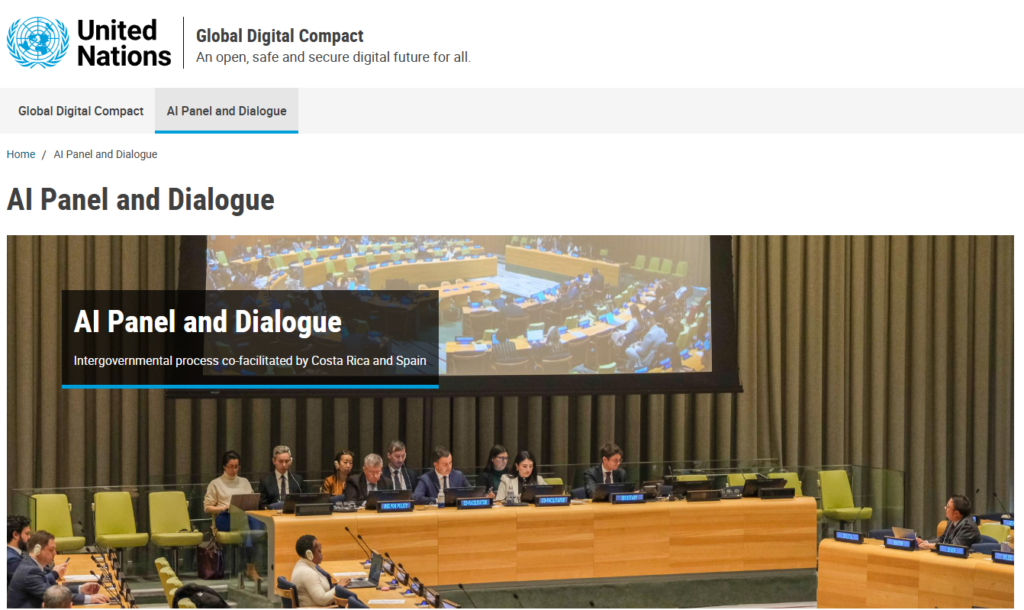
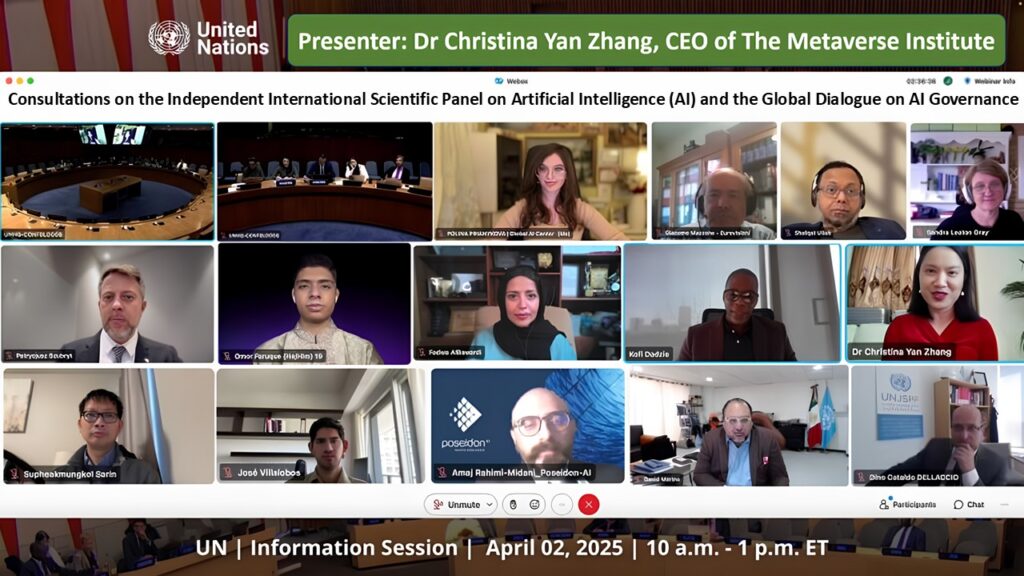
On April 2nd, 2025, amidst a complex global backdrop marked by new US tariff announcements potentially signaling heightened trade tensions, the United Nations hosted a crucial Information Session with Stakeholders on AI Governance. The Metaverse Institute was honoured to contribute to this vital dialogue, represented by CEO Dr. Christina Yan Zhang. The session underscored the urgent need for international cooperation on Artificial Intelligence, even as geopolitical friction persists.
The timing was stark: as discussions unfolded on harnessing AI for global good, headlines reflected a world grappling with economic nationalism. This juxtaposition highlights the central challenge of our time – how can we build unprecedented global collaboration required to manage AI’s profound potential and perils?
The UN, through initiatives like the Global Digital Compact, is laying the groundwork. Member States have agreed to establish an Independent International Scientific Panel on AI and foster a Global Dialogue on AI Governance, with Costa Rica and Spain commendably co-facilitating this process. These steps are crucial, but the path forward requires navigating significant hurdles.
In her address, Dr. Zhang echoed warnings from leading AI figures like Geoffrey Hinton, emphasizing the critical need for collective action to ensure the race towards Artificial General Intelligence (AGI) – AI smarter than humans – does not inadvertently lead humanity towards existential risks. Key concerns raised included:
Existential Threats & Global Safety: Prioritizing international collaboration to steer AGI development away from potential catastrophic outcomes.
Sustainability Imperative: While AI offers tools to combat climate change, its own environmental footprint – water and energy consumption, e-waste generation, carbon emissions – demands rigorous evaluation and mitigation strategies.
Societal Transformation: Proactively exploring effective governance models to address the sweeping societal impacts of AGI, including job displacement, the future of warfare, the feasibility of universal basic income, and the exacerbation of the digital divide.
The session brought together influential voices from across the AI ecosystem – policymakers, technical experts, civil society leaders, and international organizations – fostering essential dialogue. We extend sincere gratitude for the leadership shown by Costa Rica’s Ambassador to the UN, H.E. Maritza Chan, Spain’s Ambassador to the UN, H.E. Héctor Gómez, the UN Office for Digital and Emerging Technologies, particularly Lucia Velasco (Head AI Policy) and Rebekah Hayoung Woo (Policy Officer), for their significant support in advancing these critical conversations. Engaging with fellow leaders dedicated to responsible AI deployment was both insightful and encouraging.
This brings us to the pivotal question facing the international community:
How can we, as a global collective, forge the unprecedented international cooperation needed to maximize AI’s transformative power for innovation, efficiency, and solving global challenges, while simultaneously mitigating its inherent and significant risks – including sustainability challenges, a widening digital divide, and potential existential threats – especially within a climate of increasing geopolitical tension and potential trade conflicts?
Achieving this delicate balance requires more than technical solutions; it demands political will, shared ethical frameworks, and a commitment to global solidarity that transcends national interests. The path forward is complex, but the stakes – shaping a future where AI serves humanity safely and equitably – could not be higher.