OXFORD, U.K. — In a landmark victory for youth-led innovation, a team of four Indonesian high school students has claimed the top prize at one of the world’s most prestigious academic climate challenges. Their project, a coral-regenerating robot named “Boom Bloom Bio,” was named the global winner of the 2025 Oxford Saïd Global Climate Change Challenge in a ceremony at the University of Oxford, prevailing in an elite field of over 1,600 international entries.
The competition, hosted by the University of Oxford’s renowned Saïd Business School, convenes a select panel of global experts to identify the most promising sustainability solutions from the next generation. This year’s final judging panel included Dr. Christina Yan Zhang, CEO of The Metaverse Institute, who was invited to lend her expertise in technology and innovation to the rigorous selection process.
The Pinnacle of Youth-Led Sustainability Innovation
Now in its third year, the Oxford Global Climate Change Challenge has established itself as a premier global platform, recognized for its academic rigor and its mission to identify scalable, real-world solutions. The finals represent the culmination of a highly selective process, where only the most thoroughly researched and impactful proposals proceed.
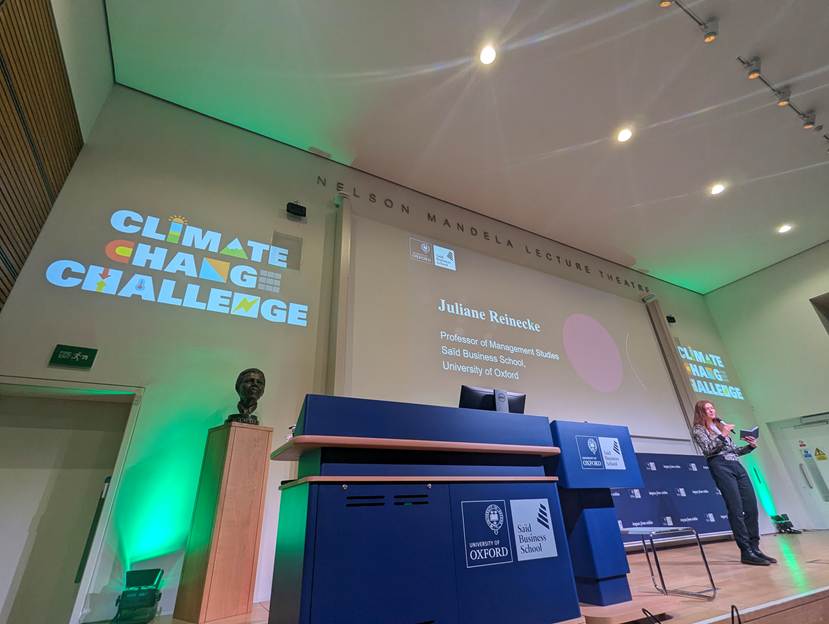
“The depth of innovation and scientific understanding displayed by these students is truly extraordinary,” said Professor Juliane Reinecke, Professor of Management Studies at Oxford Saïd and Chair of the Judging Panel. “They made our job profoundly difficult. Winning this challenge signifies that their work is not only creative but is grounded in research with genuine potential for impact.”
The winning team from Penabur Gading Serpong Christian High School in Indonesia developed “Boom Bloom Bio” to address the critical crisis of coral reef degradation. Their solution impressed the judges by directly tackling marine biodiversity loss—a complex ecological problem—with a precise, technology-enabled approach.
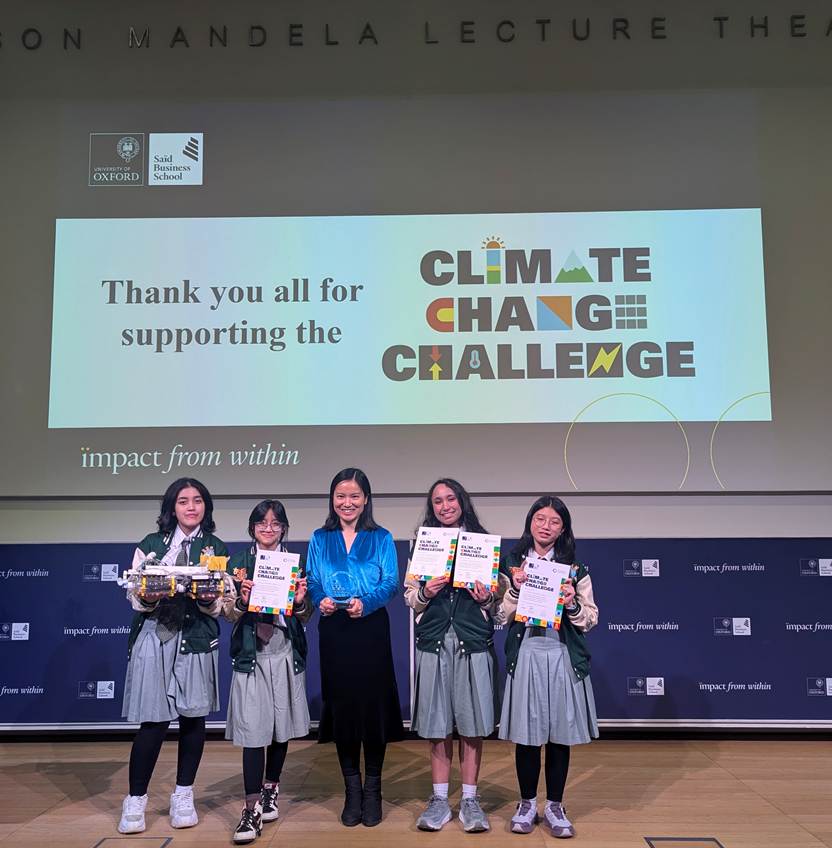
(The prestigious Oxford Climate Change Prize 2025 was awarded to the “Boom Bloom Bio” team—students Raisa, Merlin, Renata, and Cheryl from Penabur Gading Serpong Christian High School in Indonesia. Their winning project, an innovative algae dispersion robot designed for coral regeneration and biodiversity recovery, impressed the judges. Dr. Christina Yan Zhang, CEO of The Metaverse Institute, is pictured here celebrating with the young innovators.)
An Elite Judging Assembly and Educational Leadership
The competition’s prestige is underscored by the distinction of its final jury, comprising leaders from top-tier academic institutions, global media, and industry:
Professor Juliane Reinecke, Professor of Management Studies, Oxford Saïd (Chair)
Dr. Abrar Chaudhury, Oxford Saïd
Josephine Fawkes, Director of Global Inclusion and Youth Education, Oxford Saïd
Frances Lloyd, Fellow and Director of Sustainability, Wadham College, Oxford
Dr. Christina Yan Zhang, CEO, The Metaverse Institute
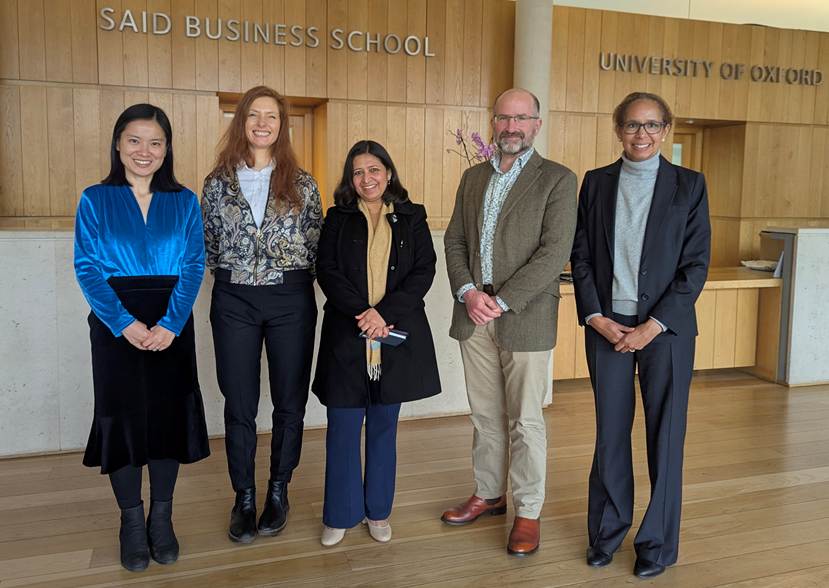
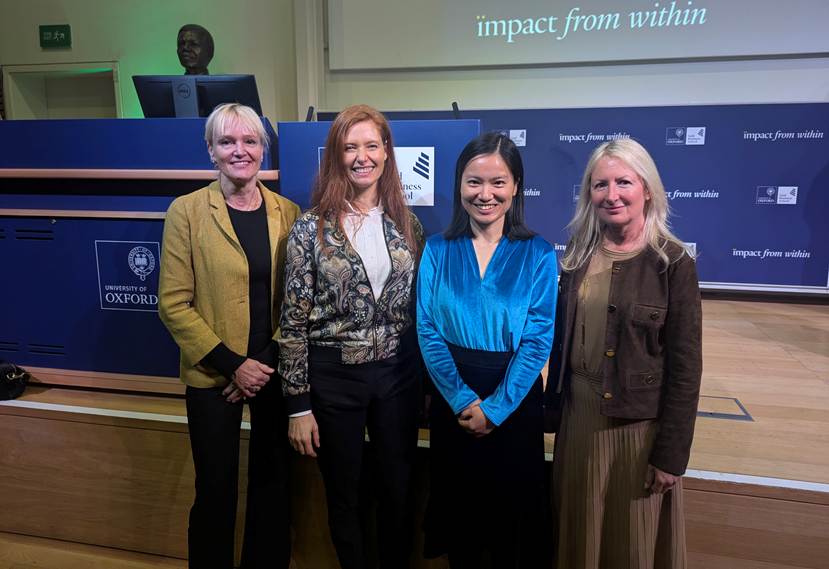
(The competition’s prestige is underscored by the distinction of its final jury, comprising leaders from top-tier academic institutions, global media, and industry, including Professor Juliane Reinecke, Professor of Management Studies, Oxford Saïd (Chair); Dr. Abrar Chaudhury, Oxford Saïd; Josephine Fawkes, Director of Global Inclusion and Youth Education, Oxford Saïd; Frances Lloyd, Fellow and Director of Sustainability, Wadham College, Oxford; Dr. Christina Yan Zhang, CEO, The Metaverse Institute; Rob Pavey, Headteacher, Cheney School, Oxford; and Subhra Priyadarshini, Chief Editor, Nature Portfolio)
The award for Best Lesson Plan was awarded to Zhaoxia Chen of Jinling High School Hexi Campus in Nanjing, whose curriculum trains students in high-stakes international diplomacy simulations focused on food security. This award highlights the challenge’s dual focus on groundbreaking student projects and transformative educational methods.
(Zhaoxia Chen, a teacher from Jinling High School Hexi Campus in Nanjing, was honored with the award for Best Lesson Plan.)
“Participating in this jury was an honor,” stated Dr. Christina Yan Zhang. “The Oxford challenge is unique in its ability to attract and identify truly exceptional talent. Evaluating these entries alongside some of the world’s foremost academic and sustainability thinkers was a powerful experience. The winning project from Indonesia is a stellar example of how global youth are applying deep tech understanding to solve our planet’s most pressing issues.”
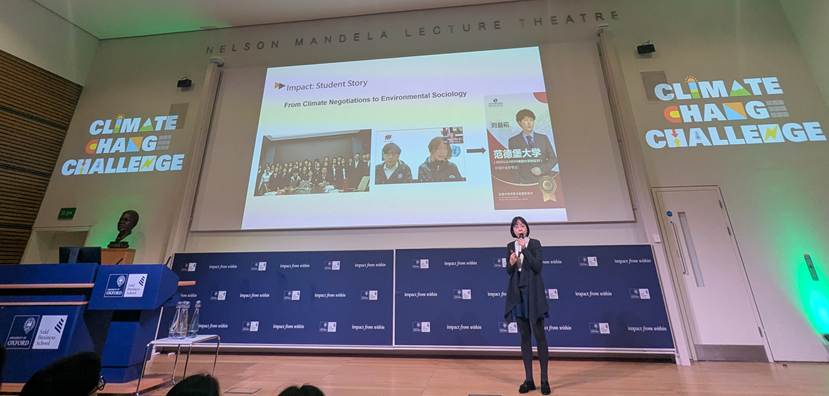
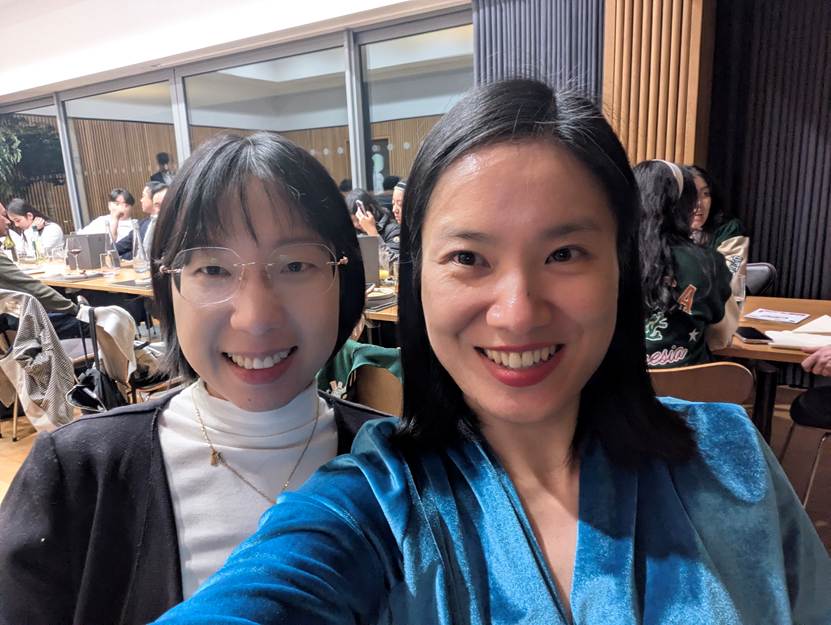
(Honouring educational excellence: Dr. Christina Yan Zhang with Zhaoxia Chen, awarded Best Lesson Plan at the Oxford Saïd Global Climate Change Challenge 2025 for her immersive “Model UN” curriculum on food security
A Launchpad for Future Global Leaders
The prizes offered reflect the competition’s role as a career-defining launchpad. The Indonesian student winners—Raisa, Merlin, Renata, and Cheryl—receive full bursaries to the Future Climate Innovators Summer School at the University of Oxford in 2026, an immersive programme taught by the University’s world-renowned academics. Teacher winner Zhaoxia Chen earns a place on a competitive Oxford Saïd Executive Education programme.
Runners-up included the collaborative MycoFuture project (USA and South Korea) and the Canadian team EcoCoil, alongside teaching innovators Chris Rowley (Chengdu) and Roudaina Mohsen Kassam (Lebanon).
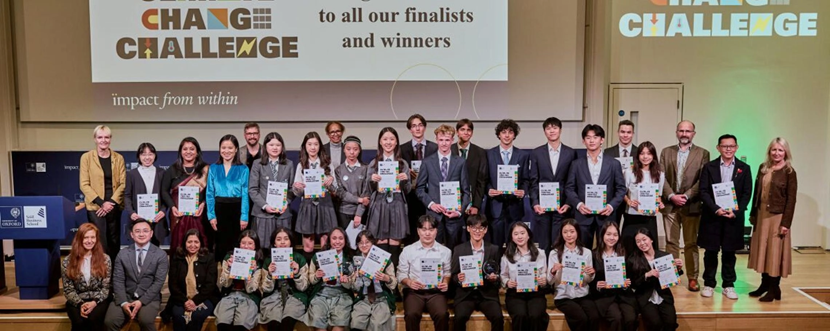
(Jo Fawkes, Director at Saïd Business School, University of Oxford welcomed all the global finalists of the Oxford Global Climate Change Challenge 2025)
The competition’s impact extends beyond prizes. Jo Fawkes, Director at Oxford Saïd, noted: “Over the past three years, the Challenge has grown into a global platform – connecting students and teachers across continents, languages and disciplines. It has brought forward extraordinary ideas, and even more importantly, it has built a community that believes education and innovation can, together, accelerate the transition to a sustainable world.”
For Dr. Zhang, participating as a judge underscored the critical role of cross-sector collaboration in empowering the next generation. “Witnessing this fusion of deep research, technological imagination, and educational passion from young people across the globe is profoundly inspiring,” she stated. “It is a powerful reminder that the most scalable solutions for our planetary challenges will come from investing in and connecting this emerging generation of innovators.”
Professor Mette Morsing, Interim Dean of Oxford Saïd, connected the winners to the school’s core mission: “We speak of creating ‘impact from within’—nurturing individuals who use their insight and compassion to transform systems. That philosophy lives at the heart of everything we do, from our research to this youth education challenge. These winners embody that spirit entirely.”
The full recording of the final competition can be found here.
Information and communications technology is key to ending global poverty – but only with universal access to digital skills and platforms, warns leading economist Jeffrey Sachs.
“Advanced digital technologies will play a breakthrough role in raising productivity in every sector of the economy, and hence can be key in accelerating the end of poverty,” claims Prof. Sachs in an interview published in the latest edition of Transform, Huawei’s thought leadership magazine.
Noted economist Prof. Jeffrey Sachs and Dr. Christina Yan Zhang on the cover of Transform #14
“Of course,” Sachs cautions, “If the digital divide widens, ICT can also exacerbate inequalities…¬The key is to ensure universal access to the skills and digital platforms needed across the society.”
In just six years, the United Nations aims to eradicate extreme poverty worldwide and reduce by half the proportion of people living in poverty. Yet more than 700 million people remain stuck at incomes of less than the International Poverty Line of US$2.15 a day, a threshold set by the World Bank.
Information and communications technology (ICT) is recognized as a key factor in helping individuals escape poverty or mitigate its most damaging effects. ICT also helps countries raise living standards by fueling economic growth.
For those and other reasons, the new edition of Transform presents a decidedly optimistic perspective hidden amidst the cautionary tales.
Otaviano Canuto, a former World Bank vice-president and deputy finance minister in Brazil, says that, ideally, ICT will deliver knowledge and enhance people’s capabilities.
“A major function of the World Bank is to play a hummingbird role,” Canuto says. “Hummingbirds pollinate flowers, and these multilateral institutions can also pollinate with knowledge.”
This pollination is especially crucial for people living in cities, where 80% of the world’s population will live by 2050. Christina Yan Zhang, CEO of the Metaverse Institute, says technology will be vital in delivering services to citizens through what she calls the “CitiVerse.”
“That term is a combination of ‘citizen’ and ‘Metaverse,’ she says. “We’re looking at how we can develop future cities where we put the needs of the citizens at the center. In the past, smart city developments haven’t always achieved the best outcomes…Sometimes there is a focus on technology for its own sake, rather than on how technology can be used to improve the lives of people.”
The latest interviews in the magazine and other thought leadership content can be found on the Transform web site.
Note:
Published every two months, Transform is an online and print magazine that runs video interviews, newsmaker profiles, and feature articles that examine the relationship between technology, business, and society. A PDF of the magazine can be downloaded from the web site, and a hard-copy edition is available in some geographic locations and upon request.
Each edition is about one topic. Recent examples include cyber security, healthcare, and finance.
When it comes to the world’s biggest digital twin, the only thing we have to fear is fear itself. Dr. Christina Yan Zhang, CEO of the Metaverse Institute, explains.
Q: What is the Metaverse?
A: The metaverse has increasingly become a convergence of a whole range of technologies, coming together to form the next generation of the internet: more immersive, interactive and intuitive. The most important use case of the metaverse is for simulating and optimizing real-world construction and development projects that are too expensive to fail, so must be got right the first time. The US$500billion mega-smart city in Saudi Arabia, known as Neom, is a good example. Metaverse technologies can be used in a similar way for dangerous operations, such as complicated or experimental surgery. In the future, large-scale digital twin simulations could also be used to model the behavior of large numbers of people in virtual environments – to understand, for instance, how they would evacuate a stadium in the event of a fire, or what would happen if there was an earthquake in a city.
Q: How do you make sure that technological advances and the metaverse benefit everyone?
A: That’s a major issue. I’m vice-chair of an International Telecommunication Union (UN ITU) working group that produced the first UN survey looking at how to develop guidance on “how to build a metaverse for all” and address the global digital divide. There are currently about 2.6 billion people – a third of the global population – who don’t have access to the internet. Today, 1.2bn people, mostly in Africa and some parts of Asia, don’t even have stable access to electricity. So, a top issue is energy poverty. That needs massive intergovernmental collaboration, with private investment coming in to support public-private partnerships, to put more infrastructure in place. Because when you don’t even have the energy to cook your daily meals, you’re not going to talk about anything fancy on technology. You’re only thinking about your own survival. So, we need to address that fundamental issue.
Q: As people increasingly move to urban areas, what are the implications for technological advancement and inclusivity for poorer communities?
A: That’s a great question. Today, 55% of the global population live in cities, and by 2050 it’s going to be 80%. I also co-chair the UN ITU task group on pre-standardization for the “CitiVerse.” That term is a combination of “citizen” and “metaverse.” So, we’re looking at how we can develop future cities where we put the needs of the citizens at the center. In the past, smart city developments haven’t always achieved the best outcomes, even though they used some of the most advanced technology available at the time. Sometimes there is a focus on technology for its own sake, rather than on how technology can be used to improve the lives of people. This has led to some smart city projects being expensive, inefficient, and even harmful.
The problem is adoption. Innovation moves so fast, it is not always easy for people to catch up. If people don’t understand how best to utilize the technology for their own benefit, then the technology can’t maximize its positive impact. So, instead of just chasing the latest techno-hype, which moves too fast for most municipal governments to follow in any case, let’s go back to basics and ask what are the key issues all our diverse citizens care about.
Not all smart city technologies have effectively addressed the issue of rising property prices in many capitals, or address the issue of providing better support to their ageing populations. According to the latest figures from the World Bank, the digital divide (access to the internet) is not only between low-income households (64%) and high-income households (92%). It is also between men (82%) and women (64%), and between different locations: urban areas (88%) vs rural ones (73%). There is also a digital divide between younger people, aged 15-24 (94%) and our ageing parents and grandparents who are 65+ years old (74%). It’s between people who have additional special needs (56%) and people who don’t (76%). There are lots of things we need to break down into more detail to provide the additional support required by our diverse communities.
Q: So, if you’re poor in the real world, how do you ensure you’re not equally poor in the digital world?
A: The first thing we need to realize is that we all have to live in the physical world for most of our lives. People are not going to spend 100% of their time in a virtual-reality metaverse; that is a science-fiction dystopia, and it’s not going to happen. The way to bring the greatest value to the metaverse is to always link it to the physical world, to do experiments in the virtual environment which are too costly or too dangerous to realize in the real world. So, the most important thing we need to do is figure out how we can help people in the real world to receive the right kind of training to allow them to figure out how to use these new technologies to bring value to their existing life and work.
Everyone’s worried about their jobs now as a result of AI, but as President Franklin Roosevelt said during the Great Depression (1929–1939), when 24.9% of the total work force in the US (nearly 13 million people) were out of work: “the only thing we have to fear is fear itself.” If we put our fear aside, look at what are the biggest challenges, and break them down into smaller, more manageable tasks, then we can really support people from diverse backgrounds with diverse needs, using new technologies within the wider metaverse ecosystem. And we’re doing that analysis now at the UN ITU working group.
Q: What are the changes that are required to ensure the technology benefits everyone?
A: Training is clearly a very important area, but so is confidence. Every one of us needs to have the confidence to believe in ourselves first before we can help other people to flourish. We human beings, as a species, are extremely adaptable. Also, in the UN ITU task group on the CitiVerse we are proposing a new type of partnership, which we call a public-private-people-planet partnership. Any kind of digital future we are planning and implementing has to ensure that the needs of our diverse people will be at the center. And to make sure everything is sustainable in the longer term, and not at the cost of our planet. We are working in collaboration with many different member states of the UN ITU to look at how we use all kinds of frontier technologies to support people-centered future cities. What will be the roadmap that cities of different sizes, focus, cultures and histories can benefit from? Should we develop a more regional focus? For example, the CitiVerse developed for Europe will be very different from the CitiVerse developed for Africa.
Q: How does technology help achieve that greater equality and greater inclusivity?
A: Everything needs to be more tailored: personalized, regionalized, to cater to the needs of different countries and different industries. I don’t believe that the best metaverse strategy is one-size-fits-all. Instead, there needs to be a metaverse strategy fit for tourism, a metaverse strategy fit for healthcare, another for arts and design, or for the entertainment industry, or for a smart factory, and so on. Rather than trying to build everything from scratch, we need to look at what’s already available out there in the existing system. For any kind of IT implementation or adoption, we can’t just get rid of the existing system, which has been running for decades. Innovation needs to be incremental to be incorporated properly into existing systems.
Q: It’s an evolution, but with people and the planet at the heart of the plan?
A: Absolutely. I would say it will always be people-centered and we need to be very balanced.
Q: You seem very optimistic that there’s a good future ahead for all of us?
A: I’m optimistic because we’ve already tried to map out all the challenges and prepared for the worst scenarios, and therefore we do not have any room left to fear anything. Our focus is to identify the most effective and pragmatic solutions to address any challenges experienced in the process. Data storage, for instance. The European Commission has given €2 million of funding to the ASCEND initiative, part of the Horizon Europe program, to put data centers in Earth orbit, thus minimizing the environmental impacts. And frontier tech companies are looking at putting data storage in the form of synthetic DNA. Like the dinosaur in amber in the film Jurassic Park, DNA is an extremely stable form of data storage. It lasts a very long time — up to 1.5 million years — while the most commonly-used medium for long-term storage, magnetic tape, has to be replaced every 10 years. The storage density potential of DNA is 10 million times that of traditional media such as hard disks and tapes, and it’s carbon emission free, too. Mark Bathe, PhD, an MIT professor of biological engineering, said that if we want to store the whole world’s data in DNA, we could fit all of it inside coffee mug.
Q: Returning to your FDR quote about fear: do we just need to stop worrying and calmly accept that this is where technology is going?
A: Yes. Life is short, and you can choose to live it in a really happy and optimistic way, or a miserable and pessimistic way. Why don’t we focus all our energy on things we can control, and on things we can do to help each other flourish, rather than fighting each other. It doesn’t make sense. Steve Jobs once said, we are here to make a dent in the universe. I think we are here to make a dent in the metaverse!