A digital twin is a digital representation of a real-world physical product, system, or process that serves as the effectively indistinguishable digital counterpart of it for practical purposes, such as simulation, integration, testing, monitoring, and maintenance.
In 1970, APPOLO 13 triggered the needs to have a kind of “digital replica”. Since then, digital Twin has found its applications in fields such as advanced manufacturing, Product Lifecycle Management, aerospace, healthcare and smart cities.
The future of digital twins has many interesting possible applications. Generative AI can mass produce the building blocks of digital twins, including high resolution avatars, 3D objects, 3D environments etc. The advances in AI have made the development of digital twins easier, cheaper and faster. There are many successful cases.
Rolls-Royce is using generative AI to create digital twins of its jet engines. These digital twins are used to predict the performance of the engines and to identify potential problems before they cause failures.
Siemens is using generative AI to create digital twins of factories. These digital twins are used to optimize the production process and to improve the efficiency of factories.
GE Healthcare is using generative AI to create digital twins of patients. These digital twins are used to personalize treatment plans and to improve the quality of care for patients.
QDTs are still under development, but they have the potential to revolutionize many industries.
Bosch is leading the way in the development of quantum digital twins. In 2022, Bosch partnered with Multiverse Computing, a Spanish quantum software platform, to integrate quantum algorithms into digital twin simulation including:
Manufacturing: Bosch is using quantum digital twins to simulate the performance of individual machines and production processes. This information is then used to identify areas where improvements can be made.
Building technology: Bosch is using quantum digital twins to simulate the energy performance of buildings. This information is then used to design buildings that are more energy-efficient and to develop strategies for reducing energy consumption.
Healthcare: Bosch is using quantum digital twins to develop new drugs and treatments for diseases such as cancer and Alzheimer’s. For example, Bosch is using quantum digital twins to simulate the behavior of proteins and other molecules involved in these diseases. This information is then used to develop new drugs that are more effective and have fewer side effects.
Quantum digital twins are in early stages and face many challenges such as the availability and reliability of quantum computers, the interoperability and standardization of data formats, and the ethical and social implications of creating virtual copies of physical systems.
Bosch believes that quantum digital twins have the potential to revolutionize a wide range of industries and to improve the lives of people around the world.
A brain–computer interface (BCI) is a direct communication pathway between the brain’s electrical activity and an external device. Based on how close electrodes get to brain tissue, BCI can be put into three types:
Invasive BCIs are implanted directly into the brain. They provide the highest quality signal, but they are also the most risky and invasive type of BCI. Invasive BCIs are typically used for research purposes or to help people with severe paralysis.
Non-invasive BCIs are worn outside of the body. They are less invasive than invasive BCIs, but they also provide a lower quality signal. Non-invasive BCIs are the most common type of BCI and are used in a variety of applications, including gaming, entertainment, and rehabilitation.
Partially invasive BCIs are implanted under the scalp but not directly into the brain. They provide a better quality signal than non-invasive BCIs but are less invasive than invasive BCIs. Partially invasive BCIs are still under development, but they have the potential to be a good middle ground between invasive and non-invasive BCIs.
BCIs have the potential to revolutionize the way we interact with computers and the world around us. By using our brains to control computers directly, we could bypass the need for traditional input devices such as VR, AR headsets, haptics etc. This would allow us to interact with computers in a more natural and immersive way.
The most ambitious champion of BCI is Elon Musk’s Neuralink. Their vision is to create a symbiosis between humans and machines, where humans can access and share information with each other and with AI at unprecedented speeds and levels. Musk is currently recruiting the first human volunteer for the brain implant.
Many people do not like the idea to have computer chips in their brains. In July 2023, the less intrusive SprialE brain-computer interface (BCI) was invented. It is a device that can connect to the brain via the ear canal. It was developed by a team from Tsinghua University in Beijing, China. Unlike other BCIs that require surgery, the SprialE BCI is designed to be comfortable, safe, and easy to use. The research was published in the scientific journal Nature Communications.
Conclusion
In the future, for tasks which are too dangerous, expensive or inaccessible in the physical world, we can experience that in 3D digital twins. The digital twins will provide us with new and innovative ways to work, learn, play, and socialise and therefore make our lives better and more fulfilling.
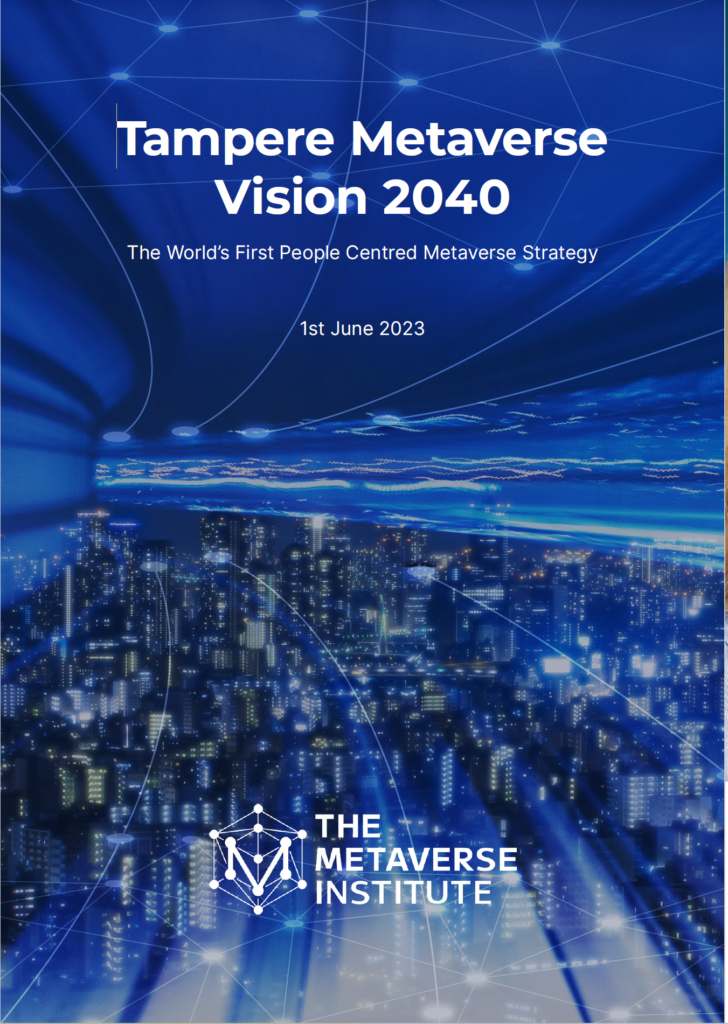
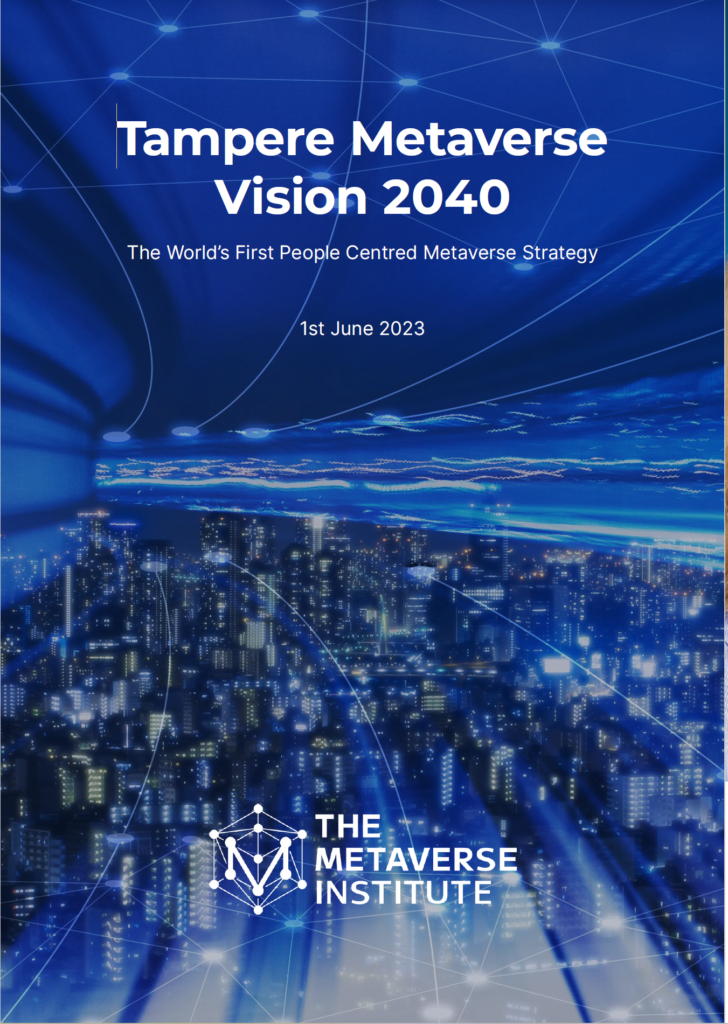
We recently developed the world’s first people centred metaverse strategy Tampere Metaverse Vision 2040, in collaboration with the City of Tampere, Finland where we outline our vision of how digital twin, AI, BCI, quantum related technologies will help to build future world where the well-being of people are prioritised. You can find the full report here.
The Tampere Metaverse Vision 2040 conceptualizes and presents the possibilities of the metaverse for future urban development, including aspects such as citizens’ well-being and climate actions. This publication is the result of the Data-Driven City for Citizens -development program by the City of Tampere, in partnership with London-based The Metaverse Institute.
Tampere Metaverse Vision 2040 primarily serves as a tool for urban development and Tampere’s workforce. It offers a glimpse into what the city could become in the 2040s.
The Tampere Metaverse Vision 2040 investigates how a metaverse environment composed of various intelligent technologies can be utilized as support for the happiness of citizens, urban governance, sustainability, equality, well-being, and healthcare. This visionary outlook of the future has been realized in collaboration with The Metaverse Institute.
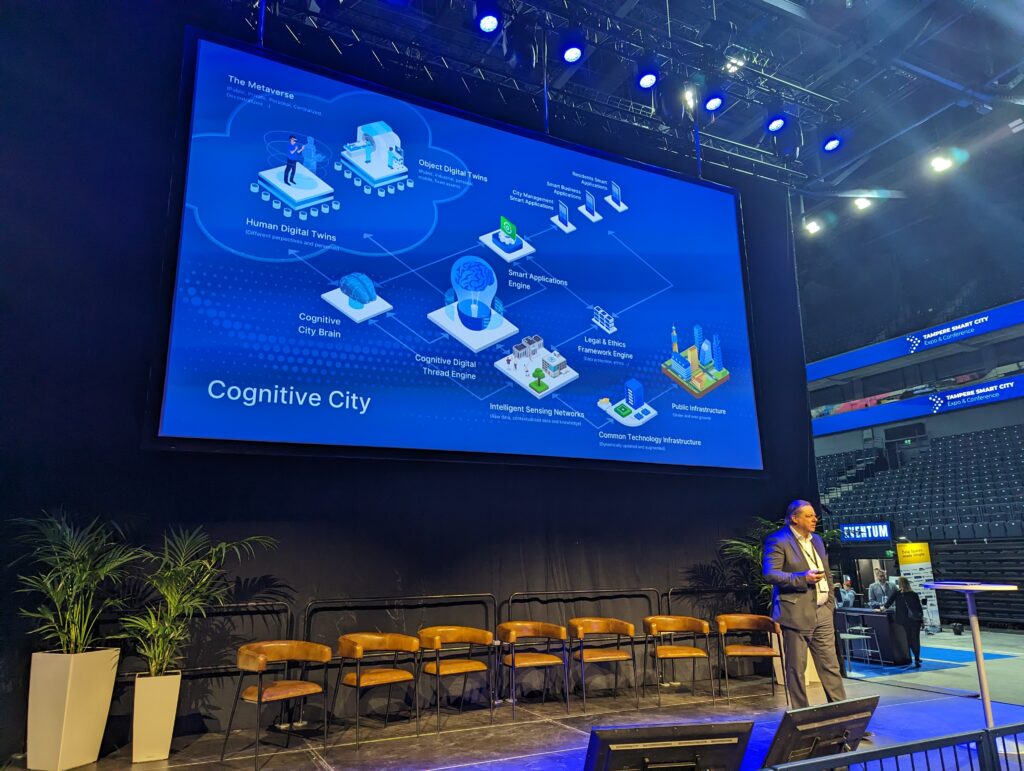
The concept of metaverse holds current relevance for the city of Tampere. It was a central theme at the Tampere Smart City Expo & Conference held at the Nokia Arena in June 2023.
–Metaverse intertwines numerous themes and concepts that are already being pursued and those on the horizon, such as data utilization, digital twins, virtual realities, and artificial intelligence. Hence, the concept is now prominently emerging. For us, the metaverse is not merely a virtual realm, but a continually evolving digital environment seamlessly integrated into the real city, explains Tiia Joki, Development Manager at the City of Tampere, offering insight into the background of Metaverse Vision 2040.
Intelligent Solutions in Support of Human-Centered Approaches
Tampere Metaverse Vision 2040 portrays various future scenarios that provide solutions for both local and global challenges. The vision depicts a future Tampere where artificial intelligence enhances citizens’ well-being by enabling more efficient solutions and personalized services, particularly in education, well-being, and urban environments. The vision envisions that in two decades, metaverse could facilitate tailored housing solutions for individuals and improve citizens’ sense of safety and security.
In this future urban vision, citizens have increased opportunities for influencing decision-making processes. Metaverse has the potential to usher in more participatory urban governance, leading to services that more effectively cater to people’s needs.
The future vision emphasizes the impact of metaverse on the economy and equality. The vision outlines a scenario for the 2040s where companies, tourists, and immigrants can explore the city, learn the language, and engage with business stakeholders even before physically arriving in the city.
According to Tampere Metaverse Vision 2040, as technology advances, the metaverse could provide a solution for achieving a carbon-neutral city. By utilizing digital twins that model the real world, various alternative perspectives can be simulated. This enables authorities, stakeholders, and city residents to test the impact of their everyday choices on people, economy, and the environment.
Metaverse as a Tool for Future Urban Planning
Tampere Metaverse Vision 2040 primarily serves as a tool for urban development and Tampere’s workforce. It offers a glimpse into what the city could become in the 2040s.
–As a city organization, we need to be at the forefront of development. The vision provides guidelines for what could be possible in future Tampere. Our collaboration partners in the business sector, both existing and potential, also benefit from these metaverse guidelines. This is the direction we are headed towards through joint efforts and learning, describes Teppo Rantanen, Executive Director of Growth, Innovation and Competitiveness at the City of Tampere.
–With the exponential development of AI, metaverse, digital twins, quantum technologies and other cutting edge technologies, it is increasingly important to put the wellbeing of citizens, and the prosperity of the human society at the centre of any kind of digital future we are developing. We are delighted to work with the City of Tampere to develop such a forward-thinking vision. Together we are developing pragmatic solutions, looking closely at how these technologies can support the happiness, sustainability, equality, health and wellbeing of our people. Consideration of effective governance is also crucial, in order to maximise the positive impact of those technologies while minimising their risks. We hope this report can be a starting point for governments worldwide who are considering metaverse technologies, to empower citizens to play a more active role in future city development and help achieve the UN Sustainable Development Goals, says Dr. Christina Yan Zhang, CEO of The Metaverse Institute.
London-based The Metaverse Institute is pioneering international research in the field of metaverse and represents the latest example of the city of Tampere’s global collaboration with companies, research, and development institutions.
The Finnish city used Tampere Smart City Expo to showcase how it aims to combine the digital and physical worlds to enhance the lives of city dwellers.
The Finnish city of Tampere is inviting companies to test their smart city solutions as it takes its first steps to becoming “a human-centric metaverse city”.
It used the recent Tampere Smart City Expo & Conference to showcase how it aims to combine the digital and physical worlds and create a vibrant digital environment that enhances the lives of city dwellers.
The metaverse and digital twins
The international Tampere Smart City Expo & Conference convened experts from around the world to share ideas in areas such as Web3 technology, sustainability, artificial intelligence and mobility.
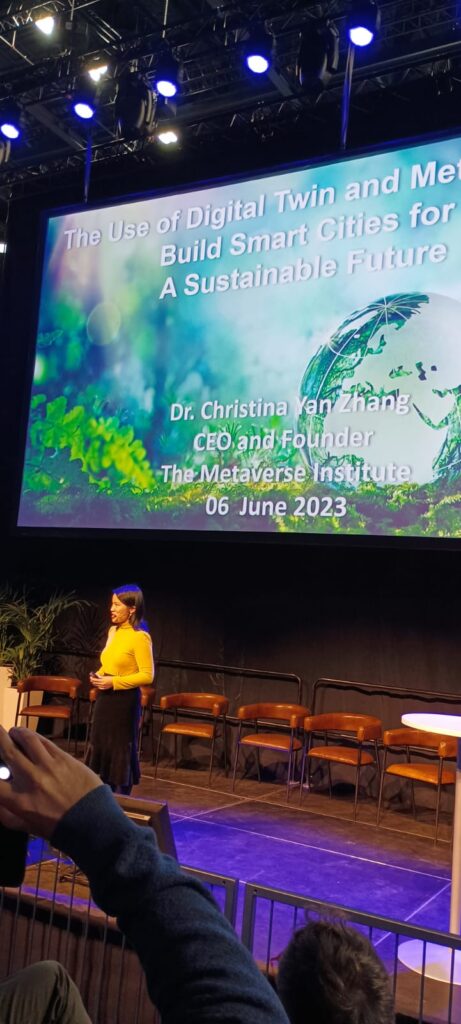
Keynote speakers included Christina Yan Zhang, CEO of the Metaverse Institute, whose speech focused on the use of digital twin and metaverse technology to build smart and sustainable cities. The event was opened by Kalervo Kummola, mayor of Tampere.
“Through intelligent solutions, our goal is to enhance the wellbeing of citizens, provide a positive urban experience, and create favourable conditions for people’s everyday lives”
The development of Tampere’s metaverse is a result of collaborations with industry-leading companies. Through partnerships with VTT Technical Research centre of Finland and global technology giants such as Microsoft and Nokia, it aims to harness the potential of the metaverse in areas such as urban planning and citizen wellbeing.
“We invite companies to test their solutions in Tampere. The city acts as a testing platform and an open partner for businesses and research,” said Teppo Rantanen, the executive director of growth, innovation and competitiveness at the City of Tampere.
“Through intelligent solutions, our goal is to enhance the wellbeing of citizens, provide a positive urban experience, and create favourable conditions for people’s everyday lives.”
The city said it is committed to sustainability, responsible data utilisation, and ethical metaverse practices. With a focus on human-centricity and stated that technological advancements must serve as catalysts for positive urban experiences.
Tampere’s metaverse-vision is driven by the belief that collaboration between cities, businesses, and ecosystem partners is essential to unlock the full potential of the technology. By embracing this collaborative approach, Tampere hopes to inspire and invite other cities and organisations to join forces in shaping the future of urban, human-centric living.
Tampere Smart City Expo & Conference will take place again next year 11-12 June.