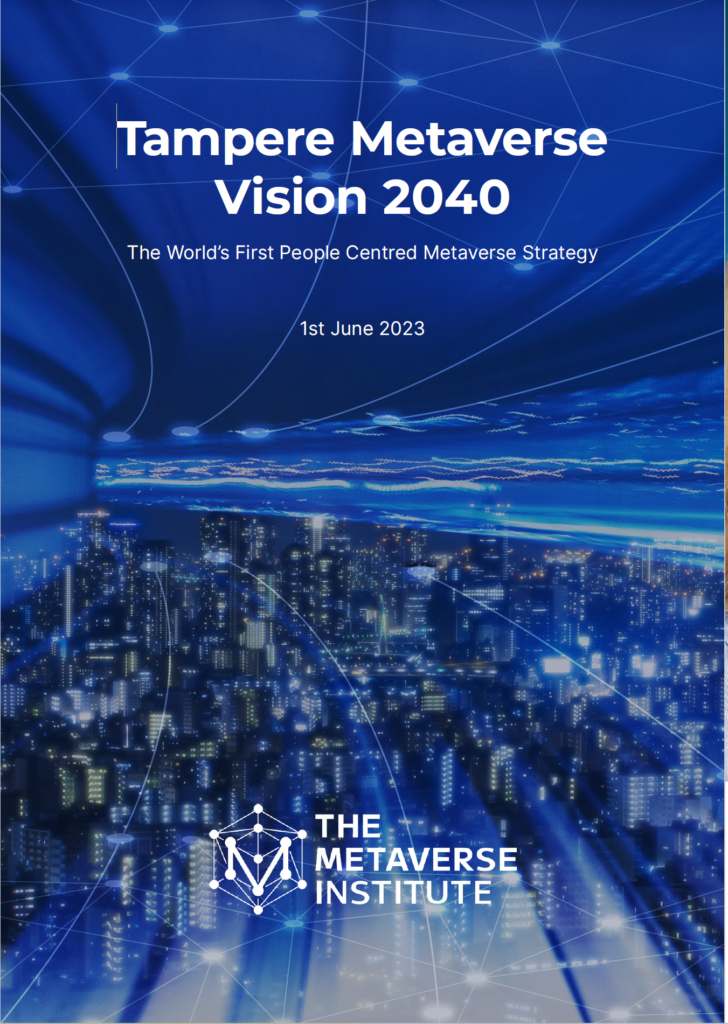
The Tampere Metaverse Vision 2040 conceptualizes and presents the possibilities of the metaverse for future urban development, including aspects such as citizens’ well-being and climate actions. This publication is the result of the Data-Driven City for Citizens -development program by the City of Tampere, in partnership with London-based The Metaverse Institute.
Tampere Metaverse Vision 2040 primarily serves as a tool for urban development and Tampere’s workforce. It offers a glimpse into what the city could become in the 2040s.
The Tampere Metaverse Vision 2040 investigates how a metaverse environment composed of various intelligent technologies can be utilized as support for the happiness of citizens, urban governance, sustainability, equality, well-being, and healthcare. This visionary outlook of the future has been realized in collaboration with The Metaverse Institute.
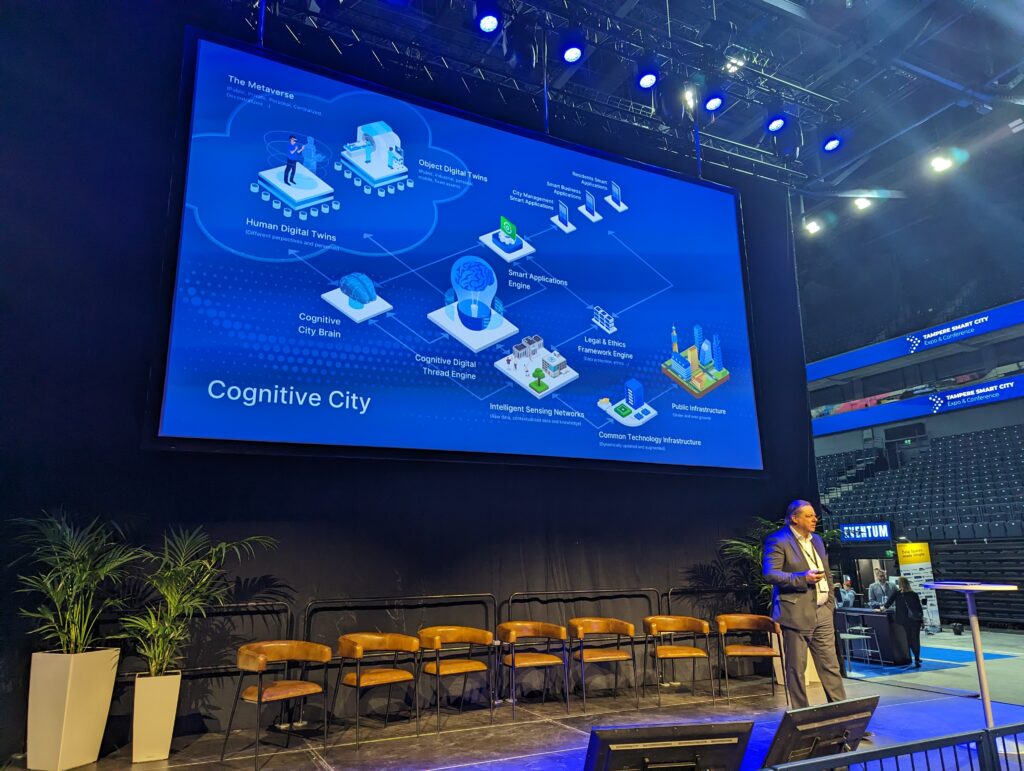
The concept of metaverse holds current relevance for the city of Tampere. It was a central theme at the Tampere Smart City Expo & Conference held at the Nokia Arena in June 2023.
–Metaverse intertwines numerous themes and concepts that are already being pursued and those on the horizon, such as data utilization, digital twins, virtual realities, and artificial intelligence. Hence, the concept is now prominently emerging. For us, the metaverse is not merely a virtual realm, but a continually evolving digital environment seamlessly integrated into the real city, explains Tiia Joki, Development Manager at the City of Tampere, offering insight into the background of Metaverse Vision 2040.
Intelligent Solutions in Support of Human-Centered Approaches
Tampere Metaverse Vision 2040 portrays various future scenarios that provide solutions for both local and global challenges. The vision depicts a future Tampere where artificial intelligence enhances citizens’ well-being by enabling more efficient solutions and personalized services, particularly in education, well-being, and urban environments. The vision envisions that in two decades, metaverse could facilitate tailored housing solutions for individuals and improve citizens’ sense of safety and security.
In this future urban vision, citizens have increased opportunities for influencing decision-making processes. Metaverse has the potential to usher in more participatory urban governance, leading to services that more effectively cater to people’s needs.
The future vision emphasizes the impact of metaverse on the economy and equality. The vision outlines a scenario for the 2040s where companies, tourists, and immigrants can explore the city, learn the language, and engage with business stakeholders even before physically arriving in the city.
According to Tampere Metaverse Vision 2040, as technology advances, the metaverse could provide a solution for achieving a carbon-neutral city. By utilizing digital twins that model the real world, various alternative perspectives can be simulated. This enables authorities, stakeholders, and city residents to test the impact of their everyday choices on people, economy, and the environment.
Metaverse as a Tool for Future Urban Planning
Tampere Metaverse Vision 2040 primarily serves as a tool for urban development and Tampere’s workforce. It offers a glimpse into what the city could become in the 2040s.
–As a city organization, we need to be at the forefront of development. The vision provides guidelines for what could be possible in future Tampere. Our collaboration partners in the business sector, both existing and potential, also benefit from these metaverse guidelines. This is the direction we are headed towards through joint efforts and learning, describes Teppo Rantanen, Executive Director of Growth, Innovation and Competitiveness at the City of Tampere.
–With the exponential development of AI, metaverse, digital twins, quantum technologies and other cutting edge technologies, it is increasingly important to put the wellbeing of citizens, and the prosperity of the human society at the centre of any kind of digital future we are developing. We are delighted to work with the City of Tampere to develop such a forward-thinking vision. Together we are developing pragmatic solutions, looking closely at how these technologies can support the happiness, sustainability, equality, health and wellbeing of our people. Consideration of effective governance is also crucial, in order to maximise the positive impact of those technologies while minimising their risks. We hope this report can be a starting point for governments worldwide who are considering metaverse technologies, to empower citizens to play a more active role in future city development and help achieve the UN Sustainable Development Goals, says Dr. Christina Yan Zhang, CEO of The Metaverse Institute.
London-based The Metaverse Institute is pioneering international research in the field of metaverse and represents the latest example of the city of Tampere’s global collaboration with companies, research, and development institutions.
Hosted at the Hilton London Bankside on 28 June, the widely-read publication will kick off the two-day event and host attendees from the global tech community.
Speakers, thought leaders, panellists, companies, and organisations will attend the Summit to explore the industrial metaverse: a key component of Industry 4.0 that analysts predict will reach nearly $48 billion USD in value, according to research from McKinsey.
Critical points of discussion will include industrial use cases, digital twins, immersive hardware and software, and theoretical and ethical considerations for developing the industrial metaverse. Many of the technologies involved will lead to greater workplace safety, increased training efficacy, and facilitated collaborative efforts.
Across the virtual, augmented, mixed, and extended reality (VR/AR/MR/XR) sectors, the Enterprise Metaverse Summit will feature some of the world’s top frontrunners for the industrial metaverse and related technologies.
Additional technologies will include 5G, the blockchain, cryptocurrencies, artificial intelligence (AI), and more.
Overall, the event will host more than 100 global speakers, over 60 main and breakaway sessions, and an attendee list surpassing 300 people.
Sponsors for the stellar event also include Meta Platforms, PricewaterhouseCoopers (PwC), VRARA London, Siemens, HTC VIVE, Deloitte, Aveva, and BGC X.
Enterprise Metaverse Summit Speaker Lineup
The event will host a stellar roster of speakers, organisations, academics, and companies. Some of the top speakers attending the Summit are:
Eva Maydell, Member of the European Parliament
Sudeep Shetty, Global Chief Information and Transformation Officer, BRITVIC PLC
Dr Lisa Cameron MP, Chair, Crypto and Digital Assets, All Party Parliamentary Group, UK Parliament
Holly Landry, Chief data officer, Maersk
Lisa Smith, Partner, Inclusion Lead, Unlimited Reality, Deloitte
Gerhard Kress, Vice-President, Xcelerator Portfolio and Digital Business, Siemens
Christine Trodella, Vice-President, Meta Reality Labs, Meta
Nathan Naidoo, Director of Public Policy, Meta
Emmanuelle Rivet, Vice-Chair, US TMT & global technology leader, PwC
John Dabill, John Dabill, Director, EMEA, HTC VIVE
Jay Koganti, Vice-President, Supply Chain COE, The Estée Lauder Companies
Joan O’Hara, Senior Vice-President, Public Policy, XR Association
Sebastian Pedro Bea, President, Coinbase Asset Management
Dr Muhsinah Morris, Metaversity Director and Assistant Professor, Morehouse College and Chief Executive, Metaverse United
Dr Christina Yan Zhang, Chief Executive, The Metaverse Institute
The Finnish city used Tampere Smart City Expo to showcase how it aims to combine the digital and physical worlds to enhance the lives of city dwellers.
The Finnish city of Tampere is inviting companies to test their smart city solutions as it takes its first steps to becoming “a human-centric metaverse city”.
It used the recent Tampere Smart City Expo & Conference to showcase how it aims to combine the digital and physical worlds and create a vibrant digital environment that enhances the lives of city dwellers.
The metaverse and digital twins
The international Tampere Smart City Expo & Conference convened experts from around the world to share ideas in areas such as Web3 technology, sustainability, artificial intelligence and mobility.
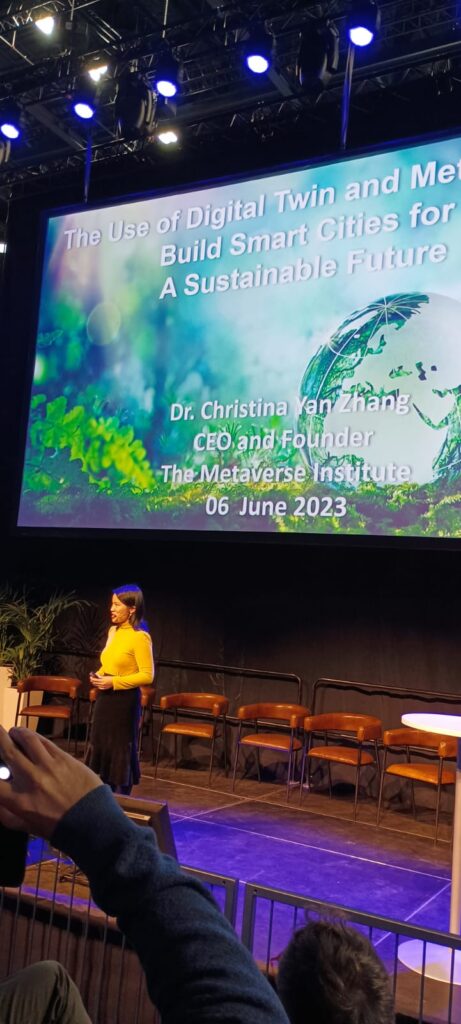
Keynote speakers included Christina Yan Zhang, CEO of the Metaverse Institute, whose speech focused on the use of digital twin and metaverse technology to build smart and sustainable cities. The event was opened by Kalervo Kummola, mayor of Tampere.
“Through intelligent solutions, our goal is to enhance the wellbeing of citizens, provide a positive urban experience, and create favourable conditions for people’s everyday lives”
The development of Tampere’s metaverse is a result of collaborations with industry-leading companies. Through partnerships with VTT Technical Research centre of Finland and global technology giants such as Microsoft and Nokia, it aims to harness the potential of the metaverse in areas such as urban planning and citizen wellbeing.
“We invite companies to test their solutions in Tampere. The city acts as a testing platform and an open partner for businesses and research,” said Teppo Rantanen, the executive director of growth, innovation and competitiveness at the City of Tampere.
“Through intelligent solutions, our goal is to enhance the wellbeing of citizens, provide a positive urban experience, and create favourable conditions for people’s everyday lives.”
The city said it is committed to sustainability, responsible data utilisation, and ethical metaverse practices. With a focus on human-centricity and stated that technological advancements must serve as catalysts for positive urban experiences.
Tampere’s metaverse-vision is driven by the belief that collaboration between cities, businesses, and ecosystem partners is essential to unlock the full potential of the technology. By embracing this collaborative approach, Tampere hopes to inspire and invite other cities and organisations to join forces in shaping the future of urban, human-centric living.
Tampere Smart City Expo & Conference will take place again next year 11-12 June.
Speakers from Airbus, bp, Barclays, Netflix and more will be discussing new internet of things developments
IoT Tech Expo Europe will provide a cross-industry view of the latest internet of things (IoT) innovations when it takes place on 26-27 September in Amsterdam, the Netherlands.
Speakers for the event will include Garima Singh, chief architect at Sandvik, who will be delivering a keynote presentation on digital twin technology and its evolution and will be a part of a panel on digital twins.
Nicolás Torralba, head of IoT, platforms and digital solutions at Airbus, will be presenting on implementing IoT inside aircrafts; Bhavdeep Magar, principal service engineer of IoT projects at bp, will discuss IoT innovation for the industrial and marine industries; and Mufeed Patel, assistant vice president and data scientist at Barclays, will explore how machine learning technology can be used as part of the ultimate IoT infrastructure.
Several Microsoft partners will also host presentations at the event, including Stephane Quetglas, embedded solutions marketing director at Thales, who will deliver a keynote about simplifying IoT deployments.
Other speakers include TJ Mead, technology continuity programme manager at Netflix; Dr. Christina Yan Zhang, CEO of The Metaverse Institute; Robert Bakelaar, IoT solution architect at Royal Vopak; and Unilever’s head of global customer experience and data analytics Karinna Calin, who will discuss industrial digitisation. Sessions will cover a range of subjects such as using IoT to make supply chains more sustainable, building automation and examining the current IoT security landscape.
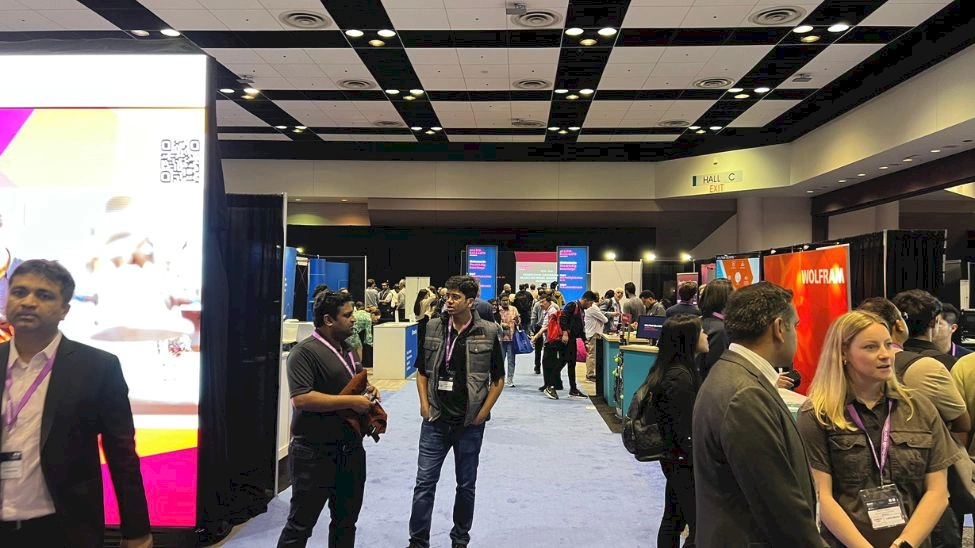
IoT Tech Expo Europe will also have over 200 exhibitors showcasing the latest solutions and products in the IoT sector, as well as a VIP networking party for the 6,000 attendees expected at the event that will be hosted at Strandzuid Boathouse.
“IoT Tech Expo Europe presents a unique platform for senior-level representatives to explore the latest applications of IoT technology, engage with industry leaders, and discover cutting-edge solutions,” said Olivia Reid, head of operations at TechEx.
Attendees with Gold and Ultimate passes will have access to event’s application, powered by artificial intelligence, to provide personalised recommendations of industry sessions and potential connections they may want to meet.
Technology Record provides news and thought leadership on how solutions from the Microsoft partner ecosystem are being used to address challenges faced by enterprise-sized organisations in all industries, with a particular focus on: financial services; industrials and manufacturing; media and communication; public sector; and retail and consumer goods. Technology Record also reports on industry trends, product launches, customer deployments and industry events.
The quarterly Technology Record magazine is available in print and digital formats and you can also sign up to a monthly newsletter that provides a digest of some of our best recent content.
For those working in enterprise organisations, Technology Record provides a wealth of information about how solutions from Microsoft partners can address your most pressing challenges. For Microsoft partners, Technology Record provides a valuable channel to communicate news about your solutions, share case studies and deliver insight to our readership.
Technology Record is produced by UK-based publisher Tudor Rose, with the support and guidance of Microsoft.
Irina Bokova, from the International Science Council and a former director general of UNESCO, speaks to Arab News in Riyadh. (Abdulrahman bin Shalhoub)
Younger generations can drive collaboration, former UNESCO chief says
New technology provides medium for greater youth engagement, Metaverse Institute CEO says
RIYADH: Engaging young people in the business of finding solutions to global challenges like climate change is one of the key themes of the inaugural Future of Education, Science and Culture International Organizations Forum, which opened in Riyadh on Wednesday.
The topic of youth engagement is at the forefront of several panels at the two-day conference, including sessions on “The Future is Digital — Building Capacity in Organizations,” “Youth and Inclusion in the Education, Science, Technology and Culture Sectors” and “Greening the Agenda — Future of Education.”
“The global and regional organizations that have staged this forum have the same mandate across several continents,” Irina Bokova, from the International Science Council and a former director general of UNESCO, told Arab News.
“We have different challenges in achieving the same sustainable development goal, which is universal, not just for the Global South, but for everybody. While listening to the debate this morning, I am even more convinced that nowadays, we should go beyond our discussions about cooperation and collaboration. We need to find synergies.”
Bokova said that young people around the world were key to building such synergies and must be educated in the art of collaboration so as to bring people closer together, especially in scientific fields.
“I sincerely hope that concrete partnerships or ideas will emerge from this conference,” she said.
“Placing an emphasis on science and research is something that I want to happen, particularly in the Arab world because it can provide great access to education for young people as well as others,” Bokova added.
“Technology is also crucial and we know that it is very unevenly distributed across the Arab region. I hope from this conference we can find ways to bridge the gaps.”
Dr. Christina Yan Zhang, CEO and founder of The Metaverse Institute in the UK, highlighted how new technology could help to boost youth engagement.
“I think all the latest technology to do with Web3 and the Metaverse can really provide an unprecedented level of opportunity for the younger generation to have greater and better opportunities to become involved in solving various key issues in society,” she told Arab News.
While policy decision-making had traditionally taken a top-down approach, with the help of new technology there was now the opportunity for other generations and segments of society to get involved in major decisions that affect our planet,” Yan said.
She cited the development of Smart Cities as an example.
“Our young people can actually see how their future city will look like in five and 10 years’ time by navigating the metaverse,” she said.
“They can also see if they will be able to reduce their own carbon footprint by 20 percent each day and how it will be visualized in 3D in their city to create a really sustainable future.”
According to the UN Development Program, 75 percent of the more than 120 countries that have signed up to its Climate Promise scheme now prioritize youth in developing their nationally determined contributions — the plans they have to reduce emissions and adapt to the impact of climate change.
Arab News, Saudi Arabia’s first English language daily newspaper was founded in 1975 and has become the Middle East’s leading English daily. It is one of 30+ brands by Saudi Research and Media Group (SRMG). From 2016 with the joining of Faisal J. Abbas as the Editor-in-Chief, Arab News has gone through major digital transformation and a complete rebranding to become popular not only among Saudi Arabia’s society and the Arab World, but also reaching policy makers and business leaders in the United States and the United Kingdom making it one of the primary sources in the Arab World to be quoted by US and UK media outlets and policy makers. Because of its wide readership profile with over 10 million website monthly readers, it is a much sought-after medium for advertising and brand building. It is a pioneer and has developed unique content, shows and programs becoming the first, what was once a traditional newspaper, to produce video talk shows and radio shows, including: Frankly Speaking video show hosted by Katie Jensen, digs deep into the insights of some of the most important policy makers and business leaders in the Middle East and Worldwide. The Mayman Show is a personable podcast by Arab News hosted by reporter Hussam Al-Mayman. The show revolves around personal and relatable conversations between the host and his celebrity guests that include actors, comedians, models, athletes and more.
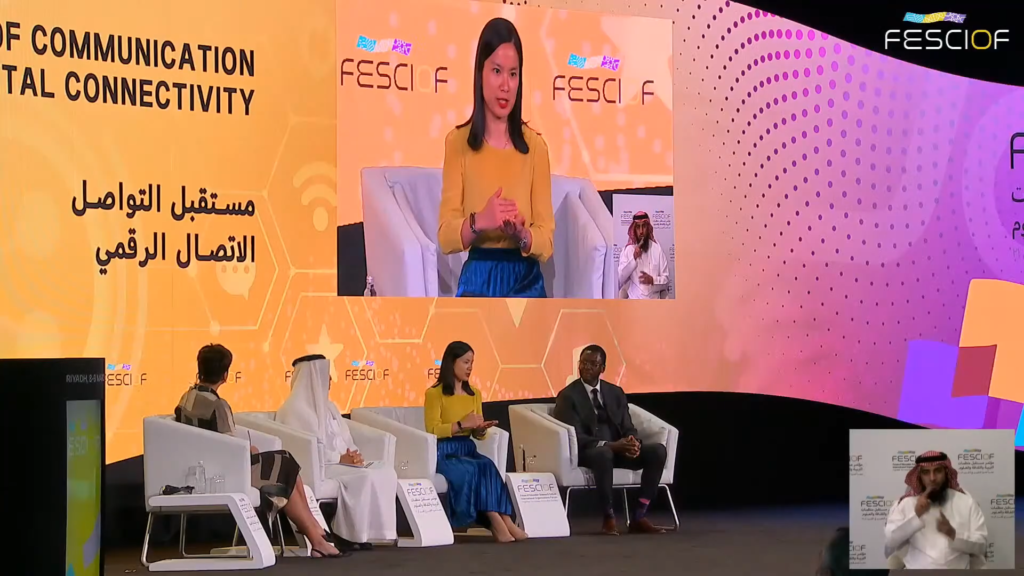
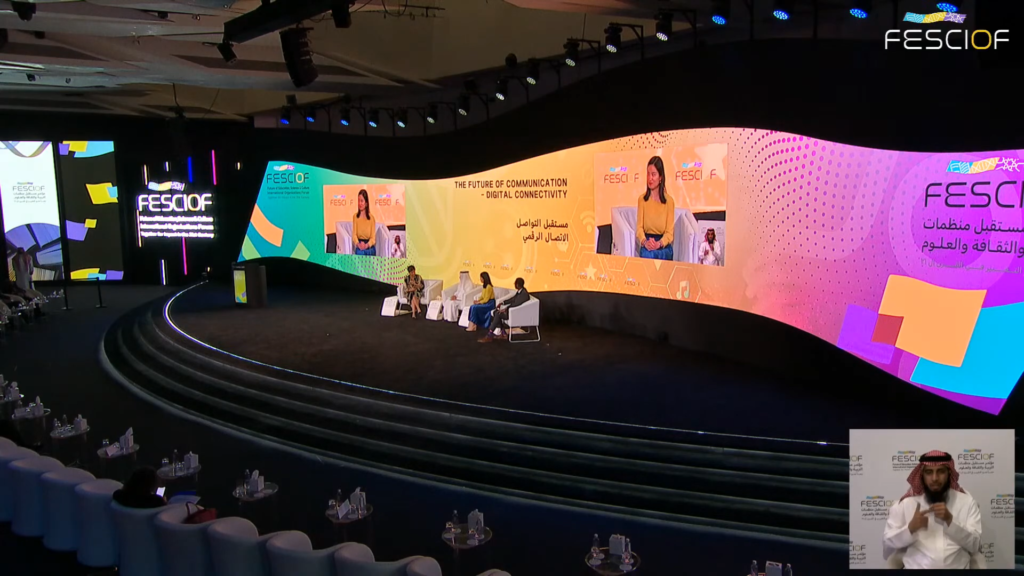
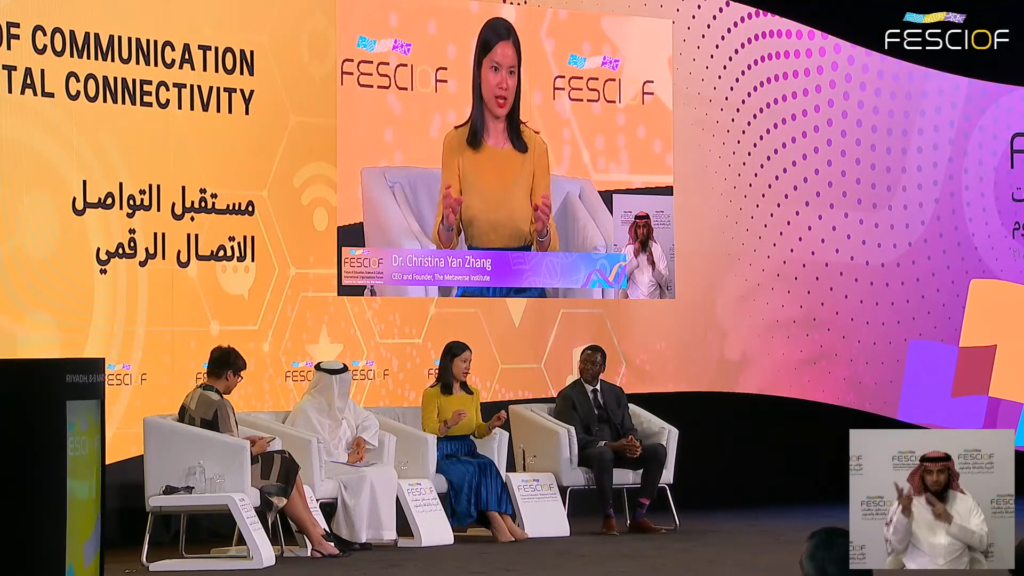
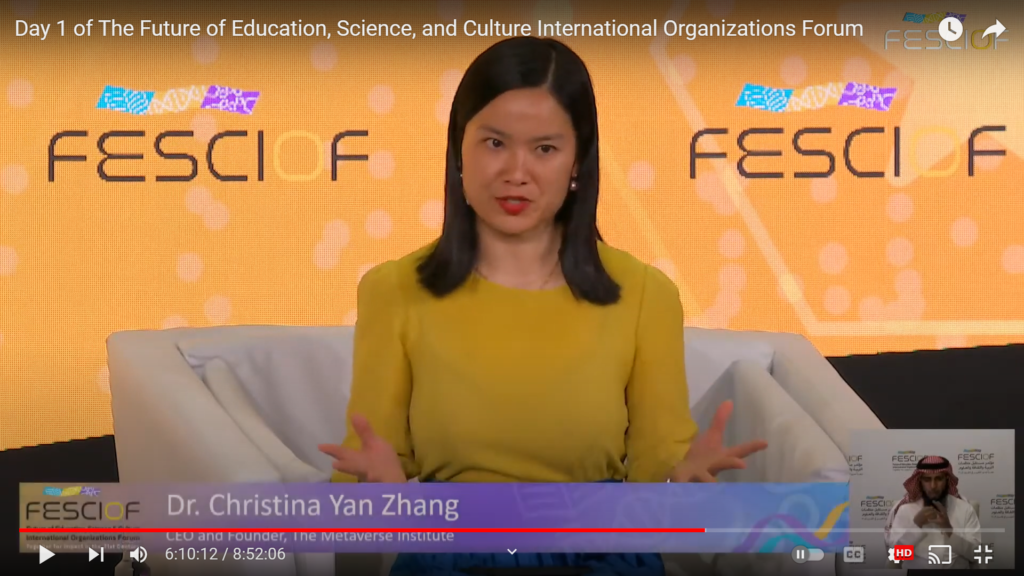
Dr. Christina Yan Zhang, CEO and founder of The Metaverse Institute in the UK, speaks during a session at FESCIOF. (AN photo)
Expert praises Kingdom’s use of metaverse in presenting smart cities
“When you have this strong digital platform, everyone will participate,” Culture Ministry official says
RIYADH: Saudi Arabia has been praised for its use of digital technology to present smart city developments to prospective investors.
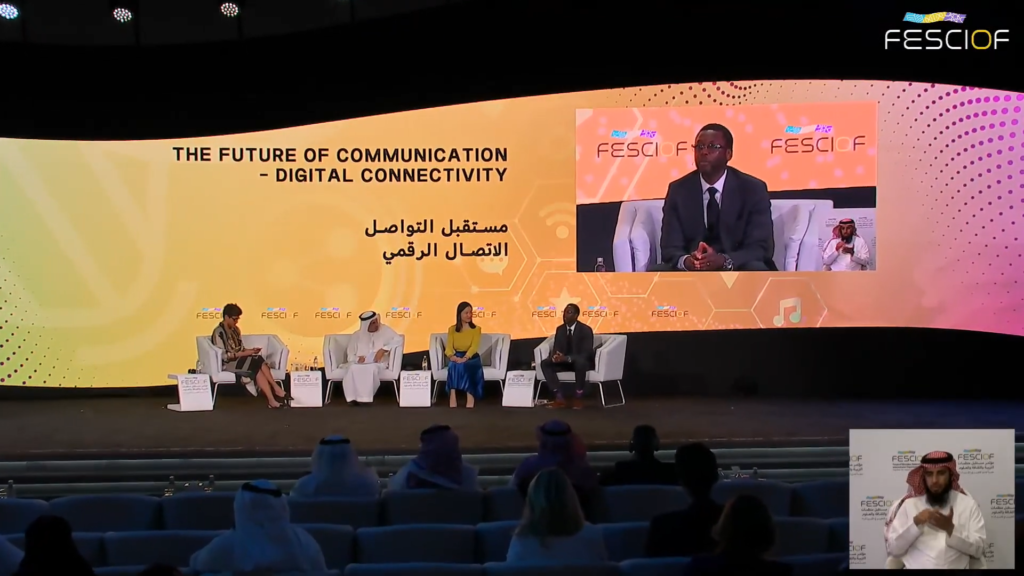
Speaking on Wednesday at the Future of Education, Science and Culture International Organizations Forum (FESCIOF), CEO and founder of The Metaverse Institute in the UK, Dr. Christina Yan Zhang said the Kingdom was embracing the technology.
“In Saudi Arabia, we have many amazing smart city projects, where we use digital today in the metaverse environments to simulate the whole city,” she said.
“Even before the city is constructed, all citizens who are planning to move to a city, either here in Saudi Arabia or from other parts of the world, they can see how the city is going to look like, either as public transport or housing or health care or as fiction.”
She said that the metaverse brought together a range of new technologies to create an intuitive, immersive and interactive interface that was very user-friendly.
“We are seeing the hallmark of this icon system through things like artificial intelligence, 5G connections, cybersecurity and different user interfaces like VR, AR, XR,” Zhang said.
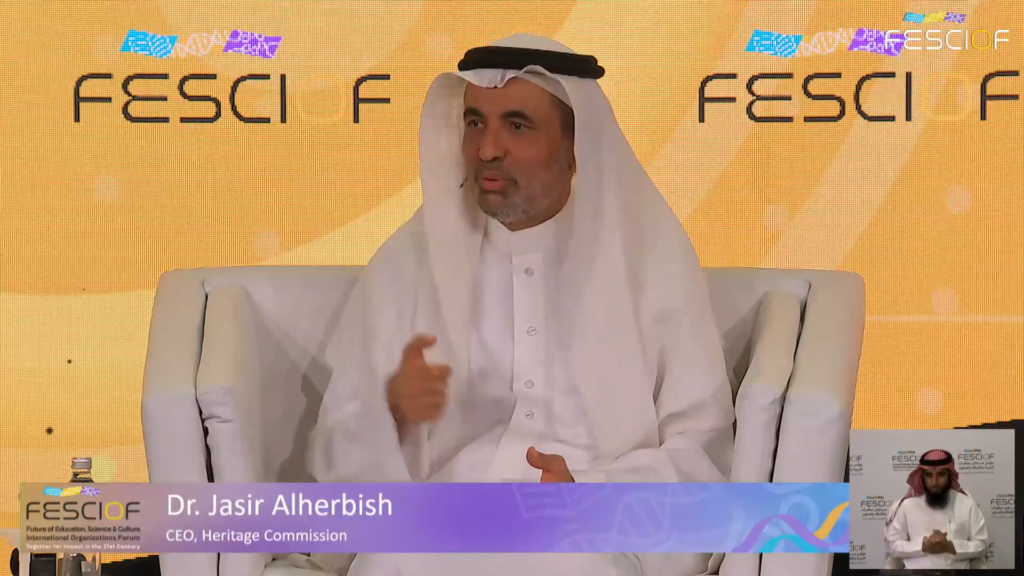
Jasir Alherbish, CEO of the Heritage Commission at the Saudi Ministry of Culture, said: “When you have this strong digital platform, everyone will participate. These technological advancements help us manage our sciences.”
Lawrence Eta, vice president of digital analytics at the Royal Commission of AlUla, said the point of the conference was to discuss the future of education and sciences, and the need for digital literacy.
He said in AlUla the RCU was working closely with telecommunications providers to develop the infrastructure needed to be able to present the region and its culture to the outside world.
“AlUla is the size of Belgium, so the first thing we have to have is internet penetration.”
He added that digital connectivity allowed telecommunications to bring value to the world.
“For example, let us take a look at autonomous pods. It is less about the autonomous cars and more about the digital economy that’s being created, because now we have local people in AlUla that are actually powering those ports.”
Arab News, Saudi Arabia’s first English language daily newspaper was founded in 1975 and has become the Middle East’s leading English daily. It is one of 30+ brands by Saudi Research and Media Group (SRMG). From 2016 with the joining of Faisal J. Abbas as the Editor-in-Chief, Arab News has gone through major digital transformation and a complete rebranding to become popular not only among Saudi Arabia’s society and the Arab World, but also reaching policy makers and business leaders in the United States and the United Kingdom making it one of the primary sources in the Arab World to be quoted by US and UK media outlets and policy makers. Because of its wide readership profile with over 10 million website monthly readers, it is a much sought-after medium for advertising and brand building. It is a pioneer and has developed unique content, shows and programs becoming the first, what was once a traditional newspaper, to produce video talk shows and radio shows, including: Frankly Speaking video show hosted by Katie Jensen, digs deep into the insights of some of the most important policy makers and business leaders in the Middle East and Worldwide. The Mayman Show is a personable podcast by Arab News hosted by reporter Hussam Al-Mayman. The show revolves around personal and relatable conversations between the host and his celebrity guests that include actors, comedians, models, athletes and more.
Blackrock’s new ETF will concentrate on companies that provide products and services that are expected to contribute to the metaverse in areas including virtual platforms, social media, gaming, 3D software, digital assets, and virtual and augmented reality. Photo: Leonardo Munoz/VIEWpress (VIEW press via Getty Images)
Blackrock (BLK) has launched an exchange-traded fund (ETF) that will concentrate on tech companies linked to the metaverse, despite the sector’s struggle to achieve mass adoption across a wide user base.
The iShares Future Metaverse Tech and Communications ETF (IVRS) will invest in firms that could directly or indirectly impact the technology associated with the metaverse. These sectors include virtual platforms, social media, gaming, 3D software, digital assets, and virtual and augmented reality.
The concept of the metaverse, first coined in sci-fi writer Neal Stephenson’s 1992 book Snow Crash, has been envisioned by proponents as an immersive and interconnected virtual environment that could potentially offer new social and economic opportunities, entertainment experiences, and educational possibilities.
The new ETF’s website said: “The iShares Future Metaverse Tech and Communications ETF seeks to track the investment results of an index composed of US and non-US companies that provide products and services that are expected to contribute to the metaverse in areas including virtual platforms, social media, gaming, 3D software, digital assets, and virtual and augmented reality.”
Some of the companies included in the index are Meta Platforms (META), Apple (AAPL), Nvidia (NVDA), Netease (NTES) and Roblox (RBLX).
At this stage the Blackrock ETF will primarily focus on equities, has a net asset value of around $5m and trades on the New York Stock Exchange (^AMZI).
The fund’s prospectus said that the ETF seeks to track the investment results of the Morningstar Global Metaverse & Virtual Interaction Select Index which measures the performance of equity securities issued by companies that “enable the metaverse”.
The metaverse is usually accessed through a virtual reality headset. Meta has invested $36bn in developing the associated technology.
However, it has incurred significant losses, according to analysis by Business Insider, posting a $3.7bn operating loss on revenue of $285m in its most recent quarter.
Developers have been trying to take virtual reality to the masses since the mid 1990s, when metaverse platform Active Worlds offered users the opportunity to explore 3D environments built by others or create and “own” custom universes but it didn’t gel with the public.
Now that the graphics of these virtual worlds has improved, users still aren’t flocking in. So why have Blackrock decided to launch their metaverse-focused ETF?
BlackRock Technology Opportunities Fund manager Reid Menge thinks the metaverse has potential. In a blog post in February he said: “The metaverse at this juncture, it is much like the internet of the early 1990s or the smartphone of the early 2000s. We expect it is going to be big, and very likely change people’s daily lives.”
Dr Christina Yan Zhang, CEO of The Metaverse Institute, told Yahoo Finance UK: “Blackrock is one of world’s largest asset management companies. Their iShare ETF products are mainly focusing on long term investments. According to a recent survey from consulting firm KPMG, over 90% of investors still believe the metaverse is the next phase of the internet. For Blackrock, it is an important sector not to be missed for long term investment gain.
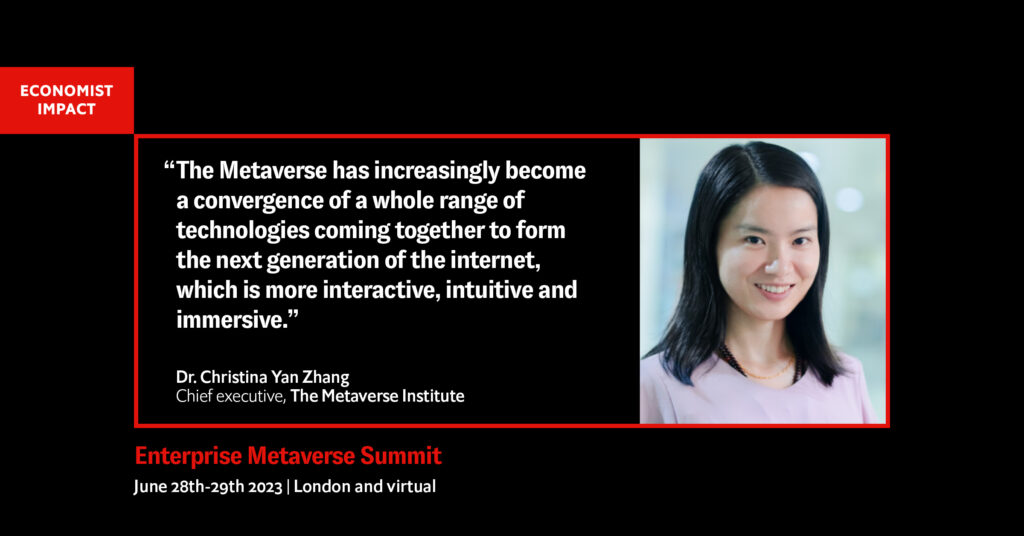
“The Metaverse has increasingly become a convergence of a whole range of cutting edge technology from quantum computing and AI, 5G, 6G to various user interface such as AR, XR, coming together to form the next generation of the internet which is more immersive, interactive and intuitive.”
However Zhang added: “Not many business have successfully figured out efficient business models to make huge money from the metaverse related economy now.
“Combined with high inflation rates and gloomy economic outlook, big tech are focusing on ChatGPT and other Generative AI products, which seems to be easier to develop business models and attract mass adoption quickly.
“A typical example is Microsoft (MSFT) who in February disbanded its Industrial Metaverse Project after four months.
“Instead, they are investing hugely to ChatGPT and Generative AI.”
Zhang said that it is natural for any kind of new technology to go through the Hype Cycle. She highlighted that AI has gone through the same cycle before, experiencing two winters so far, one during the 1970s-1980s, caused by a dwindling of funding, interest and research, and during the Mid-1990s, caused by overly complicated technology and a drop in corporate interest.
Zhang said suggested that the Metaverse is similar as “the first wave to attempt mass adoption took place in 2003, led by game engines such as Second Life, hype was generated then, but it cooled down”.
Zhang said Blackrock “will always want to attract more Chinese investors” as the metaverse as a key industry for the nation’s future development.
She said: “China’s Ministry of Industry and Information Technology (MIIT) along with four other government departments, provides the most comprehensive set of policies yet for developing China’s metaverse, with key tasks and development goals for the period up until 2026.”
There are other metaverse focused ETFs available, such as the Fidelity Metaverse ETF (FMET), which has increased in value since late December 2022.
Global leaders in research, sport, and AI gathered in London this week (Monday the 19th of December) to discuss ‘Sport and the Metaverse’, as part of a new Loughborough University and MIT Sloan School of Management collaboration.
This thought leadership event brought together some of the greatest minds in academia, sport and business to unpick what the Metaverse is, and how sport can harness the opportunities it presents.
Speakers described the Metaverse as a 3D virtual reality where individuals can interact with one another and digital objects to explore alternative worlds.
Dr Ben Shields, Senior Lecturer, MIT Sloan, spoke of a “seismic shift in the internet” due to the Metaverse. Ben also touched upon how the Metaverse will continue to evolve, citing human demand (needs and wants), technological readiness/feasibility, and societal impact. He also spoke of how these factors would allow businesses and sport institutions to benefit through new revenue streams.
Paul McDonagh-Smith, Senior Lecturer, MIT Sloan, led a morning session detailing ‘where we’ve been, where we’re headed’ in relation to the Metaverse. Paul covered converging trends in virtual worlds including how these spaces can offer new journeys, pose new questions, and new possibilities, as audiences explore, experiment, and evolve virtually.
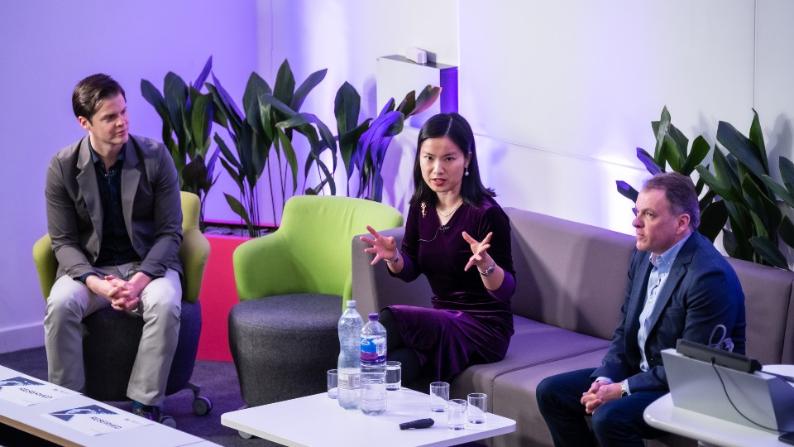
This session was followed by a panel discussion with Loughborough alumna Dr Christina Yan Zhang (CEO of The Metaverse Institute). Dr Zhang spoke of inclusion, responsibility, sustainability, and energy challenges.
Dr Christina Yan Zhang (centre) in conversation during a panel session.
Another panel discussion followed as Senior Lecturers Bob Pozen and Dr Phil Budden of MIT Sloan were joined by industry leaders Paul Taylor (Director, Morgan Stanley International) and Professor Tim Watson (Programme Director, Alan Turing Institute). The panel, titled ‘promise and peril of the Metaverse’, detailed how the Metaverse can be monetised but also warned of security risks. The speakers spoke about the possibility of criminal infiltration and how users may become complacent to danger.
The speakers also recognised the tremendous opportunity for experimentation and collaboration.
The afternoon session led with a discussion on ‘what can the Metaverse REALLY do for sport’. Christina Chase (Managing Director, MIT Sports Lab) was joined by Peter Keen (Director of Sport Advancement, Loughborough University), Professor Nick Jennings (Vice-Chancellor and President of Loughborough University), Ed Smith (Former England cricketer and now Co-Founder & Director, Institute of Sports Humanities), and Ally McDonald-Alonso (Head Of Staff, Loughborough University).
Opportunities were discussed on how the Metaverse could engage sports fans in new ways, including the idea of facing an over from the late, great, Australia spin bowler, Shane Warne.
As new technologies arise, commercial opportunities were also front of mind and how, if it all, sport could benefit from additional revenue opportunities. The event ended with further audience interaction, as Dr Shields and Professor Jennings closed proceedings with key takeaway findings.
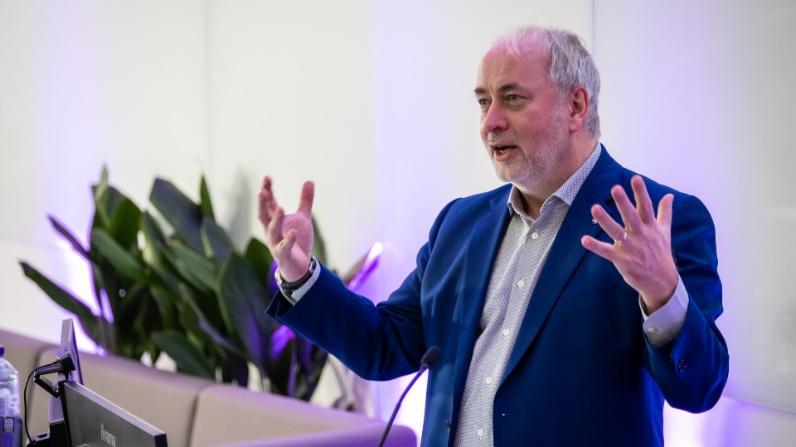
Professor Nick Jennings addresses delegates.
Following the event, Professor Nick Jennings, Vice-Chancellor and President of Loughborough University, said: “Today proved to be an exciting event as we discussed sport and the Metaverse extensively. Personally, this brings together two of things I really care about in life – sport and digital technologies.
“It is also an important step in our long-term strategy as we engage with our international colleagues from MIT to form a solid foundation to co-create, tackle, and define areas of future opportunity.
“The thought leadership aspect that drove discussions today is also important to recognise. We have collaborated from various standpoints, as some people in the room have technology backgrounds, others a user experience point of view, and others from a sport participation perspective.
“Those perspectives from both sides of the Atlantic are really interesting as we come together with the real leaders in this area to see what themes are emerging and what the art of the possible is.”
Dr Ben Shields, Senior Lecturer, MIT Sloan, added: “We are, in many respects, at an inflection point on the internet and as a society on what the future will be. For our two institutions – MIT and Loughborough University – to come together and deliberate that question, the opportunities, and the challenges, is what today is about.
“What’s unique about our approach today is that we are exploring the future with the very specific case study of sport.
“As we know, sport has been an innovation driver for many technologies in the past – whether that be radio, television, mobile phones or social media – and it is quite likely that sport will be a leading innovation driver for the Metaverse moving forward.”
Notes for editors
Loughborough is one of the country’s leading universities, with an international reputation for research that matters, excellence in teaching, strong links with industry, and unrivalled achievement in sport and its underpinning academic disciplines.
It has been awarded five stars in the independent QS Stars university rating scheme, named the best university in the world for sports-related subjects in the 2022 QS World University Rankings – the sixth year running – and University of the Year for Sport by The Times and Sunday Times University Guide 2022.
Loughborough is ranked 7th in The UK Complete University Guide 2023, 10th in the Guardian University League Table 2023 and 11th in the Times and Sunday Times Good University Guide 2023.
Loughborough is consistently ranked in the top twenty of UK universities in the Times Higher Education’s ‘table of tables’, and in the Research Excellence Framework (REF) 2021 over 90% of its research was rated as ‘world-leading’ or ‘internationally-excellent’. In recognition of its contribution to the sector, Loughborough has been awarded seven Queen’s Anniversary Prizes
The Loughborough University London campus is based on the Queen Elizabeth Olympic Park and offers postgraduate and executive-level education, as well as research and enterprise opportunities. It is home to influential thought leaders, pioneering researchers and creative innovators who provide students with the highest quality of teaching and the very latest in modern thinking.