Category: Media Coverage

AutoExpert, Poland: XIII edition of the MotoIdea automotive conference – October 2023

An event related to the Polish automotive industry, global economy and new technologies is underway. A meeting of business people and all those interested in the topics of artificial intelligence, automation, geopolitics was organized in Wrocław’s Bielany district. autoEXPERT presents the main issues discussed during lectures and discussion panels.

What factors have the greatest impact on the Polish automotive landscape?

1. Regionalization.

Paweł Borys, President of the Polish Development Fund, pointed to economic destabilization as one of the elements adversely affecting the country’s development. The twisting of supply chains, which has already taken place during the pandemic, is now caused by armed conflicts around the world. And it closes the option of foreign trade for many countries, establishing international cooperation in many industries.

2. Technological revolution.

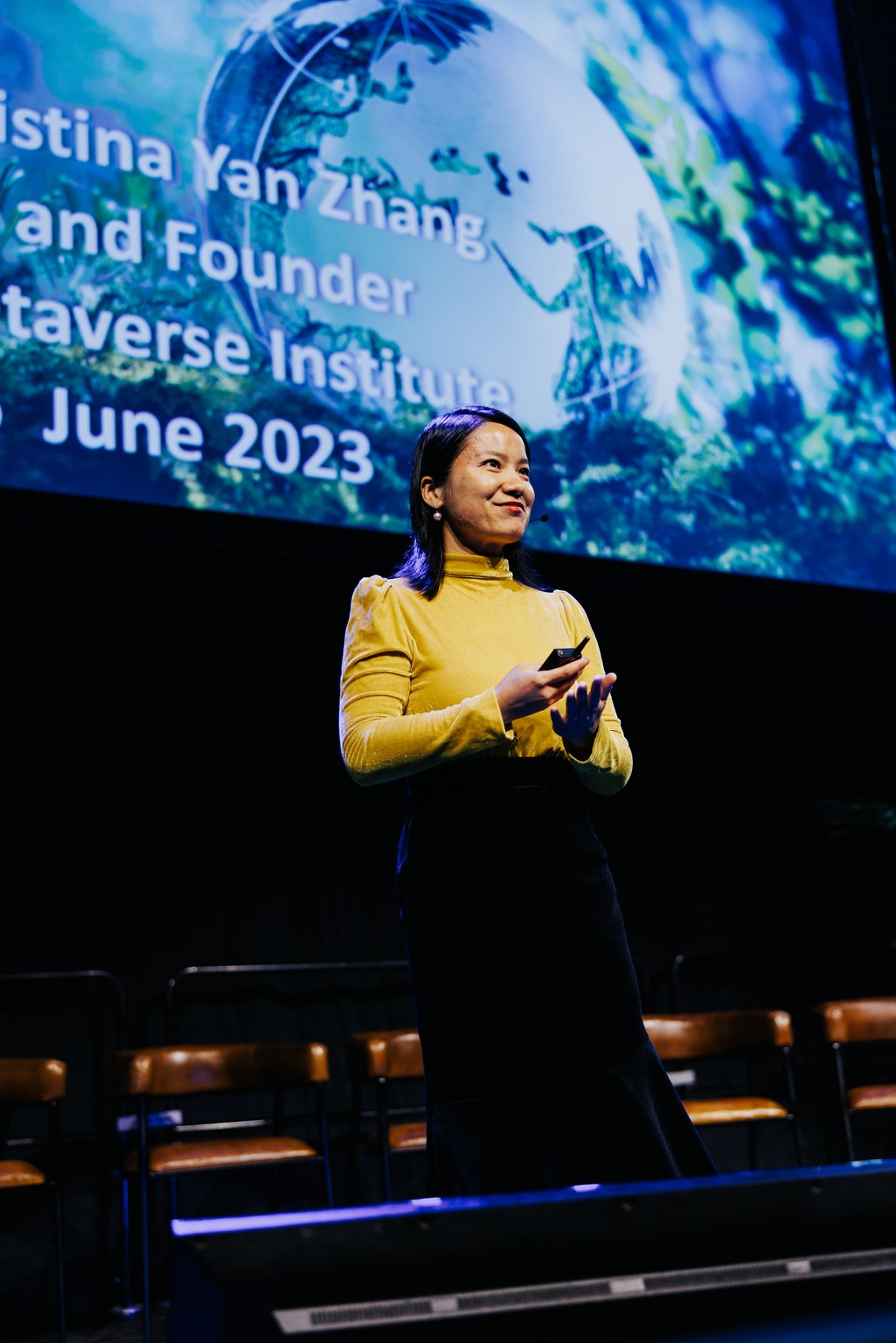
Keeping up with AI can be difficult,” Dr. Christina Yan Zhang, CEO of The Metaverse Institute, talked about in detail about this phenomenon. This technology is estimated to deliver a 40% increase in productivity in many industrial sectors over the next few years. This is because it has a very significant impact on building revenues, but it requires entrepreneurs to actively use its benefits, as well as to become aware of the risks it entails. The topic of cybersecurity is coming back like a boomerang. And investing in cloud computing is a very good business direction, argued the speakers.

3. Inflation.

New investments do not have a favorable economic environment – however, as noted by the organizer of the conference, Paweł Gos, President of the Management Board of Exact Systems, despite the weak currency, the Polish labor market is strengthening and developing. There are more and more small companies that are open to foreign contacts. This is where the potential of the domestic economy currently lies.

4. Energy transition.

In the media, we constantly hear about the need to obtain the so-called green energy. This is a very strong global trend. What does Poland have to offer in this regard? Access to the Baltic Sea and the development of photovoltaics are a response to the direction of energy transformation. There is definitely a need for faster action in this area.

5. Ageing population.

Demography undoubtedly influences the consumption model. An estimated 3 million workers will disappear from the market in the coming decades. And although 17 million people are currently working, many companies are struggling to find and hire specialists. For example, there is a shortage of experts in quality control, information acquisition or setting the path of change for small and large enterprises. In Poland, many investors choose automation instead of investing in human potential. Whether this is a good decision – time will tell…

Generation Z in the workshop

5. Generation Z in the workshop

This is the first generation to grow up in a fully digitalised society, where access to media and new technologies is unlimited. In terms of year, this social group ranks in the years 1995-2012, which means that we will soon be dealing with another generation change.

6. Geopolitical tensions.

The automotive industry is also affected by the issue of security threats, the consumption and acquisition of material goods recede into the background when there is a war just across the border. The risk is hedged by the export of goods. The Polish automotive sector is stubbornly striving for stabilization from before the pandemic, counting on a downward trend in inflation and state support in access to new technologies and funds for the development of the industry. Because the automotive industry is not only a business, it is also a passion of many people and one of the economic pillars – argued the organizers of the event.

More information about the agenda and speakers of the conference can be found on the organizer’s website.

Source: Editorial

Tags: , , , ,

MIT:Web3, Metaverse and Digital Twins: Convergence of Virtual Worlds

Going all in or taking a more conservative path to implementing emerging technologies – what is the best approach for companies? Experts weigh in

Liji Varghese

Source: The article was published on 23 Oct 2023 by MIT Sloan Management Review Middle East at https://www.mitsloanme.com/article/web3-metaverse-and-digital-twins-convergence-of-virtual-worlds/

[Source photo: Venkat Reddy Marri/MITSMR Middle East]

Today, it’s almost impossible to open your phone without scrolling across a mention of the ever-looming virtual worlds. The meteoric rise of Web3, metaverse, and digital twin technologies have led to some brilliant breakthroughs separately, but the real impact of the present and future will be how these technologies converge. These technologies are a new realm that grants infinite access to every experience imaginable, and it feels suddenly closer than we ever thought possible.

Like any innovation, some emerging technologies are characterized by hyperbole and hysteria. The dramatic rise of cryptocurrency and the whole hype bubble bursting in 2022 had many doubting the future of Web3 and declaring the death of the metaverse. However, tech evangelists believe that “initial mistakes” are no reason to throw the technologies out the window.

Changing the Game

“With Web2 (the current version of the web) and other technologies, there was no revelation of what it would be like. Sometimes, like in startup life, you make mistakes, but through trial and error, you get to what it will be as a business model. Something that we are all happy to engage with over a long time,” said Sebastien Borget, Co-Founder of The Sandbox, a unique virtual world built on Web3 concepts.

In games like The Sandbox, where the Web3 principles are embedded into their metaverse design, “true ownership” lies with the player, and anything earned as a gamer or creator can be utilized across not only one but many platforms. “Web3 and blockchain are truly changing the game,” adds Borget.

Anas Bhurtun, CEO and Co-Founder of Arts DAO, a decentralized autonomous organization representing the largest Web3 / NFT community in the Middle East, echoes a similar sentiment.

”Web3 represents a change where the customer effectively owns a stake in the product brand that is issuing something in some sense. That is a huge change in mindset. The real innovation is how the customer becomes passionate about their stake in this instrument.”

But is it too soon to assume that ownership matters to the customer? 

Borget believes the idea of ownership underlying it is not necessarily the first thing you sell to someone, but it’s a powerful one. “It’s not just about owning and potentially making money off it. That is part of it. Yes, you can make money as a customer of the underlying token issued by the brand, but there is an incredible tribalistic need in the human condition to be part of something more than just yourself,” adds Bhurtun.

For bigger enterprises, the buzzwords don’t matter. This year, in May, Emirates Group and Amazon Web Services announced a new collaboration to create an immersive extended reality platform tailored for the airline’s personnel in the UAE. This innovative iXR platform, primarily intended to benefit cabin crew, new recruits, and industry collaborators, incorporates 3D virtual hubs, virtual training modules, gamified settings, and simulated experiences.

“Many enterprises approach the technology through a more conservative model, which includes calculating the ROI, the risks involved, the impact on the brand, etc. It is more like sandbox testing so that we are sure whatever we provide to our passengers and internally as an organization is coming in at the right time and in the right form,” said Ismail Issa, Head of Web3 and Metaverse, Emirates Airline.

Experts emphasize that things will take time to build, and Web3, metaverse, and digital twins are bringing real value to businesses.

Twinning into the Metaverse

Giving an example of a real-life situation when a baby is born during a flight or an unexpected fire in the aircraft, Issa said, “When you have an enterprise metaverse or immersive extended platform, it helps with a more realistic experience, and enables the cabin crew to handle the situation better.” 

Achieving the mass simulation and replicating the real-life experience in the enterprise metaverse could seem aspirational, but the foundation has been laid with digital twin technology. (Read more on Unlocking the Potential of Digital Twins in Supply Chains)

“The metaverse has increasingly become a convergence of a whole new range of technologies. Perhaps among the metaverse environments, the most significant application is digital twin,” said Dr. Christina Yan Zhang, CEO and Founder of UK-based The Metaverse Institute. 

“There are many different layers of digital twin that can be utilized on a city level to support people-centered city developments and push sustainability goals,” she added.

The concept of digital twins is not new. It was born at NASA in the 1960s as a “living model” of the Apollo mission. Fast forward to 2022, Singapore became the first nation in the world to clone the entire island into the virtual world. 

The European Commission’s flagship initiative, The Destination Earth(DestinE), aims to develop a highly accurate digital model of the Earth with an initial focus on the effects of climate change and extreme weather events, their socio-economic impact, and possible adaptation and mitigation strategies.

“Digital twin is going to be applicable everywhere you can think of –manufacturing, healthcare, retail, financial systems,” said Maher Al Kaabi, Independent Board Member and Advisor to Group Chairman, Alserkal Group.

Airports are a critical link to the global transportation system, and streamlining the operations and making travel seamless for passengers has been a top priority for the airline industry. 

“We have pockets of areas called real-time DXB, which is a real-time digital view of every airport, every airplane that lands and takes off, how they park, how they depart. And we have a real-time view of all our guests,” said Tareque Choudhury, Vice President-Technology, Dubai Airports. 

“Digital twin is taking all that data and creating a holistic view of all airport operations so that our control center can have a real 3D view for a more contextualized view of airport operations. This will enhance airport operations, give us a lot more safety and security, and optimize passenger experience,” he added.

In Saudi Arabia, real estate group Roshn is leveraging digital twin from an urban design perspective, integrating it with virtual reality and community infrastructure planning. 

“We use it to go through the design concept that we have and get feedback from customers in terms of where the improvements are needed,” added Jayesh Maganlal, Group Chief Information and Digital Officer of Roshn. 

Global car manufacturer BMW recently partnered with Nvidia to build a digital replica of the company’s 400-hectare plant in Debrecen, Hungary, which will be operational in 2025. 

Having a digitally simulated factory for large enterprises before the physical one takes shape helps save millions of dollars by better planning and optimizing industrial processes, mitigates the risk of costly mistakes, and accelerates team effort.

Building something so vast virtually doesn’t come easy and is extremely challenging. A successful digital twin strategy requires a comprehensive collection of personnel, infrastructure, data, and more.

“Simulating the real world is quite a task. It’s time and cost, first and foremost. It’s a huge amount of data that needs to be processed. So, computing capabilities need to be faster and cheaper. And obviously, data transfer must be faster and cheaper to get mass adoption,” said Dr. Hamid Haqparwar, Managing Director, BMW Group, Middle East. 

“The other challenge is data security and safety because everything is in the cloud,” he added.

Al Kaabi stresses the need for alignment with the company, stakeholders, and board members. He advised against jumping onto the bandwagon if the company doesn’t have a use case and the importance of training and upskilling talent. 

“Having a clear business objective and data strategy, ensuring data quality, privacy and security are key. The outcome is as good as your data,” added Maganlal.  

New technologies are growing and will play a more crucial role in the years to come. The best thing organizations can do is to decide what they want, gain some experience and metrics, and identify where they can grow. The leap will be worth the payoff if everyone in the organization is aligned and understands the goals and vision.

As with any emerging technology, it’s crucial to critically assess the potential benefits and challenges while keeping an open mind to their future possibilities. Over time, these technologies evolve, find practical applications, and become more integrated into our daily lives.

_________________________________________________

The NextTech Summit was hosted by MIT SMR Middle East on September 20, 2023. The panels on the virtual worlds were moderated by Paul Dawalibi, CEO, Holodeck Ventures and Riaz Naqvi, Senior Editor, Hill+Knowlton Strategies.

The event had Technology Innovation Institute as the presenting partner and Digital Dubai as the strategic government partner. G42 and Boston Consulting Group joined as the strategic sponsor and the gold sponsor.

Tags: , , , , , ,

TechUK:Quamtum, AI and Brain Computer Interface Powered Digital Twin Applications for the Future

A digital twin is a digital representation of  a real-world physical product, system, or process that serves as the effectively indistinguishable digital counterpart of it for practical purposes, such as simulation, integration, testing, monitoring, and maintenance.

In 1970, APPOLO 13 triggered the needs to have a kind of “digital replica”. Since then, digital Twin has found its applications in fields such as advanced manufacturing, Product Lifecycle Management, aerospace, healthcare and smart cities.

Generative AI to fast-tract Digital Twins development

The future of digital twins has many interesting possible applications. Generative AI can mass produce the building blocks of digital twins, including high resolution avatars, 3D objects, 3D environments etc. The advances in AI have made the development of digital twins easier, cheaper and faster. There are many successful cases.

  • Rolls-Royce is using generative AI to create digital twins of its jet engines. These digital twins are used to predict the performance of the engines and to identify potential problems before they cause failures.
  • Siemens is using generative AI to create digital twins of factories. These digital twins are used to optimize the production process and to improve the efficiency of factories.
  • GE Healthcare is using generative AI to create digital twins of patients. These digital twins are used to personalize treatment plans and to improve the quality of care for patients.

Picture2.jpg 3

Quantum Digital Twins

A quantum digital twin (QDT) is a digital twin that leverages the power of quantum computing to simulate complex system. A quantum digital twin can offer advantages such as faster simulation, higher accuracy, and greater scalability than a classical digital twin.

QDTs are still under development, but they have the potential to revolutionize many industries.

Bosch is leading the way in the development of quantum digital twins. In 2022, Bosch partnered with Multiverse Computing, a Spanish quantum software platform, to integrate quantum algorithms into digital twin simulation including:

  • Manufacturing: Bosch is using quantum digital twins to simulate the performance of individual machines and production processes. This information is then used to identify areas where improvements can be made.
  • Building technology: Bosch is using quantum digital twins to simulate the energy performance of buildings. This information is then used to design buildings that are more energy-efficient and to develop strategies for reducing energy consumption.
  • Healthcare: Bosch is using quantum digital twins to develop new drugs and treatments for diseases such as cancer and Alzheimer’s. For example, Bosch is using quantum digital twins to simulate the behavior of proteins and other molecules involved in these diseases. This information is then used to develop new drugs that are more effective and have fewer side effects.

Quantum digital twins are in early stages and face many challenges such as the availability and reliability of quantum computers, the interoperability and standardization of data formats, and the ethical and social implications of creating virtual copies of physical systems.

Bosch believes that quantum digital twins have the potential to revolutionize a wide range of industries and to improve the lives of people around the world.Picture3.jpg 6

Brain Computer Interface to become the ultimate interface for Digital Twins?

A brain–computer interface (BCI) is a direct communication pathway between the brain’s electrical activity and an external device. Based on how close electrodes get to brain tissue, BCI can be put into three types:

  • Invasive BCIs are implanted directly into the brain. They provide the highest quality signal, but they are also the most risky and invasive type of BCI. Invasive BCIs are typically used for research purposes or to help people with severe paralysis.
  • Non-invasive BCIs are worn outside of the body. They are less invasive than invasive BCIs, but they also provide a lower quality signal. Non-invasive BCIs are the most common type of BCI and are used in a variety of applications, including gaming, entertainment, and rehabilitation.
  • Partially invasive BCIs are implanted under the scalp but not directly into the brain. They provide a better quality signal than non-invasive BCIs but are less invasive than invasive BCIs. Partially invasive BCIs are still under development, but they have the potential to be a good middle ground between invasive and non-invasive BCIs.

BCIs have the potential to revolutionize the way we interact with computers and the world around us. By using our brains to control computers directly, we could bypass the need for traditional input devices such as VR, AR headsets, haptics etc. This would allow us to interact with computers in a more natural and immersive way. 

The most ambitious champion of BCI is Elon Musk’s Neuralink. Their vision is to create a symbiosis between humans and machines, where humans can access and share information with each other and with AI at unprecedented speeds and levels. Musk is currently recruiting the first human volunteer for the brain implant.

Many people do not like the idea to have computer chips in their brains. In July 2023, the less intrusive SprialE brain-computer interface (BCI) was invented. It is a device that can connect to the brain via the ear canal. It was developed by a team from Tsinghua University in Beijing, China. Unlike other BCIs that require surgery, the SprialE BCI is designed to be comfortable, safe, and easy to use. The research was published in the scientific journal Nature Communications.Brain.jpg 2

Conclusion

In the future, for tasks which are too dangerous, expensive or inaccessible in the physical world, we can experience that in 3D digital twins. The digital twins will provide us with new and innovative ways to work, learn, play, and socialise and therefore make our lives better and more fulfilling.

We recently developed the world’s first people centred metaverse strategy Tampere Metaverse Vision 2040, in collaboration with the City of Tampere, Finland where we outline our vision of how digital twin, AI, BCI, quantum related technologies will help to build future world where the well-being of people are prioritised. You can find the full report here. 

Tampere Metaverse Vision 2040

vvv.JPG

Source: TechUK, full article can be found here: Quamtum, AI and Brain Computer Interface Powered Digital Twin Applications for the Future (techuk.org)

Tags: , , , , , ,

Tampere City Government Finland: Tampere Metaverse Vision 2040 Unveils the Potential of a Future City Leveraging Advanced Technologies

The Tampere Metaverse Vision 2040 conceptualizes and presents the possibilities of the metaverse for future urban development, including aspects such as citizens’ well-being and climate actions. This publication is the result of the Data-Driven City for Citizens -development program by the City of Tampere, in partnership with London-based The Metaverse Institute.

Yläilmakuva Nokia Arenasta ja Tampereen keskustasta kesällä.
Tampere Metaverse Vision 2040 primarily serves as a tool for urban development and Tampere’s workforce. It offers a glimpse into what the city could become in the 2040s.

The Tampere Metaverse Vision 2040 investigates how a metaverse environment composed of various intelligent technologies can be utilized as support for the happiness of citizens, urban governance, sustainability, equality, well-being, and healthcare. This visionary outlook of the future has been realized in collaboration with The Metaverse Institute.

The concept of metaverse holds current relevance for the city of Tampere. It was a central theme at the Tampere Smart City Expo & Conference held at the Nokia Arena in June 2023.

–Metaverse intertwines numerous themes and concepts that are already being pursued and those on the horizon, such as data utilization, digital twins, virtual realities, and artificial intelligence. Hence, the concept is now prominently emerging. For us, the metaverse is not merely a virtual realm, but a continually evolving digital environment seamlessly integrated into the real city, explains Tiia Joki, Development Manager at the City of Tampere, offering insight into the background of Metaverse Vision 2040.

Intelligent Solutions in Support of Human-Centered Approaches

Tampere Metaverse Vision 2040 portrays various future scenarios that provide solutions for both local and global challenges. The vision depicts a future Tampere where artificial intelligence enhances citizens’ well-being by enabling more efficient solutions and personalized services, particularly in education, well-being, and urban environments. The vision envisions that in two decades, metaverse could facilitate tailored housing solutions for individuals and improve citizens’ sense of safety and security.

In this future urban vision, citizens have increased opportunities for influencing decision-making processes. Metaverse has the potential to usher in more participatory urban governance, leading to services that more effectively cater to people’s needs.

The future vision emphasizes the impact of metaverse on the economy and equality. The vision outlines a scenario for the 2040s where companies, tourists, and immigrants can explore the city, learn the language, and engage with business stakeholders even before physically arriving in the city.

According to Tampere Metaverse Vision 2040, as technology advances, the metaverse could provide a solution for achieving a carbon-neutral city. By utilizing digital twins that model the real world, various alternative perspectives can be simulated. This enables authorities, stakeholders, and city residents to test the impact of their everyday choices on people, economy, and the environment.

Metaverse as a Tool for Future Urban Planning

Tampere Metaverse Vision 2040 primarily serves as a tool for urban development and Tampere’s workforce. It offers a glimpse into what the city could become in the 2040s.

–As a city organization, we need to be at the forefront of development. The vision provides guidelines for what could be possible in future Tampere. Our collaboration partners in the business sector, both existing and potential, also benefit from these metaverse guidelines. This is the direction we are headed towards through joint efforts and learning, describes Teppo Rantanen, Executive Director of Growth, Innovation and Competitiveness at the City of Tampere.

–With the exponential development of AI, metaverse, digital twins, quantum technologies and other cutting edge technologies, it is increasingly important to put the wellbeing of citizens, and the prosperity of the human society at the centre of any kind of digital future we are developing. We are delighted to work with the City of Tampere to develop such a forward-thinking vision. Together we are developing pragmatic solutions, looking closely at how these technologies can support the happiness, sustainability, equality, health and wellbeing of our people. Consideration of effective governance is also crucial, in order to maximise the positive impact of those technologies while minimising their risks. We hope this report can be a starting point for governments worldwide who are considering metaverse technologies, to empower citizens to play a more active role in future city development and help achieve the UN Sustainable Development Goals, says Dr. Christina Yan Zhang, CEO of The Metaverse Institute.

London-based The Metaverse Institute is pioneering international research in the field of metaverse and represents the latest example of the city of Tampere’s global collaboration with companies, research, and development institutions.

The article is published at Tampere Metaverse Vision 2040 Unveils the Potential of a Future City Leveraging Advanced Technologies | www.tampere.fi

Tags: , , , , , , , ,

UEL: Keynote Speech on Metaverse for the Financial Service at Centre of Fintech 1st Year Anniversary

The Centre of FinTech at the Royal Docks School of Business and Law celebrated its first anniversary with a special conference at the USS campus entitled: ‘Financial Services and the Metaverse’ on Wednesday 14 June. 

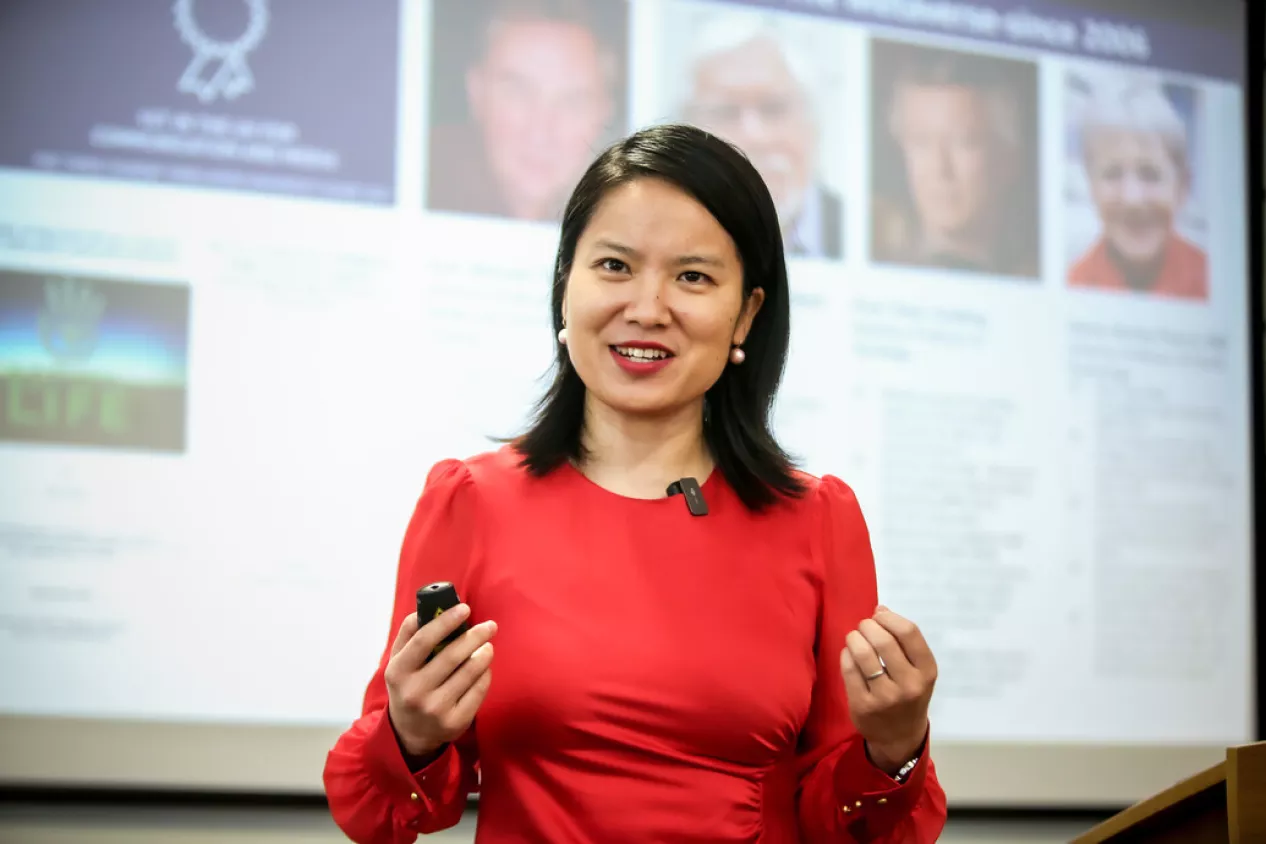
The event was put together by the Director of the Centre of FinTech, Dr. Iwa Salami with Interim Dean Shampa Roy-Mukherjee and Professor Matt Bellgard giving welcome addresses and Dr. Christina Yan Zhang delivering the keynote speech which can be watched on YouTube.

Dr. Iwa Salami commented:

“The rationale for this event was to create an opportunity for discussion, among key industry players in the space, on: the evolution of the metaverse; its meaning; and identifying opportunities and risks. It was also to consider the areas of concerns for UK-based regulators around the possibilities of financial services in the metaverse. Creating the opportunity for these discussions aligns with the vision of the Centre to become the global centre for the creation and communication of practice-led knowledge that enables FinTech to be more inclusive, robust and sustainable.”

Across the day, the Centre welcomed highly esteemed lead speakers, including Roland Emmans, Nicole Sandler, Dr. Ruth Wandhöfer, Jehangir Byramji, Adriana Ennab, Kirk ChangSiraj Sait, Emma Leech, Darren Montgomery, Teresa Cascino and Pavle Avramović. Contributors to the roundtables included Barry James, Matthew Cheung, Sharjeel Ahmed, Ina Alogwu, Elizabeth Uwaifo, Cornelius Glackin, Prof. Kofi KufuourProf. Vassilis FouskasProf. Nazrul IslamDr. Julie Wall and Dr. Fahimeh Jafari with Dr. Iwa Salami and Nick Cook moderating.

Source: Centre of FinTech celebrates 1st year anniversary | University of East London (uel.ac.uk)

Tags: , , , , , ,

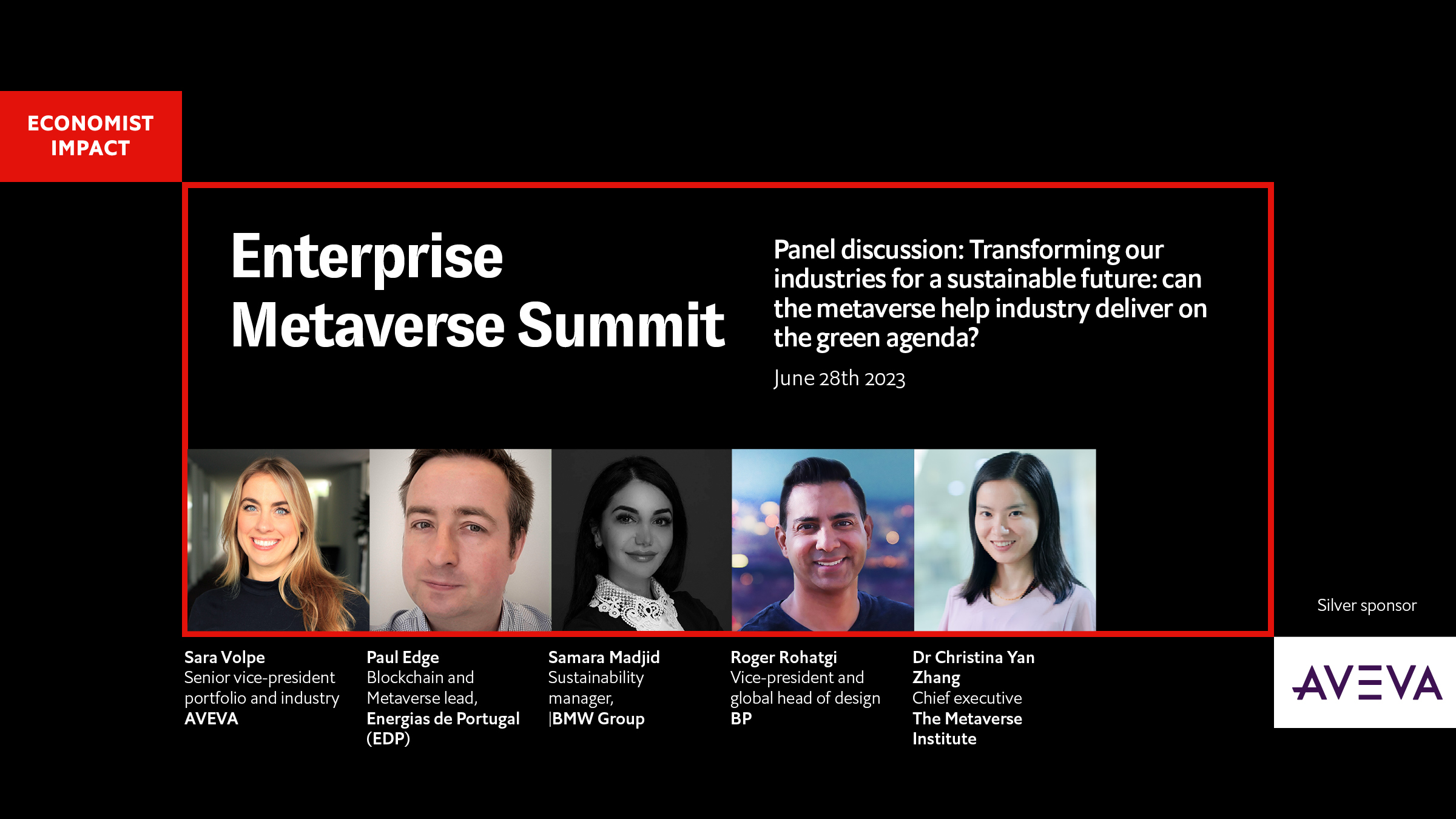
XR Today: Enterprise Metaverse Summit to Kick Off In London

The Economist’s two-day event is expected to create a massive ‘impact’ on the global XR community.

Economist Impact is set to host its Enterprise Metaverse Summit 2023 event in the heart of the British capital.

Hosted at the Hilton London Bankside on 28 June, the widely-read publication will kick off the two-day event and host attendees from the global tech community.

Speakers, thought leaders, panellists, companies, and organisations will attend the Summit to explore the industrial metaverse: a key component of Industry 4.0 that analysts predict will reach nearly $48 billion USD in value, according to research from McKinsey.

Critical points of discussion will include industrial use cases, digital twins, immersive hardware and software, and theoretical and ethical considerations for developing the industrial metaverse. Many of the technologies involved will lead to greater workplace safety, increased training efficacy, and facilitated collaborative efforts.

Across the virtual, augmented, mixed, and extended reality (VR/AR/MR/XR) sectors, the Enterprise Metaverse Summit will feature some of the world’s top frontrunners for the industrial metaverse and related technologies.

Additional technologies will include 5G, the blockchain, cryptocurrencies, artificial intelligence (AI), and more.

Overall, the event will host more than 100 global speakers, over 60 main and breakaway sessions, and an attendee list surpassing 300 people.

Sponsors for the stellar event also include Meta Platforms, PricewaterhouseCoopers (PwC), VRARA London, Siemens, HTC VIVE, Deloitte, Aveva, and BGC X.

Enterprise Metaverse Summit Speaker Lineup

The event will host a stellar roster of speakers, organisations, academics, and companies. Some of the top speakers attending the Summit are:

  • Eva Maydell, Member of the European Parliament
  • Sudeep Shetty, Global Chief Information and Transformation Officer, BRITVIC PLC
  • Dr Lisa Cameron MP, Chair, Crypto and Digital Assets, All Party Parliamentary Group, UK Parliament
  • Holly Landry, Chief data officer, Maersk
  • Lisa Smith, Partner, Inclusion Lead, Unlimited Reality, Deloitte
  • Gerhard Kress, Vice-President, Xcelerator Portfolio and Digital Business, Siemens
  • Christine Trodella, Vice-President, Meta Reality Labs, Meta
  • Nathan Naidoo, Director of Public Policy, Meta
  • Emmanuelle Rivet, Vice-Chair, US TMT & global technology leader, PwC
  • John Dabill, John Dabill, Director, EMEA, HTC VIVE
  • Jay Koganti, Vice-President, Supply Chain COE, The Estée Lauder Companies
  • Joan O’Hara, Senior Vice-President, Public Policy, XR Association
  • Sebastian Pedro Bea, President, Coinbase Asset Management
  • Dr Muhsinah Morris, Metaversity Director and Assistant Professor, Morehouse College and Chief Executive, Metaverse United
  • Dr Christina Yan Zhang, Chief Executive, The Metaverse Institute

Author: Demond Cureton

The original article is published here Enterprise Metaverse Summit to Kick Off In London – XR Today

Tags: , , , , ,

Tampere bids to become pioneering metaverse city

The Finnish city used Tampere Smart City Expo to showcase how it aims to combine the digital and physical worlds to enhance the lives of city dwellers.

Tampere Smart City Expo & Conference convened experts from around the world to share ideas on building smart and sustainable cities

The Finnish city of Tampere is inviting companies to test their smart city solutions as it takes its first steps to becoming “a human-centric metaverse city”.

It used the recent Tampere Smart City Expo & Conference to showcase how it aims to combine the digital and physical worlds and create a vibrant digital environment that enhances the lives of city dwellers.

The metaverse and digital twins 

The international Tampere Smart City Expo & Conference convened experts from around the world to share ideas in areas such as Web3 technology, sustainability, artificial intelligence and mobility.

Keynote speakers included Christina Yan Zhang, CEO of the Metaverse Institute, whose speech focused on the use of digital twin and metaverse technology to build smart and sustainable cities. The event was opened by Kalervo Kummola, mayor of Tampere.

“Through intelligent solutions, our goal is to enhance the wellbeing of citizens, provide a positive urban experience, and create favourable conditions for people’s everyday lives”

The development of Tampere’s metaverse is a result of collaborations with industry-leading companies. Through partnerships with VTT Technical Research centre of Finland and global technology giants such as Microsoft and Nokia, it aims to harness the potential of the metaverse in areas such as urban planning and citizen wellbeing.


“We invite companies to test their solutions in Tampere. The city acts as a testing platform and an open partner for businesses and research,” said Teppo Rantanen, the executive director of growth, innovation and competitiveness at the City of Tampere.

“Through intelligent solutions, our goal is to enhance the wellbeing of citizens, provide a positive urban experience, and create favourable conditions for people’s everyday lives.”

The city said it is committed to sustainability, responsible data utilisation, and ethical metaverse practices. With a focus on human-centricity and stated that technological advancements must serve as catalysts for positive urban experiences.

Tampere’s metaverse-vision is driven by the belief that collaboration between cities, businesses, and ecosystem partners is essential to unlock the full potential of the technology. By embracing this collaborative approach, Tampere hopes to inspire and invite other cities and organisations to join forces in shaping the future of urban, human-centric living.

Tampere Smart City Expo & Conference will take place again next year 11-12 June.

The original article is published here Smart Cities World – Digital twins – Tampere bids to become pioneering metaverse city

Tags: , , , , , , , , ,

Technology Record: IoT Tech Expo Europe to showcase cross-industry IoT innovations

facebook sharing button
linkedin sharing button
twitter sharing button
email sharing button
IoT Tech Expo Europe to showcase cross-industry IoT innovations

Speakers from Airbus, bp, Barclays, Netflix and more will be discussing new internet of things developments


IoT Tech Expo Europe will provide a cross-industry view of the latest internet of things (IoT) innovations when it takes place on 26-27 September in Amsterdam, the Netherlands. 

Speakers for the event will include Garima Singh, chief architect at Sandvik, who will be delivering a keynote presentation on digital twin technology and its evolution and will be a part of a panel on digital twins. 

Nicolás Torralba, head of IoT, platforms and digital solutions at Airbus, will be presenting on implementing IoT inside aircrafts; Bhavdeep Magar, principal service engineer of IoT projects at bp, will discuss IoT innovation for the industrial and marine industries; and Mufeed Patel, assistant vice president and data scientist at Barclays, will explore how machine learning technology can be used as part of the ultimate IoT infrastructure. 

Several Microsoft partners will also host presentations at the event, including Stephane Quetglas, embedded solutions marketing director at Thales, who will deliver a keynote about simplifying IoT deployments. 

Other speakers include TJ Mead, technology continuity programme manager at Netflix; Dr. Christina Yan Zhang, CEO of The Metaverse Institute; Robert Bakelaar, IoT solution architect at Royal Vopak; and Unilever’s head of global customer experience and data analytics Karinna Calin, who will discuss industrial digitisation. Sessions will cover a range of subjects such as using IoT to make supply chains more sustainable, building automation and examining the current IoT security landscape.

IoT Tech Expo Europe will also have over 200 exhibitors showcasing the latest solutions and products in the IoT sector, as well as a VIP networking party for the 6,000 attendees expected at the event that will be hosted at Strandzuid Boathouse.

“IoT Tech Expo Europe presents a unique platform for senior-level representatives to explore the latest applications of IoT technology, engage with industry leaders, and discover cutting-edge solutions,” said Olivia Reid, head of operations at TechEx. 

Attendees with Gold and Ultimate passes will have access to event’s application, powered by artificial intelligence, to provide personalised recommendations of industry sessions and potential connections they may want to meet.

Find out more and register on the IoT Tech Expo website.

Author AMBER HICKMAN

Technology Record provides news and thought leadership on how solutions from the Microsoft partner ecosystem are being used to address challenges faced by enterprise-sized organisations in all industries, with a particular focus on: financial services; industrials and manufacturing; media and communication; public sector; and retail and consumer goods. Technology Record also reports on industry trends, product launches, customer deployments and industry events.

Digital Subscription

The quarterly Technology Record magazine is available in print and digital formats and you can also sign up to a monthly newsletter that provides a digest of some of our best recent content.

For those working in enterprise organisations, Technology Record provides a wealth of information about how solutions from Microsoft partners can address your most pressing challenges. For Microsoft partners, Technology Record provides a valuable channel to communicate news about your solutions, share case studies and deliver insight to our readership.

Technology Record is produced by UK-based publisher Tudor Rose, with the support and guidance of Microsoft.

The original article is published here: Technology Record | The best of enterprise solutions from the Microsoft partner ecosystem > about us

Tags: , , , , ,

Tampere City Government, Finland: THE USE OF DIGITAL TWIN AND METAVERSE FOR SMART CITIES OF A SUSTAINABLE FUTURE?

Increasingly, more and more cities are piloting different technologies within the metaverse ecosystem to provide more inclusive cities development to ensure the needs of diverse community groups are fully represented and proactively engaged at all levels. How could cities governments use metaverse and digital twins to develop smart cities of a sustainable future? This is what I will be speaking on 6th June 2023 at the Tampere Smart City Expo & Conference.

Source: The Use of Digital Twin and Metaverse for smart cities of a sustainable future? | TSCEC

  1. Cities fighting Climate Crisis

On 20 Mar 2023, The Intergovernmental Panel on Climate Change (IPCC), made up of the world’s leading climate scientists, delivered a “final warning” on the climate crisis: the world still has a chance of limiting global temperature rises to 1.5C above pre-industrial levels, the threshold beyond which our damage to the climate will rapidly become irreversible.

In response, the UN secretary general, António Guterres, said: “This report is a clarion call to massively fast-track climate efforts by every country and every sector and on every timeframe. Our world needs climate action on all fronts: everything, everywhere, all at once.”

I cannot agree with the statement more. It is a survival issue- now or never! Unfortunately, according to the latest report from UN, at current pace we won’t achieve the Sustainable Development Goals and the latest Climate COP confirmed we won’t reach the Paris Climate Agreement goals either. We need to continue doing more and better of what works so far and really provide the funding and support in place to accelerate this. Meanwhile, maybe we also need to be more imaginative to explore what new methods, new ideas, new techniques and how they can be used to address the survival and wellbeing issues of all humanity.

Cities has played an important part in addressing climate changes over the years. Over half(55%) the world currently resides in major urban areas. By 2050 the UN estimates that number will grow to 80%. With proximity and access to networks, cities have been engines of innovation for centuries, providing a clear path from poverty to prosperity for many. Most cities in the world have put sustainability at the heart of all policies implementation.

  1. The Metaverse

The term ‘metaverse’ is nothing new. Author Neal Stephenson coined the word in his 1992 science-fiction novel ‘Snow Crash’, which envisions a virtual reality-based successor to the internet. In the novel, people use digital avatars of themselves to explore the online world.

The 2003 virtual world Second Life is often described as the first metaverse platform. Second Life allows people to create an avatar for themselves and have a parallel life in an online virtual world. Developed and owned by the San Francisco-based firm Linden Lab and launched on June 23, 2003, it saw rapid growth for some years and in 2013 it had approximately one million regular users. It is still going strong as of 2022, with around 900,000 active users.

I was lucky to be one of the early adopters of the metaverse, in 2006. I saw it as the next generation of the internet, and both my master’s degree and PhD were focused on using the metaverse to help education institutions develop their international strategy, and on how architects, engineers and the construction industry can use digital twins in the virtual world for simulations, aimed at improving real world AEC projects.

The metaverse we talk about today is the second attempt at mass adoption. It started with a successful IPO of Roblox in March 2021, which achieved a market value of $38bn. The excitement about the metaverse really ramped up after Facebook changed its name to Meta in October that year.

Now, the metaverse has become a convergence of a whole range of cutting-edge technologies, which together will form the next generation of the internet. These include better and faster IT infrastructure, such as 5G and 6G mobile networks; new user interfaces such as XR, wearables, haptics, and voice/gesture recognition; and new computing technologies such as spatial, edge and quantum computing. There are also new information-organising tools such as AI and machine learning; digital-finance technologies such as blockchain, NFTs, and cryptocurrency; and new forms of social interaction online, such as e-sports, virtual events and gaming. Many of these developments are interrelated or even interdependent, but it is still uncertain what shape the emerging ecosystem will take. Nevertheless, it seems inevitable that many of these elements will combine to make the internet more immersive, interactive and intuitive.

  1. Digital Twins:

The idea of a “digital twin” was born at NASA in the 1960s as a “living model” of the Apollo mission. In response to Apollo 13’s oxygen tank explosion and subsequent damage to the main engine, NASA employed multiple simulators to evaluate the failure and extended a physical model of the vehicle to include digital components. This “digital twin” was the first of its kind, allowing for a continuous ingestion of data to model the events leading to up to the accident for forensic analysis and exploration of next steps.

A digital twin is a dynamic virtual copy of a physical asset, process, system or environment that looks like and behaves identically to its real-world counterpart. A digital twin ingests data and replicates processes so you can predict possible performance outcomes and issues that the real-world product might undergo.

Digital twin is one of the key metaverse technologies that can also play a key role as a sustainability solution, by helping to model, monitor and predict changes to the Earth’s climate system on a city, country and global levels. The European Commission has invested 150 million Euro to create digital twins of the Earth named “Destination Earth”, which will start by simulating extreme events and climate change adaptation. The long-term goal is to integrate simulations of the oceans and biodiversity by 2030. Similarly, Nvidia’s “Earth-2” is another digital twin able to predict, monitor and mitigate climate change using AI and machine-learning.

  1. Using Metaverses for People centred Smart Cities Development

There are two types of application. One is to use the metaverse to develop a brand-new city from scratch, such as the $500 billion Neom City in Saudi Arabia. Most of them are focusing on using the new technologies to improve efficiency of existing cities with different focuses. For example, traffic control is an important area explored by many cities such as New York, Shanghai, Tokyo, Wellington. Some cities are focusing on using the gamified feature of the metaverse to attract more consumers for the local shops such as Santa Monica. Seoul has been exploring the use of the metaverse to improve its public services while Dubai and Abu Dhabi are focusing on positioning themselves as the global tech hub for metaverse technology adoption.

What interest me most is how to the use the metaverse to empower the citizens to play more active roles in key decision makings of the future of their cities. The decentralized nature of the metaverse has the potential to give power back to the end-users and employees, and allow them to play a more proactive role in business and society.

I gave a keynote speech in November 2022 at the Smart City Expo World Congress in Barcelona looking at how to use digital twin in the metaverse to support mayors worldwide to develop smart cities. The metaverse has the potential to provide millions of citizens with an “immersive, interactive and intuitive user interface” which will allow urban planning to become more “bottom-up”. 3D visualisation could become a powerful tool for the general public to better understand how the city’s development would impact on their daily life. It could also incorporate information on CO2 reductions, empowering millions to play a more active role in fighting climate change.

This is what we call people centred metaverse strategy for smart cities of a sustainable future. Why not join us and let us use various technologies in the metaverse environment to make our cities inclusive, equitable and sustainable.

Tags: , , ,

Tampere Fair, Finland:The metaverse makes designing smart cities easier than ever before

By leveraging the metaverse and digital twin, we can design and build sustainable smart cities. We all need to act proactively and quickly to stop global warming,” says Christina Yan Zhang.

The metaverse has become a unifying and unifying force for many new technologies, says Dr. Christina Yan Zhang, CEO and founder of the Metaverse Institute.

Source: Tampere Fair, the full article can be found here The metaverse makes designing smart cities easier than ever before – Technology &; Economy (tekniikkatalous.fi)

The metaverse has been described as a next-generation internet. It is an entity consisting of virtual spaces that can be used to create more realistic experiences online.

Christina Yan Zhang, CEO and founder of the Metaverse Institute

Yan Zhang, who has worked with the metaverse for almost two decades, is particularly interested in how metaverse technologies can be better utilised in sustainable and environmentally friendly urban planning.

“In the future, the majority of the population will live in cities, so with environmentally conscious, resident-oriented urban planning, we can have a huge impact on building sustainable living environments,” says Yan Zhang.

“If we don’t act now, we’re in trouble. Global warming must be halted, and in addition to industry, cities play a key role in this work.”

Digital simulation revolutionises construction

According to Christina Yan Zhang, the metaverse and the technologies connected to it offer new opportunities for solving the global climate problem. Especially with the help of digital twins, modelling is already producing results, and its utilisation is only in its early stages.

“Any kind of activity can be simulated in the metaverse with the help of a digital twin. By digitally modelling the physical world, we can plan evacuation situations in advance or assess the effects of natural forces on buildings before the construction phase,” says Yan Zhang.

“If we don’t act now, we’re in trouble. Global warming must be stopped.”

“New York and Tokyo have used metaverse platforms to plan traffic flows and prevent congestion. Dubai and Abu Dhabi are using the metaverse to create new jobs,” says Yan Zhang enthusiastically.

“There are plenty of examples of digital simulation around the world. By leveraging metaverse technologies and the digital twin, designing smart cities has never been easier.”

Sustainable lifestyle is everyone’s business

The key to building smart cities is action to combat climate change.

“With the digital twin, we can, for example, model residents’ carbon emissions and reduce them. I believe that a sustainable lifestyle is a matter for every citizen. However, structures must enable climate-friendly activities,” says Christina Yan Zhang.

“We all need to be active in order to reach the UN Sustainable Development Goals in time. Extreme natural phenomena have increased alarmingly,” Yan Zhang points out.

“With new technologies, we have potential solutions at our fingertips, not forgetting hydrogen and fusion power. I hope that city leaders and planners will take swift action to promote sustainable urban development.”

Christina Yan Zhang will perform as a keynote speaker on the main stage of Tampere Smart City Expo &; Conference on 6.6.2023. Welcome to learn about the cities of the future!

Tampere Trade Fairs

Finland’s second largest exhibition and event company covers the year’s most uplifting encounters, current issues and burning services at the top of professional fields, Tampere Exhibition and Sports Centre.

The international Tampere Smart City Expo &; Conference for smart city development and ICT will be held on 6–7 June at Nokia Arena. The theme of the event is Beyond the Abstract, which dives into the urban metaverse, with Digitally Smart, Urban Intelligence and Responsible ColLAB as its perspectives. International encounters in the field and networking of top experts play a significant role in Tampere Smart City Expo & Conference.

The Expo is free of charge and open to all registered participants, including the main stage program. Tampere Smart City Expo &; Conference’s diverse Conference offering can be redeemed on the website.

The event is organised in cooperation with the City of TampereBusiness Tampere and Tampere Fair Group.

In addition to a comprehensive trade fair calendar, Tampere Fair brings joy and experiences to consumers’ lives throughout the year. Check out the event calendar.

Tags: , , ,